Ford Fiesta

Importing a used Ford Fiesta from the USA

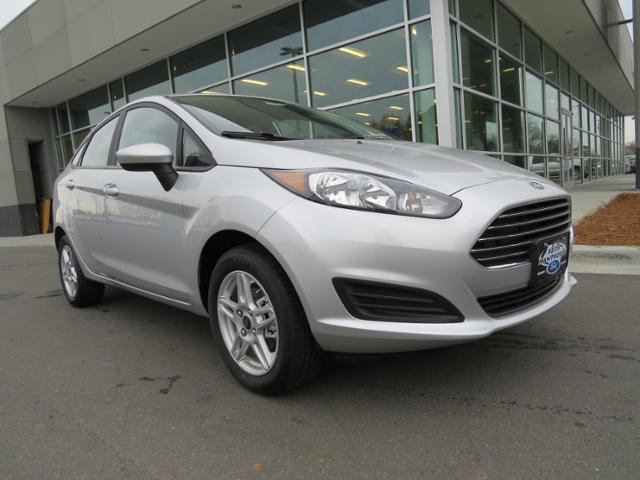
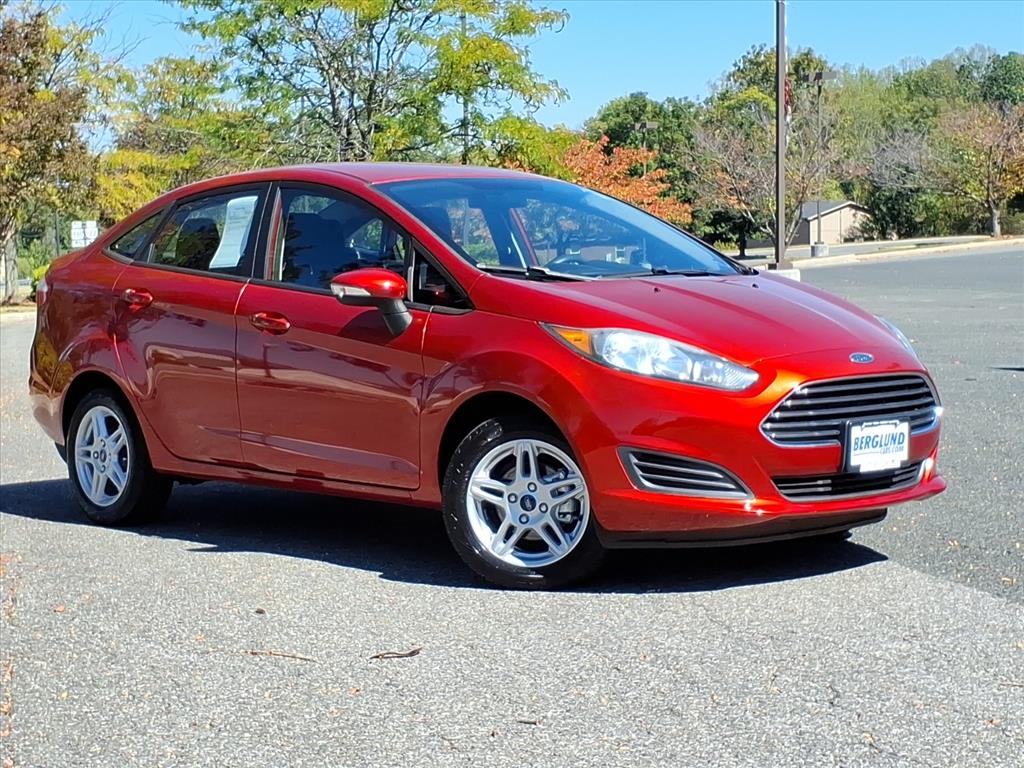
The Fiesta is a global small car, but the American-market version is a specific animal that appeals to a particular kind of importer — usually someone chasing a clean Fiesta ST, a rare North American colour, or simply a well-kept subcompact from a dry state. Ford sold the sixth-generation Fiesta in the US and Canada from the 2011 model year until it was withdrawn after 2019, in both four-door sedan and five-door hatchback forms. Because these cars were built in Mexico for North America, the customs picture differs from a US-assembled vehicle, and that is the first thing any serious buyer should understand. USCar Trader works purely as an independent broker for used cars — we take no dealer margin and never deal in new stock.

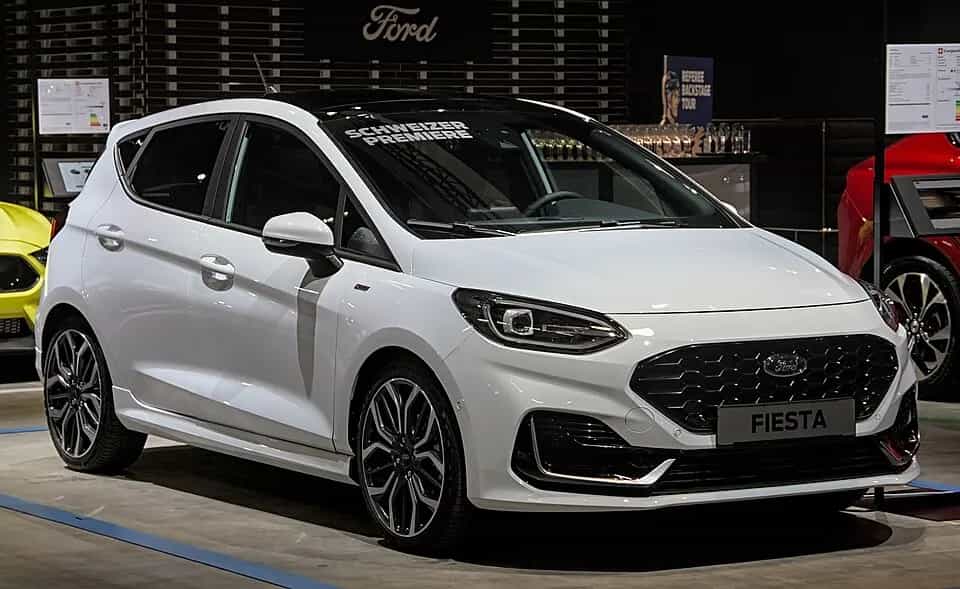
Ford Fiesta – used car imported from the USA
Photo: Alexander Migl · CC BY-SA 4.0 · Wikimedia Commons

Production years and key changes

North America only ever received the sixth-generation Fiesta (Mk6/Mk7 in European numbering), launched for 2011 and lightly facelifted for 2014 with the corporate trapezoidal grille. Uniquely for the US market, Ford offered both a saloon and a hatchback throughout the run — the sedan being the volume seller in America, where small hatchbacks are a niche taste. Production for North America came from Ford's Cuautitlán plant in Mexico. The car soldiered on with minor trim changes until Ford exited the US small-car segment and discontinued it after 2019.

What is under the hood

The staple engine was the 1.6-litre Ti-VCT four-cylinder (around 120 hp), offered with a five-speed manual or the six-speed PowerShift dual-clutch automatic. From 2014 Ford added the 1.0-litre EcoBoost three-cylinder turbo as an efficiency option. The enthusiast's choice is the Fiesta ST, powered by the 1.6-litre EcoBoost turbo four producing roughly 197 hp and paired exclusively to a six-speed manual — a genuinely sharp hot hatch that developed a cult following. All US Fiestas are front-wheel drive.

Trims and body styles

US trims ran from the basic S through SE to the well-equipped Titanium, with the ST sitting apart as the performance flagship. Body styles were the four-door sedan and five-door hatchback. Higher trims offered SYNC infotainment, heated seats, keyless entry and, on the ST, Recaro sport seats and a torque-vectoring-tuned chassis. Because US buyers gravitated to the sedan, hatchbacks — and especially STs — are the more sought-after imports.

What the US market offers

There is a broad supply of ordinary SE sedans across the country, and a steadier trickle of enthusiast-owned ST hatchbacks. When you import a used Ford Fiesta from the USA, the ST is usually the car that justifies the freight, so verify it has not been tracked hard or crash-repaired. For everyday examples, prioritise cars from dry southern and western states to avoid corrosion, and favour manual-transmission cars given the automatic's known issues.

Who this import is for

The Fiesta suits the buyer who wants a specific US-market ST, a particular colour combination not sold in Europe, or a cheap, cheerful runabout with a documented single-owner history from a rust-free region. If you simply want a used small hatchback, plenty were sold in Europe; importing makes most sense when the exact car you want is on the American side of the Atlantic.

Technical data and figures

AttributeDetail
GenerationSixth generation (2011–2019 US)
Body styles4-door sedan, 5-door hatchback
Base engine1.6L Ti-VCT I4 (~120 hp)
Economy engine1.0L EcoBoost turbo I3 (from 2014)
ST engine1.6L EcoBoost turbo I4 (~197 hp)
Transmissions5-speed manual, 6-speed PowerShift DCT, 6-speed manual (ST)
DriveFront-wheel drive
AssemblyCuautitlán, Mexico
Length (sedan)~4,409 mm
Length (hatch)~4,067 mm
Seating5
FuelPetrol
ST 0–100 km/h~6.9 s
Production end (US)2019

Reliability: trouble spots to check

The defining Ford Fiesta problem is the six-speed PowerShift dual-clutch automatic, which suffered widespread shudder, clutch wear and control-module faults across these years and became the subject of major litigation in the US. If you are considering an automatic, insist on documentation of clutch and TCM replacements — or, better, buy a manual and sidestep the issue entirely. Beyond the transmission, the naturally aspirated 1.6 is durable but can develop rough idle from carbon or a failing coil pack. The 1.0 EcoBoost is willing but check coolant history, as early three-cylinder EcoBoost units were sensitive to overheating. On the ST, confirm the clutch and check for aftermarket tuning. Interior trim rattles and worn door-latch actuators are common minor Fiesta common problems.

US vs. Europe differences

US Fiestas use MPH instruments, US lighting logic and typically no rear fog lamp. SYNC infotainment is US-configured. The ST's Recaro seats and equipment broadly mirror Europe, but colours and option packs differ. These items are handled during inspection and TUEV.

How the import works

Select the car; verify the VIN and confirm the Mexican build (relevant to origin classification); agree terms with secure escrow so money releases only on delivery; arrange inland haulage and ocean freight to a North Sea port such as Bremerhaven; clear EU customs; present for TUEV individual approval with required modifications; then register locally. We coordinate the chain end to end.

Import duty, VAT and fees

Key point: duty depends on the plant of build; only a VIN check secures the 0% rate. Import VAT of 19% applies regardless.

Two separate items apply. The import duty: the 0% rate under Regulations (EU) 2026/1455 and 2026/1461 (valid 1 July 2026 to 31 December 2029, direct transport) applies only to vehicles of provable US origin. Because North American Fiestas are built in Mexico, they generally do not meet US-origin criteria, so the duty follows the car's actual origin rather than the 0% US rate. Separately and always, the 19% German import VAT (Einfuhrumsatzsteuer) applies to every imported car. We never advertise duty-free imports and never add a hidden margin.

From modifications to registration

Expect to fit or activate a rear fog lamp, adapt the lighting to ECE standards, address the MPH speedometer, and confirm the odometer reading for the individual approval file. With the TUEV report in hand, registration is straightforward.

Pre-buy inspection points

Before buying any used Fiesta, check:

  • Transmission type — strongly prefer manual; if automatic, demand PowerShift repair records.
  • VIN decode and confirmation of build origin.
  • Carfax or AutoCheck for accidents, salvage and title branding.
  • Underbody and arches for corrosion; favour dry-state cars.
  • On the ST, evidence of track abuse or aftermarket tuning.
  • Service history for the 1.0 EcoBoost cooling system.
  • Clean, non-salvage title.

What buyers ask most

Can I import a used Ford Fiesta from the USA?

Yes. Sedans, hatchbacks and STs can all be imported and registered after clearance and TUEV.

Does a US Fiesta qualify for the 0% import duty?

Usually not. North American Fiestas are built in Mexico, so they typically fail the US-origin test and the duty follows their actual origin.

Does the 19% import VAT still apply?

Yes. German import VAT applies to every imported car, separately from any customs duty.

Is the Fiesta ST worth importing?

For enthusiasts, yes — the 1.6 EcoBoost manual ST is the version that most often justifies the effort and freight.

Should I avoid the automatic?

The PowerShift dual-clutch had significant reliability issues. A manual car is the safer choice.

What is the most common Fiesta problem?

The PowerShift automatic's shudder and clutch wear; after that, minor trim and coil issues.

How long does importing take?

Typically several weeks including freight, customs and TUEV, depending on schedules.

Can you inspect before I pay?

Yes. We arrange inspection and hold funds in escrow until delivery.

See more Ford in the Carhub, or compare the Ford Focus and Ford Fusion, and browse current Fiesta listings.