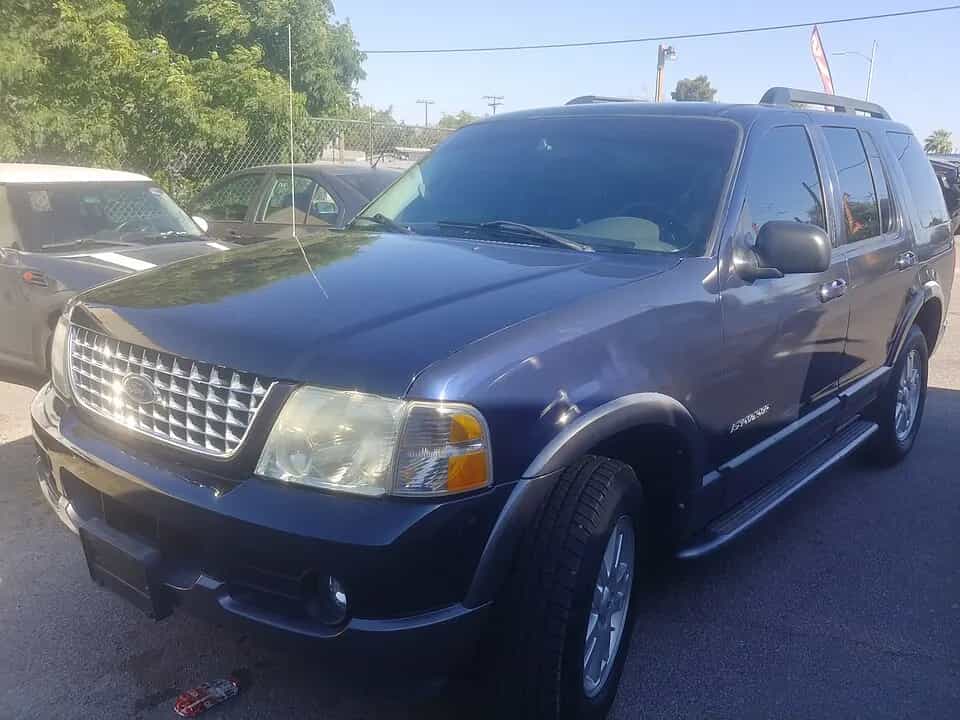
Ford Explorer

Importing a used Ford Explorer from the USA

The Ford Explorer is one of the vehicles that defined the modern SUV, and it remains a genuinely American product built primarily at Ford's Chicago Assembly plant. That matters for anyone looking to import a used Ford Explorer from the USA: a US-built VIN is exactly the kind of origin that can open the door to preferential treatment under the current EU rules. As an independent broker, USCar Trader sources used Explorers on the American market on your behalf, checks the paperwork, and organises transport and clearance. We do not sell new cars and we hold no manufacturer franchise; our job is to find the right used unit and get it to Germany cleanly.

Ford Explorer – used car imported from the USA
Photo: Noah Wulf · CC BY-SA 4.0 · Wikimedia Commons

From launch to today

The Explorer arrived in 1990 and grew through five body-on-frame generations before Ford switched direction. The fifth generation (2011-2019, the U502 platform) moved to a unibody structure shared with the Taurus and marked the point where the Explorer became a car-based crossover rather than a truck. The sixth generation (2020 onward, code CX482) was a bigger rethink: Ford returned to a longitudinal, rear-biased architecture, which improved towing and driving dynamics. A mid-cycle refresh for 2025 brought a cleaner interior with a large central touchscreen and simplified trims. When you shop the US market you will mostly see fifth- and sixth-generation cars, so it pays to know which platform a given VIN sits on.

Engines and drivetrain in detail

American Explorers are overwhelmingly petrol. The volume engine in recent years is the 2.3-litre EcoBoost four-cylinder turbo, good for roughly 300 hp, paired with a 10-speed automatic. Above it sits the 3.0-litre EcoBoost V6 in the Explorer ST and the higher Platinum trims, producing around 400 hp in ST guise. Earlier fifth-generation cars often carry the naturally aspirated 3.5-litre V6 (about 290 hp) or the twin-turbo 3.5 EcoBoost in the Sport model. A Police Interceptor Utility variant and, from 2020, a hybrid using the 3.3-litre V6 also exist but are rarer on the export market. Rear-wheel drive is standard on the sixth generation, with intelligent four-wheel drive optional and very common on cars that spent their life in the north.

Trim levels and variants

The Explorer is a three-row, seven-seat SUV throughout. US trim ladders have included Base, XLT, Limited, ST-Line, ST, Platinum and King Ranch depending on the year. XLT and Limited make up the bulk of used inventory and offer a sensible balance of equipment. The ST is the enthusiast pick with the 400 hp V6, sport suspension and unique styling, while Platinum focuses on leather, wood trim and the full driver-assistance suite. Body style never varies: it is always a five-door SUV, but seating can be configured with a second-row bench or captain's chairs.

Used availability in the USA

Explorers are plentiful in the United States, which keeps selection wide. Fleet and rental origins mean many three- to five-year-old examples come to market with moderate to high mileage, while privately owned Limited and Platinum cars tend to be better cared for. Southern and western states supply the cleanest bodies because road salt is largely absent there; cars from the Rust Belt need a closer underbody inspection. Typical export candidates run from around 30,000 to 120,000 km, and a documented service history is realistic to find on this model.

When importing makes sense

A used Ford Explorer suits a buyer who wants a large, genuinely seven-seat SUV with American road manners and a strong petrol drivetrain, without paying European-market premiums for the same generation. Families that regularly carry six or seven people, owners who tow a trailer or caravan, and anyone who simply prefers the Explorer's presence over a German mid-size SUV are the natural audience. Because it is US-built, the Explorer is also one of the more straightforward Fords to import from an origin standpoint.

Facts and figures

Vehicle classMid/full-size SUV, three rows
Generations on US market5th (2011-2019), 6th (2020-)
Platform (6th gen)CD6, longitudinal, RWD-based
Base engine2.3 L EcoBoost I4 turbo, ~300 hp
Performance engine3.0 L EcoBoost V6, ~400 hp (ST)
Legacy engines3.5 L V6 NA / 3.5 L EcoBoost V6
Transmission10-speed automatic
DriveRWD or intelligent 4WD
Seating6 or 7
Length (6th gen)approx. 5,050 mm
Wheelbaseapprox. 3,025 mm
Towing (properly equipped)up to ~2,540 kg
FuelPetrol (hybrid variant exists)
Country of buildUSA (Chicago Assembly)

Reliability and common problems

Explorer reliability is generally acceptable but generation-specific. The fifth generation drew complaints about exhaust fumes entering the cabin under certain conditions, which prompted a Ford campaign; check that any fix has been applied. The 2.3 EcoBoost is robust but demands disciplined oil changes, as turbocharged fours punish neglected maintenance. Early sixth-generation cars (2020) had a rocky launch with recalls covering rear-axle mounting bolts, the drive-shaft and software; a well-kept later build is the safer bet. Across the range, watch the 10-speed automatic for harsh shifts if fluid service has been skipped, and inspect the panoramic sunroof drains. These are the common problems worth pricing into any Ford Explorer import.

How US versions differ

US Explorers use amber or combined rear lighting and typically lack a rear fog lamp, both of which German registration requires. Cornering and headlight aiming follow US standards and usually need adjustment or coding. The instrument cluster reads in miles, and some driver-assistance features are calibrated for US road markings. Infotainment runs SYNC with US navigation maps, which can be updated to European mapping. None of this is unusual for a US import; it is routine work we coordinate for you.

From US purchase to registration

Selection comes first: we identify suitable used Explorers and share condition reports. Next is the VIN and origin check to confirm US build and eligibility. Payment is handled through escrow for security, after which the car moves by road to the departure port and travels by container or RoRo across the Atlantic. On arrival we handle customs clearance, then arrange the TÜV inspection and, where needed, individual approval (Einzelabnahme), followed by registration at your local authority.

Costs, duty and taxes at a glance

Key point: duty depends on the plant of build; only a VIN check secures the 0% rate. Import VAT of 19% applies regardless.

Two separate charges apply. The first is EU import duty. Under Regulations (EU) 2026/1455 and 2026/1461, in force since 1 July 2026 for directly transported goods, a 0% rate can apply to vehicles of provable US origin, which a US-built Explorer VIN typically supports; this is not automatic and never guaranteed without documentation. The second charge is the 19% German import VAT (Einfuhrumsatzsteuer), which always applies regardless of origin and is calculated on the customs value plus duty and freight. We quote these transparently and add no hidden margin.

TÜV, approval and license plates

Typical work includes fitting or activating a rear fog lamp, adapting the headlights to European aiming, and confirming the speedometer and odometer readings. The TÜV or a recognised expert issues the report used for registration; where no EC type approval exists, an individual approval covers the specific vehicle. Once documents are in order, standard German registration follows.

Pre-purchase checklist

Confirm the VIN and decode it for plant and build date. Pull a Carfax or AutoCheck history for accidents, title branding and odometer consistency. Inspect the underbody for rust, especially on Rust Belt cars. Verify service records, particularly oil and transmission fluid intervals. Check that any open recalls have been closed. Confirm the title is clean and transferable for export. Test the four-wheel-drive system and the panoramic roof for leaks.

Import FAQ

Can I import a used Ford Explorer from the USA?

Yes. As a broker we source the vehicle, verify it and manage transport and clearance into Germany.

Does the Explorer qualify for 0% EU import duty?

Often, because it is US-built, but only with provable origin via the VIN and plant documentation. It is never guaranteed in advance.

Is the 19% import VAT always due?

Yes. The Einfuhrumsatzsteuer applies to every import regardless of origin and is billed separately from duty.

Which Explorer engine is best for import?

The 2.3 EcoBoost covers most needs efficiently, while the 3.0 EcoBoost ST suits buyers wanting performance.

Are Explorer parts available in Europe?

Wear and service parts are widely available; some US-specific trim may need ordering from the States.

How long does the import take?

From purchase to registration typically several weeks, driven mainly by ocean transit and clearance timing.

Do I need individual approval?

Usually yes for US models without EU type approval, which is a routine TÜV process.

Explore more options in the Ford in the Carhub, compare the Expedition, the Edge and the Bronco 4-Door, or browse current Explorer listings.