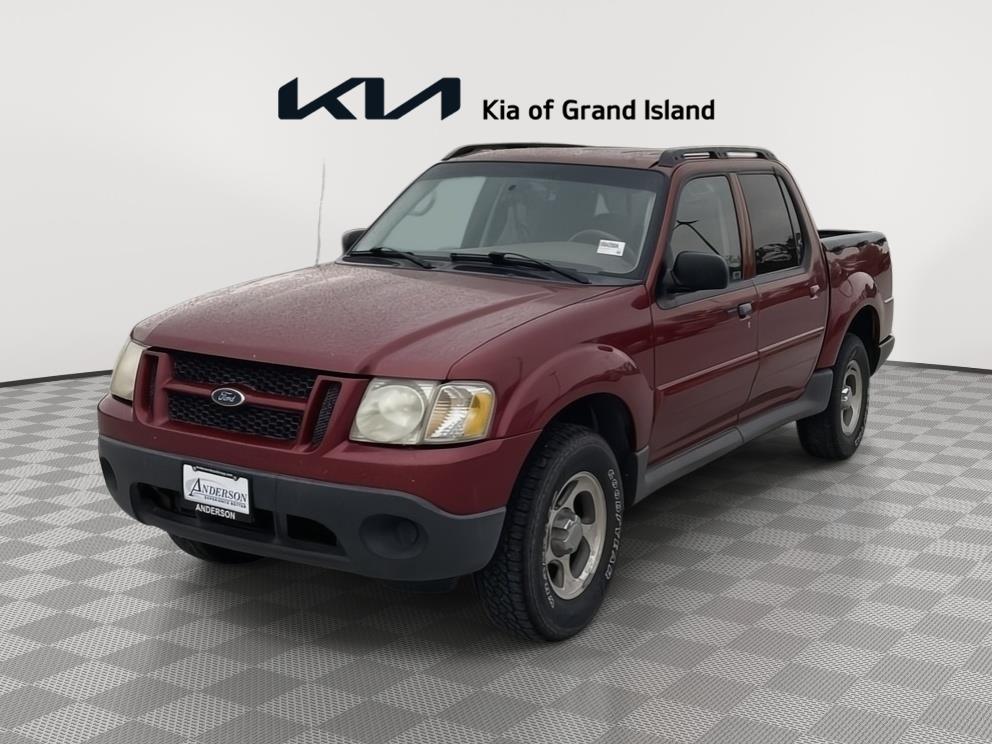
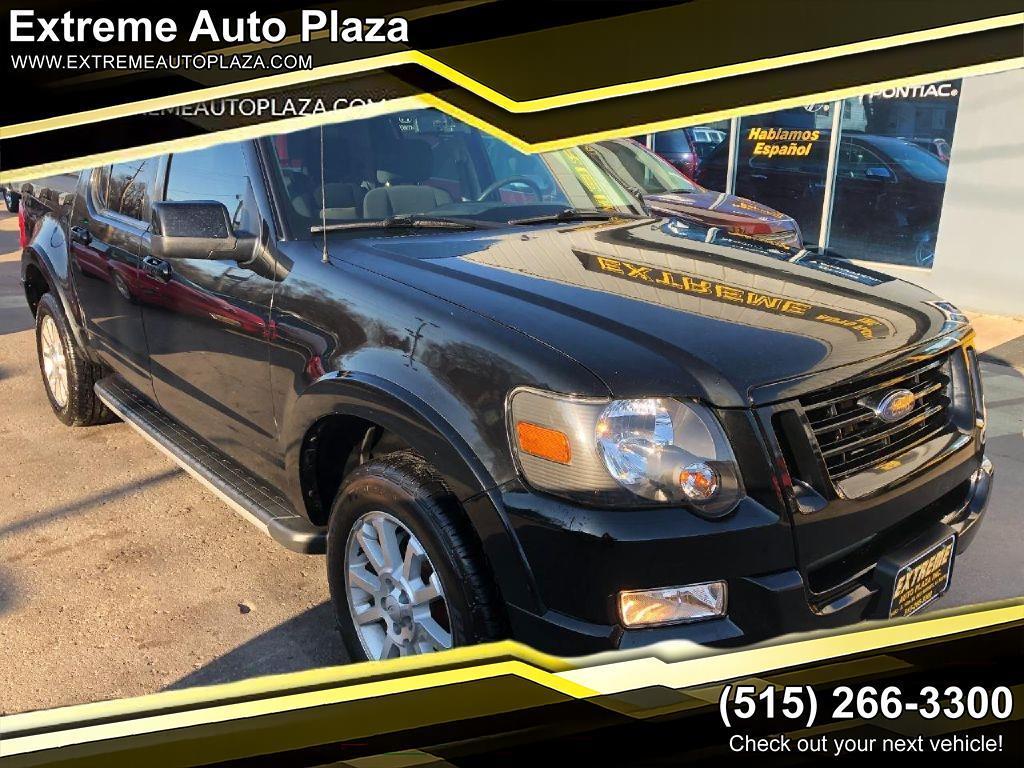
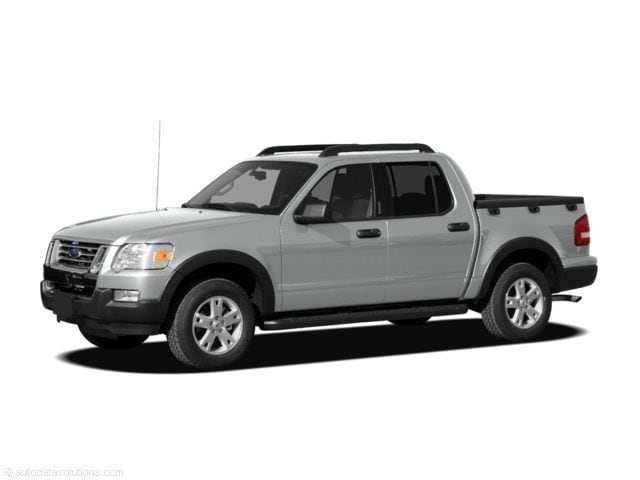
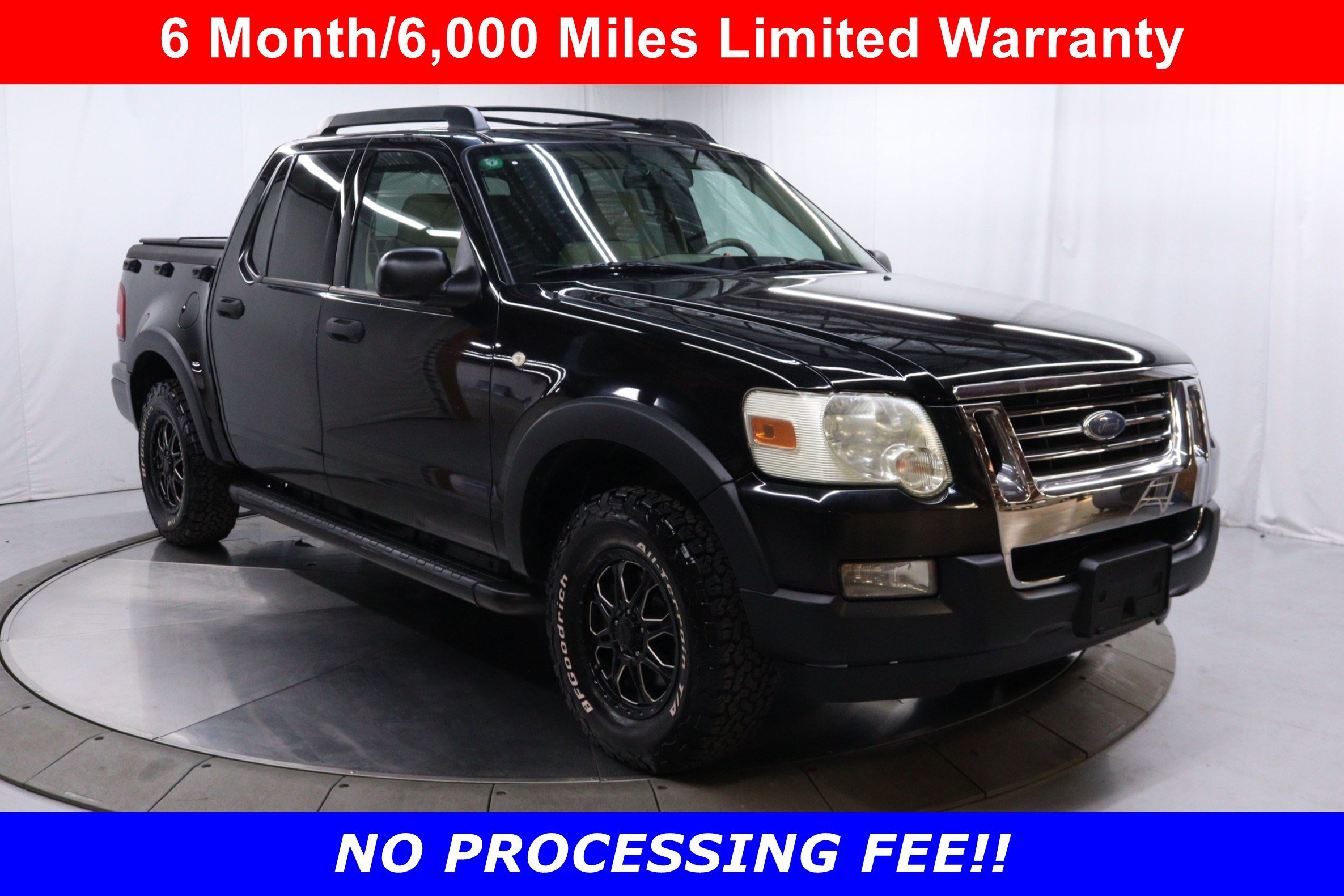
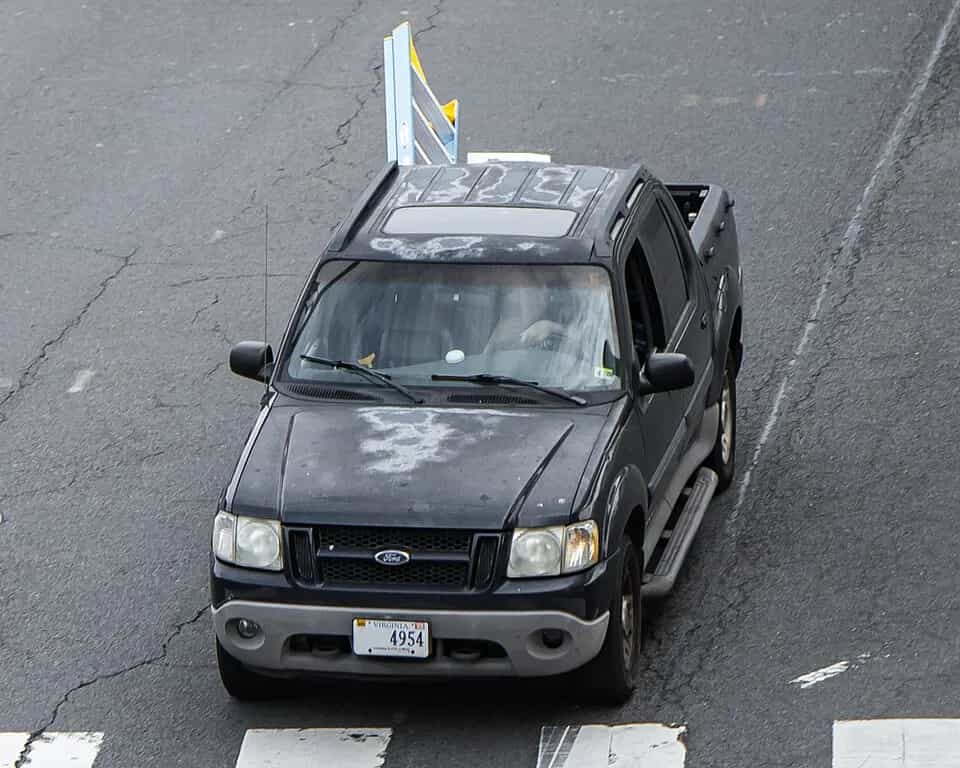
Ford Explorer Sport Trac
Importing a used Ford Explorer Sport Trac from the USA
The Explorer Sport Trac is one of those vehicles that barely reached Europe, which is precisely why importing a used one from the USA makes sense. It is a rare crossover between an SUV and a pickup: a four-door, five-seat cabin bolted to a short composite cargo bed on a body-on-frame chassis. Ford built it almost exclusively for the North American market, so the used pool sits in the United States, and buyers in Germany who want a genuine mid-size US pickup with everyday usability tend to look there first. As an independent broker, USCar Trader sources these vehicles for private buyers rather than stocking them, so what you see is the actual American used market.

Production years and key changes
There are two clearly separate generations. The first (2001–2005, internal UN46) was derived from the second-generation Explorer and stretched to accept a roughly 1.3 m composite bed behind the passenger cabin. It launched as a 2001 model and quickly became a niche favourite for people who wanted SUV comfort with an open load area. The second generation (2007–2010, on the U251 platform shared with the fourth-generation Explorer) rode on a fully boxed frame, grew slightly, and — importantly — finally offered a V8. Ford dropped the model after 2010 as the market moved toward the F-150 and unibody crossovers, which is part of why clean survivors now hold their value.
What is under the hood
Every first-generation Sport Trac uses the 4.0-litre SOHC V6 (Cologne-derived), rated around 205–210 hp and paired with a 5-speed 5R55E automatic; a 5-speed manual existed early on but is scarce. The second generation kept the 4.0 SOHC V6 (210 hp) and added the 4.6-litre 3-valve modular V8 with about 292 hp and a 6-speed 6R60 automatic. Both generations were offered in rear-wheel drive or with ControlTrac four-wheel drive, which includes a low range for light off-road and towing duty. If you want the strongest example, the V8 4WD car is the one to hunt for.
Trims and body styles
The body style never changed — always a four-door crew cab with the integrated bed. Trims ran from base XLS/XLS to XLT and Limited, with the sportier Adrenalin package appearing on the second generation (monochrome styling, larger wheels, sport tuning). Options that matter for a European import include the tow package, the hard tonneau or bed cage, leather, and the moonroof. There was no diesel and no long-bed variant.
What the US market offers
Supply is steady across the sun-belt states, where these trucks avoided road salt. Typical first-generation cars now show higher mileage (well past 150,000 miles is normal), while the 2007–2010 V8 examples are the sweet spot for condition and drivetrain. Look in Texas, Arizona, Florida and California for rust-free bodies and intact composite beds. Because the model was cheap when new, service history quality varies widely, so a documented car is worth paying for.
Who this import is for
This is a vehicle for someone who wants a comfortable daily driver that can still carry bikes, building materials or a couple of quads without an exposed pickup interior. It suits owners who like the American-truck character but find a full-size F-150 too large for German roads and parking. If you tow a small trailer or a horsebox and want a five-seat cabin, the Sport Trac fills a gap almost nothing in the European catalogue does.
Technical data and figures
| Body style | 4-door crew-cab pickup (integrated composite bed) |
| Generations | 1st gen 2001–2005; 2nd gen 2007–2010 |
| Base engine | 4.0 L SOHC V6 (~205–210 hp) |
| Top engine (2nd gen) | 4.6 L 3-valve V8 (~292 hp) |
| V6 torque | approx. 340 Nm |
| V8 torque | approx. 407 Nm |
| Transmission | 5-speed auto (5R55E); 6-speed auto (6R60, V8) |
| Drivetrain | RWD or ControlTrac 4WD with low range |
| Chassis | Body-on-frame (boxed frame on 2nd gen) |
| Length | approx. 5.03 m (1st gen) / 5.24 m (2nd gen) |
| Wheelbase | approx. 3.09 m / 3.31 m |
| Bed length | approx. 1.3 m composite bed |
| Curb weight | approx. 2,000–2,200 kg |
| Max towing (V8) | up to approx. 3,175 kg (7,000 lb) |
| Fuel tank | approx. 83 L |
| Seating | 5 |
Reliability: trouble spots to check
The recurring Explorer Sport Trac reliability topic is the 4.0 SOHC V6 timing system. The engine uses three chains, and the guides and tensioners at the rear of the block wear out, producing a cold-start rattle. Because the cassette sits behind the engine, the repair is labour-intensive — a car that already rattles should be priced accordingly. The 5R55E automatic can develop harsh shifts and solenoid faults, so check for clean fluid and smooth engagement. The 4.6 V8 is generally tougher but has its own weak points around spark plugs (the two-piece plugs on 3-valve modular engines can seize or break during removal). On any generation, inspect the frame and rear suspension mounts for corrosion on cars from northern states. The composite bed resists dents and rust, which is a genuine plus for a used pickup.
US vs. Europe differences
US cars use amber rear turn signals combined into the tail lamp, mph-primary instruments, and no rear fog lamp — all of which matter for German approval. Lighting is typically DOT/SAE rather than ECE. Emissions equipment is US federal or California (CARB) spec; the drivetrains themselves are conventional petrol units with no European diesel equivalent, so there is no adaptation drama there beyond documentation.
How the import works
The process runs: select a documented car and confirm condition with photos or an inspection; verify the VIN and build plant (a decoded VIN tells you the assembly location, which drives the customs rate); use escrow so funds are only released on clean paperwork; book ocean freight (usually container or RoRo from an East or Gulf Coast port to Bremerhaven); clear German customs on arrival; present the vehicle for TÜV and individual approval (Einzelabnahme under §21 StVZO); then register it with your local authority.
Import duty, VAT and fees
In short: the 0% duty rate applies only with documented US origin (VIN/plant) – German import VAT of 19% is always due.
Two charges are always separated. First, the import duty: the 0% rate under Regulations (EU) 2026/1455 and 2026/1461 (in force since 1 July 2026, direct transport, valid until 31 December 2029) applies only where US origin is provable via the VIN and plant. The Sport Trac was assembled in the USA (Louisville, Kentucky), so a US-origin car can qualify — but this must be confirmed per VIN, never assumed. Where origin cannot be proven, the standard passenger-car duty applies. Second, and regardless of origin, the 19% German import VAT (Einfuhrumsatzsteuer) is charged on the customs value plus freight. We never quote a duty as guaranteed and never add a hidden margin.
From modifications to registration
Typical changes for approval are: converting or adding a rear fog lamp, adapting the rear turn signals to comply, headlight aim or units suitable for right-hand traffic, and confirming the speedometer reads km/h (usually a secondary scale exists). The odometer reading is documented and carried over. A tow bar, if fitted, needs a compliant type approval.
Pre-buy inspection points
1) Decode the VIN and confirm the assembly plant for the customs rate. 2) Pull a Carfax or AutoCheck history for accidents, title brands and odometer consistency. 3) Inspect the frame, rear cross-member and suspension mounts for rust. 4) Listen for the timing-chain rattle on a genuine cold start. 5) Verify the title is clean (not salvage/rebuilt) unless you knowingly accept it. 6) Check service records for timing and transmission work. 7) Confirm 4WD engages properly, including low range.
What buyers ask most
Is the Explorer Sport Trac a real pickup?
Yes — it has a separate, weatherproof composite cargo bed on a body-on-frame chassis, just with a full crew cabin ahead of it.
V6 or V8 — which should I import?
The 2007–2010 4.6 V8 offers the best power and towing and is the more modern platform, but a well-kept V6 is cheaper to run and easier to find.
Does a US-built Sport Trac get 0% duty?
It can, because it was built in the USA, but only when US origin is proven through the VIN and plant. The 19% import VAT still applies.
How reliable is the 4.0 V6?
Mechanically durable, but the rear timing-chain guides are a known weak point; a documented history and a quiet cold start are what you want.
Can I tow with it in Germany?
Yes, with a type-approved tow bar; the V8 4WD models have the highest rated towing capacity.
Will it pass TÜV?
With the usual lighting adaptations and an individual approval, yes — it is a conventional petrol vehicle with no unusual obstacles.
Where are the cleanest examples?
Dry southern and western US states, where the frame and bed avoid road salt.
How long does the import take?
Typically several weeks door to door, driven mainly by ocean freight scheduling and customs clearance.
Explore more of the range in the Ford in the Carhub, compare it with the Ford Ranger, the Dodge Dakota and the Chevrolet Avalanche, or browse the current Explorer Sport Trac listings.