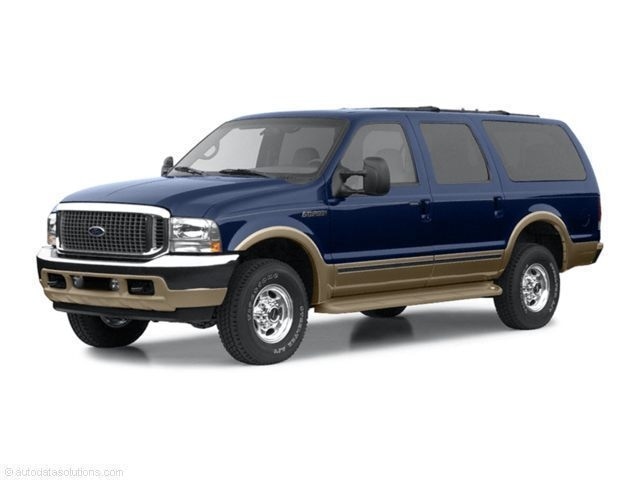
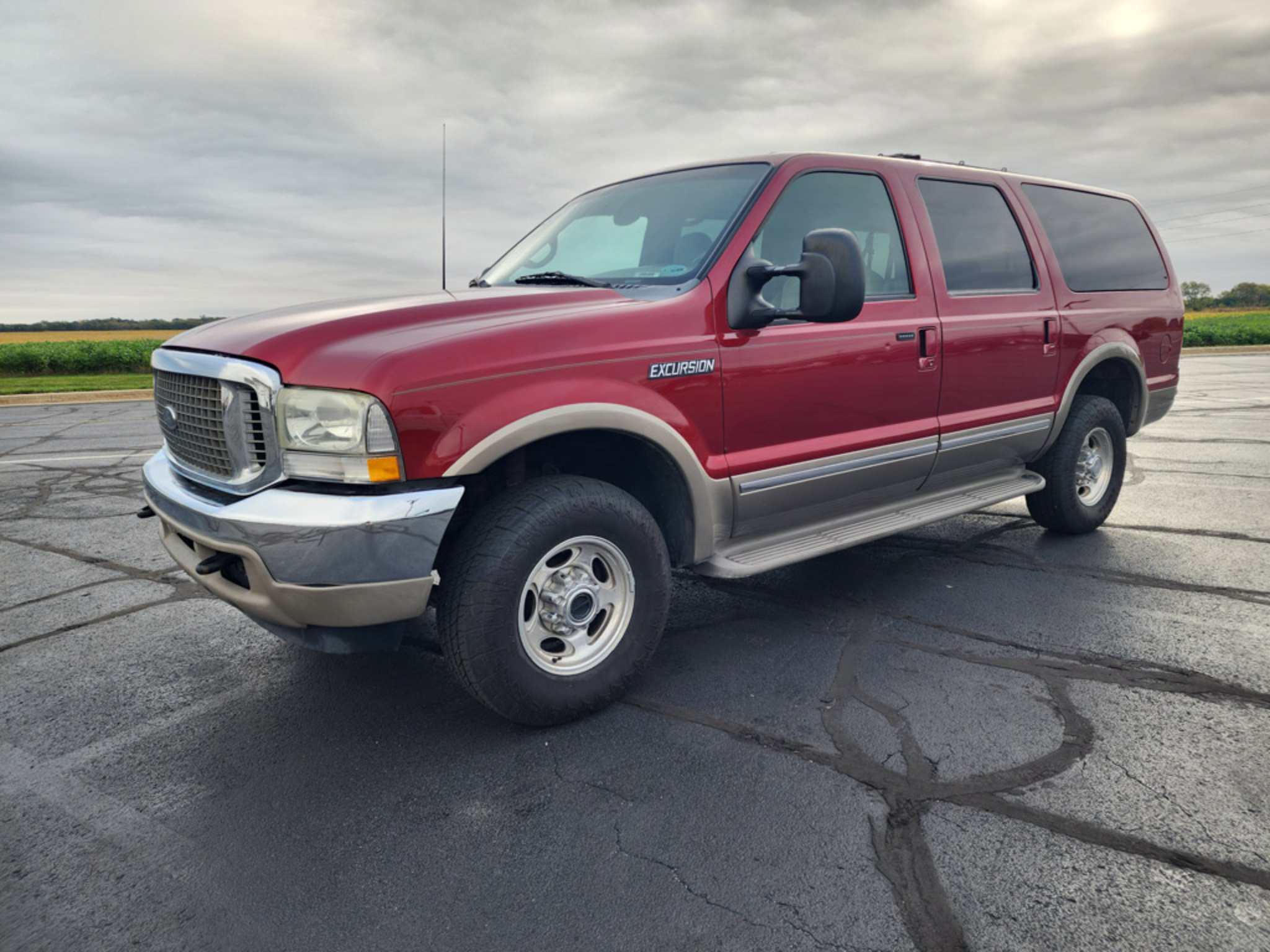
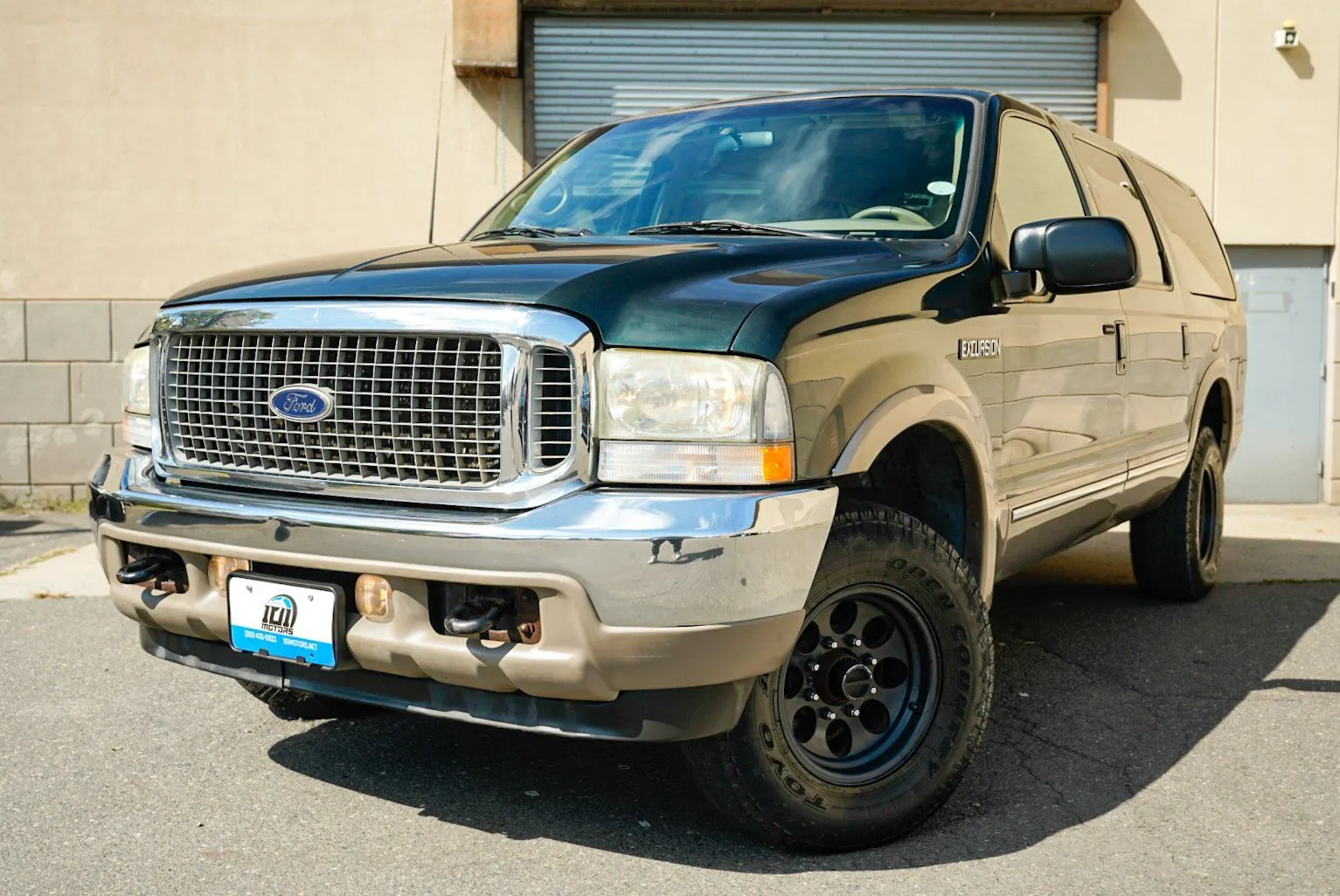
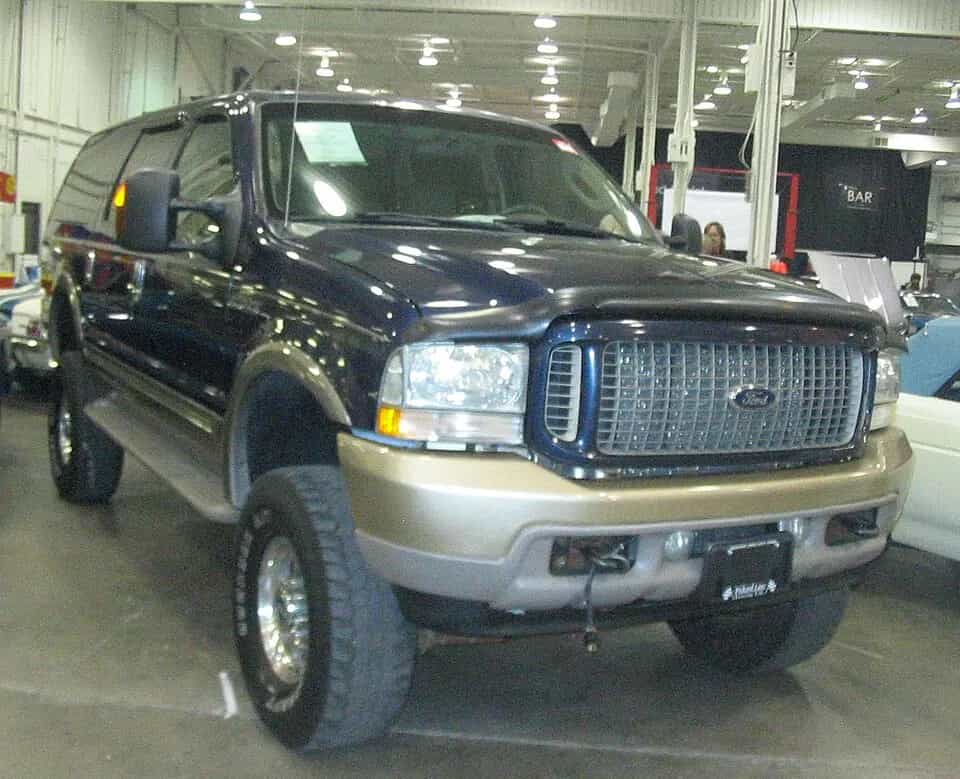
Ford Excursion
Importing a used Ford Excursion from the USA
The Ford Excursion is the largest SUV Ford ever built, and it exists almost nowhere in Europe — which is exactly why enthusiasts and large families import one. Based on the Super Duty pickup chassis, it seats up to nine, tows enormous loads and, in diesel form, can cover big distances between fill-ups. There is no European equivalent, so if you want a genuine full-size American SUV, importing a used Ford Excursion from the USA is the only real path. USCar Trader acts as an independent broker: we find the truck, verify its history and origin, and organise freight and customs. We hold no stock and take no vehicle margin.
Production years and key changes
The Excursion was produced for a single generation across the 2000–2005 model years, built in Kentucky on the Super Duty (F-250/F-350) platform. It arrived as Ford's answer to the Chevrolet Suburban and quickly gained a following for its sheer size and towing ability. A facelift for 2005 brought a new grille, revised interior and the newer 6.0-litre Power Stroke diesel. Rising fuel prices and shifting tastes ended production after 2005, which makes surviving examples genuine modern classics with a strong following in the US.
What is under the hood
Three engines defined the Excursion. The base petrol was the 5.4-litre Triton V8 (around 260 hp), adequate but working hard in such a heavy vehicle. Most buyers stepped up to the 6.8-litre Triton V10 (around 310 hp and 583 Nm), a smooth, torquey petrol favoured for towing. The star, however, is the 7.3-litre Power Stroke turbodiesel V8 (around 250 hp but a mighty 705 Nm), built by International/Navistar and legendary for durability; it was replaced during 2003 by the 6.0-litre Power Stroke (around 325 hp). Transmissions were 4-speed automatics (4R100, later 5R110 TorqShift), with rear-wheel drive or part-time four-wheel drive.
Trims and body styles
The Excursion came in one gigantic body style: a four-door, three-row SUV. Trims ran XLT, Eddie Bauer and Limited. XLT was the workhorse with cloth or vinyl; Eddie Bauer added two-tone paint, leather and extra comfort; Limited was the top luxury trim with power everything, wood trim and premium audio. Many were ordered as heavy-half or three-quarter-ton (F-250/F-350-equivalent) chassis, and payload and towing ratings vary accordingly.
What the US market offers
Excursions are sought-after in the States, so clean diesel examples command loyalty and rarely sit unsold. Typical import candidates from the dry southern and western states show 120,000–220,000 miles (roughly 190,000–350,000 km) — high by European standards, but these drivetrains are built for it, especially the 7.3 diesel. Rust on frame, cab corners and rear wheel arches is the main enemy on salt-belt trucks, so provenance matters. Well-maintained diesels with service records are the ones to chase.
Who this import is for
This is a vehicle for people who genuinely need space and towing capacity — horse and boat owners, large families, expedition builders — or who simply love the presence of a full-size American SUV. It is not a city runabout: it is over five metres long and thirsty. But for towing a heavy trailer or carrying nine people in comfort, few used imports match it, and the 7.3 Power Stroke gives it real long-haul character.
Technical data and figures
| Body style | 4-door full-size SUV, up to 9 seats |
| Platform | Ford Super Duty (F-250/F-350) |
| US model years | 2000–2005 |
| Petrol V8 | 5.4 Triton, approx. 260 hp |
| Petrol V10 | 6.8 Triton, approx. 310 hp / 583 Nm |
| Diesel (2000–2003) | 7.3 Power Stroke V8, approx. 250 hp / 705 Nm |
| Diesel (2003–2005) | 6.0 Power Stroke V8, approx. 325 hp |
| Transmission | 4-speed auto (4R100) / 5-speed TorqShift |
| Drive | Rear-wheel or part-time 4x4 |
| Length | approx. 5,760 mm |
| Wheelbase | approx. 3,510 mm |
| Kerb weight | approx. 3,300–3,900 kg |
| Max towing | up to approx. 4,500 kg (conventional) |
| Fuel tank | approx. 170 litres (44 US gal) |
| Typical import mileage | 120,000–220,000 miles |
Reliability: trouble spots to check
Excursion reliability depends heavily on which engine you choose. The 7.3 Power Stroke is the gold standard: cam position sensors, injector O-rings and the HPOP can need attention, but the block routinely exceeds 300,000 miles. The 6.0 Power Stroke is more powerful but more troublesome — EGR cooler failures, oil-cooler clogging, head-gasket lift and FICM issues are well documented, and many owners fit a bulletproofing package. The 6.8 V10 is dependable but early Triton engines can spit spark plugs from the aluminium heads, so check for prior repairs. Across the range, inspect the front hubs and ball joints on 4x4 trucks, the automatic transmission (especially behind the diesels), and the frame and rear arches for rust. These are common Excursion problems, all solvable, but they shape which truck is worth importing.
US vs. Europe differences
The Excursion was never sold in Europe, so everything is US-spec: mph speedometer, US lighting with amber rear indicators and no rear fog lamp, and imperial gauges. Emissions equipment on the diesels is US-calibrated, which matters for German approval. There is no factory CoC, so an individual approval is mandatory. The sheer size also means careful thought about German dimensions and axle-load regulations.
How the import works
The route is straightforward with a broker. First, selection to your specification — engine, drive, trim, budget. Second, a VIN and origin check plus a Carfax/AutoCheck history. Third, escrow payment so money is released only against clean paperwork. Fourth, inland haulage to a US port and ocean freight, usually RoRo or container, to Bremerhaven or Antwerp. Fifth, customs clearance in the EU. Sixth, TÜV inspection and an individual approval (Einzelabnahme) under §21 StVZO, including emissions checks on diesel trucks. Finally, local registration.
Import duty, VAT and fees
Key point: duty depends on the plant of build; only a VIN check secures the 0% rate. Import VAT of 19% applies regardless.
Two separate charges apply. Import duty is set by the vehicle's actual origin. The Excursion was assembled in the USA, so a clean VIN that proves US build, on a truck shipped directly from the States between 1 July 2026 and 31 December 2029, may qualify for the temporary 0% EU import duty under Regulations (EU) 2026/1455 and 2026/1461; without provable US origin the standard rate applies. The 19% German import VAT (Einfuhrumsatzsteuer) is charged on the customs value regardless of origin. USCar Trader passes both official amounts through at cost with no margin, and nothing is ever guaranteed until the VIN is verified.
From modifications to registration
Expect to fit a red rear fog lamp, convert or adjust the headlights for right-hand traffic and confirm the indicator arrangement. Diesel trucks need an emissions check appropriate to their US calibration; some owners address particulate and NOx equipment for approval. The odometer reading in miles is documented, and given the size, axle loads and towing ratings are reviewed at inspection.
Pre-buy inspection points
Before you buy, confirm: (1) VIN decode and US plant of origin for customs; (2) a Carfax or AutoCheck report free of salvage, flood or accident flags; (3) frame, cab-corner and rear-arch rust inspection; (4) engine-specific health — for a 6.0, evidence of EGR/oil-cooler work or bulletproofing; for a 7.3, injector and HPOP condition; (5) transmission operation under load; (6) 4x4 hubs and front-end joints; (7) clean, transferable title.
What buyers ask most
Which Excursion engine is the most reliable?
The 7.3 Power Stroke diesel is the durability benchmark; the 6.8 V10 is a solid petrol; the 6.0 diesel is powerful but needs careful vetting.
Was the Excursion ever sold in Europe?
No. Every Excursion in Germany is a US import, which is part of its appeal and rarity.
Can it tow a large trailer?
Yes — depending on configuration it can tow up to roughly 4,500 kg conventionally, one of its main strengths.
Will it qualify for 0% import duty?
It was US-built, so a verified US-origin VIN shipped directly may qualify under the current regulations; the 19% import VAT always applies.
What mileage is normal?
Diesel Excursions with 120,000–220,000 miles are common and can still have long lives ahead if maintained.
Is rust a problem?
Only on salt-belt trucks; southern and western examples are usually far cleaner underneath.
Is the 6.0 diesel worth importing?
It can be, but only with proof of the common EGR, oil-cooler and head-gasket issues being addressed.
How thirsty is it?
Very — this is a large, heavy SUV, and fuel consumption should be part of your ownership plan.
Talk to USCar Trader about sourcing one. Explore Ford in the Carhub, compare related heavy Fords such as the F-250 Super Duty, the F-350 Super Duty and the Expedition, or view current Excursion listings.