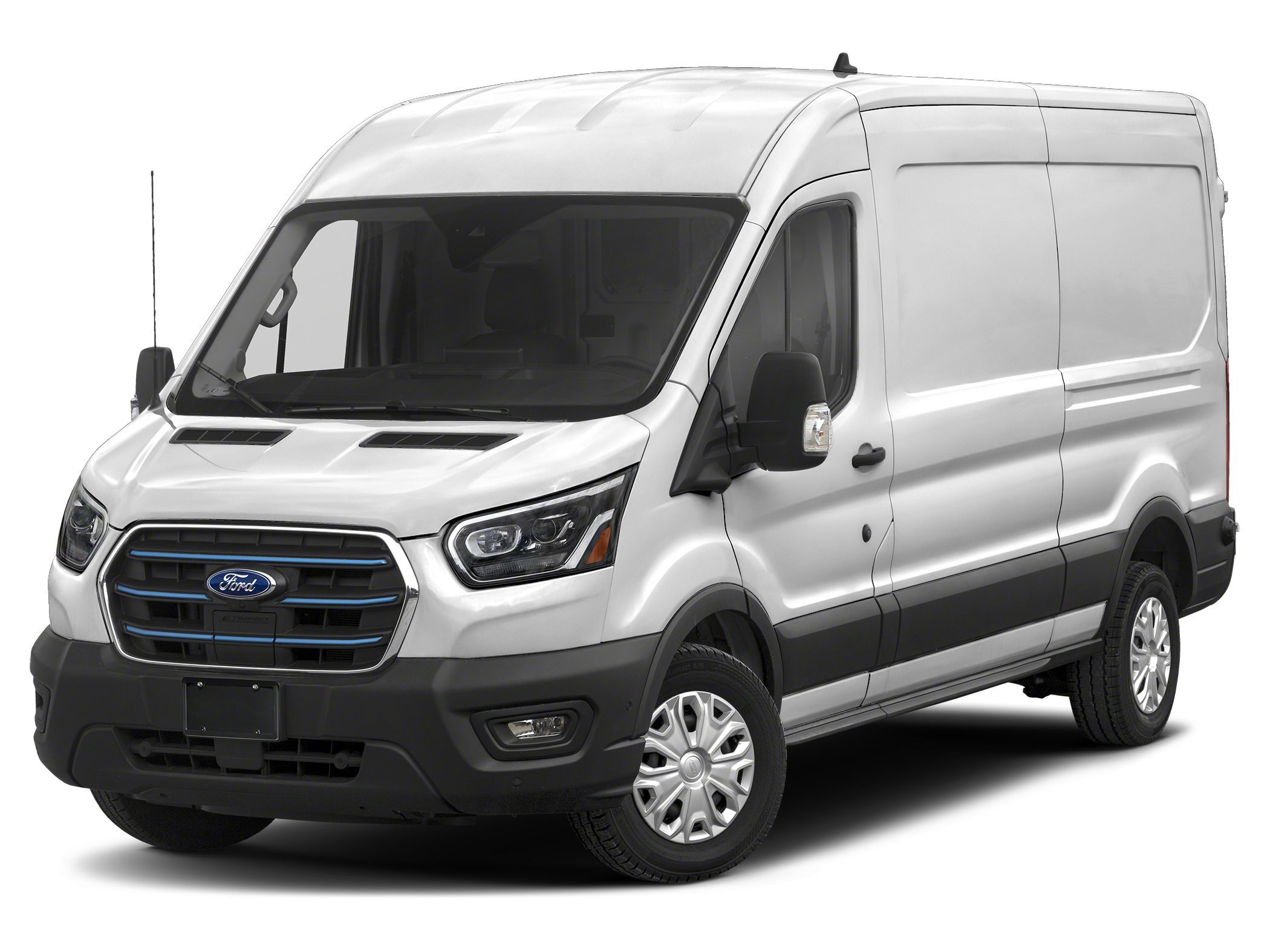
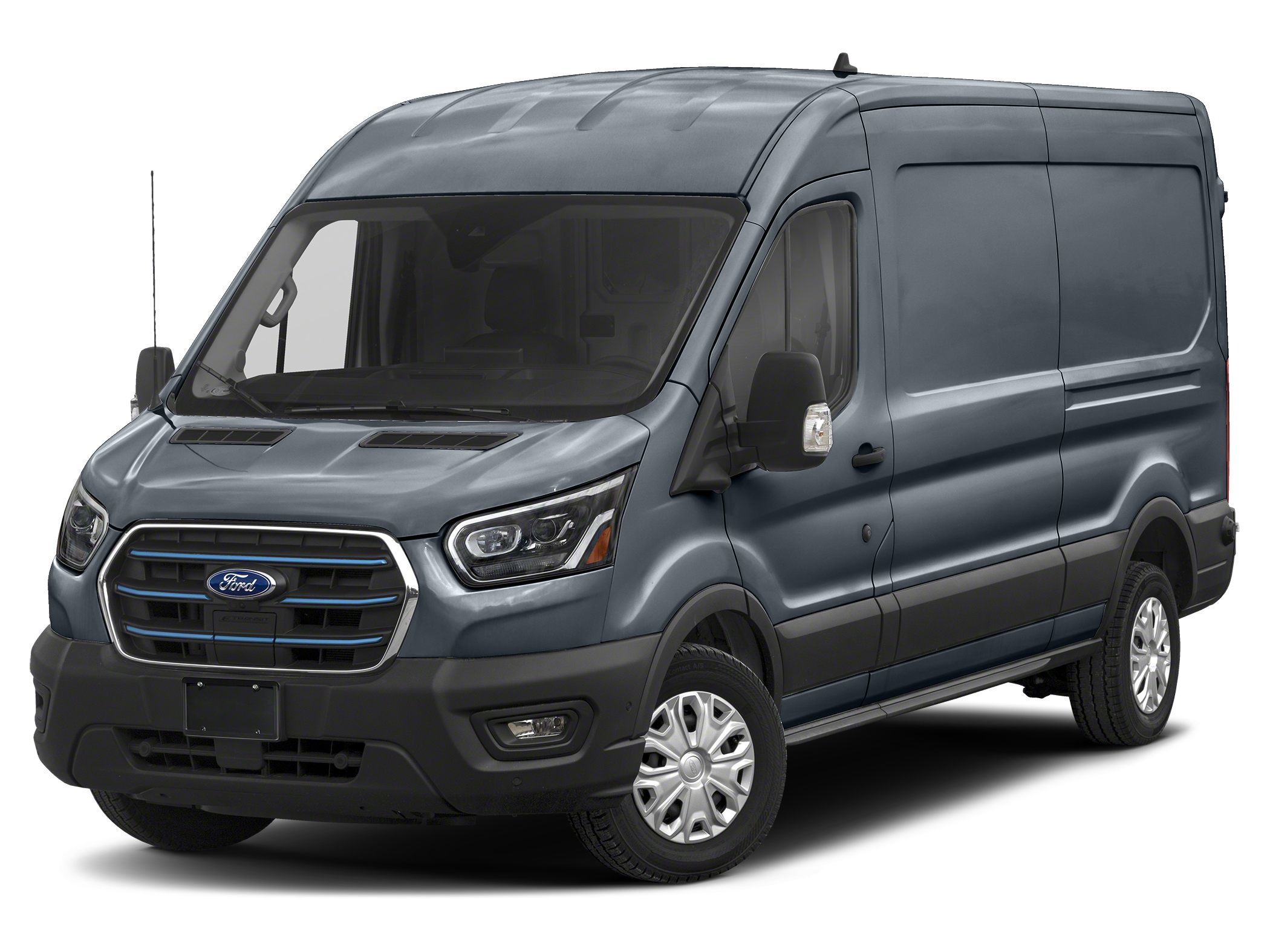
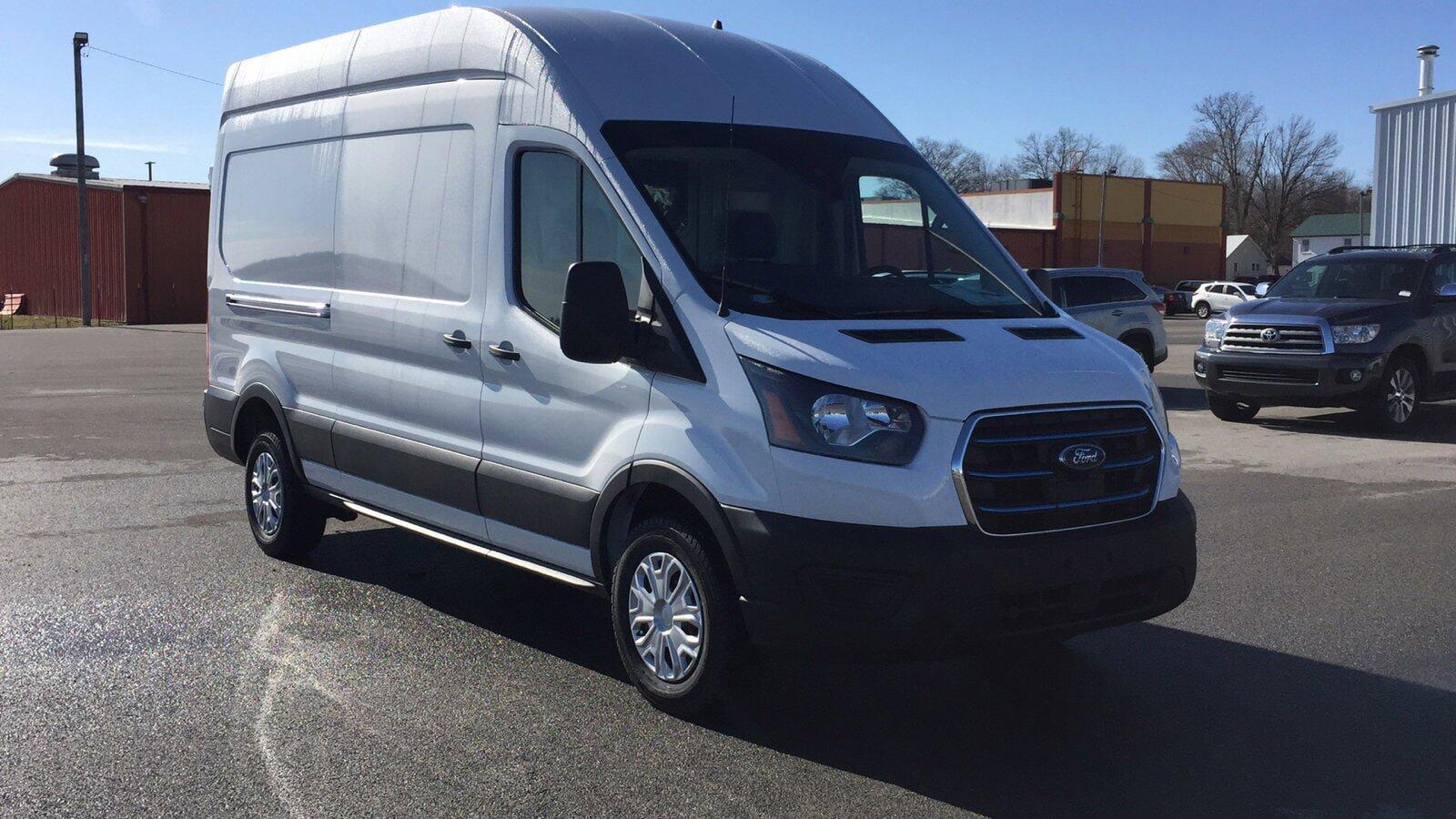
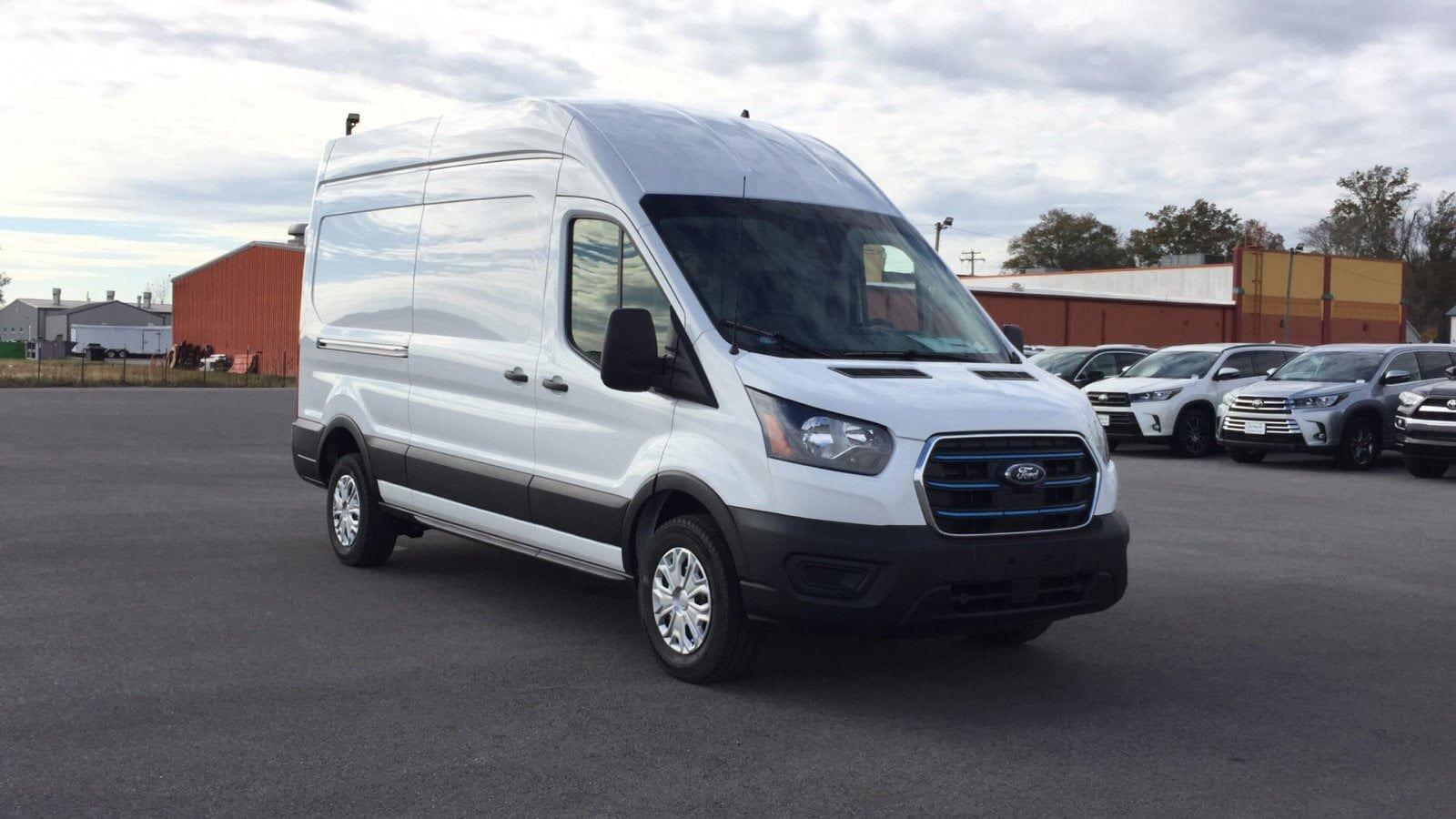
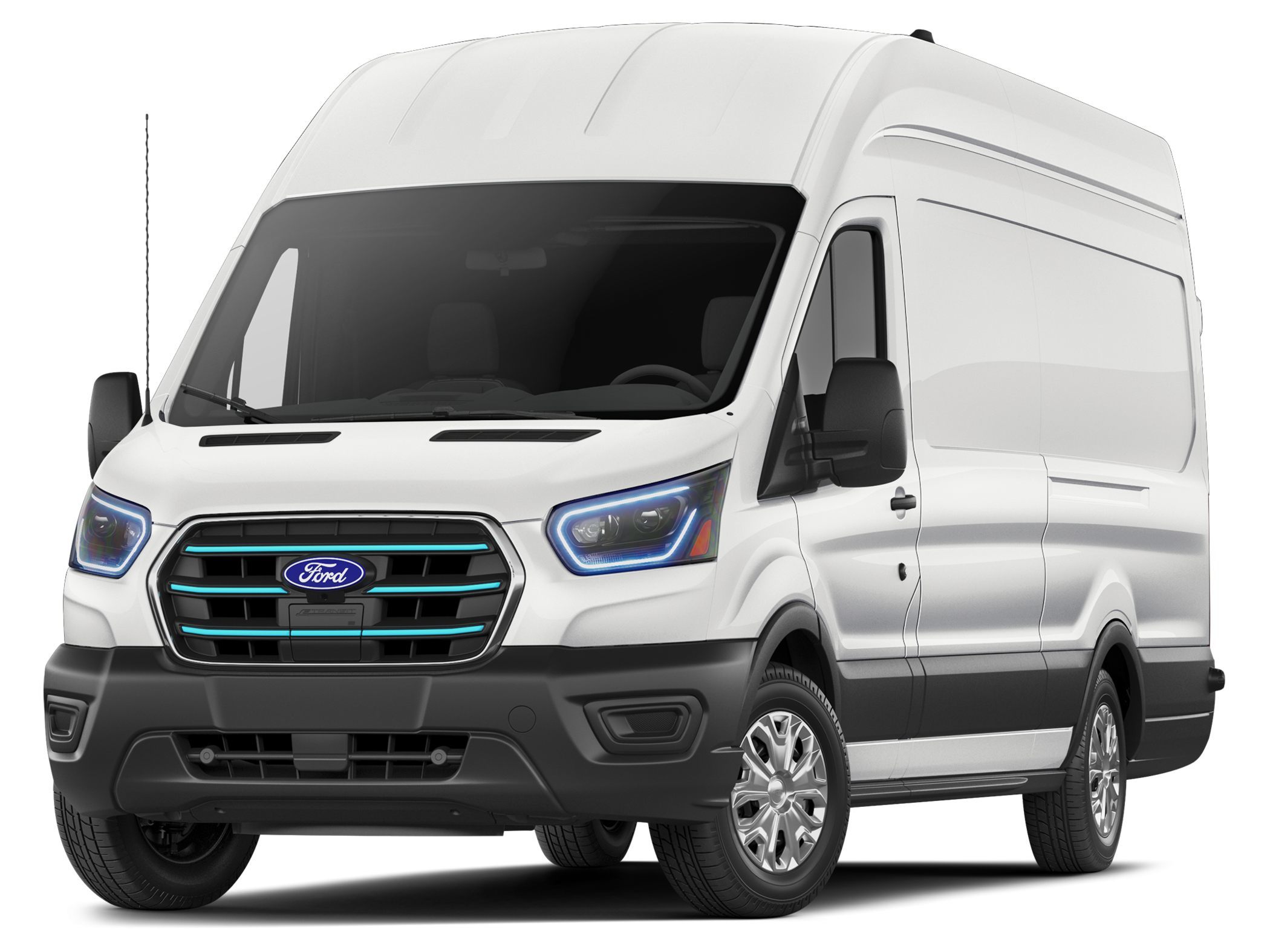
Ford E-Transit Cargo Van

Importing a used Ford E-Transit Cargo Van from the USA

The Ford E-Transit is the all-electric version of the world's best-selling van line, and it is built in the United States — at Ford's Kansas City Assembly Plant in Missouri. For a European operator eyeing a used electric commercial vehicle, a US E-Transit can be an interesting proposition, especially given its American origin. USCar Trader works strictly as an independent broker for used vehicles, takes no margin on the van itself, and states all customs and taxes clearly. This page explains the E-Transit's specification, its real-world strengths and limits, and exactly how the import into Germany works.

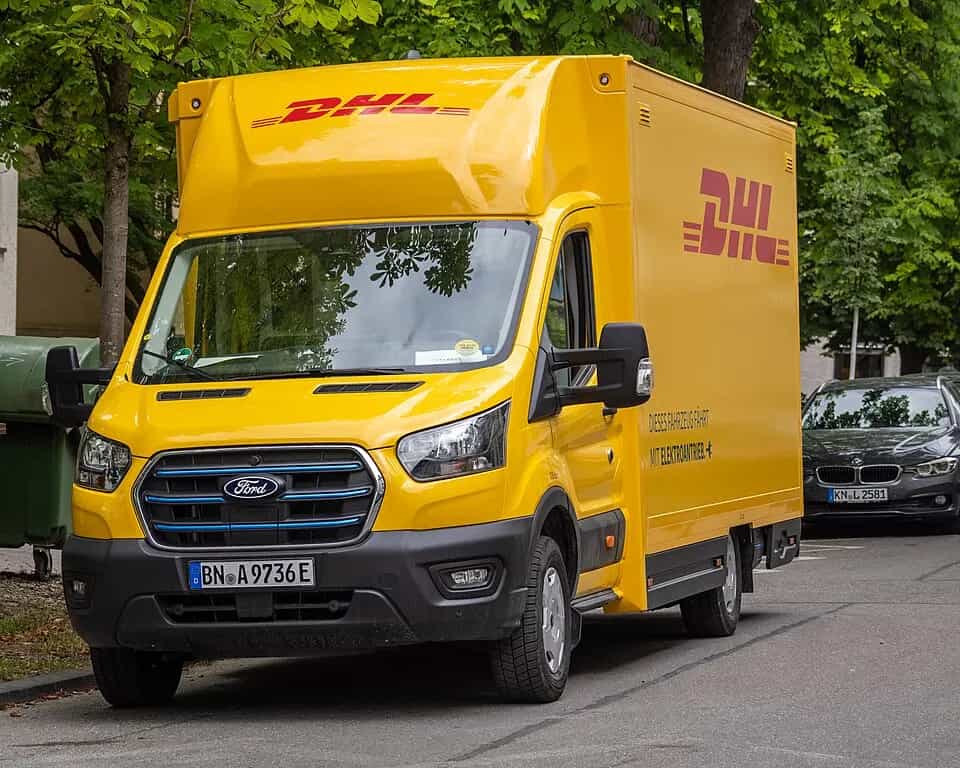
Ford e-transit-cargo-van – used car imported from the USA
Photo: JoachimKohler-HB · CC BY-SA 4.0 · Wikimedia Commons

Model history: years and generations

The E-Transit entered production for the 2022 model year, arriving alongside the long-established diesel and petrol Transit rather than replacing it. It shares the fourth-generation Transit's body and cargo dimensions, so the load area, door apertures and upfit compatibility mirror the combustion van that fleets already know. Ford has updated the battery and charging specification through the model's life, but the core proposition — a familiar full-size van with an electric drivetrain — has stayed consistent.

Engines, transmissions and drive

In place of an engine, the E-Transit uses a single rear-mounted electric motor driving the rear wheels, rated at roughly 266 hp and 317 lb-ft (430 Nm) of torque — strong low-speed pull that suits stop-start delivery work. Energy comes from a battery of around 67 kWh usable capacity. US EPA range depends on roof height and load, with the low-roof cargo van rated around 126 miles (about 200 km). The van accepts AC charging and DC fast charging up to roughly 115 kW, giving a meaningful mid-shift top-up. Rear-wheel drive and a low, flat load floor aid both traction when laden and everyday practicality.

Equipment lines and body styles

The E-Transit mirrors the Transit range with three roof heights (low, medium, high) and multiple body lengths, sold predominantly as a panel/cargo van, with chassis-cab and cutaway options for upfitters. US grades run from a base cargo specification up to better-equipped versions with driver assistance and Ford's larger touchscreen infotainment. Because these are working vehicles, used examples vary widely in fit-out — from bare cargo bays to shelved, racked delivery configurations.

The US used market

Many US E-Transits entered large delivery and utility fleets, so used supply is growing as those fleets cycle their vehicles. Typical cars are 2022–2024 examples, often with moderate mileage but intensive urban duty cycles, so battery condition and charging history matter as much as the odometer. Fleet vans may show cosmetic wear in the load bay; owner-operator vans tend to be tidier. Southern and western states again yield the least corroded bodies.

Is an import right for you?

The E-Transit suits a business or tradesperson running predictable urban and regional routes within its range, with depot or on-site charging. It is ideal where a familiar Transit body and upfit ecosystem is valued, and where zero local emissions help with low-emission-zone access. It is not the tool for long-haul, high-daily-mileage work; for that, a diesel Transit remains more suitable. Match the roof height and length to your load, and the E-Transit is a quiet, low-running-cost workhorse.

Specs at a glance

SpecificationDetail (typical US E-Transit cargo)
Body styleFull-size electric cargo van
Production from2022 (model year)
Assembly plantKansas City, Missouri, USA
DrivetrainSingle rear motor, rear-wheel drive
Motor outputapprox. 266 hp / 430 Nm
Usable batteryapprox. 67 kWh
EPA range (low roof)approx. 126 mi / 200 km
DC fast chargingup to approx. 115 kW
AC chargingup to approx. 11 kW onboard
Roof heightsLow, medium, high
Max payloadup to approx. 1,700 kg (config-dependent)
Cargo volumeup to approx. 15.1 m3 (high roof, extended)
Charge portCCS1 (US) — adapter/assessment for EU
Top speedlimited, approx. 130 km/h
EmissionsZero local emissions

Common issues buyers should know

The E-Transit benefits from a mature Transit body and a relatively simple EV drivetrain, so wear items are few. Reported issues cluster around software and 12V-battery behaviour, occasional charging-session faults with certain chargers, and the usual commercial-vehicle wear in the load bay, door seals and suspension on heavily worked fleet vans. Battery health is the key variable: check the state-of-health readout and charging history, since intensive DC fast charging and constant full loads accelerate degradation. Brakes often last well thanks to regenerative braking. As with any E-Transit reliability assessment, a used example's duty cycle tells you more than its age.

Differences from the European version

The most important difference is charging: US vans use the CCS1 connector, whereas Europe uses CCS2, so DC fast charging requires a suitable adapter or assessment, and AC charging must be matched to European infrastructure. US vans also run mph instrumentation, US lighting without a rear fog lamp, and North American telematics. The body and load dimensions align closely with the European Transit, easing upfit and parts supply.

Import step by step

Select a suitable van, run a VIN and origin check to confirm the Kansas City build, pay via escrow, move the vehicle to a US port, ship by ocean freight to a North European port, clear customs, complete technical inspection and individual approval (TÜV / §21 Einzelabnahme) including EV-specific checks, and register commercially. High-voltage systems require careful, compliant handling, which we coordinate.

Customs and taxes: what applies

In short: the 0% duty rate applies only with documented US origin (VIN/plant) – German import VAT of 19% is always due.

Two separate charges apply and we never bury a margin inside them. First, the import duty, whose rate depends on provable origin. Because the E-Transit is built in Missouri, a US-built van with VIN/plant evidence and direct transport may qualify for the 0% preferential rate under Regulations (EU) 2026/1455 and 2026/1461 within the scheme's window — but this is never automatic or guaranteed and must be documented; otherwise the applicable commercial-vehicle duty applies. Second, and in every case, the 19% German import VAT (Einfuhrumsatzsteuer) is charged on the customs value plus any duty and freight; VAT-registered businesses can usually reclaim it through the normal process. Both lines are itemised before you commit.

Modifications and single-vehicle approval

Approval work typically includes adding a rear fog lamp, headlight conformity, converting the speedometer to km/h, documenting the odometer, and providing high-voltage system and charging documentation. The charging interface should be assessed for European compatibility as part of the process.

What to verify before buying

  • Verify the VIN and confirm Kansas City build and model year.
  • Obtain a full Carfax or AutoCheck history — accidents, title, mileage.
  • Check the battery state-of-health and DC-fast-charging history.
  • Inspect the load bay, door seals and suspension for fleet wear.
  • Confirm roof height and length suit your intended load.
  • Assess charge-port type and plan for CCS2 compatibility.
  • Ensure a clean title status (not salvage) unless intentionally chosen.

Common questions

Is the Ford E-Transit built in the USA?

Yes. It is produced at Ford's Kansas City Assembly Plant in Missouri, so US vans are American-built.

Can a US E-Transit qualify for 0% EU import duty?

Potentially, because it is US-built. The 0% preferential rate needs provable US origin via VIN/plant, direct transport and the scheme's conditions; it is never guaranteed. The 19% import VAT always applies.

Can I charge a US E-Transit in Germany?

With adaptation. US vans use the CCS1 connector, so DC fast charging requires a suitable adapter or assessment, and AC charging must be matched to European infrastructure.

What real-world range should I expect?

The low-roof cargo van is EPA-rated around 126 miles (about 200 km); real figures depend on load, roof height, weather and route.

Is the E-Transit reliable?

The Transit body and EV drivetrain are proven; the main variable is battery health, which depends on the van's duty cycle and charging history.

Can a business reclaim the import VAT?

VAT-registered businesses can usually reclaim the 19% import VAT through the normal procedure; the duty is separate.

How long does the import take?

Typically several weeks, driven by ocean freight and the inspection appointment.

To get started, browse Ford in the Carhub, compare related models such as the Ford Transit Van, the Ford F-150 Lightning and the RAM ProMaster Cargo Van, or view current E-Transit listings.