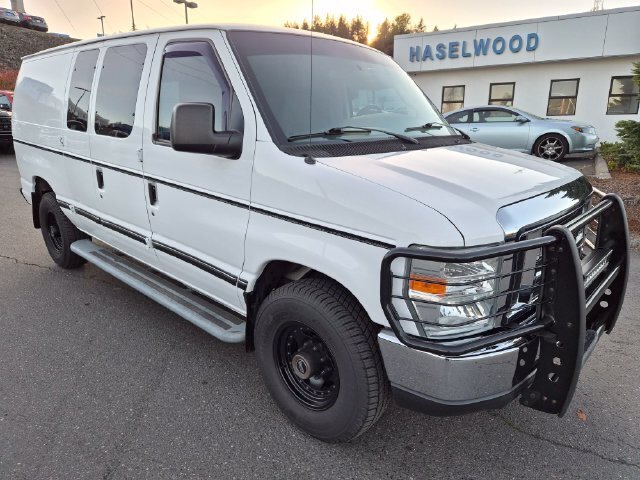
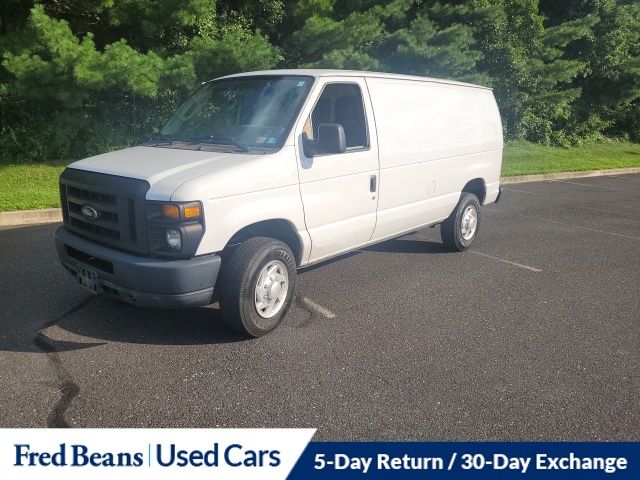
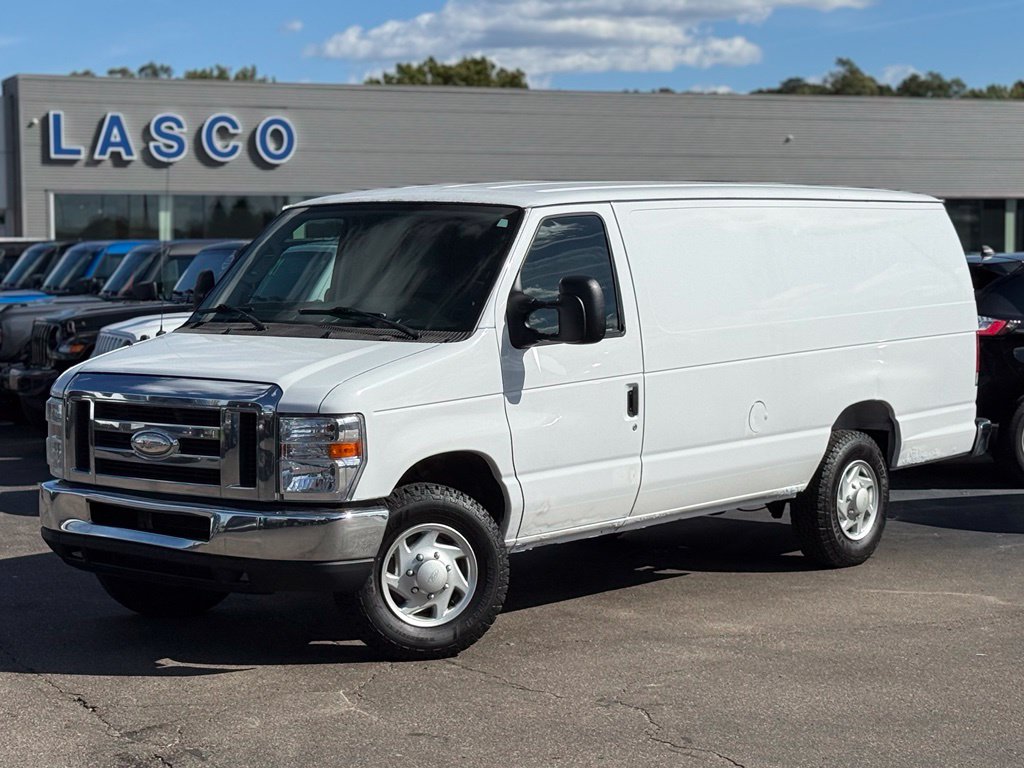
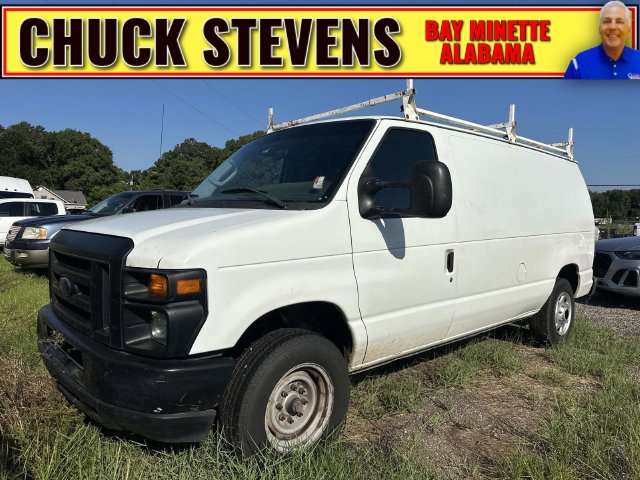
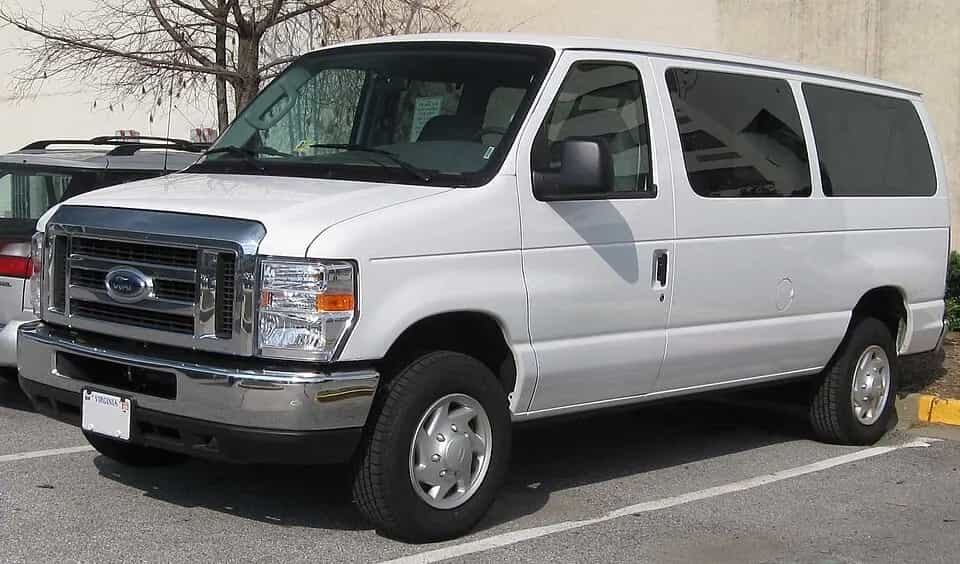
Ford E-Series Econoline Van

USCar Trader import service

Import this model from the USA or Canada

Choose a specific vehicle. Where data is available, its detail page shows the import cost calculation. We assess any possible duty benefit with you before purchase.

Important: A 0% EU import-duty rate may be available for a vehicle covered by Regulation (EU) 2026/1455 that has US origin and is imported directly into the EU. CETA may apply to a vehicle with preferential Canadian origin. Whether the requirements are met is assessed for the individual case. Please contact us before purchase; we review the possible duty benefit and provide non-binding support through the process. Import VAT and other costs are assessed separately.

CarHub · Ford

Ford E-Series Econoline Van

Few vehicles are as thoroughly American as the Ford E-Series, the full-size van most people still call by its original name, Econoline.

Body styles
Typical value (fourth-gen E-Series): Cargo van, Club Wagon passenger, cutaway/chassis cab
Layout
Typical value (fourth-gen E-Series): Front engine, rear-wheel drive
Trims/classes
Typical value (fourth-gen E-Series): E-150, E-250, E-350, E-450
Petrol engines
Typical value (fourth-gen E-Series): 4.6 L Triton V8, 5.4 L Triton V8, 6.8 L Triton V10
Ford E-Series Econoline Van

Model profile

Model history and generations

Model history and generations

The Econoline launched in 1961 as a compact, cab-over van, but the vehicle relevant to importers is the fourth generation introduced for 1992 and built with steady updates until 2014. This is the familiar big van on a proper ladder frame, sold as E-150, E-250, E-350 and, in heavier chassis form, E-450.

Powertrain and equipment

Engines, drivetrain and trims

Engines and drivetrain

Nearly every imported example is rear-wheel drive with a longitudinal V8 or V10. The mainstream units are the 4.6-liter and 5.4-liter Triton V8s, with the 6.8-liter Triton V10 reserved for E-350/E-450 heavy haulers and motorhome chassis.

Which trim makes sense

The range splits into cargo vans (empty load bay), the Club Wagon passenger version with up to 15 seats, and cutaway/chassis-cab variants that underpin ambulances, shuttles and Class C motorhomes. You will also find countless aftermarket conversions: high-top campers, wheelchair-accessible builds and mobile workshops.

Vehicle selection

North American market and suitability

Supply on the US market

Supply is excellent. Fleet-operated Econolines turn over constantly, and dry-state examples from the Southwest routinely survive with clean underbodies.

Who benefits from importing

An E-Series suits camper and overland builders who want a durable, easily serviced platform, businesses needing an authentically American shuttle or event vehicle, and enthusiasts drawn to the classic full-size van format that Europe never sold.

Vehicle data

Technical data by generation and specification

Body and dimensions

Body stylesTypical value (fourth-gen E-Series): Cargo van, Club Wagon passenger, cutaway/chassis cab
Trims/classesTypical value (fourth-gen E-Series): E-150, E-250, E-350, E-450
Seating (Club Wagon)Typical value (fourth-gen E-Series): Up to 15
WheelbaseTypical value (fourth-gen E-Series): Regular and extended (Super) lengths
GVWR classTypical value (fourth-gen E-Series): E-150 light-duty to E-450 heavy-duty

Engine and drivetrain

LayoutTypical value (fourth-gen E-Series): Front engine, rear-wheel drive
Petrol enginesTypical value (fourth-gen E-Series): 4.6 L Triton V8, 5.4 L Triton V8, 6.8 L Triton V10
Diesel enginesTypical value (fourth-gen E-Series): 7.3 L Power Stroke V8, later 6.0 L Power Stroke V8
Power (typical)Typical value (fourth-gen E-Series): ~225–305 hp petrol; ~235 hp diesel
TransmissionTypical value (fourth-gen E-Series): 4R70W / 4R100 4-speed; 5R110W TorqShift 5-speed auto
Fuel tankTypical value (fourth-gen E-Series): Approx. 132–190 liters depending on config
Fuel typeTypical value (fourth-gen E-Series): Petrol or diesel

Model and other data

Production (van)Typical value (fourth-gen E-Series): Fourth generation 1992–2014
OriginThe assessment depends on the specific vehicle and the circumstances of the transaction. Please contact USCar Trader before purchase; we review any possible duty benefit and provide non-binding support. Import VAT and other costs are considered separately.

Values are reproduced verbatim from the existing article table. The documents for the specific vehicle govern.

Pre-purchase review

Model-specific inspection points

Known weak points and maintenance

The E-Series is fundamentally durable, but the two-valve Triton engines have well-known weak points. The 5.4 and 6.8 are notorious for spark-plug blow-out, where the plug threads strip out of the aluminum head; a thread repair insert is the standard fix. Exhaust manifold studs corrode and snap, causing a ticking exhaust leak.

Germany and Europe

Differences, adaptation and registration

US and EU spec compared

The Econoline was never officially sold in Europe, so every example is a genuine US-spec vehicle.

TÜV, modifications and registration

Typical changes for approval include converting the rear lighting to include a rear fog lamp and EU-legal indicators, verifying headlight beam pattern, and confirming the odometer reads correctly (a km conversion or documentation is expected).

USCar Trader services

Inspection, purchase processing and escrow

As a buyer based in Germany, you do not have to inspect the vehicle yourself in the United States or Canada. Within the agreed scope, USCar Trader can coordinate document review, a separately commissioned on-site inspection and purchase processing.

  • Vehicle profile and history: The profile can show the VIN, US title status and available history records. No data source guarantees that every earlier event was reported.
  • Optional CARFAX report: Additional reported maintenance or service entries can be included. The report is not a complete service book or proof of every interval.
  • On-site inspection / USCT AutoCheck: USCar Trader can arrange a separately booked vehicle inspection. Agreed visible and accessible areas are documented. Road or functional tests require suitable access and seller approval; the visual review is not a lift inspection or workshop diagnosis.
  • Purchase processing and escrow: After approval, USCar Trader can coordinate seller contact, negotiation, contract and the escrow and import service. Fees, payment route and responsibilities are recorded in advance.
  • Recalls: Open safety recalls can be checked by VIN through the NHTSA recall search; they do not describe overall condition.

Covered inspection points are agreed in advance. An on-site inspection records condition at the appointment and is not a guarantee.

Next step: Before commissioning, USCar Trader and the customer agree which document, history, inspection and transaction checks suit the vehicle and are included in the service. This records what was actually checked.

Import process

Import, customs, costs and delivery

The import process in detail

The assessment depends on the specific vehicle and the circumstances of the transaction. Please contact USCar Trader before purchase; we review any possible duty benefit and provide non-binding support. Import VAT and other costs are considered separately.

Questions and answers

Common questions about importing this model

Can I import a used Ford Econoline into Germany?

Yes. As a used US vehicle it is eligible for import and individual approval; the main hurdles are lighting, weight class and paperwork, all of which are routine.

Which engine should I look for?

The 5.4 Triton V8 is the most common and best-supported petrol unit; the 7.3 Power Stroke diesel is the enthusiast pick for durability.

Is the 15-passenger Club Wagon a problem to register?

It can raise weight-class and licence questions in Germany, so confirm the permissible gross mass and your driving entitlement before purchase.

Does this vehicle automatically qualify for a 0% import-duty rate?

No, not automatically. A 0% EU import-duty rate may be available for a vehicle covered by Regulation (EU) 2026/1455 that has US origin and is imported directly into the EU. CETA may apply to a vehicle with preferential Canadian origin. Whether the requirements are met is assessed for the individual case. Please contact USCar Trader before purchase; we review the possible duty benefit and provide non-binding support. Import VAT and other costs are assessed separately.

How is it shipped from the USA?

Usually by RoRo or container from a US port. USCar Trader coordinates escrow, freight and clearance as your broker.

Are parts available in Europe?

Wear and service parts are widely available and inexpensive thanks to the van's huge US production run; some trim items may need US ordering.

What mileage is acceptable?

These are commercial vehicles, so high mileage with good documentation is normal and often preferable to a neglected low-mileage van.

How can a specific Ford E-Series Econoline Van be checked from Germany?

Available VIN, title and history information can be reviewed in the vehicle profile. USCar Trader can also arrange a separately booked on-site inspection within a scope agreed in advance.

More vehicles