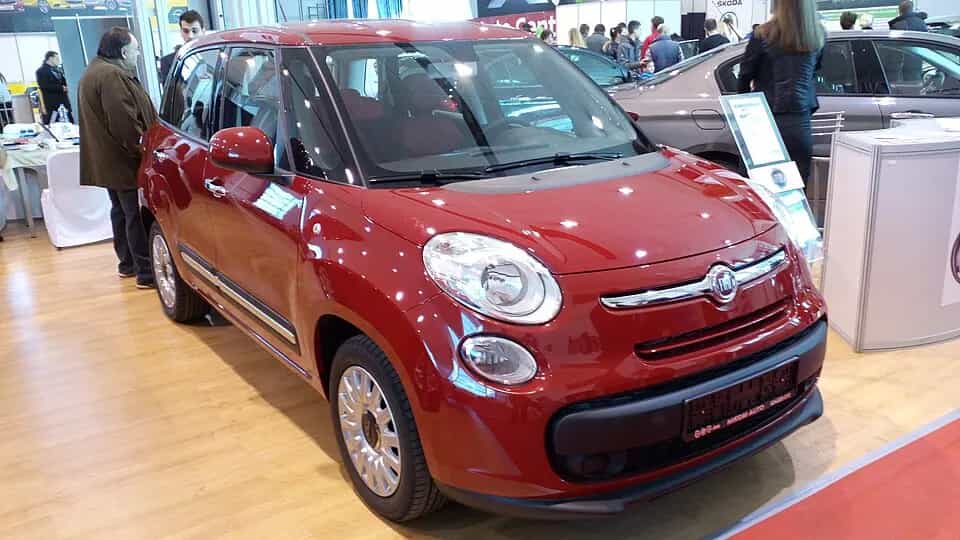
Fiat 500L

Importing a used FIAT 500L from the USA

The FIAT 500L is the tall, five-door member of the 500 family, and it was sold in North America from the 2014 model year onward as FIAT's attempt to give the Cinquecento a practical, family-friendly body. If you want to import a used FIAT 500L from the USA, you are looking at a car that shares its name and styling cues with the small 500 but is really a different vehicle underneath — longer, taller, and built on a stretched version of the Small Wide platform that also underpinned the Jeep Renegade and 500X. For a German buyer the appeal is a well-equipped, comfortably specified compact with the turbocharged MultiAir engine as standard, often at attractive US mileage and with clean interiors.

Fiat 500L – used car imported from the USA
Photo: KGC626 · CC BY-SA 4.0 · Wikimedia Commons

From launch to today

The 500L reached the US market for 2014 and remained on sale through roughly the 2020 model year, so the used pool is a single generation with one meaningful update. Cars from 2014 to 2017 wear the original front end with the split headlamp treatment. FIAT gave the 500L a facelift for the 2018 model year, bringing a redesigned nose, a cleaner dashboard, a larger Uconnect touchscreen and revised trim names. Because the North American 500L was assembled in Kragujevac, Serbia, its country of build is European rather than American — something that matters for customs classification and is covered below.

Engines and drivetrain in detail

Every US-market 500L used the same powertrain: the 1.4-litre MultiAir Turbo inline-four, rated at 160 horsepower and around 184 lb-ft (roughly 250 Nm) of torque. Early cars offered a six-speed manual or a six-speed twin dry-clutch automatic; the dual-clutch unit drew the most owner complaints, and from the 2015 model year onward FIAT moved to a conventional six-speed Aisin torque-converter automatic, which is the smoother and more durable choice on the used market. All 500L models are front-wheel drive — there was no all-wheel-drive option in North America. When you shop, note which transmission a specific VIN carries; it is the single biggest driveability differentiator between two otherwise similar cars.

Trim levels and variants

The 500L is a single five-door MPV-style hatch, but trim variety was broad. Pre-facelift cars came as Pop, Easy, Trekking and Lounge; the Trekking added rugged-look bumpers and roof rails without any real off-road hardware. After the 2018 update FIAT simplified the range around Pop and the better-equipped Trekking and Lounge/Urbana trims. Higher trims bring the panoramic glass roof, larger alloys, dual-zone climate, heated leather and the bigger Uconnect infotainment with reversing camera — all worth having on an import because retrofitting is rarely worth the effort.

Used availability in the USA

The 500L sold in modest numbers in America, so it is not a car you will find on every corner, but clean, low-mileage examples do surface regularly through US auctions and independent dealers, particularly in sunbelt states where corrosion is minimal. Typical import candidates run from 2015 to 2019 with mileage in the 40,000 to 90,000 mile range. Southern and south-western cars tend to be rust-free, which is a genuine advantage over comparable European stock. As always with a used import there are no Euro prices quoted here — condition, history and transmission type drive value far more than the model year alone.

When importing makes sense

A used FIAT 500L makes sense for a buyer who wants the character of the 500 range but needs proper rear-seat room and a large, flat load area. It suits city and suburban use, small families and anyone who values the high seating position and big glasshouse. It is not a performance car and not an all-weather workhorse — front-wheel drive and a small turbo four define its remit. If those priorities fit, a carefully selected US example with a documented history and the Aisin automatic is a sensible, distinctive import.

Facts and figures

SpecificationFIAT 500L (US market)
Body style5-door compact MPV / tall hatch
GenerationType 330, 2014–2020 (facelift 2018)
Engine1.4 L MultiAir Turbo inline-4 (petrol)
Powerapprox. 160 hp (118 kW)
Torqueapprox. 184 lb-ft (250 Nm)
Transmission6-speed manual / 6-speed dual-clutch (early) / 6-speed Aisin automatic
DrivetrainFront-wheel drive
Lengthapprox. 4,240 mm
Widthapprox. 1,780 mm
Seating5
FuelPetrol
Country of buildKragujevac, Serbia
0–100 km/happrox. 9.5 s
InfotainmentUconnect 5"/7" touchscreen

Reliability and common problems

The 500L's reputation is mixed, and honesty helps you buy well. The most cited weakness is the early twin dry-clutch automatic, which can shudder, hesitate and wear prematurely; a car with the later Aisin torque-converter gearbox avoids that entirely. The 1.4 MultiAir engine is generally sound but is sensitive to oil condition — the MultiAir hydraulic actuator unit dislikes neglected oil changes, so a documented service record is essential. Owners also report failures of the power window regulators, the occasional Uconnect glitch, and turbo-related codes on higher-mileage cars. None of these are unusual for the class, but they reward a thorough pre-purchase inspection and a look at how the previous owner maintained the car.

How US versions differ

US-market 500L cars run amber side markers, headlamps aimed for right-hand traffic, and a speedometer reading primarily in mph. The infotainment is a US Uconnect build with US navigation mapping, and the daytime running light and rear fog lamp configuration differs from EU requirements. Mechanically the car is close to its European sibling, which simplifies parts supply, but the lighting and instrumentation are the items that need attention for German type approval.

From US purchase to registration

The process runs in a clear sequence: you select a specific car; we verify the VIN and confirm the documented country of build and history; funds are held in escrow until the vehicle is confirmed; the car is booked onto ocean freight to a North European port such as Bremerhaven; it clears EU customs on arrival; it is then presented for TÜV inspection and, where needed, individual approval (Einzelabnahme) under §21 StVZO; finally it is registered with your local authority. USCar Trader acts purely as an independent broker throughout — we arrange and coordinate, we do not sell the car with a hidden margin.

Costs, duty and taxes at a glance

In short: the 0% duty rate applies only with documented US origin (VIN/plant) – German import VAT of 19% is always due.

Two separate charges apply on import. First, customs duty: the reduced 0% EU rate applies only where US origin is provably documented via the VIN and plant of manufacture under Regulations (EU) 2026/1455 and 2026/1461 (in force since 1 July 2026, direct transport, valid to 31 December 2029). Because the 500L is built in Serbia rather than the USA, it will normally not qualify for the US-origin preference, so the standard EU passenger-car customs rate applies — the exact figure follows from the documented origin. Second, and always: the German import VAT (Einfuhrumsatzsteuer) of 19% is levied on the customs value plus duty and freight. This VAT applies to every import without exception. We never describe any car as duty-free or guaranteed.

TÜV, approval and license plates

Typical work for German approval includes converting or adjusting the headlamps for right-hand traffic, fitting a compliant rear fog lamp, confirming the side marker arrangement, and having the odometer reading recorded and, if in miles, documented for the vehicle papers. Once the inspector issues the report, the car receives its German registration and you can insure and drive it normally.

Pre-purchase checklist

Before committing to any US 500L, work through these points: confirm the VIN and match it to the title; pull a full Carfax or AutoCheck history for accident, title and odometer records; establish which transmission the car has; inspect for underbody corrosion despite a southern location; verify the oil-change history because of the MultiAir system; check the title is clean and not salvage or rebuilt; and confirm the Uconnect and electrical systems all function.

Import FAQ

Is the FIAT 500L reliable enough to import?

Yes, provided you choose a well-maintained car with the Aisin automatic or the manual and a documented oil-change record. The early dual-clutch cars are the ones to approach with caution.

Does a used 500L qualify for 0% EU import duty?

Usually not, because it is built in Serbia rather than the USA. The 0% preference requires provable US origin via the VIN. For the 500L the standard passenger-car rate normally applies, plus 19% import VAT.

Which engine does the US 500L use?

All US cars use the 1.4-litre MultiAir Turbo four with around 160 hp. There was no diesel or naturally aspirated option in North America.

Is the 500L front- or all-wheel drive?

Front-wheel drive only. The Trekking trim looks rugged but has no all-wheel-drive hardware.

Are parts hard to get in Germany?

No. The 500L shares its engine and much of its platform with European FIAT models, so service parts are widely available.

How long does the import take?

From purchase to German registration typically a couple of months, driven mainly by ocean freight scheduling and the TÜV/approval step.

Do I pay VAT even on a used car?

Yes. The 19% German import VAT applies to every used vehicle imported from the USA and is calculated on the customs value plus duty and freight.

Can you import the pre-facelift or facelift version?

Both are available on the US used market. The 2018-onward facelift brings the newer dashboard and larger touchscreen.

Ready to look at cars? Browse FIAT in the Carhub, compare the smaller 500 or the crossover 500X, and see the current 500L listings we can source from the USA.