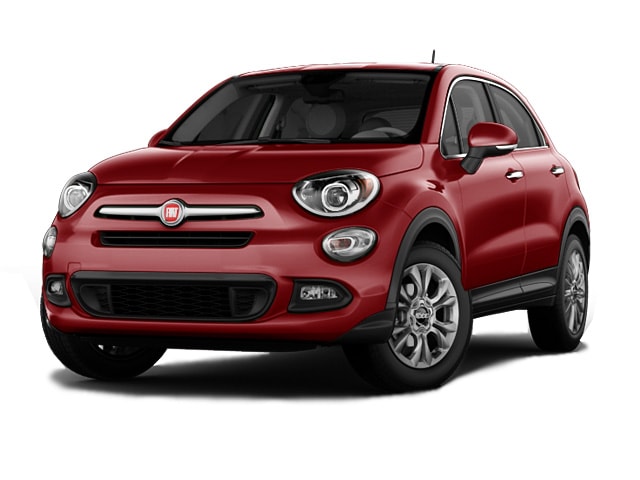

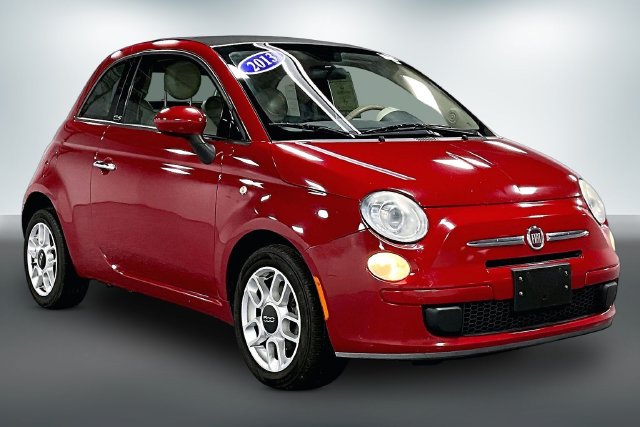

Importing a used FIAT 500 from the USA
The 500 is small and simple, but the US range spanned everything from a frugal petrol city car to a hot Abarth and an early electric 500e, so identifying the exact variant matters.
 0049 (0)89 2000 791 00
 Mo - Fr 8:00am - 8:00pm
USCar Trader import service
Choose a specific vehicle. Where data is available, its detail page shows the import cost calculation. We assess any possible duty benefit with you before purchase.
Important: A 0% EU import-duty rate may be available for a vehicle covered by Regulation (EU) 2026/1455 that has US origin and is imported directly into the EU. CETA may apply to a vehicle with preferential Canadian origin. Whether the requirements are met is assessed for the individual case. Please contact us before purchase; we review the possible duty benefit and provide non-binding support through the process. Import VAT and other costs are assessed separately.
CarHub · Fiat
The FIAT 500 is a familiar face in Europe, but the North American version is a subtly different animal, and that is what makes a US import interesting.
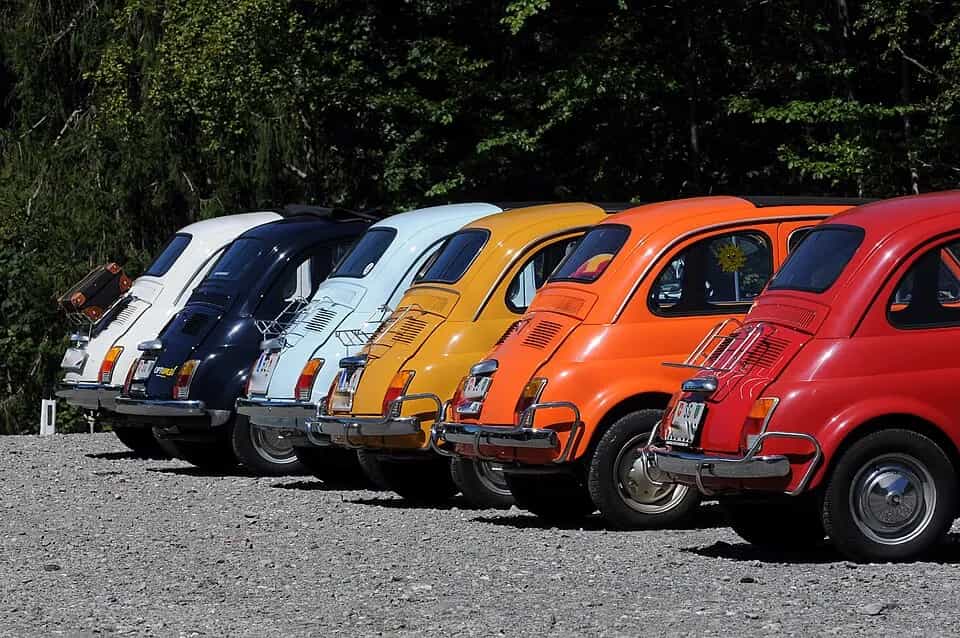
Model profile
The 500 is small and simple, but the US range spanned everything from a frugal petrol city car to a hot Abarth and an early electric 500e, so identifying the exact variant matters.
The modern 500 (type 312) launched in Europe in 2007 and reached the US for the 2012 model year.
Powertrain and equipment
The mainstream US 500 used a 1.4-litre MultiAir four-cylinder producing around 101 hp, driving the front wheels through a five-speed manual or a six-speed automatic.
US body styles were the three-door hatch and the 500c cabrio. Trims typically included Pop, Sport, Lounge and the performance Abarth, with the 500e as a distinct electric model. Higher trims added alloy wheels, upgraded audio, automatic climate control and leather.
Vehicle selection
US 500s are widely available, often as second cars, city runabouts or lease returns. Typical import candidates are eight to fourteen years old with a broad mileage spread.
A used FIAT 500 from the US suits the buyer who wants a specific US-spec variant, a rare colour or trim, an Abarth with the North American package, or an early 500e as a curiosity.
Vehicle data
| Body styles | Detail (US-market FIAT 500): 3-door hatch, 500c cabrio |
|---|---|
| Kerb weight | Detail (US-market FIAT 500): approx. 1,000-1,100 kg |
| Length | Detail (US-market FIAT 500): approx. 3,547 mm |
| Wheelbase | Detail (US-market FIAT 500): approx. 2,300 mm |
| Seating | Detail (US-market FIAT 500): 4 |
| Base engine | Detail (US-market FIAT 500): 1.4 L MultiAir I4 petrol |
|---|---|
| Base power | Detail (US-market FIAT 500): approx. 101 hp |
| Abarth engine | Detail (US-market FIAT 500): 1.4 L turbo, approx. 135-160 hp |
| 500e | Detail (US-market FIAT 500): Electric, approx. 84 hp |
| Transmission | Detail (US-market FIAT 500): 5-speed manual / 6-speed auto |
| Drivetrain | Detail (US-market FIAT 500): Front-wheel drive |
| Fuel tank | Detail (US-market FIAT 500): approx. 40 L |
| Fuel | Detail (US-market FIAT 500): Petrol or electric (500e) |
| 0-100 km/h (1.4) | Detail (US-market FIAT 500): approx. 9-10 s |
|---|
Values are reproduced verbatim from the existing article table. The documents for the specific vehicle govern.
Pre-purchase review
FIAT 500 reliability is a mixed picture and worth honest scrutiny. The 1.4 MultiAir engine relies on its MultiAir hydraulic valve unit, which can fail and is a known FIAT 500 problem, alongside occasional oil consumption. Electrical gremlins, window regulator failures and clutch wear on manuals also feature in owner reports. The dual-clutch and torque-converter automatics vary in longevity, so service proof matters.
Germany and Europe
US 500s differ from European cars in bumpers, lighting, badging, mph instrumentation and North American infotainment.
The assessment depends on the specific vehicle and the circumstances of the transaction. Please contact USCar Trader before purchase; we review any possible duty benefit and provide non-binding support. Import VAT and other costs are considered separately.
Typical work includes adapting the lighting to European requirements, fitting a rear fog lamp, and documenting the odometer in kilometres.
USCar Trader services
As a buyer based in Germany, you do not have to inspect the vehicle yourself in the United States or Canada. Within the agreed scope, USCar Trader can coordinate document review, a separately commissioned on-site inspection and purchase processing.
Covered inspection points are agreed in advance. An on-site inspection records condition at the appointment and is not a guarantee.
Next step: Before commissioning, USCar Trader and the customer agree which document, history, inspection and transaction checks suit the vehicle and are included in the service. This records what was actually checked.
Import process
The import process for a Fiat 500 is planned around the specific listing, location, documents and commissioned service scope.
Questions and answers
Yes. US cars have unique bumpers, lighting, badging and trim packaging, plus mph instruments and US infotainment.
It is mixed. The MultiAir valve unit and some electrical items are known weak points, so service history is essential.
No, not automatically. A 0% EU import-duty rate may be available for a vehicle covered by Regulation (EU) 2026/1455 that has US origin and is imported directly into the EU. CETA may apply to a vehicle with preferential Canadian origin. Whether the requirements are met is assessed for the individual case. Please contact USCar Trader before purchase; we review the possible duty benefit and provide non-binding support. Import VAT and other costs are assessed separately.
Yes, and the US-spec Abarth is a popular import. Check the turbo, clutch and service history.
It can be imported, but confirm battery health and charging compatibility for European infrastructure first.
Most are eight to fourteen years old with varied mileage.
Yes, after lighting adaptation, a rear fog lamp and a standard individual approval.
Yes. Its tiny footprint and character make it well suited to urban use.
More vehicles