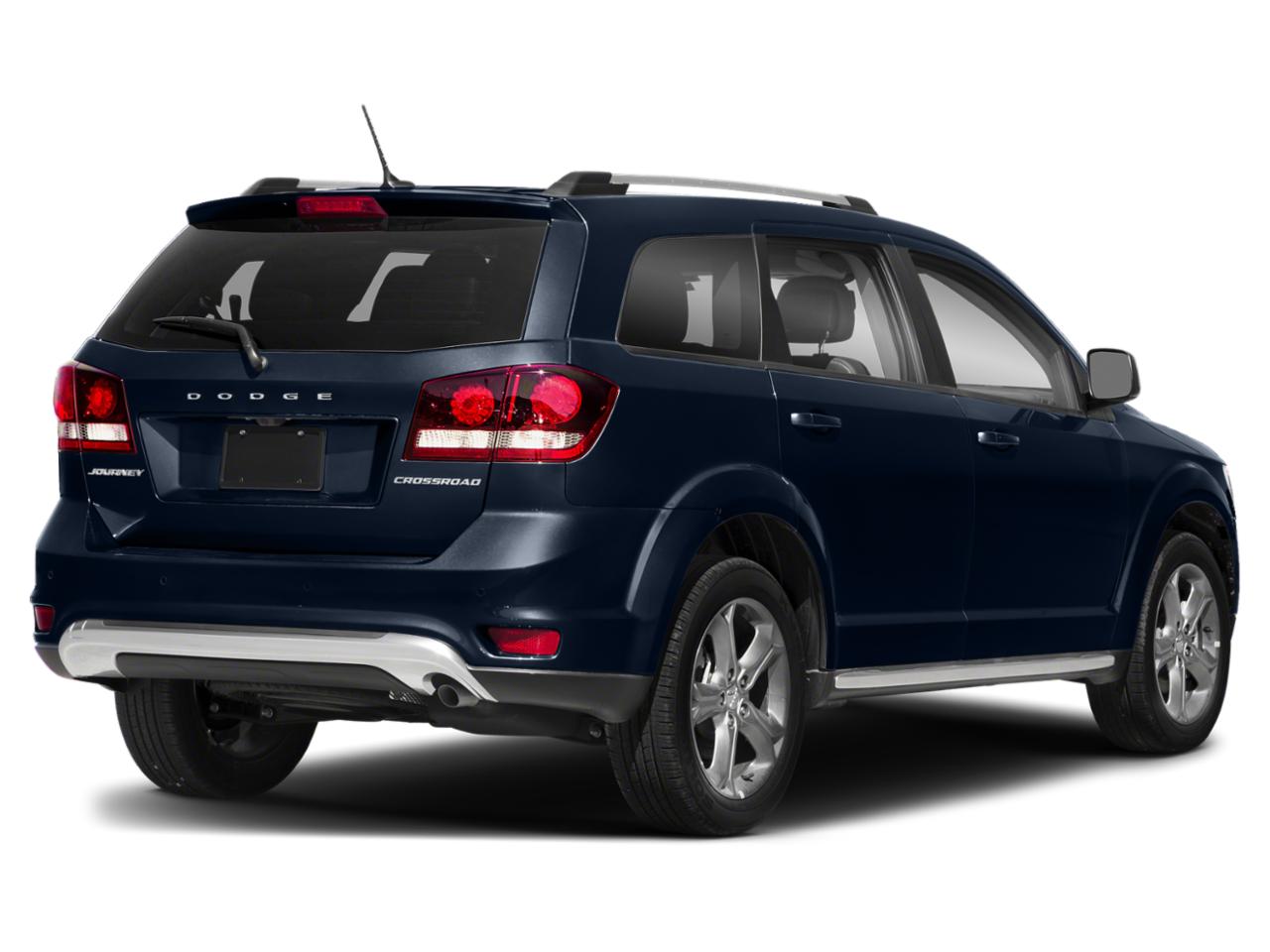
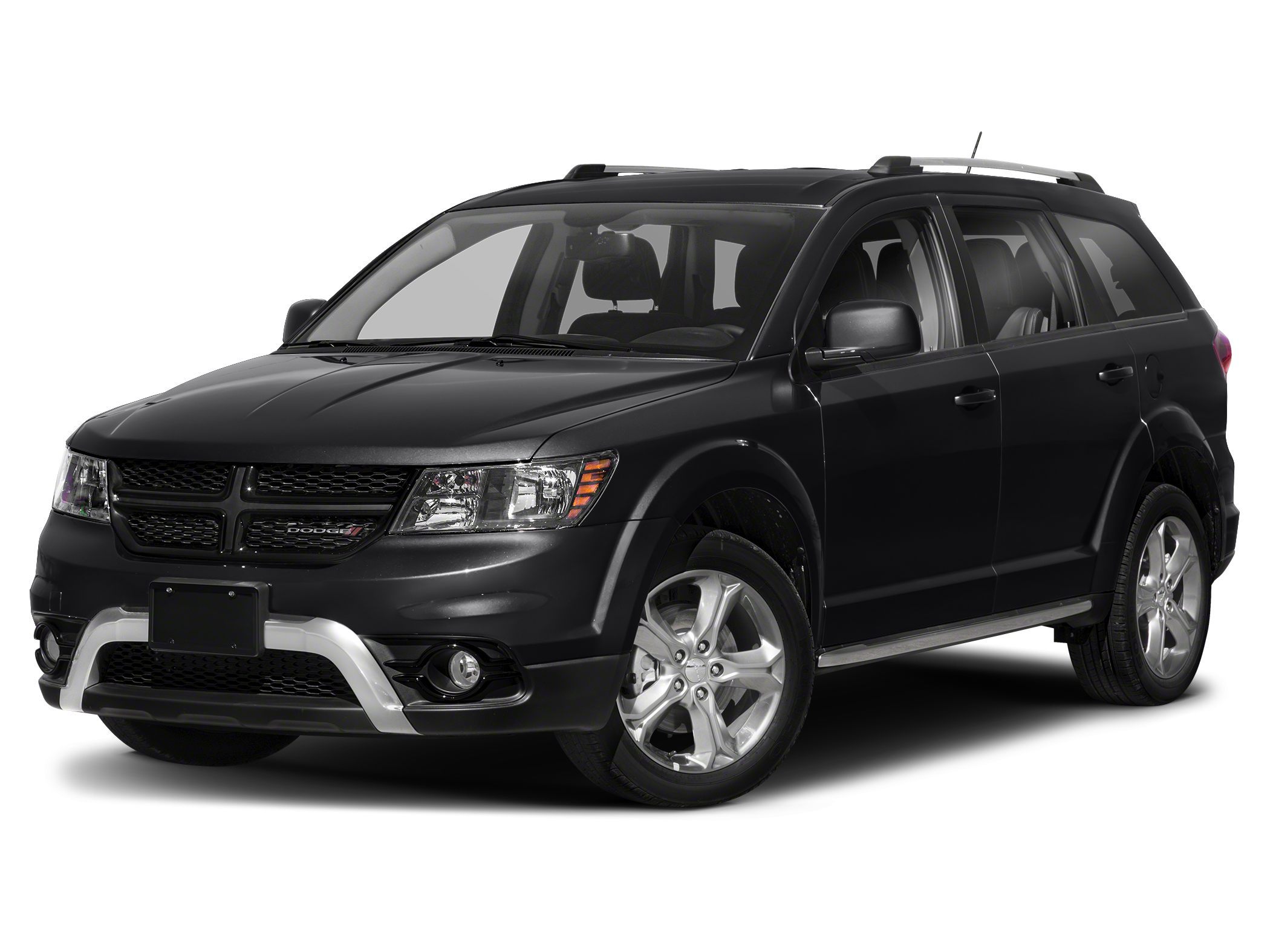
Dodge Journey

Importing a used Dodge Journey from the USA

The Dodge Journey is one of the most common seven-seat crossovers on American used lots, and that abundance is exactly why it turns up on the radar of European buyers. It was Dodge's practical family answer for more than a decade, sold in huge numbers, and it survives on the US market in every trim and condition you can imagine. If you want a roomy, affordable three-row hauler and you are willing to accept a somewhat dated design, importing a used Journey from the USA can make sense — provided you understand where it was built and how that affects your customs rate. USCar Trader handles the sourcing, inspection and shipping as an independent broker; we do not sell the car, we bring the one you choose to Germany.

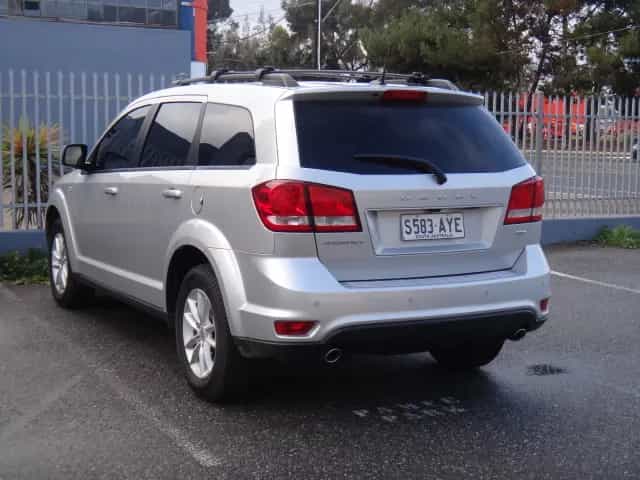
Dodge journey – used car imported from the USA
Photo: TuRbO_J from Adelaide, Australia · CC BY 2.0 · Wikimedia Commons

Model history and generations

Unlike most rivals, the Journey ran through a single long generation (chassis code JC) from the 2009 model year all the way to 2020, when US production wound down. It sat on the Chrysler JS platform shared with the Avenger and Sebring sedans. A significant refresh arrived for 2011: the interior was overhauled, the dashboard materials improved, and the drivetrain was modernised. Late cars were sold largely unchanged, so a 2016 and a 2019 Journey are mechanically near-identical. That long, stable run is good news for an importer — parts commonality is high and there are no complicated model-year traps to navigate.

Engines and drivetrain

Two engine families dominate the US used pool. The entry unit is the 2.4-litre World Gas Engine four-cylinder, rated around 173 hp and paired with a four-speed automatic — adequate in the city but strained by the Journey's weight, especially loaded. The one to look for is the 3.6-litre Pentastar V6 introduced for 2011, making roughly 283 hp and mated to a six-speed automatic. It transforms the car and is far better suited to a full cabin and a small trailer. Early pre-2011 V6 cars used the older 3.5-litre unit (235 hp). Front-wheel drive is standard; all-wheel drive was offered only with the V6.

Which trim makes sense

The Journey is a single five-door crossover body, offered as a five- or seven-seater. US trims ran from base SE and volume SXT through the rugged-look Crossroad and the sportier R/T, with a top Limited earlier on. Higher trims add the larger Uconnect touchscreen, three-zone climate, heated leather and the flip-and-fold third row. The clever in-floor storage bins behind the front seats are a genuine practical highlight and a talking point with families.

Supply on the US market

Availability is excellent. The Journey sold in very large volumes, so late-model examples with the Pentastar V6, moderate mileage and clean histories are easy to source across the country. Typical import candidates are 2014–2019 cars with 60,000 to 130,000 miles. Because it was a value model, many lived hard family lives — a proper history check matters more here than on a prestige car. Fleet and rental examples are common, which can mean higher but well-documented mileage.

Who benefits from importing

This is a car for the buyer who wants space and seats over badge and polish. If you need three rows, a big cargo hold and a proven V6 without paying for a premium SUV, the Journey delivers. It suits large families, ride-share operators and anyone who values the flexible interior. Note one important customs point up front: US-market Journeys were built in Toluca, Mexico, not the United States, so the 0% EU origin duty for genuine US-built vehicles generally does not apply — your rate depends on the actual plant recorded against the VIN, which we verify before you commit.

Technical data

AttributeTypical figure (2011+ 3.6 V6)
GenerationJC (2009–2020)
Body5-door crossover SUV, 5 or 7 seats
Petrol engines2.4 L I4; 3.5 L V6 (early); 3.6 L Pentastar V6
Power (3.6 V6)approx. 283 hp
Power (2.4 I4)approx. 173 hp
Transmission6-speed auto (V6); 4-speed auto (2.4)
DrivetrainFWD standard; AWD with V6
Lengthapprox. 4,890 mm
Widthapprox. 1,878 mm
Wheelbaseapprox. 2,890 mm
Kerb weightapprox. 1,750–1,900 kg
Towing (V6)approx. 1,100 kg
Fuel tankapprox. 78 L
Assembly plantToluca, Mexico
Vehicle classMid-size crossover

Known weak points and maintenance

The Journey is mechanically simple but has known weak points. The single biggest is the TIPM (Totally Integrated Power Module) — the central fuse and relay box — which can cause no-start, stalling and phantom electrical faults on earlier cars. The four-speed automatic behind the 2.4 is the least robust part of the range and a reason many buyers insist on the V6. Watch for premature front brake wear and warped rotors, wheel bearing noise, alternator failure, and water ingress into footwells from blocked sunroof or cowl drains. The 3.6 Pentastar itself is generally durable but check for cylinder-head issues on very early 2011 units and keep on top of oil changes. Documented, regular servicing is the best predictor of a good example.

US and EU spec compared

US Journeys run amber rear indicators integrated differently from EU norms, lack a rear fog lamp, and use miles-per-hour instrumentation. Headlights are built to US (SAE/DOT) beam patterns rather than ECE. Uconnect systems are set to US navigation and radio bands. None of this is a barrier to registration, but each item is a defined step for the TÜV individual approval described below.

The import process in detail

The process is orderly. First, selection — we help you shortlist the right V6 trim and condition. Then a VIN and origin check to confirm the plant and duty position. Payment is handled through secure escrow so funds are only released on delivery to the port. The car is booked onto ocean freight (typically container or RoRo) to a North German port such as Bremerhaven. On arrival we handle customs clearance, then arrange the technical inspection and any required modifications for TÜV individual approval (Einzelabnahme), and finally support your registration at the local authority.

What customs clearance really costs

In short: the 0% duty rate applies only with documented US origin (VIN/plant) – German import VAT of 19% is always due.

Two charges always apply and we state them separately, never as a bundled margin. The import duty depends strictly on provable origin: the 0% EU rate under Regulations (EU) 2026/1455 and 2026/1461 (in force since 1 July 2026, direct transport, until 31 December 2029) applies only to vehicles with proven US build. Because the Journey was assembled in Mexico, that 0% normally will not apply and the standard passenger-car duty rate for the actual plant is charged — we confirm this from the VIN before purchase. On top of the customs value, the 19% German import VAT (Einfuhrumsatzsteuer) always applies. We never promise duty-free or guaranteed rates.

TÜV, modifications and registration

Typical work for approval includes fitting a rear fog lamp, adjusting or replacing headlights to ECE specification, confirming the side indicator and marker configuration, and converting the odometer/speedometer reading for the Kfz papers. A CoC is not available for US cars, so a full engineering assessment establishes the data for the German vehicle documents.

Check before you buy

Before you commit, verify: (1) the VIN and its recorded assembly plant; (2) a full Carfax or AutoCheck history for accidents, title branding and mileage rollback; (3) underbody and subframe condition, since salt-belt cars rust; (4) that the four-speed cars have healthy shift quality, or preferably choose the V6; (5) service records for oil and transmission fluid; (6) clean, unbranded title status; (7) evidence the TIPM and electrical systems behave normally on a cold start.

Common questions

Is a used Dodge Journey worth importing from the USA?

If you need affordable seven-seat space and choose a well-documented 3.6 V6, yes. It is a value proposition, not a prestige one.

Which engine should I look for?

The 3.6-litre Pentastar V6 with the six-speed automatic. The 2.4 with the four-speed feels underpowered and its gearbox is less durable.

Does the Dodge Journey qualify for 0% import duty?

Usually not, because US Journeys were built in Toluca, Mexico. The 0% rate needs proven US build; we check the VIN plant first.

Do I still pay VAT?

Yes. The 19% German import VAT (Einfuhrumsatzsteuer) always applies on the customs value, regardless of the duty outcome.

What are the most common Dodge Journey problems?

TIPM electrical faults, the weak four-speed automatic, brake wear, wheel bearings and water leaks into the footwells.

How many seats does it have?

Five as standard, with an optional folding third row for seven.

Can it be registered in Germany?

Yes, via TÜV individual approval with lighting changes, a rear fog lamp and the usual documentation work.

How long does the import take?

Typically several weeks from purchase to registration, driven mainly by ocean freight and clearance scheduling.

Ready to start? Browse Dodge in the Carhub, compare related models such as the Dodge Nitro, the Dodge Grand Caravan and the Jeep Compass, or view current Dodge Journey listings.