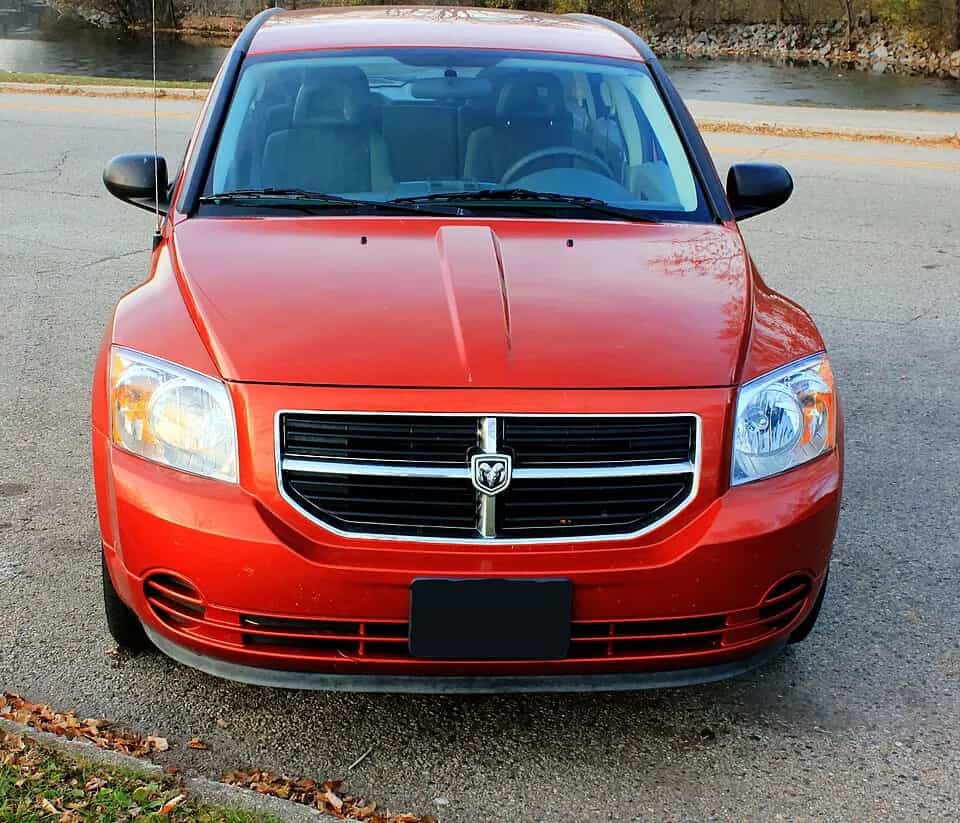
Dodge Caliber
Importing a used Dodge Caliber from the USA
The Caliber was Dodge's compact five-door — part hatchback, part small crossover — and one of the more distinctive American economy cars of its era. With its chunky, truck-influenced styling and a hot SRT4 flagship, it stands apart from the anonymous compacts of the mid-2000s. Because the Caliber was built and sold primarily for North America, the US is the obvious place to import a used Dodge Caliber from the USA, whether you want a sensible everyday version or the turbocharged SRT4.

Model history: years and generations
The Caliber launched for the 2007 model year as the replacement for the Dodge Neon and ran through the 2012 model year in a single generation (development code PM). It was assembled at Chrysler's Belvidere plant in Illinois. Over its life it saw interior-quality updates and trim revisions, but the basic package — a tall, practical five-door on the GS/Global Engine Manufacturing Alliance platform shared with Jeep Compass and Patriot — stayed consistent.
Engines, transmissions and drive
The Caliber used the World Engine family co-developed by Chrysler, Mitsubishi and Hyundai. US buyers saw a 1.8-litre (around 148 hp), a 2.0-litre (around 158 hp) and a 2.4-litre (around 172 hp) four-cylinder. Transmissions were a five-speed manual or a continuously variable transmission (CVT); most automatic Calibers used the CVT rather than a conventional torque-converter gearbox. Front-wheel drive was standard, with an all-wheel-drive option on some 2.4 versions. The standout is the Caliber SRT4, which used a turbocharged 2.4-litre making roughly 285 hp through a six-speed manual — a genuine hot hatch.
Equipment lines and body styles
The Caliber came only as a five-door hatchback. US trims evolved but broadly included SE, SXT, Mainstreet, Heat, Rush and Uptown, plus the range-topping performance R/T (with available AWD) and the SRT4. Higher trims added alloy wheels, the Chill-Zone glovebox cooler, Boston Acoustics audio and a flip-down tailgate speaker on some cars.
The US used market
Supply in the United States is plentiful and the Caliber is an affordable, easy-to-find used car. Most examples are naturally aspirated commuters with varied mileage; the SRT4 is rarer and worth seeking out for enthusiasts. Because many Calibers led hard, low-budget lives, condition and maintenance history are the key variables — a well-kept example is far preferable to a cheap, neglected one.
Is an import right for you?
The Caliber appeals to buyers who want something practical and unmistakably American rather than a European-market compact. Its tall body and folding seats make it genuinely useful, while the SRT4 is a left-field choice for hot-hatch fans who like rarity. As an independent broker for used US vehicles, USCar Trader can locate the right car and handle the full import to Germany on your behalf.
Specs at a glance
| Body style | 5-door compact hatchback |
| Production | 2007–2012 model years |
| Development code | PM |
| Assembly plant | Belvidere, Illinois (USA) |
| Base engine | 1.8-litre World Engine I4 (~148 hp) |
| Mid engine | 2.0-litre I4 (~158 hp) |
| Top NA engine | 2.4-litre I4 (~172 hp) |
| SRT4 engine | 2.4-litre turbo (~285 hp) |
| Transmissions | 5-speed manual, CVT, 6-speed manual (SRT4) |
| Drive | Front-wheel drive; AWD on some 2.4 |
| Seating | 5 |
| Length | approx. 4,415 mm |
| Fuel | Petrol |
| Platform mates | Jeep Compass / Patriot |
Common issues buyers should know
The Caliber's reputation is mixed, and knowing the weak points helps you buy well. The CVT is the biggest concern: neglected units overheat and fail, so a car with documented CVT fluid changes and no shudder or slip is essential. The World Engine can develop noisy timing chains and is sensitive to skipped oil changes. Interior plastics on early cars were widely criticised for cheapness and can rattle or wear. On the SRT4, watch for clutch wear and evidence of hard tuning. Overall the manual, naturally aspirated Calibers are the most trouble-free choice, while any CVT car needs careful transmission scrutiny.
Differences from the European version
US Calibers have amber side markers, US-pattern headlights, mph-first instruments and no standard rear fog lamp. Because the Caliber was largely a North American model, it is comparatively uncommon in Europe, which is part of its appeal. The equipment and infotainment are US-specific but present no barrier to registration once the standard conversions are done.
Import step by step
The route is straightforward: choose the exact Caliber; run a VIN and origin check (the Caliber is assembled in Belvidere, Illinois, so US assembly can be documented from the VIN and plant records); pay via escrow; ship by ocean freight to a German port such as Bremerhaven; clear customs; complete the TÜV individual approval with any needed modifications; and register locally.
Customs and taxes: what applies
Bottom line: what matters is the factory shown by the VIN – proven US origin unlocks 0% duty. The 19% import VAT always applies.
Two charges apply on entry. The import duty depends on the vehicle's provable country of origin. The Caliber is a US-assembled car, so with documented US origin from the VIN and plant of manufacture it may qualify for the 0% rate under Regulations (EU) 2026/1455 and 2026/1461 (in force since 1 July 2026, requiring direct transport, and running until 31 December 2029). We never promise this as "guaranteed" — origin must be provable in each case. Separately, the German import VAT (Einfuhrumsatzsteuer) at 19% always applies, calculated on the customs value plus any duty. USCar Trader adds no margin to these charges.
Modifications and single-vehicle approval
Typical approval work includes switching the headlights to a European beam pattern, fitting a rear fog lamp, and confirming a km/h speedometer reading. The odometer is read and recorded. Once the individual approval is granted, you register the Caliber and receive German plates.
What to verify before buying
Before buying any US Caliber, cover these points: decode the VIN and confirm engine and trim; pull a Carfax or AutoCheck report for accidents, title status and odometer history; insist on a clean (non-salvage) title where possible; on CVT cars demand transmission service records and test for shudder; check the timing chain and oil-change history; and inspect for rust on cars from salt-belt states.
Common questions
Is the Dodge Caliber built in the USA?
Yes. It was assembled at Chrysler's Belvidere plant in Illinois, which is why US origin can often be documented for customs purposes.
Can the Caliber qualify for 0% EU import duty?
It may, if US origin is provable from the VIN and plant of manufacture under the current regulations. It is never guaranteed, and the rate always depends on documented origin.
Does the 19% import VAT still apply?
Yes. The German Einfuhrumsatzsteuer at 19% always applies to imported used cars, calculated separately on the customs value plus any duty.
How reliable is the Caliber's CVT?
The CVT is the main weak point. Well-maintained units with documented fluid changes can be fine, but neglected ones fail; a manual car avoids the issue entirely.
Is the SRT4 worth importing?
For hot-hatch enthusiasts, yes — its 285 hp turbo four and rarity make it a distinctive import, provided it has not been abused.
Are parts available in Germany?
Many Caliber parts are shared with the Jeep Compass and Patriot and can be sourced through Stellantis channels and specialists, with more available from the US.
Why is the Caliber rare in Europe?
It was built mainly for North America, so importing one from the US is the most reliable way to get a good example.
Get started: browse Dodge in the Carhub, compare related models such as the Dodge Dart, the Dodge Journey and the Dodge Nitro, or see current Caliber listings.