Dodge Dakota
Importing a used Dodge Dakota from the USA
The Dodge Dakota holds a special place in American truck history as the mid-size pickup that dared to offer V8 power when its rivals stuck to four- and six-cylinder engines. It was never officially sold in Europe, so every Dakota on German roads is an import, and the American used market is the only real source. As an independent broker for used US vehicles, USCar Trader can find a documented Dakota and manage the full route to German registration. If you have been researching how to import a used Dodge Dakota from the USA, this page covers the generations, the engines, the honest ownership picture and the import process.

Generations at a glance
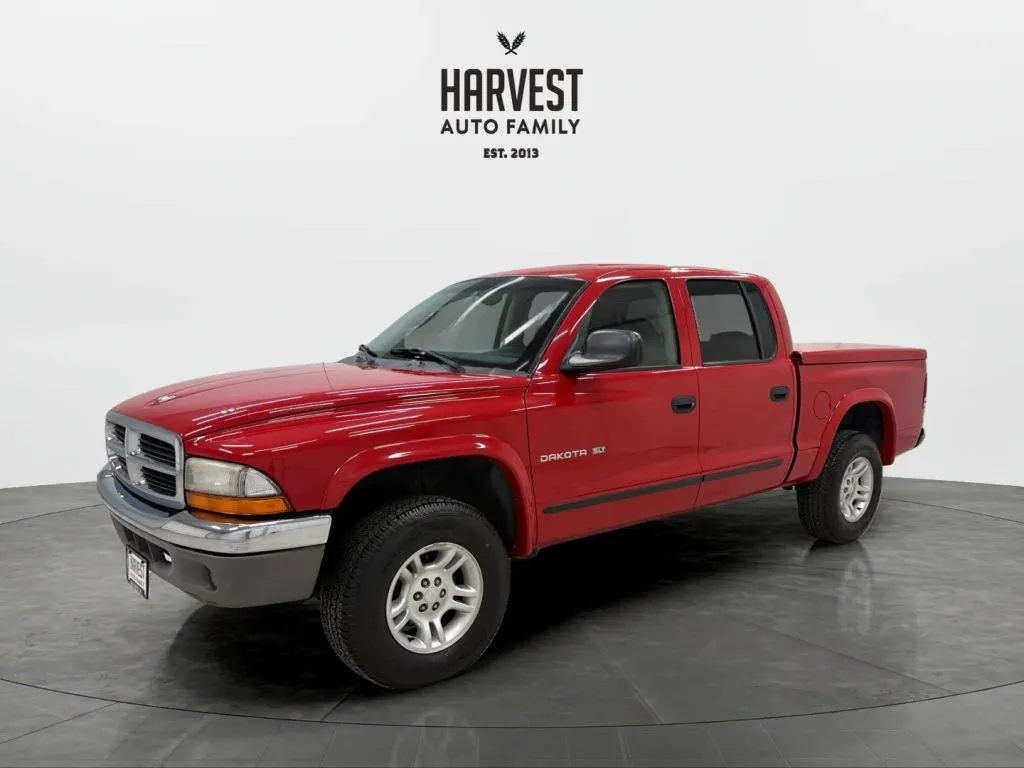
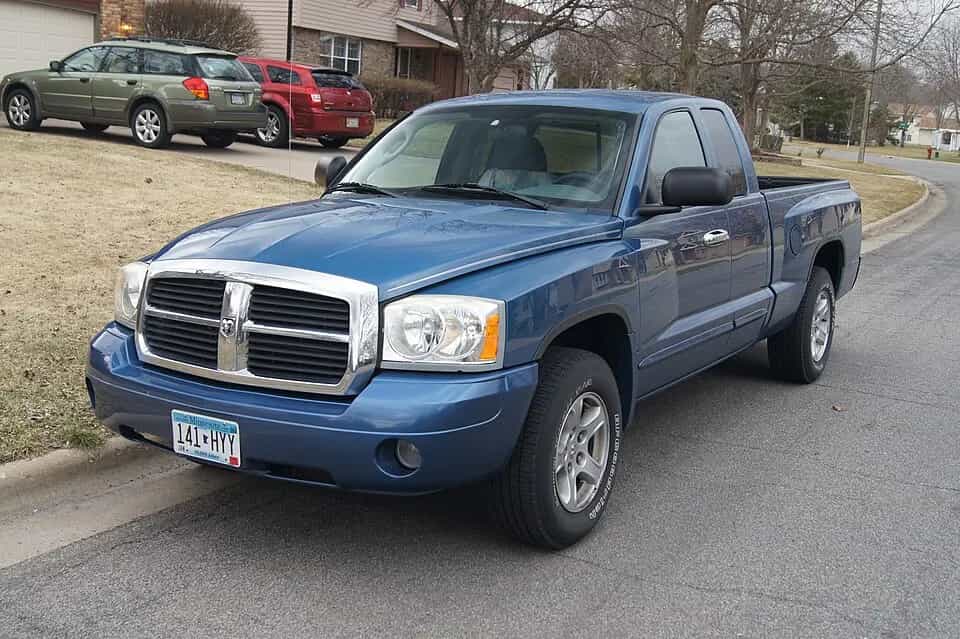
The Dakota ran across three generations. The first (1987–1996) established the format: a compact-to-mid-size pickup, notable for offering a V8 in a class that normally did not. The second generation (1997–2004) adopted the big-rig "semi" front-end styling shared with the Ram of the era and grew more capable, with extended and quad-cab options. The third generation (2005–2011) was the largest and most refined, edging close to full-size trucks in cabin room, and for a short period it was also sold as the Mitsubishi Raider. Production ended in 2011, so all Dakotas are now classic or youngtimer-age vehicles, which affects both parts supply and their appeal to enthusiasts.
Powertrain lineup
Engine choice depended on the era. Early Dakotas offered a 2.5-litre four, a 3.9-litre Magnum V6 and 5.2- and 5.9-litre Magnum V8s. From 1997 the 3.9 V6 continued alongside the 5.2/5.9 V8s. The second and third generations moved to the 3.7-litre PowerTech V6 (around 210 hp) and the 4.7-litre PowerTech V8 (roughly 230–300 hp depending on year and the High Output version). Transmissions were four- and five-speed automatics or a manual on some trims. Buyers could choose rear-wheel drive or part-time four-wheel drive with a low-range transfer case, the latter being the more sought-after configuration for load and terrain work.
Trims in the US market
The Dakota was sold in regular cab, extended (Club) cab and four-door (Quad/Crew) cab forms, with short or longer beds. Trim names varied by year — ST, SLT, SXT, Sport, Laramie, and the sporty R/T on some second-generation trucks. The R/T, with the 5.9 V8 and a lowered stance, is a cult favourite. For import buyers, the four-door Quad Cab with the 4.7 V8 and four-wheel drive tends to be the most usable and desirable combination.
The used market stateside
Because the Dakota was a popular working and personal truck for decades, used examples are still reasonably plentiful in the United States, though the best ones are thinning out as the model ages. Condition varies enormously: some were worked hard on farms and job sites, others were kept as tidy weekend trucks. Rust is the single biggest variable, so dry sun-belt trucks from the south and south-west are far preferable to rust-belt examples. Given the age, prioritise a well-documented, structurally sound truck over the cheapest one you can find.
Who should import one
The Dakota appeals to a buyer who wants a genuine American mid-size pickup with V8 character that is now rare and distinctive in Europe, whether for classic-truck enjoyment, light utility or the R/T's performance flavour. It is not a modern, refined workhorse; it is a robust, characterful older truck. If you value the simplicity and torque of a PowerTech or Magnum engine and want something with real presence and history, importing a used Dodge Dakota from the USA is a rewarding project.
Key specifications
| Attribute | Typical figures (US-market Dodge Dakota) |
|---|---|
| Body style | Mid-size pickup (regular, extended, quad cab) |
| Generations | 1987–1996, 1997–2004, 2005–2011 |
| Layout | Front engine, RWD or part-time 4WD |
| V6 engines | 3.9 L Magnum; 3.7 L PowerTech (approx. 210 hp) |
| V8 engines | 5.2/5.9 L Magnum; 4.7 L PowerTech (approx. 230–300 hp) |
| Transmission | 4/5-speed automatic or manual |
| Drive | Rear-wheel or part-time four-wheel drive |
| Length (3rd gen) | approx. 5,560 mm (varies by cab/bed) |
| Wheelbase | varies widely by cab and bed configuration |
| Fuel | Petrol |
| Towing | Solid mid-size capacity depending on engine |
| Assembly | Warren, Michigan, USA (typical) |
| Seating | 2 to 6 depending on cab |
| Production ended | 2011 |
How reliable is it?
The Dakota's engines are generally tough, but age is now the main issue. On 4.7-litre PowerTech V8s, watch for sludge and overheating history, as neglected cooling and oil changes can shorten their life; a healthy service record matters. The 3.7 V6 is durable but modestly powered for a truck this size. Across all Dakotas, rust is the biggest enemy: inspect the frame, cab corners, bed and rocker panels closely, because structural corrosion can fail TÜV and is expensive to repair. Front suspension components (ball joints, upper control arms on some years) wear out, and the automatic transmissions can be tired on high-mileage or hard-worked trucks. Check for a proper service history and evidence the truck was maintained rather than merely used up.
What US models do differently
US trucks use mph instrumentation, US lighting and usually lack a rear fog lamp required in Germany. Older Dakotas predate much modern emissions and safety equipment, and their size and classification can affect registration paperwork and running costs. Because the Dakota was never type-approved for Europe, a US truck must go through individual approval rather than being registered on an EU certificate.
Seven steps to your import
With a broker managing the process, the steps are: select and inspect the truck; run the VIN and build-origin check for customs; pay via escrow so funds release only against clean title and documents; ship by ocean freight to a North European port; clear customs on arrival; complete TÜV and individual approval (Einzelabnahme); then register in Germany. USCar Trader coordinates each stage for you.
Customs, taxes and costs explained
Remember: no origin proof, no 0% duty – and 19% German import VAT is due on every import.
Customs treatment depends on the truck's actual origin, which the VIN confirms, and on how the vehicle is classified for import. The Dakota was built in the United States, so it can potentially qualify as US-origin goods. Under EU Regulations 2026/1455 and 2026/1461, provable US-origin vehicles imported by direct transport within the qualifying window (in force since 1 July 2026, ending 31 December 2029) can benefit from the 0% import duty rate — but this depends on documented origin and correct classification and is never automatic or guaranteed. If origin cannot be proven, the applicable duty for the vehicle's classification applies. In every case, the 19% German import VAT (Einfuhrumsatzsteuer) is charged separately on the customs value. We quote duty and import VAT transparently, with no added margin.
German TÜV and registration
Typical work includes fitting or converting a rear fog lamp, confirming the headlights meet EU standards, adjusting or converting side-marker lighting, and documenting the odometer in kilometres. The inspector checks the frame, brakes, emissions data and identity against the VIN, and on an older truck the structural inspection is thorough. Once individual approval is granted, registration proceeds.
The buyer checklist
- Decode the VIN and confirm build plant, generation, engine and drivetrain.
- Pull a Carfax or AutoCheck history for accidents, title and odometer.
- Confirm a clean, non-salvage title in the seller's name.
- Inspect the frame, cab corners, bed and rockers for rust — the key point.
- Check cooling and oil-change history on 4.7 V8 engines.
- Test the transmission, transfer case and 4WD engagement.
- Prefer a documented dry-state truck over a cheap rust-belt example.
Questions and answers
Which Dakota generation is best to import?
The third generation (2005–2011) is the most refined and roomy; the second-generation R/T is a cult performance pick. Choice depends on your priorities and the individual truck's condition.
Does the Dakota qualify for 0% import duty?
Potentially, since it was US-built, if origin is proven via the VIN and the truck meets the direct-transport and classification conditions. It is never automatic and cannot be promised in advance.
What is the most sought-after engine?
The 4.7-litre PowerTech V8, ideally in a four-wheel-drive Quad Cab, is the most desirable everyday combination; the 5.9 Magnum R/T is the enthusiast's choice.
Is rust a big concern?
Yes. Frame and body corrosion is the single most important thing to inspect on an older Dakota and can decide whether a truck passes TÜV.
Will it pass German TÜV?
A structurally sound, well-prepared Dakota will, after typical lighting adaptations and a thorough inspection, via individual approval.
Are parts available in Germany?
Many mechanical parts are shared with Ram and other Chrysler-era vehicles and can be sourced; some body and trim parts may need importing.
How long does the import take?
Usually several weeks from purchase to registration, mainly limited by ocean freight and the approval inspection.
Explore the full Dodge in the Carhub, or compare related pickups such as the Dodge Ram 1500 Pickup, the Dodge Ram 2500 Pickup and the Ford Ranger. You can also browse current Dakota listings.