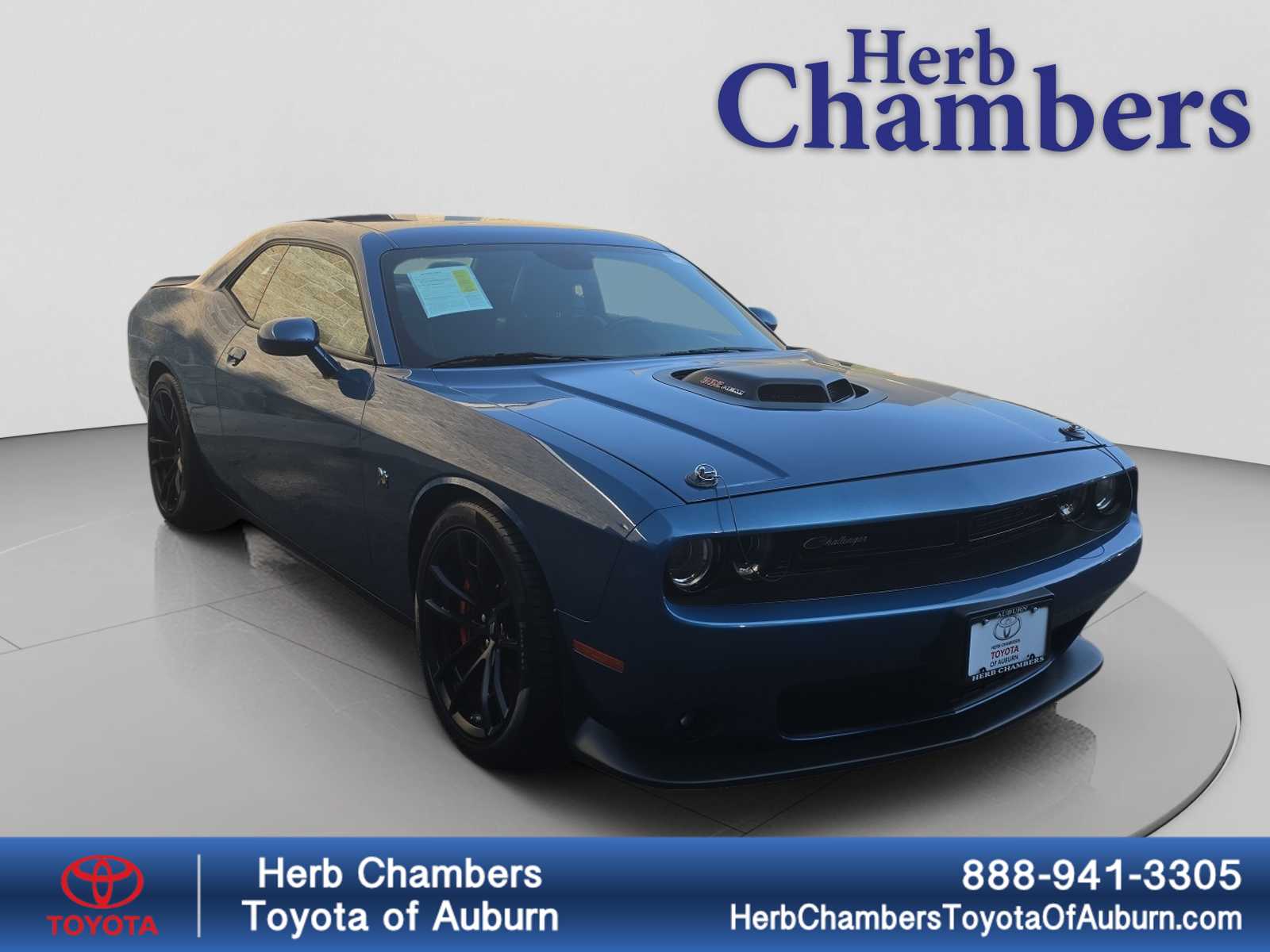
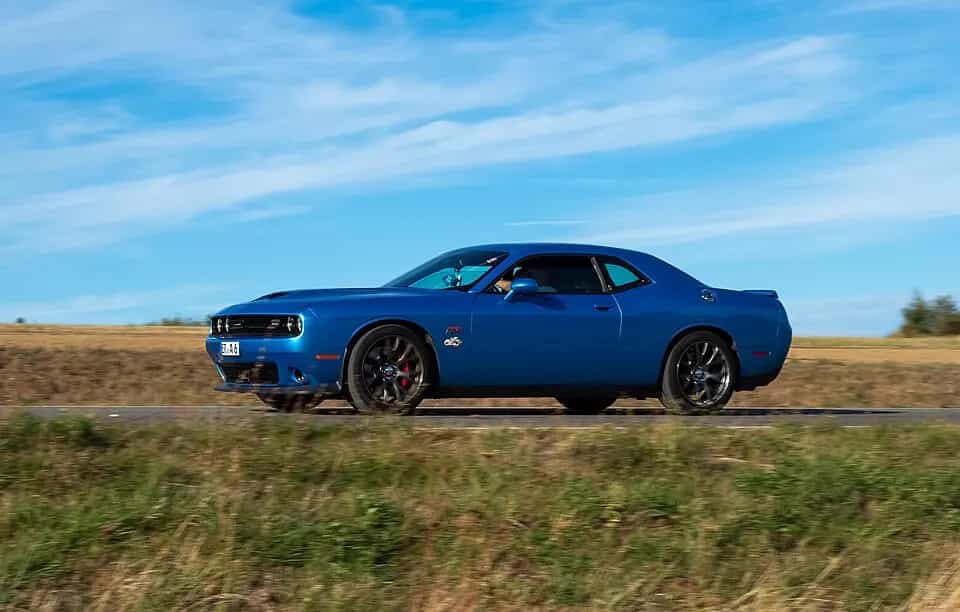
Dodge Challenger
Importing a used Dodge Challenger from the USA
The modern Dodge Challenger is one of the last true American muscle cars: big, rear-drive, retro-styled, and available with everything from a sensible V6 to a supercharged Hellcat. Its long production run and enormous US sales mean the used market is deep and varied, which is why it is such a popular car to import a used Challenger from the USA. USCar Trader operates purely as an independent broker for used vehicles — we source the exact Challenger you want in the States, verify it, and handle transport and clearance, without selling from our own inventory or charging a dealer margin.

Model history: years and generations
The reborn Challenger (chassis LC, later LA/LD) launched for 2008 and stayed in production, remarkably, through 2023 — an unusually long life that let Dodge continually add more powerful variants rather than fully redesign the car. Styling deliberately echoes the 1970 original, with a long bonnet, wide stance, and split grille. Mid-cycle updates in 2011 (Pentastar V6), 2015 (Hellcat and a refreshed interior), and later Widebody options kept the range fresh. Because it changed little in silhouette, parts and knowledge are abundant and well documented.
Engines, transmissions and drive
The line-up is broad. Early cars used a 3.5-litre V6; from 2011 the 3.6-litre Pentastar V6 (around 305 hp) became the base engine. The 5.7-litre HEMI V8 (about 372 hp) powers the R/T, while the 6.4-litre 392 HEMI (around 485 hp) sits in the R/T Scat Pack and SRT 392. At the top, the supercharged 6.2-litre Hellcat produces 707, 717, or 797 hp depending on year and Redeye trim, with the limited Demon reaching 840 hp on race fuel. Transmissions are an eight-speed automatic (845RE) across the range and a Tremec six-speed manual on V8 cars; drive is rear-wheel, with all-wheel drive offered on V6 GT models from 2017.
Equipment lines and body styles
The Challenger is a two-door coupe only, with a genuinely usable back seat and large boot — unusual for a muscle car. Trims run SXT and GT (V6), R/T (5.7), R/T Scat Pack (6.4), SRT 392, and the Hellcat family (Hellcat, Redeye, Super Stock). The T/A appearance packages and Widebody fender kits add visual drama and, on Widebody cars, wider tyres. Confirm exactly which engine and package a car carries, since values differ sharply.
The US used market
Supply is excellent. Pentastar and 5.7 HEMI cars are everywhere across the US, often with 40,000–120,000 miles, while Scat Pack and Hellcat examples are more sought-after and hold value strongly. Dry-state cars from the south and west offer the cleanest, rust-free bodies that pass German inspection most easily. Because the design barely changed, a 2015 and a 2022 R/T look and drive similarly, which makes finding the right specification straightforward.
Is an import right for you?
The Challenger suits buyers who want authentic American muscle with everyday practicality — two doors, but real rear seats and boot space. The V6 GT AWD is a clever all-weather choice; the 5.7 R/T is the classic HEMI experience; the 392 Scat Pack is arguably the sweet spot for sound and value; the Hellcat is for those who want headline power. Whatever the trim, importing a used Challenger from the USA brings a car Europe never sold in volume.
Specs at a glance
| Attribute | Detail (2008–2023) |
|---|---|
| Body style | 2-door coupe (4 seats) |
| Base engine | 3.6 L Pentastar V6, ~305 hp |
| R/T engine | 5.7 L HEMI V8, ~372 hp |
| Scat Pack / 392 | 6.4 L HEMI V8, ~485 hp |
| Hellcat | 6.2 L supercharged V8, 707–797 hp |
| Transmission | 8-speed auto (845RE) / 6-speed manual (V8) |
| Drive | Rear-wheel drive (AWD on V6 GT) |
| Length | approx. 5.02 m |
| Wheelbase | approx. 2.95 m |
| Kerb weight | approx. 1,800–2,000 kg |
| 0–100 km/h (Hellcat) | approx. 3.6 s |
| Fuel | Petrol (premium on V8) |
| Assembly | Brampton, Ontario, Canada |
| Production years | 2008–2023 |
| Boot volume | approx. 459 litres |
Common issues buyers should know
The Challenger is generally robust, but the HEMI V8s share the family's known issues. The most reported Dodge Challenger common problems are lifter and camshaft wear on the 5.7 (the HEMI 'tick'), some oil consumption, and, on high-power Hellcat and Scat Pack cars, driveline stress — differentials, half-shafts and driveshafts can suffer if the car has been launched hard. The Pentastar V6 is reliable. Across the range, watch for oil-cooler leaks on the 6.4, cooling-system wear, and occasional Uconnect glitches. A car with documented, gentle history is worth paying more for than a cheap, abused one.
Differences from the European version
US Challengers need European-approved headlights, a rear fog lamp, and compliant rear lighting to be registered in Germany. The speedometer reads primarily in mph, and the odometer conversion must be documented. Some US driver-assist and radio features (SiriusXM) will not work here. Otherwise the car is mechanically identical to what Europe would have received, which simplifies parts and service.
Import step by step
The process runs: select the exact car and confirm engine and package; verify the VIN and plant of build; place funds in escrow; ship by container or RoRo to Bremerhaven or Rotterdam; clear customs; pass TÜV and the individual approval (§21 StVZO); then register locally. USCar Trader coordinates each step so the car does not sit idle at the port.
Customs and taxes: what applies
Remember: no origin proof, no 0% duty – and 19% German import VAT is due on every import.
Two separate charges apply. Import duty: since 1 July 2026, Regulations (EU) 2026/1455 and 2026/1461 allow a 0% rate for vehicles of provable US origin, on direct transport, through 31 December 2029. Important nuance for the Challenger: it is assembled in Brampton, Ontario, Canada, not in the United States, so US origin cannot be assumed — the VIN and plant must be checked carefully, and if the car does not qualify as US-origin the standard duty applies. We never promise 0% on this model. Second, the 19% German import VAT (Einfuhrumsatzsteuer) always applies, on the customs value plus freight, regardless of origin. USCar Trader charges no margin.
Modifications and single-vehicle approval
Typical approval work includes European headlights, a rear fog lamp, compliant rear indicators, and odometer documentation. Noise and emissions are checked in the Einzelabnahme; the factory exhaust normally passes, but aftermarket systems may not. Keep the original title and complete history for customs and registration.
What to verify before buying
Confirm before buying: 1) the full VIN and the plant of manufacture (Brampton) so origin can be assessed honestly; 2) a clean Carfax or AutoCheck with no salvage or flood record; 3) a clear (not rebuilt/salvage) title; 4) rust-free underbody, ideally a dry-state car; 5) documented service, especially oil changes on HEMI cars; 6) the exact engine/package matches the listing; 7) no lifter-tick or check-engine symptoms, and healthy driveline on higher-power cars.
Common questions
Is the Dodge Challenger easy to import to Germany?
Yes. It is a common, well-supported import; the main tasks are lighting compliance and the individual approval, and dry-state cars pass the TÜV most smoothly.
Does the 0% import duty apply to a Challenger?
Not automatically. The Challenger is built in Canada, so US origin cannot be assumed — the VIN and plant must be checked, and if the car does not qualify the standard duty applies. The 19% import VAT always applies.
Which Challenger is the best value?
The 5.7 R/T offers the classic HEMI experience affordably; the 6.4 Scat Pack is often seen as the sweet spot for sound and performance versus cost.
What are the common Challenger problems?
Lifter and camshaft wear on the HEMI V8s, some oil consumption, driveline stress on high-power cars, and occasional cooling and Uconnect issues.
Can I get a manual Challenger?
Yes, a Tremec six-speed manual was offered on V8 cars; V6 and Hellcat automatics use the eight-speed 845RE.
Is the Challenger practical?
Unusually so for a muscle car — it has genuine rear seats and a large boot, making it usable daily.
How long does the import take?
Typically several weeks from purchase to registration, mainly determined by shipping schedules and customs.
Browse the wider range in the Dodge in the Carhub, compare it with classic muscle like the Pontiac GTO and Pontiac Firebird or the four-door Chrysler 300, and see the current Challenger listings.