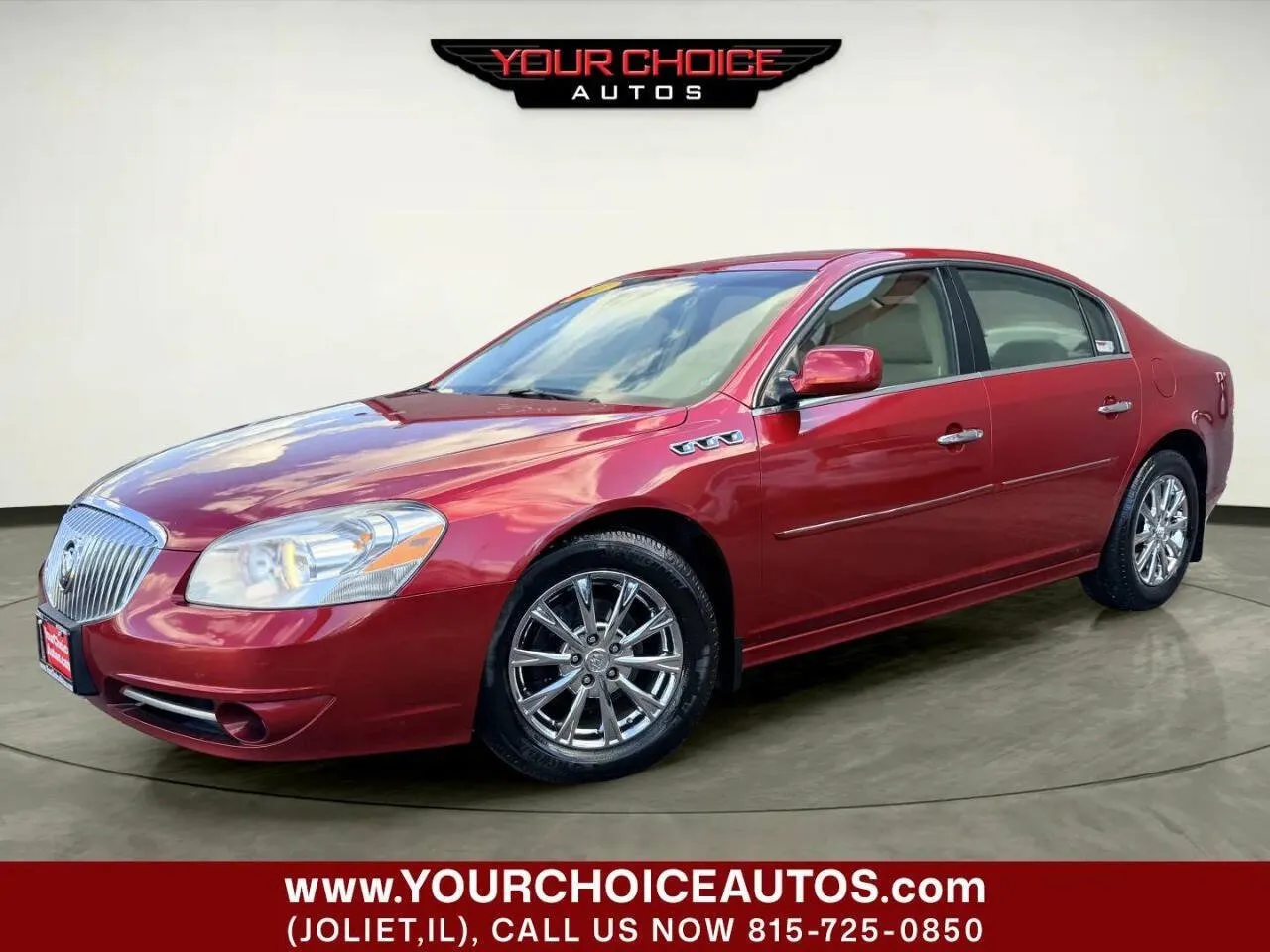
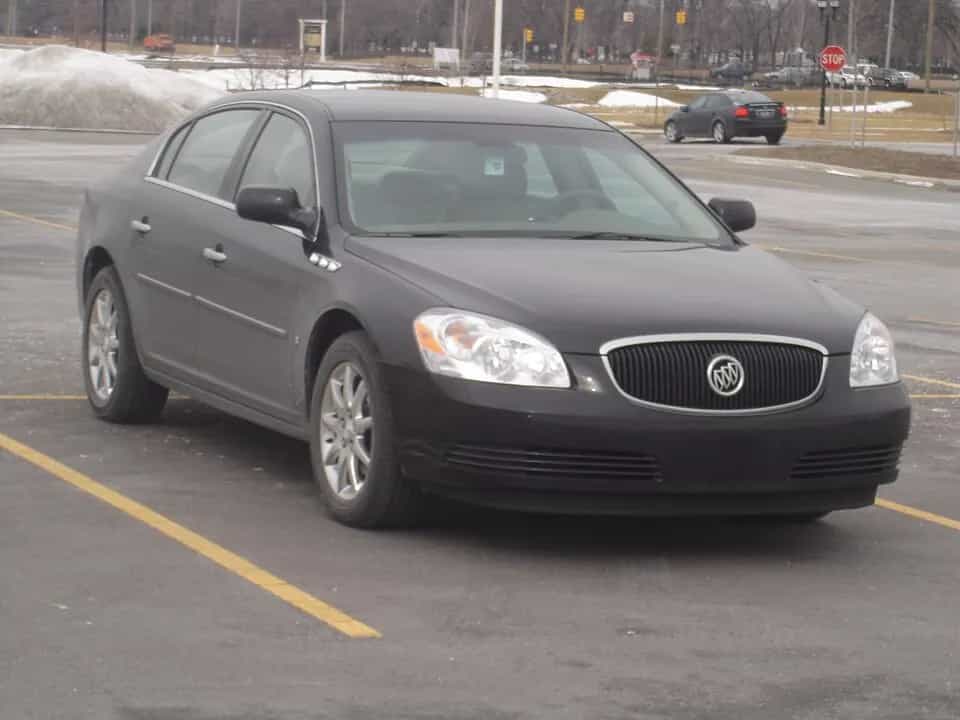
Buick Lucerne
Importing a used Buick Lucerne from the USA
The Buick Lucerne is one of the last genuinely American full-size front-wheel-drive sedans, and it remains a quietly sensible import for European buyers who want space, a soft ride and V8 availability without paying luxury-brand money. Built in Detroit-Hamtramck and sold across North America between the 2006 and 2011 model years, the Lucerne almost never came to Germany officially, so nearly every example on German roads has been privately imported. If you are looking to import a used Buick Lucerne from the USA, the car's simple mechanicals and huge US parts supply make it one of the more approachable projects in this class.
USCar Trader works as an independent broker: we source the specific car you want from US auctions and dealers, verify its history and build origin, and manage the freight and customs process end to end. We do not hold stock and we do not add a hidden margin to the vehicle price.

Model history: years and generations
The Lucerne was a single-generation model that replaced two cars at once — the LeSabre and the top-tier Park Avenue. It launched for 2006 on GM's H-body platform and stayed in production, with only detail changes, until the 2011 model year, after which Buick shifted entirely toward the imported LaCrosse and Regal. A mild facelift for 2009 tidied the grille, revised the interior trim and dropped some early-model equipment quirks. Because it ran essentially unchanged for six years, VIN-by-VIN differences matter more than model-year hunting: trim and engine choice define the car far more than the calendar.
Engines, transmissions and drive
Two engine families powered the Lucerne. The volume choice was GM's cast-iron 3.8-litre Series III V6 (around 197 hp), replaced from 2009 by the 3.9-litre "High Value" V6 with variable valve timing (roughly 227 hp). The headline engine was the aluminium 4.6-litre Northstar V8, rated near 275 hp in the CXS and lifted to about 292 hp in the later Super. Every Lucerne is front-wheel drive through a four-speed automatic (4T65-E on the V6, a heavier-duty 4T80-E behind the Northstar). There is no manual and no all-wheel drive. The V8 cars ride on GM's magnetic-style adaptive dampers in Super guise, which is worth seeking out.
Equipment lines and body styles
The Lucerne was sold only as a four-door sedan. Trim walked up from CX and CXL (V6, cloth or leather, chrome trim) to the CXS (Northstar V8, sportier tune) and, from 2008, the range-topping Super with the higher-output V8, unique fascias and standard leather. Typical equipment includes heated and cooled front seats, a column or console shifter depending on year, dual-zone climate and, on higher trims, a heads-up display and premium Harman-branded audio.
The US used market
Lucernes are plentiful and cheap in the American market, which is exactly why they suit importing. Most surviving cars are V6 CXL examples that spent their lives with retirees, so genuinely low-mileage, one- or two-owner cars are easy to find, often with complete dealer service records. Northstar-powered CXS and Super cars are rarer and command a premium in the US. Because so many lived in the Sun Belt, rust is usually minor, but always confirm condition on a car-by-car basis rather than assuming.
Is an import right for you?
This is a car for the buyer who values a wide, comfortable cabin, a smooth freeway gait and low running costs over sharp handling or badge prestige. It appeals to collectors of late American full-size sedans, to families who want unusual space for the money, and to anyone who specifically wants a V8-powered comfort saloon that almost no one else in Germany will have. If you want a dynamic driver's car, look elsewhere; if you want relaxed long-distance cruising, the Lucerne delivers.
Specs at a glance
| Attribute | Typical figures (US-spec) |
|---|---|
| Body style | Full-size four-door sedan |
| Production years | 2006–2011 (single generation) |
| Platform | GM H-body (FWD) |
| Base engine | 3.8L V6 (Series III), later 3.9L V6 |
| Top engine | 4.6L Northstar V8 |
| Power (V6) | approx. 197–227 hp |
| Power (V8) | approx. 275–292 hp |
| Transmission | 4-speed automatic (4T65-E / 4T80-E) |
| Drivetrain | Front-wheel drive |
| Length | approx. 5.16 m |
| Wheelbase | approx. 2.94 m |
| Kerb weight | approx. 1,700–1,800 kg |
| Seating | 5 (6 with front bench, early cars) |
| Fuel | Petrol |
| Suspension (Super) | Adaptive magnetic dampers |
Common issues buyers should know
The 3.8 V6 is one of GM's most durable engines, but it is known for intake manifold and lower-intake gasket seepage that can let coolant into the oil if ignored — check for a clean, non-milky oil cap. The Northstar V8 is smooth and strong but carries a well-documented weakness: head-bolt threads can pull out of the aluminium block, causing head-gasket failure that is expensive to repair properly (time-serts). Buy a V8 car with a cool, stable temperature gauge and no history of overheating. Across the range, watch for failing HVAC blend-door actuators (clicking behind the dash), power-steering pump whine, and worn front suspension bushings on high-mile cars. Parts are cheap and widely stocked in the US; source consumables before or with the car.
Differences from the European version
US Lucernes run amber rear turn signals combined into the tail lamp cluster, sealed-beam-era headlight aiming set for right-hand traffic, and miles-per-hour instruments. There is no rear fog lamp and, on most trims, no European-style rear parking provisions. Tyre pressure and warning systems are calibrated to US standards. None of this is a barrier, but each item is something the TÜV examiner will look at during individual approval.
Import step by step
The process runs in a fixed order: vehicle selection and inspection in the US; VIN and build-origin check to establish the correct customs treatment; secure payment through escrow so funds are only released on clean documents; road transport to the export port and ocean freight to a North-Sea port such as Bremerhaven; customs clearance on arrival; a German technical inspection with individual approval (Einzelabnahme) where required; and finally local registration. We coordinate each stage and keep the paperwork chain intact for customs.
Customs and taxes: what applies
In short: the 0% duty rate applies only with documented US origin (VIN/plant) – German import VAT of 19% is always due.
Two separate charges apply and should never be blurred together. First, import duty: the Lucerne was built in Detroit-Hamtramck, so with documented US origin (VIN and plant evidence) it can qualify for the 0% EU rate under Regulations (EU) 2026/1455 and 2026/1461, in force since 1 July 2026 for goods of US origin shipped directly. This is not automatic or guaranteed — without provable US origin the standard passenger-car duty of 10% applies. Second, and always, the 19% German import VAT (Einfuhrumsatzsteuer) is due on the customs value regardless of origin. We quote both line items transparently and add no margin to the car itself.
Modifications and single-vehicle approval
Typical work to pass German inspection includes adding a rear fog lamp, adjusting or replacing headlights for right-hand traffic, and confirming the odometer reads in kilometres or is documented in miles. The speedometer must be legible in the required unit. A valid Carfax or AutoCheck report supports the odometer and title declaration. Once the individual approval and Datenbestätigung are issued, registration at your local office is straightforward.
What to verify before buying
Before committing to any Lucerne, confirm: (1) the full 17-digit VIN and that it decodes to a US plant; (2) a clean Carfax/AutoCheck with no salvage, flood or odometer flags; (3) title status is clear, not "salvage" or "rebuilt"; (4) the oil cap and coolant are clean, especially on Northstar V8 cars; (5) documented service history; (6) underbody and rear-arch condition for rust; (7) that all power seat, HVAC and electronic features function.
Common questions
Is the Buick Lucerne a reliable import?
The V6 cars are very durable and cheap to run. The Northstar V8 is smoother and faster but demands proof it has never overheated, given its known head-bolt weakness.
Can I get the 0% EU import duty on a Lucerne?
Possibly. The Lucerne was US-built, so with provable US origin it can qualify for 0% under the 2026 regulations. This is never guaranteed and depends on VIN/plant documentation; the 19% import VAT always applies.
V6 or Northstar V8 — which should I import?
Choose the 3.8/3.9 V6 for lowest running costs and proven durability, or the Northstar V8 (CXS/Super) for effortless performance if the car has a clean cooling history.
How long does importing a Lucerne take?
Typically several weeks from purchase to registration, driven mainly by ocean transit and the customs and TÜV steps on arrival.
Do I need to change anything for German registration?
Usually a rear fog lamp, headlight adjustment for right-hand traffic and odometer documentation. These are routine for a US import.
Are parts available in Germany?
Wear items are best sourced from the US where they are plentiful and inexpensive; many are shared with other GM models and available through European suppliers too.
Is rust a problem on these cars?
Many Lucernes come from dry Sun Belt states with minimal corrosion, but always verify each individual car's underbody rather than assuming.
Does USCar Trader sell the car to me?
No. We are an independent broker. We locate and import the specific used car you choose and charge for the service, not a dealer margin.
Ready to start? Browse Buick in the Carhub, compare related full-size options like the Buick LaCrosse, the Buick LeSabre and the Cadillac DTS, or view current Lucerne listings.