Importing a used Buick LeSabre from the USA
USCar Trader works purely as an independent broker. We do not hold stock, take a hidden margin, or represent Buick.
 0049 (0)89 2000 791 00
 Mo - Fr 8:00am - 8:00pm
USCar Trader import service
Choose a specific vehicle. Where data is available, its detail page shows the import cost calculation. We assess any possible duty benefit with you before purchase.
Important: A 0% EU import-duty rate may be available for a vehicle covered by Regulation (EU) 2026/1455 that has US origin and is imported directly into the EU. CETA may apply to a vehicle with preferential Canadian origin. Whether the requirements are met is assessed for the individual case. Please contact us before purchase; we review the possible duty benefit and provide non-binding support through the process. Import VAT and other costs are assessed separately.
CarHub · Buick
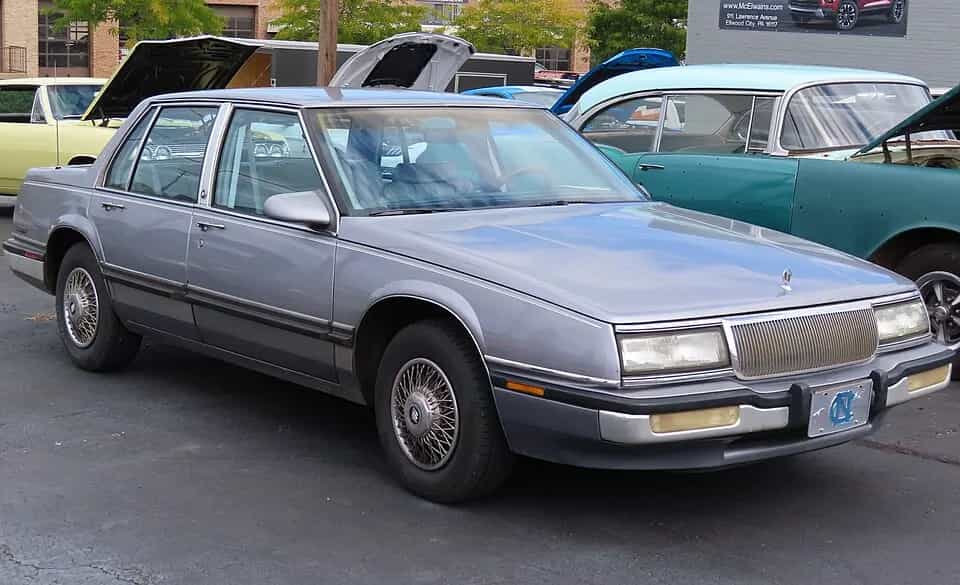
The Buick LeSabre was, for decades, the quiet backbone of the American full-size sedan segment.

Price:7,495.00 USD

Price:6,500.00 USD

Price:19,995.00 USD

Price:29,995.00 USD

Price:2,999.00 USD
Model profile
USCar Trader works purely as an independent broker. We do not hold stock, take a hidden margin, or represent Buick.
The nameplate ran from 1959 to 2005, but the cars most relevant to import are the front-wheel-drive H-body generations.
Powertrain and equipment
Almost every LeSabre of this era used the 3.8-litre (3800) V6. The naturally aspirated Series II produced around 205 hp and, crucially, huge low-end torque. It drove the front wheels through GM's 4T65-E four-speed automatic.
The LeSabre was sold exclusively as a four-door sedan; there was no coupe or wagon in these later generations. Custom trims came with cloth seats and steel wheels under covers, while Limited cars added leather, alloy wheels, dual-zone climate, and often a heads-up display and power passenger seat.
Vehicle selection
LeSabres are plentiful in the United States, especially across the Midwest and the Sun Belt, where many were bought new by retirees and covered modest annual mileage.
A used LeSabre suits the buyer who values comfort, simplicity, and mechanical honesty over badge prestige.
Vehicle data
| Body style | Detail (2000-2005 Limited, typical): Full-size four-door sedan |
|---|---|
| Length | Detail (2000-2005 Limited, typical): approx. 5.08 m |
| Wheelbase | Detail (2000-2005 Limited, typical): approx. 2.85 m |
| Kerb weight | Detail (2000-2005 Limited, typical): approx. 1,600 kg |
| Seating | Detail (2000-2005 Limited, typical): 5-6 (bench front optional) |
| Production years | Detail (2000-2005 Limited, typical): 1992-2005 (H-body) |
| Layout | Detail (2000-2005 Limited, typical): Front engine, front-wheel drive |
|---|---|
| Engine | Detail (2000-2005 Limited, typical): 3.8 L (3800) Series II V6 |
| Output | Detail (2000-2005 Limited, typical): approx. 205 hp |
| Torque | Detail (2000-2005 Limited, typical): approx. 320 Nm |
| Transmission | Detail (2000-2005 Limited, typical): 4-speed automatic (4T65-E) |
| Fuel | Detail (2000-2005 Limited, typical): Petrol |
| Fuel tank | Detail (2000-2005 Limited, typical): approx. 68 L |
| Origin | The assessment depends on the specific vehicle and the circumstances of the transaction. Please contact USCar Trader before purchase; we review any possible duty benefit and provide non-binding support. Import VAT and other costs are considered separately. |
|---|
Values are reproduced verbatim from the existing article table. The documents for the specific vehicle govern.
Pre-purchase review
The LeSabre's reputation for reliability is well earned, but it is not fault-free. The classic 3800 weak point is the plastic upper intake manifold and the EGR stovepipe, which can erode and cause coolant loss or overheating — a known, well-documented fix. Watch for failing intake manifold gaskets, weeping around the coolant elbows, and the occasional window regulator or blend-door actuator.
Germany and Europe
US LeSabres run amber-free rear indicators combined into the brake lights, a single rear reversing/fog arrangement, and miles-per-hour speedometers.
Typical work for approval includes fitting or adapting the rear fog lamp, adjusting or replacing headlights to European beam pattern and markings, confirming the odometer reads in kilometres, and verifying tyre and emissions data.
USCar Trader services
As a buyer based in Germany, you do not have to inspect the vehicle yourself in the United States or Canada. Within the agreed scope, USCar Trader can coordinate document review, a separately commissioned on-site inspection and purchase processing.
Covered inspection points are agreed in advance. An on-site inspection records condition at the appointment and is not a guarantee.
Next step: Before commissioning, USCar Trader and the customer agree which document, history, inspection and transaction checks suit the vehicle and are included in the service. This records what was actually checked.
Import process
The assessment depends on the specific vehicle and the circumstances of the transaction. Please contact USCar Trader before purchase; we review any possible duty benefit and provide non-binding support. Import VAT and other costs are considered separately.
Questions and answers
Yes. The 3800 V6 is among the most dependable American engines, and parts are inexpensive and widely available, which makes long-term ownership in Europe realistic.
No, not automatically. A 0% EU import-duty rate may be available for a vehicle covered by Regulation (EU) 2026/1455 that has US origin and is imported directly into the EU. CETA may apply to a vehicle with preferential Canadian origin. Whether the requirements are met is assessed for the individual case. Please contact USCar Trader before purchase; we review the possible duty benefit and provide non-binding support. Import VAT and other costs are assessed separately.
Import VAT and other taxes or costs are assessed separately under the applicable rules and the circumstances of the individual case. A blanket answer for every vehicle would not be reliable.
The plastic upper intake manifold and EGR area on the 3800 can degrade and cause coolant loss. It is a known, affordable repair.
Yes. 3800 and 4T65-E components are shared across many GM models and are easy to source through US suppliers or specialists.
Typically several weeks once purchased, driven mainly by ocean freight scheduling and the TUEV appointment.
No. We are an independent broker and intermediary for used vehicles. You buy the car itself in the US; we handle sourcing, verification, and logistics without a margin.
The assessment depends on the specific vehicle and the circumstances of the transaction. Please contact USCar Trader before purchase; we review any possible duty benefit and provide non-binding support. Import VAT and other costs are considered separately.
More vehicles