Audi RS7
Importing a used Audi RS7 from the USA
The Audi RS7 is the fast four-door done the understated way: a 600-hp twin-turbo V8 wrapped in a sleek five-door Sportback body that carries four adults and their luggage without fuss. The American market bought RS7s in reasonable numbers and often loaded them with the driver-assistance, audio and interior options that make these cars special. Importing a used Audi RS7 from the USA lets you target a specific generation, output level and specification that may be scarce or expensive at home. USCar Trader acts as your independent broker — we source the car, inspect it, arrange shipping and handle customs, with no margin on the vehicle.

From launch to today
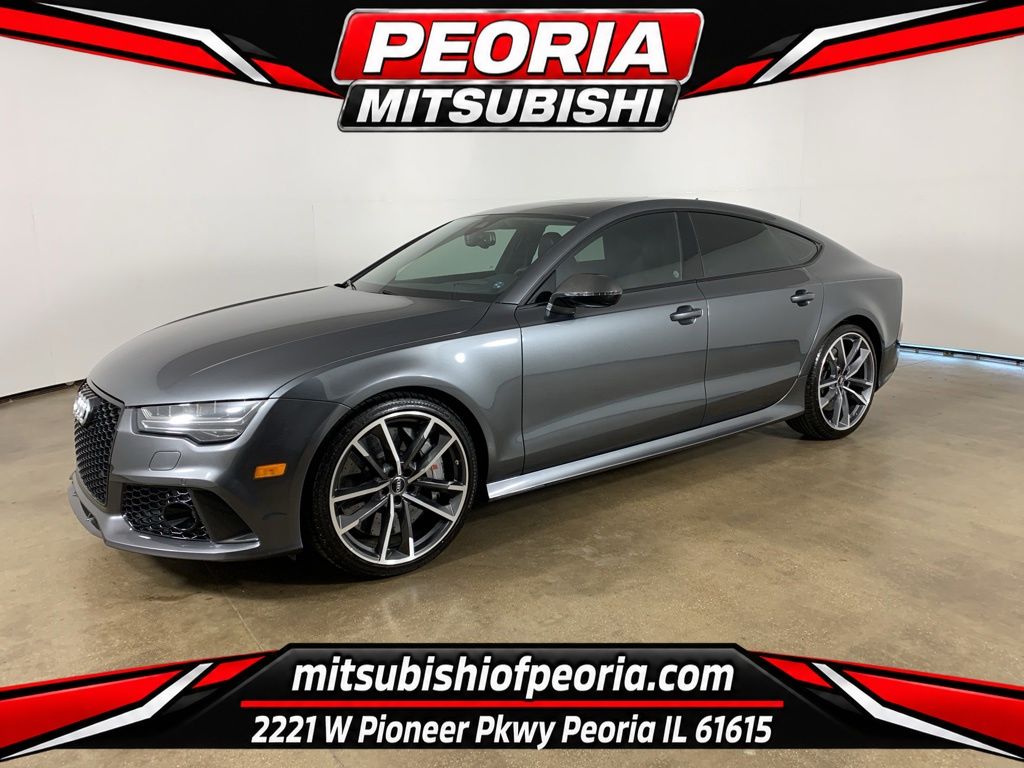
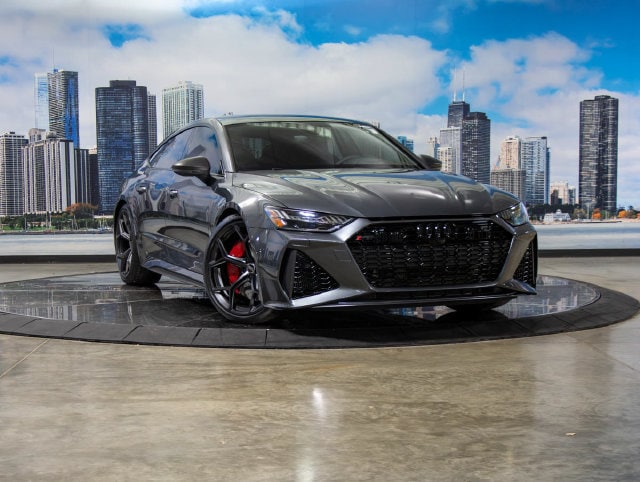
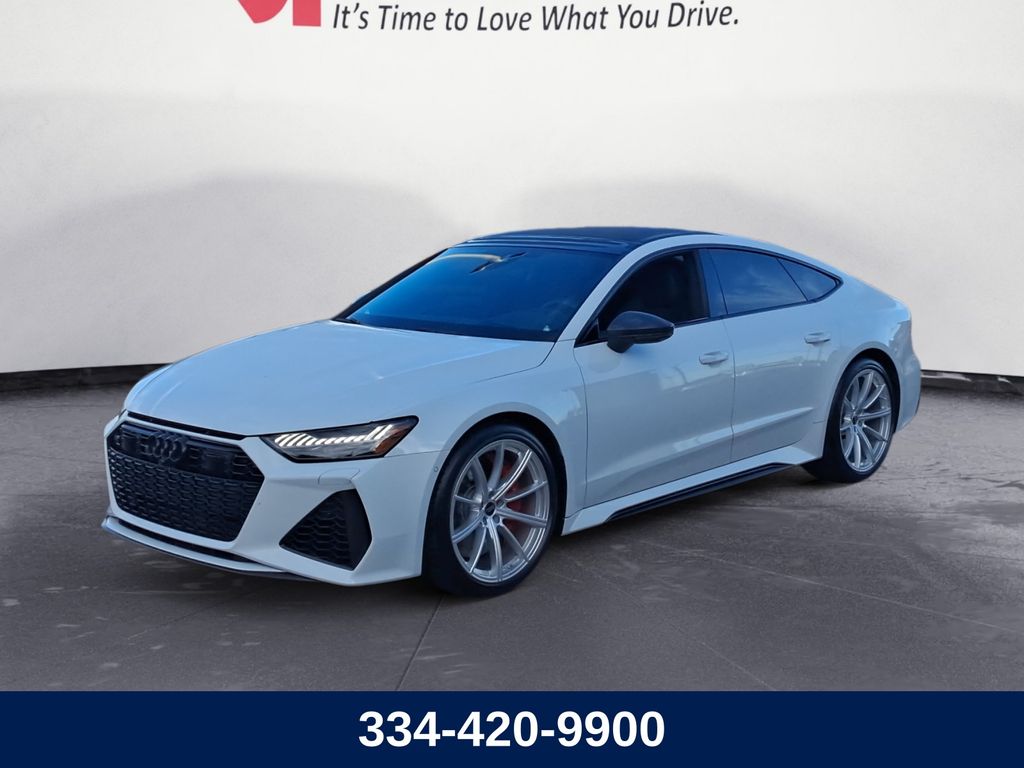
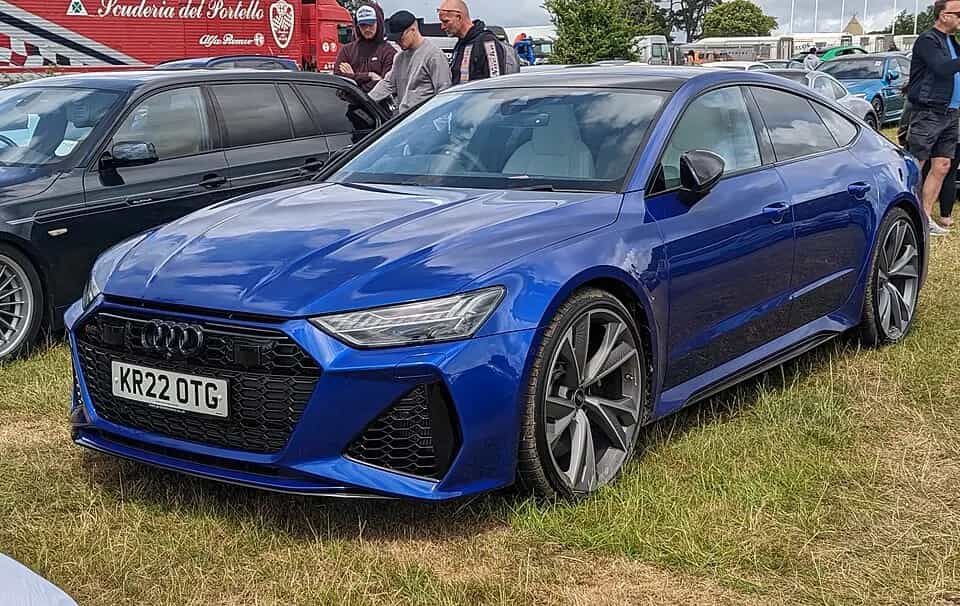
The first RS7 (C7, 2013–2018) arrived as a Sportback with the 4.0-litre TFSI twin-turbo V8, initially rated at 560 hp and later offered as the RS7 Performance with up to 605 hp. The current generation (C8, from 2019) continues the Sportback-only formula with a 591-hp version of the 4.0 TFSI, now mild-hybrid assisted, and sharper styling. Both generations were sold in the US, so the used pool spans early C7 cars through to recent C8 examples with the latest tech. The RS7 has always been the halo of the A7 range, sitting above the S7.
Engines and drivetrain in detail
The RS7's signature is the 4.0-litre TFSI twin-turbo V8, with the turbochargers nestled inside the vee for compact packaging and quick response. Outputs run from 560 hp (early C7) through 605 hp (C7 Performance) to 591 hp with 800 Nm on the C8, the latter using a 48-volt mild-hybrid system and cylinder-on-demand for efficiency. Power reaches the road through quattro all-wheel drive and an eight-speed tiptronic automatic on the C7, and an eight-speed torque-converter automatic on the C8. A sports differential and, on many cars, dynamic ride control or air suspension sharpen the handling of what is a large, heavy car.
Trim levels and variants
The RS7 is offered only as the five-door Sportback — there is no saloon or estate RS7. US trims centre on the standard RS7 and the C7 Performance, with option packages covering carbon-ceramic brakes, the Dynamic package that raises the limited top speed, Bang & Olufsen audio, carbon and Alcantara interior trim, and various driver-assistance bundles. American cars frequently carry generous equipment, which is part of the appeal when importing.
Used availability in the USA
Availability is concentrated in affluent metropolitan areas across California, Texas, Florida and the Northeast. RS7s were often second cars and many show moderate mileage; typical import candidates sit between 20,000 and 70,000 miles. Southern and western cars tend to be rust-free, which suits German conditions. As with any high-performance V8, history is everything — confirm dealer servicing and be cautious with tuned examples, since the 4.0 TFSI responds strongly to remapping and some cars have been pushed hard.
When importing makes sense
Importing a used Audi RS7 suits the buyer who wants a discreet, genuinely fast grand tourer with everyday practicality, and who is after a specific colour, output or options set. It rewards a careful inspection and a clean service record. If you want supercar pace with four doors and a big boot, the American RS7 market is well worth searching.
Facts and figures
| Attribute | Typical figures (varies by generation) |
|---|---|
| Body style | 5-door Sportback |
| Engine | 4.0 TFSI twin-turbo V8 (mild-hybrid on C8) |
| Power output | 560 hp (C7) / 605 hp (C7 Performance) / 591 hp (C8) |
| Torque | ~700–800 Nm |
| Transmission | 8-speed tiptronic / 8-speed automatic |
| Drive | quattro all-wheel drive |
| 0–100 km/h | ~3.4–3.9 s |
| Top speed | 250 km/h (280–305 km/h with Dynamic package) |
| Fuel | Premium unleaded (98 RON recommended) |
| Seating | 5 |
| Length | ~5.01 m |
| Kerb weight | ~2,000–2,200 kg |
| Fuel tank | ~72–75 litres |
| Emissions class | Euro 5 to Euro 6 by year |
Reliability and common problems
The 4.0 TFSI is a strong engine, but it has known service points. Carbon build-up on the intake valves is common on direct-injection V8s and may need walnut-blasting over time. Watch for oil leaks from the valve covers and the timing-cover area, and check the water pump and thermostat on higher-mileage cars. The turbochargers and their oil feeds should be inspected on tuned examples. Air-suspension bags and dynamic ride control components can leak with age and are costly to replace. The eight-speed automatics are durable when serviced, but fluid changes are often neglected. Overall Audi RS7 reliability is respectable for a 600-hp car, yet maintenance is firmly premium-level, so buy the best-documented example you can and budget accordingly.
How US versions differ
US RS7s use amber side markers, US-pattern headlights, an mph speedometer and no rear fog lamp, all of which the TÜV requires addressing. Some driver-assistance and MMI infotainment features were configured for the US market. Mechanically the cars match their European counterparts, and because the RS7 is built in Germany, parts and specialist support at home are straightforward.
From US purchase to registration
Select the car and confirm its specification; verify the VIN and Audi build data plus a full Carfax or AutoCheck history; place funds in escrow; arrange ocean freight (container recommended) to Bremerhaven or Rotterdam; clear German customs; complete the TÜV individual approval with any required modifications; and register the car locally. USCar Trader manages and documents each stage.
Costs, duty and taxes at a glance
In short: the 0% duty rate applies only with documented US origin (VIN/plant) – German import VAT of 19% is always due.
Two separate charges. Import duty: since 1 July 2026, Regulations (EU) 2026/1455 and 2026/1461 provide a 0% preferential rate for vehicles of provable US origin shipped directly, valid until 31 December 2029. The RS7 is built in Germany (Neckarsulm), so it does not carry US origin and the standard passenger-car duty is likely to apply — which is why we check the VIN rather than promise a rate. Second, the 19% German import VAT (Einfuhrumsatzsteuer) applies to every import, calculated on the vehicle value plus freight and duty. We show both as clear line items and add no margin of our own.
TÜV, approval and license plates
Typical approval work includes converting or coding the headlights, adding a rear fog lamp, fitting European indicators and confirming the speedometer reads in km/h. If a sport or aftermarket exhaust is fitted, noise and emissions are checked against the type data. Once the TÜV report is issued you receive the documents needed to register the RS7 and obtain German plates.
Pre-purchase checklist
- Decode the VIN and confirm the exact generation and output (560, 591 or 605 hp).
- Order a full Carfax or AutoCheck report and study accident and title history.
- Check for a remap or tune — the 4.0 TFSI is a popular tuning target — and inspect turbos accordingly.
- Inspect air-suspension bags, dynamic ride control and the underbody for leaks and rust.
- Confirm complete service history, including transmission fluid changes.
- Verify the title is clean, not salvage or rebuilt.
- Commission an independent pre-purchase inspection before releasing funds.
Import FAQ
Can I import any generation of Audi RS7 from the USA?
Yes. Both the C7 (2013–2018) and the current C8 were sold in the US, and we can source either as a used import depending on availability and budget.
Will my imported RS7 get 0% customs duty?
Unlikely. The RS7 is built in Germany, so it does not have US origin and the standard duty normally applies. We verify the VIN before quoting any figure.
Does the 19% import VAT always apply?
Yes. The German Einfuhrumsatzsteuer of 19% is charged on every private import regardless of the car's origin.
Is the RS7 practical enough for daily use?
Very much so. The Sportback body seats five, has a large hatchback boot and rides comfortably in its softer modes, making it a genuine everyday car.
Should I be worried about tuned RS7s?
The 4.0 TFSI is easy to remap, and some US cars have been. A tune is not automatically bad, but it demands closer inspection of the turbos, drivetrain and service history.
How does the RS7 compare to the S7?
The RS7 is the more powerful halo model with the twin-turbo V8 and RS-specific chassis; the S7 is quicker to own and run but noticeably less extreme.
How long does the import take?
Usually several weeks from purchase to German plates, mostly determined by shipping schedules and the TÜV appointment.
Start here: browse Audi in the Carhub, compare related Audis such as the Audi S7, the Audi A7 or the Audi R8, or view current RS7 listings. USCar Trader guides you from VIN check to German registration.