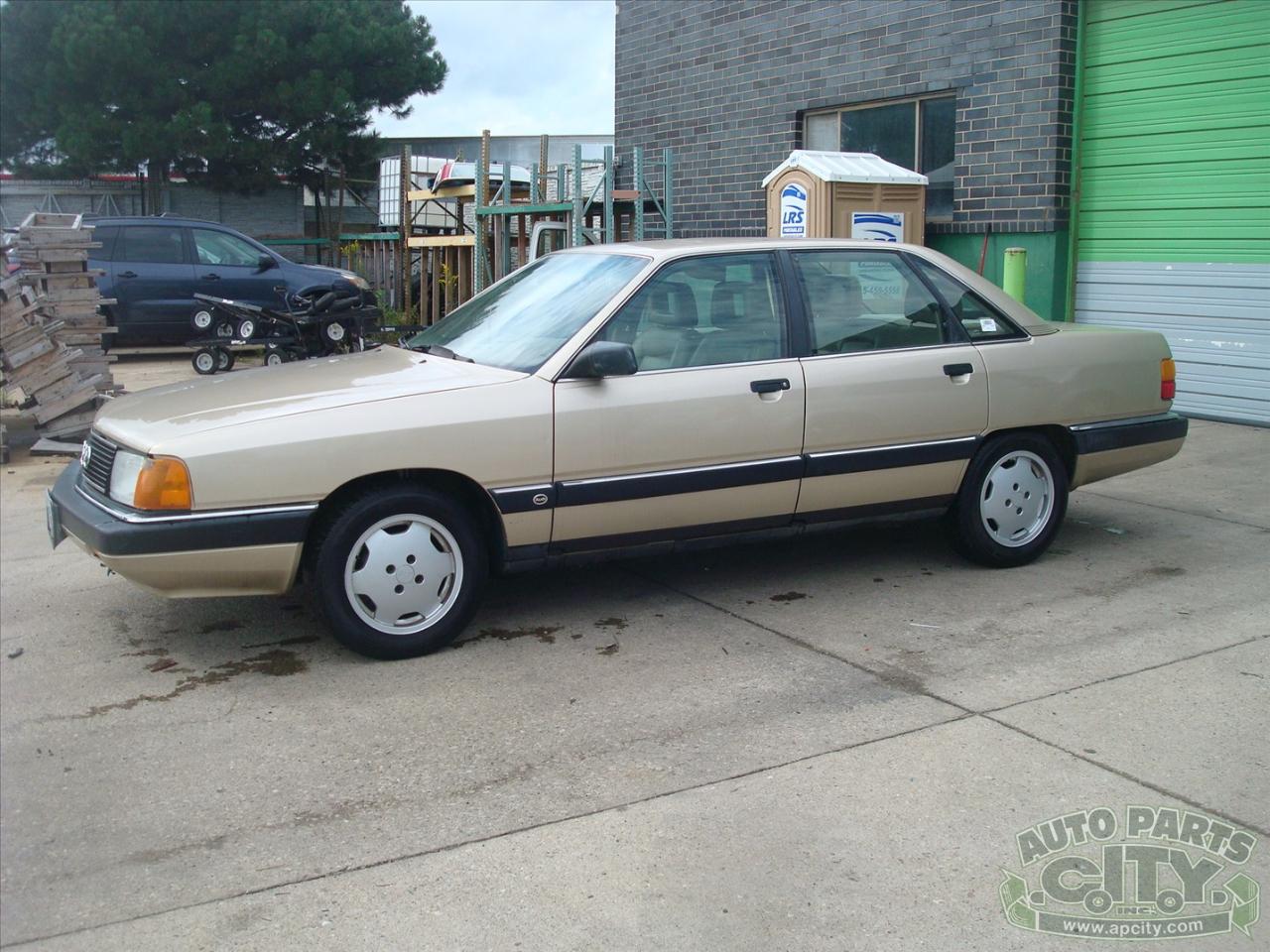
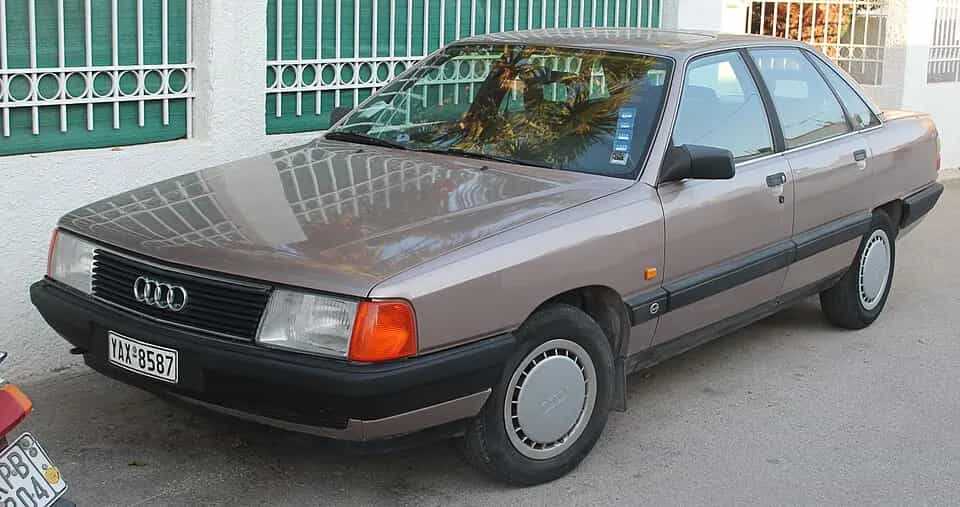
Audi 100

USCar Trader import service

Import this model from the USA or Canada

Choose a specific vehicle. Where data is available, its detail page shows the import cost calculation. We assess any possible duty benefit with you before purchase.

Important: A 0% EU import-duty rate may be available for a vehicle covered by Regulation (EU) 2026/1455 that has US origin and is imported directly into the EU. CETA may apply to a vehicle with preferential Canadian origin. Whether the requirements are met is assessed for the individual case. Please contact us before purchase; we review the possible duty benefit and provide non-binding support through the process. Import VAT and other costs are assessed separately.

CarHub · Audi

Audi 100

The Audi 100 is a genuine engineering landmark, and the version that spent its life in the United States is often a very different animal from the one German buyers remember.

Generations
C1 (1968–76), C2 (1976–82), C3 (1982–91), C4 (1991–94)
US names
Audi 5000, then Audi 100 / 200 from 1989
Body styles
4-door saloon, Avant estate
Engines (US)
2.2/2.3 five-cyl NA, 2.2 turbo five, 2.2 turbo diesel, 2.8 V6 (C4)
Audi 100

Model profile

Model history and generations

Generations at a glance

The nameplate ran across four generations. The C1 (1968–1976) launched the model and put Audi back on the map as a maker of full-size saloons. The C2 (1976–1982) introduced the classic 2.1–2.2-litre five-cylinder and reached the US as the 5000.

Powertrain and equipment

Engines, drivetrain and trims

Powertrain lineup

The five-cylinder is the heart of the car. American 5000/100 models were offered with naturally aspirated 2.2 and 2.3 units (the 2.3 with around 130 hp), the turbocharged 2.2 in the 5000 Turbo and 200, and the smooth-idling 2.2 turbo diesel that is a rare find.

Trims in the US market

US buyers mainly saw the four-door saloon and the Avant estate, sold as the 5000 wagon and later the 100 Avant. Trim ran from base to the well-equipped CS and CS quattro, with the sportier 200 sitting above the 100 in the hierarchy.

Vehicle selection

North American market and suitability

The used market stateside

These are now firmly classic and youngtimer territory, so condition varies enormously.

Who should import one

An Audi 100 from the US suits the collector who wants a solid, rust-free body as the foundation for a keeper, and the enthusiast who values the five-cylinder character and early quattro engineering.

Vehicle data

Technical data by generation and specification

Body and dimensions

Body styles4-door saloon, Avant estate
Length (C3)approx. 4,790 mm
Kerb weightapprox. 1,250–1,500 kg

Engine and drivetrain

Engines (US)2.2/2.3 five-cyl NA, 2.2 turbo five, 2.2 turbo diesel, 2.8 V6 (C4)
Power rangeapprox. 100–220 hp depending on engine
Standout engine2.2 20-valve turbo five (Audi 200)
DrivetrainFront-wheel drive or quattro all-wheel drive
Transmissions5-speed manual, 3/4-speed automatic
FuelPetrol / diesel
LayoutLongitudinal front engine

Model and other data

GenerationsC1 (1968–76), C2 (1976–82), C3 (1982–91), C4 (1991–94)
US namesAudi 5000, then Audi 100 / 200 from 1989
Drag coefficient (C3)0.30
Age todayC3/C4 examples are 30+ years old

Values are reproduced verbatim from the existing article table. The documents for the specific vehicle govern.

Pre-purchase review

Model-specific inspection points

Inspection plan for this model

For the Audi 100, the agreed inspection plan focuses in particular on a cold start only where access is authorised, visible leaks, maintenance records and exhaust-aftertreatment components. USCar Trader can document these points through a separately commissioned on-site inspection; inaccessible areas or unauthorised road tests are explicitly recorded as unchecked.

Germany and Europe

Differences, adaptation and registration

What US models do differently

American cars carry federalised lighting (sealed-beam or US-spec headlamps with amber side markers), a different bumper and impact structure, mph-primary instruments and, often, air conditioning fitted as standard.

German TÜV and registration

Typical work is straightforward: convert or replace headlamps to E-approved units, fit a rear fog lamp, confirm the speedometer shows km/h and provide a documented odometer reading.

USCar Trader services

Inspection, purchase processing and escrow

As a buyer based in Germany, you do not have to inspect the vehicle yourself in the United States or Canada. Within the agreed scope, USCar Trader can coordinate document review, a separately commissioned on-site inspection and purchase processing.

  • Vehicle profile and history: The profile can show the VIN, US title status and available history records. No data source guarantees that every earlier event was reported.
  • Optional CARFAX report: Additional reported maintenance or service entries can be included. The report is not a complete service book or proof of every interval.
  • On-site inspection / USCT AutoCheck: USCar Trader can arrange a separately booked vehicle inspection. Agreed visible and accessible areas are documented. Road or functional tests require suitable access and seller approval; the visual review is not a lift inspection or workshop diagnosis.
  • Purchase processing and escrow: After approval, USCar Trader can coordinate seller contact, negotiation, contract and the escrow and import service. Fees, payment route and responsibilities are recorded in advance.
  • Recalls: Open safety recalls can be checked by VIN through the NHTSA recall search; they do not describe overall condition.

Covered inspection points are agreed in advance. An on-site inspection records condition at the appointment and is not a guarantee.

Next step: Before commissioning, USCar Trader and the customer agree which document, history, inspection and transaction checks suit the vehicle and are included in the service. This records what was actually checked.

Import process

Import, customs, costs and delivery

Seven steps to your import

The assessment depends on the specific vehicle and the circumstances of the transaction. Please contact USCar Trader before purchase; we review any possible duty benefit and provide non-binding support. Import VAT and other costs are considered separately.

Questions and answers

Common questions about importing this model

Is the Audi 5000 the same car as the Audi 100?

Yes. The US market used the 5000 name for the C2 and C3 before switching to the European 100 and 200 badges for the 1989 model year.

Can I import an Audi 100 with quattro?

Yes. quattro all-wheel-drive cars were sold in the US and are among the most desirable examples to import.

Does this vehicle automatically qualify for a 0% import-duty rate?

No, not automatically. A 0% EU import-duty rate may be available for a vehicle covered by Regulation (EU) 2026/1455 that has US origin and is imported directly into the EU. CETA may apply to a vehicle with preferential Canadian origin. Whether the requirements are met is assessed for the individual case. Please contact USCar Trader before purchase; we review the possible duty benefit and provide non-binding support. Import VAT and other costs are assessed separately.

How is import VAT treated when importing a Audi 100?

Import VAT and other taxes or costs are assessed separately under the applicable rules and the circumstances of the individual case. A blanket answer for every vehicle would not be reliable.

How reliable is a used Audi 100?

Mechanically robust when maintained, but every car is now old; timing belt history, fuel injection health and rust are the main things to verify.

Is it hard to get parts?

Service parts for the five-cylinder are still available, though some trim and electronic items are becoming scarce and may need specialist sourcing.

Which engine should I look for?

The 2.2 20-valve turbo five (Audi 200) is the enthusiast pick; a clean naturally aspirated five with quattro is the sensible everyday classic.

How long does the import take?

Typically several weeks once purchased, covering freight, customs clearance and the TÜV/registration process.

More vehicles