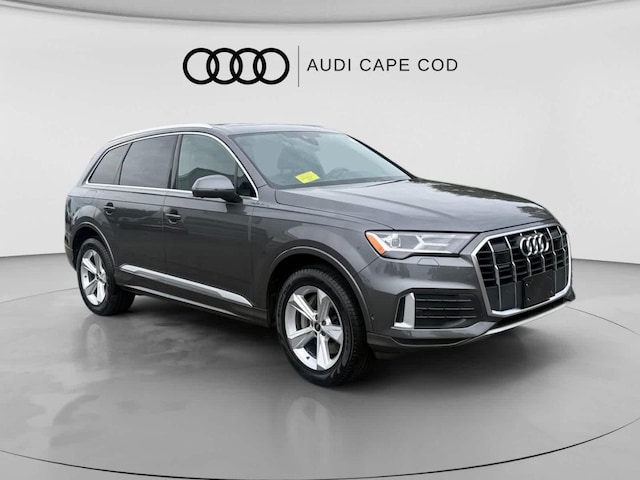
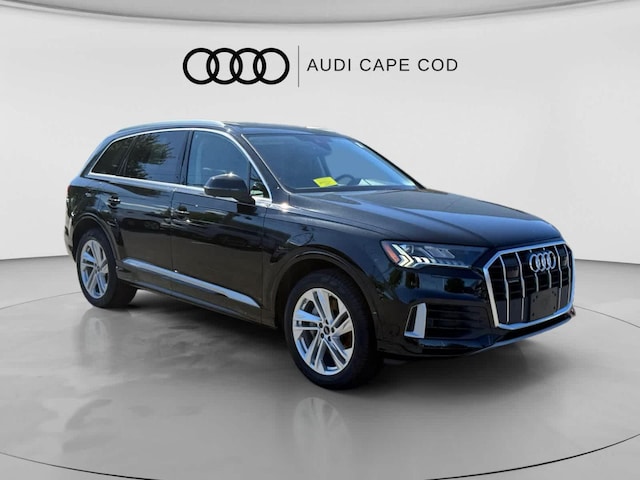
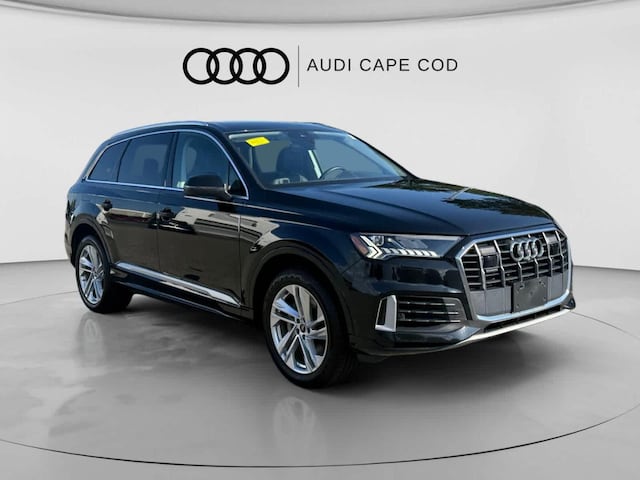
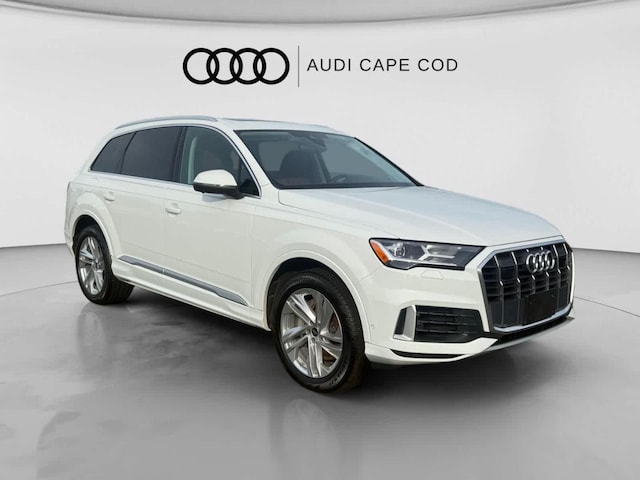
Audi Q7

Importing a used Audi Q7 from the USA

The Q7 is Audi's full-size, seven-seat family SUV — spacious, quietly luxurious and genuinely capable on the highway. It has been a strong seller in the United States since 2007, so the used pool is large, varied and generally well documented. Buyers who want to import a used Audi Q7 from the USA can pick from high-spec Premium Plus and Prestige cars at attractive value. The Q7 is built in Bratislava, Slovakia, which is why origin must be verified from the VIN before any duty rate is assumed, as covered below.

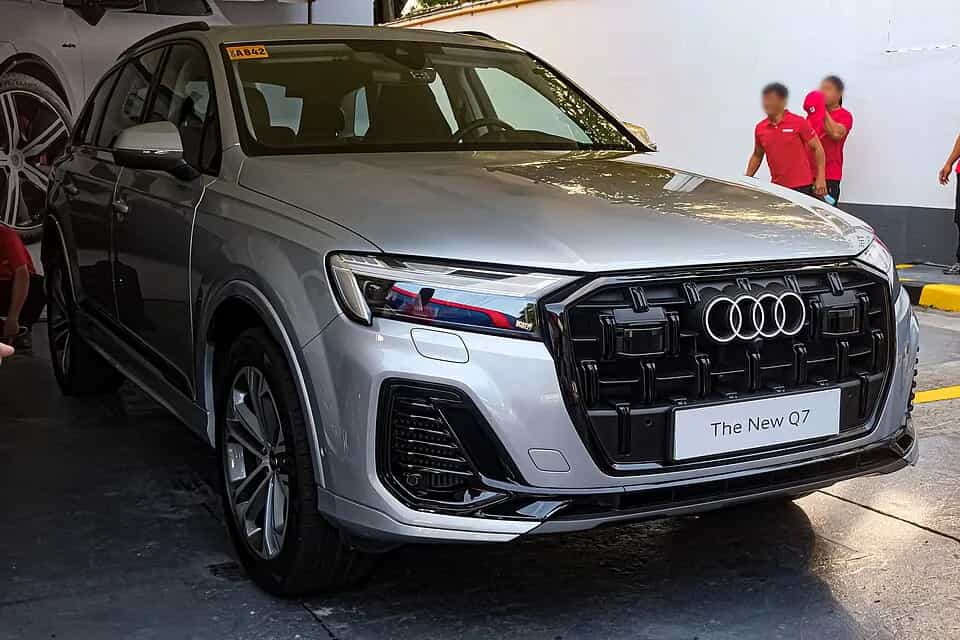
Audi Q7 – used car imported from the USA
Photo: Ethan Llamas · CC BY-SA 4.0 · Wikimedia Commons

From launch to today

The first-generation Q7 (4L, 2007-2015) was a heavier, more truck-like SUV offered in the US with 3.6 and 4.2-litre V6/V8 petrol engines and the 3.0 TDI diesel. The second-generation Q7 (4M, 2017- ) moved to the lighter MLB Evo platform, sharpening handling and efficiency, with facelifts in 2020 and 2024 bringing updated styling and infotainment. The 4M is the version most US used shoppers will focus on, alongside the performance SQ7.

Engines and drivetrain in detail

US 4M Q7 55 TFSI models use a 3.0-litre turbocharged V6 with 48-volt mild-hybrid assistance, around 335 hp and 500 Nm; earlier 4M cars offered a 2.0-litre four-cylinder (45 TFSI). The SQ7 brings a 4.0-litre twin-turbo V8 with roughly 500 hp. All 4M Q7s pair an eight-speed Tiptronic automatic with quattro all-wheel drive, and many carry adaptive air suspension plus optional all-wheel steering for easier parking of a large vehicle.

Trim levels and variants

US Q7s came as Premium, Premium Plus and Prestige, all with three rows and seven seats. Expect Virtual Cockpit, dual-screen MMI on facelift cars, panoramic roof, Bang & Olufsen audio, quad-zone climate and 19- to 21-inch wheels. There is no coupe or short-wheelbase variant — the lower, five-seat sibling is the Q8.

Used availability in the USA

Supply is broad. Second-generation cars from 2017-2022 commonly show 30,000-90,000 miles, often as one-owner lease returns with full histories. Sun Belt examples give rust-free bodies; northern cars warrant an underbody inspection for road salt. First-generation 4L cars are cheaper but older, so condition and maintenance matter even more.

When importing makes sense

The Q7 is the practical choice for families who need three usable rows without stepping up to a truck-based SUV. It suits long-distance drivers, buyers who tow, and anyone wanting a comfortable, well-equipped seven-seater with documented US ownership. If you value space and refinement over the Q8's style, the Q7 is the sensible pick.

Facts and figures

SpecificationDetail (55 TFSI 4M, typical US car)
Generation4M (2017- ), facelifts 2020/2024
Body style5-door SUV, 7 seats
Engine3.0 TFSI turbo V6, 48V MHEV
Power335 hp (SQ7 approx. 500 hp)
Torque500 Nm (55 TFSI)
Transmission8-speed Tiptronic automatic
Drivetrainquattro all-wheel drive
0-100 km/happrox. 5.9 s (55 TFSI)
Top speedapprox. 250 km/h
Lengthapprox. 5,065 mm
Kerb weightapprox. 2,065 kg
FuelPremium petrol
Seating7 (three rows)
Boot capacityapprox. 295-2,050 litres

Reliability and common problems

The 3.0 TFSI V6 is well proven; watch for carbon build-up, water-pump and thermostat wear, and keeping the 48V mild-hybrid system healthy. On first-generation 4L cars, timing-chain tensioner issues on the earlier 3.0 TFSI are a known concern, so confirm any related work. Air suspension is the main high-mileage cost — check the car sits level and rises without delay. Infotainment glitches usually clear with a software update. A complete service record is the best proof of Audi Q7 reliability, and well-kept examples last a long time.

How US versions differ

US cars use amber side markers, US-spec headlight patterns, no standard rear fog lamp and MPH-primary clusters. Petrol Q7 mechanicals are shared globally, making European compliance straightforward — simpler than importing market-specific diesel variants.

From US purchase to registration

Select a documented car, run a VIN and origin check to establish the true plant of build, pay through escrow, arrange ocean freight to a European port, clear customs, present the car for TUEV/individual approval covering the lighting and cluster changes, and register it in Germany. USCar Trader coordinates each step as your intermediary.

Costs, duty and taxes at a glance

In short: the 0% duty rate applies only with documented US origin (VIN/plant) – German import VAT of 19% is always due.

Two separate charges apply. Import duty: the 0% EU rate under Regulations (EU) 2026/1455 and 2026/1461 applies only where US origin is provable from the VIN/plant. The Q7 is built in Slovakia, so the correct duty rate depends on that verified plant of build and is never assumed — we confirm it from the VIN. The 19% German import VAT (Einfuhrumsatzsteuer) always applies on top and is stated separately. Both are quoted transparently, with no margin.

TÜV, approval and license plates

Typical work covers European headlight coding or replacement, a rear fog lamp, a km/h speedometer confirmation, and odometer documentation. With full US records the individual approval is usually smooth.

Pre-purchase checklist

Match the VIN to title and body plate. Obtain a full Carfax or AutoCheck history. Inspect for accident repair, underbody corrosion and tyre wear. Confirm the air suspension works correctly. Verify service intervals and, on older cars, timing-chain history. Ensure the title is clean, not salvage. Confirm all keys and manuals are present.

Import FAQ

Is the Audi Q7 a genuine seven-seater?

Yes, all Q7s have three rows; the third row suits children or shorter adults on longer trips.

Does the Q7 qualify for 0% import duty?

Not automatically. It is built in Slovakia, so the duty rate is verified from the VIN and plant; we never promise duty-free.

Is the 19% import VAT always charged?

Yes. German import VAT applies to every imported vehicle and is shown as a separate line.

What is the difference between Q7 and Q8?

The Q7 is a taller seven-seater; the Q8 is a lower, sportier five-seat coupe-SUV on the same platform.

What mileage should I expect?

Second-generation Q7s commonly show 30,000-90,000 miles.

Are first-generation Q7s worth importing?

They are cheaper but older; buy on condition and a documented service history.

How long does import take?

Several weeks including freight, clearance and approval, depending on schedules.

Should I worry about the air suspension?

Only if it is neglected; verify it sits level and rises promptly before buying.

Explore more with Audi in the Carhub, compare the Audi SQ7, the Audi Q8 and the Audi Q5, or browse current Q7 listings.