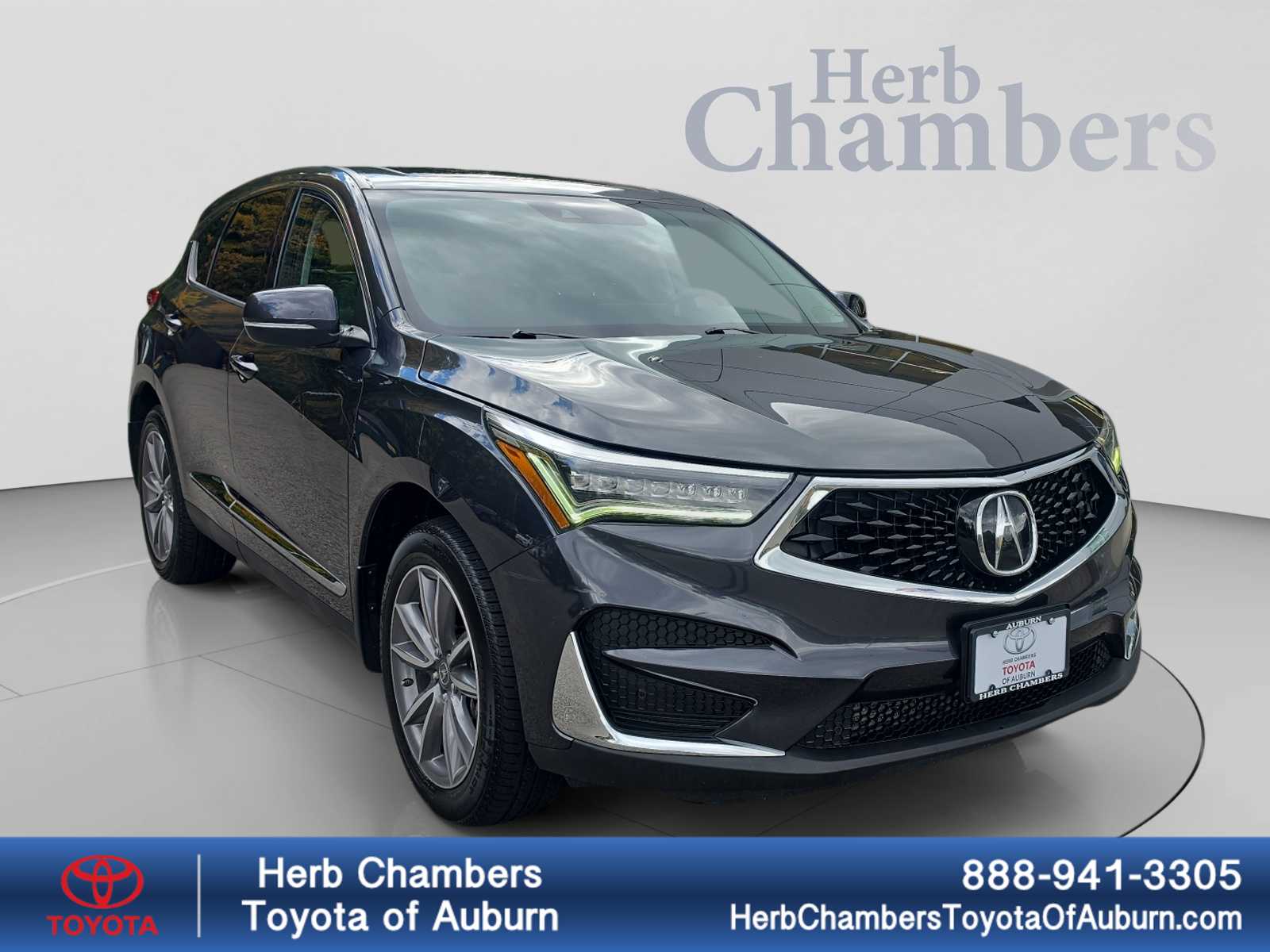


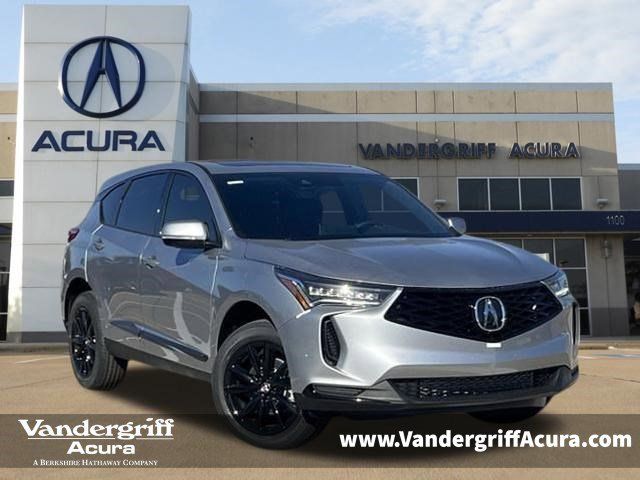
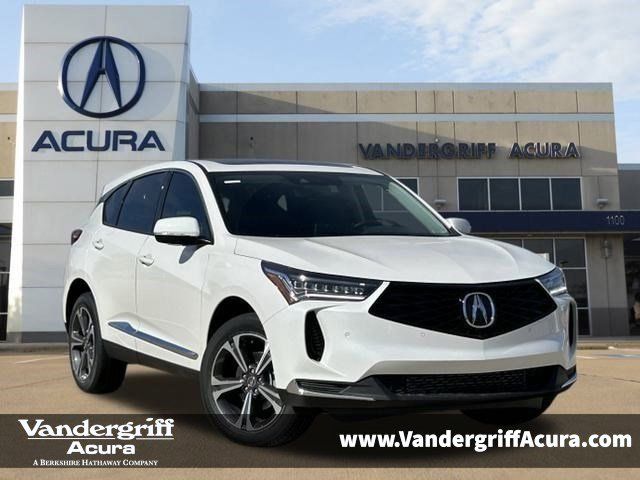
Importing a used Acura RDX from the USA
USCar Trader acts strictly as an independent broker for used vehicles. No margin, no manufacturer tie, no new-car sales.
 0049 (0)89 2000 791 00
 Mo - Fr 8:00am - 8:00pm
USCar Trader import service
Choose a specific vehicle. Where data is available, its detail page shows the import cost calculation. We assess any possible duty benefit with you before purchase.
Important: A 0% EU import-duty rate may be available for a vehicle covered by Regulation (EU) 2026/1455 that has US origin and is imported directly into the EU. CETA may apply to a vehicle with preferential Canadian origin. Whether the requirements are met is assessed for the individual case. Please contact us before purchase; we review the possible duty benefit and provide non-binding support through the process. Import VAT and other costs are assessed separately.
CarHub · Acura
Acura is Honda's North American luxury division, and it has no dealer network in Germany at all — which makes every RDX on European roads an import.
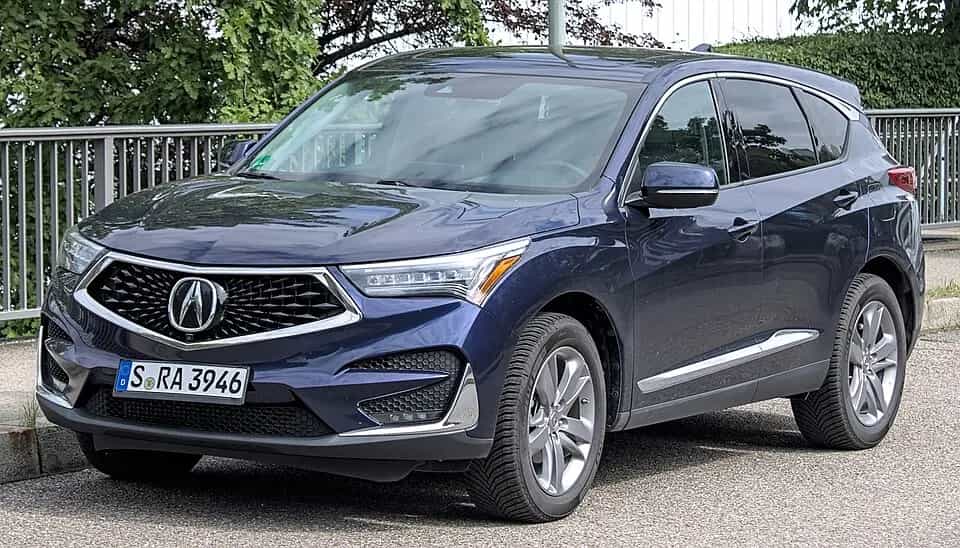
Model profile
USCar Trader acts strictly as an independent broker for used vehicles. No margin, no manufacturer tie, no new-car sales.
The RDX arrived in 2007. The first generation (2007–2012) was a turbocharged four-cylinder crossover with Acura's SH-AWD.
Powertrain and equipment
The third-generation RDX uses a single engine: the 2.0-litre VTEC turbocharged four-cylinder (K20C family), producing 272 hp and 280 lb-ft of torque, mated to a 10-speed automatic.
The RDX is a five-door compact luxury SUV only. US trims run Base, Technology, A-Spec and Advance, with A-Spec adding sportier styling, larger wheels and sport seats, and Advance layering in the full premium package — ELS Studio audio, ventilated seats, surround-view camera and adaptive dampers on later cars.
Vehicle selection
The RDX sells in strong volume in the States, so used supply is deep and varied.
The assessment depends on the specific vehicle and the circumstances of the transaction. Please contact USCar Trader before purchase; we review any possible duty benefit and provide non-binding support. Import VAT and other costs are considered separately.
Vehicle data
| Length | 186.8 in / 4,745 mm |
|---|---|
| Width | 74.8 in / 1,900 mm |
| Height | 65.7 in / 1,669 mm |
| Wheelbase | 108.3 in / 2,750 mm |
| Curb weight | 3,783–3,977 lb / 1,716–1,804 kg |
| Cargo (rear up / down) | 29.5 / 58.9 cu ft |
| Engine (3rd gen) | 2.0 L VTEC turbo inline-4 (K20C) |
|---|---|
| Power output | 272 hp |
| Torque | 280 lb-ft (approx. 380 Nm) |
| Transmission | 10-speed automatic |
| Drivetrain | FWD or SH-AWD |
| Fuel type | Premium unleaded (petrol) |
| 0–60 mph | approx. 6.5 s |
|---|---|
| Build location | East Liberty, Ohio, USA |
| EPA economy | approx. 22 city / 28 hwy mpg |
Values are reproduced verbatim from the existing article table. The documents for the specific vehicle govern.
Pre-purchase review
The third-generation RDX is generally reliable, drawing on Honda's well-developed 2.0T and 10-speed drivetrain. The most common ownership complaint is not mechanical but the True Touchpad infotainment, which many owners find unintuitive — worth testing thoroughly before you commit. Early 2019 cars saw software updates for the 10-speed's low-speed shift behaviour and for start-stop calibration; confirm these were applied.
Germany and Europe
US RDX cars use MPH instruments, US lighting with side-marker reflectors and no rear fog lamp, and US-band radio and navigation.
The assessment depends on the specific vehicle and the circumstances of the transaction. Please contact USCar Trader before purchase; we review any possible duty benefit and provide non-binding support. Import VAT and other costs are considered separately.
Typical modifications are a rear fog lamp, ECE-compliant lighting adaptation, a speedometer that reads in km/h, and a complete emissions and technical file for the individual approval.
USCar Trader services
As a buyer based in Germany, you do not have to inspect the vehicle yourself in the United States or Canada. Within the agreed scope, USCar Trader can coordinate document review, a separately commissioned on-site inspection and purchase processing.
Covered inspection points are agreed in advance. An on-site inspection records condition at the appointment and is not a guarantee.
Next step: Before commissioning, USCar Trader and the customer agree which document, history, inspection and transaction checks suit the vehicle and are included in the service. This records what was actually checked.
Import process
The import process for a Acura RDX is planned around the specific listing, location, documents and commissioned service scope.
Questions and answers
Whether a duty benefit may be available for the specific vehicle is assessed individually. Please contact USCar Trader before purchase; we review the case and provide non-binding support through the process.
No, not automatically. A 0% EU import-duty rate may be available for a vehicle covered by Regulation (EU) 2026/1455 that has US origin and is imported directly into the EU. CETA may apply to a vehicle with preferential Canadian origin. Whether the requirements are met is assessed for the individual case. Please contact USCar Trader before purchase; we review the possible duty benefit and provide non-binding support. Import VAT and other costs are assessed separately.
No. Acura has no German network, so every RDX here is imported.
SH-AWD adds torque-vectoring traction and is the enthusiast's choice for European conditions.
Yes, broadly. Watch for carbon build-up over time and keep to premium fuel and the service schedule.
The True Touchpad divides opinion. Test it in person before buying.
2019-2022 cars with 30,000-70,000 miles offer strong value and condition.
Typically several weeks from purchase to registration, mostly freight and customs time.
More vehicles