
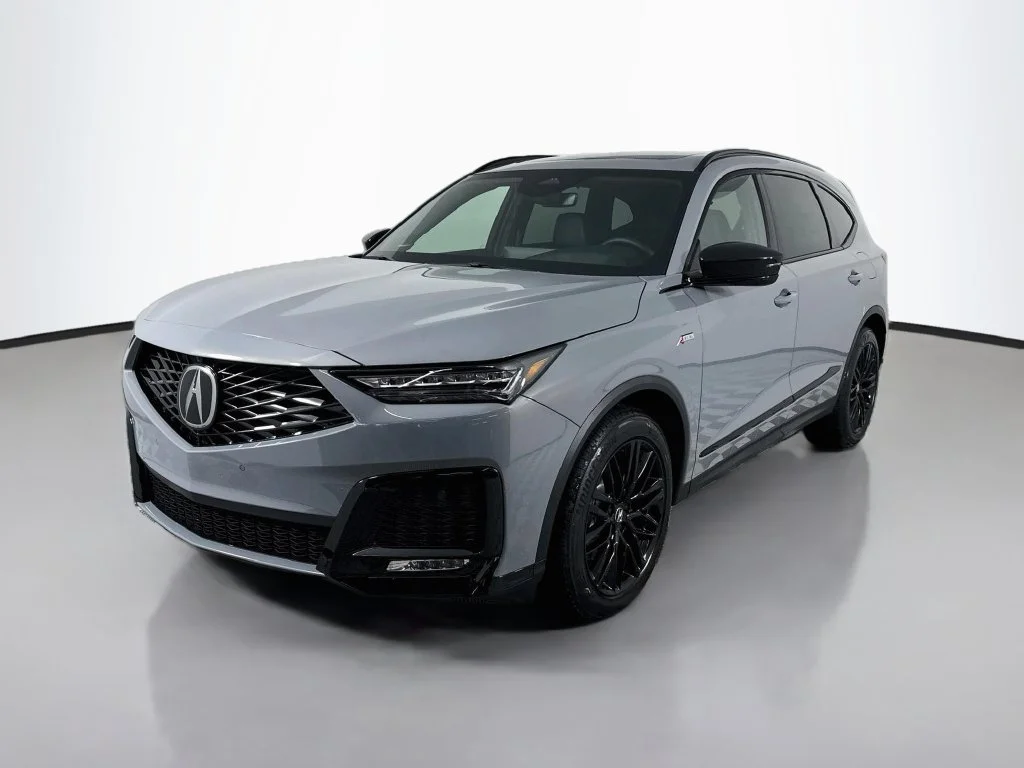


Importing a used Acura MDX from the USA
For a German buyer the MDX offers something the local market rarely does: a genuinely large, quiet, all-wheel-drive family SUV with a V6 and a torque-vectoring driveline, at used-import terms.
 0049 (0)89 2000 791 00
 Mo - Fr 8:00am - 8:00pm
USCar Trader import service
Choose a specific vehicle. Where data is available, its detail page shows the import cost calculation. We assess any possible duty benefit with you before purchase.
Important: A 0% EU import-duty rate may be available for a vehicle covered by Regulation (EU) 2026/1455 that has US origin and is imported directly into the EU. CETA may apply to a vehicle with preferential Canadian origin. Whether the requirements are met is assessed for the individual case. Please contact us before purchase; we review the possible duty benefit and provide non-binding support through the process. Import VAT and other costs are assessed separately.
CarHub · Acura
The Acura MDX has been Honda's premium three-row SUV since 2001, and it never sold new in Europe. That makes the used US market the only realistic way to put one on German plates.
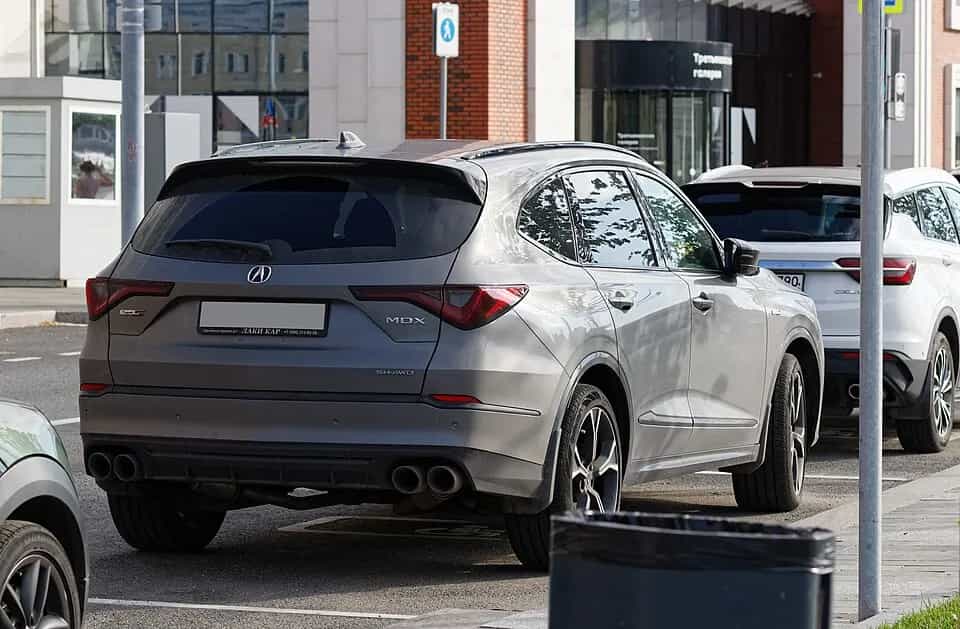
Model profile
For a German buyer the MDX offers something the local market rarely does: a genuinely large, quiet, all-wheel-drive family SUV with a V6 and a torque-vectoring driveline, at used-import terms.
The first generation (2001–2006, YD1) launched the nameplate with a 3.5-litre V6 and Honda's early VTM-4 all-wheel drive.
Powertrain and equipment
The volume engine across the third and fourth generations is the J35 3.5-litre naturally aspirated V6, producing roughly 290 hp. Third-generation cars paired it first with a six-speed and later a ZF-sourced nine-speed automatic; the fourth generation uses a ten-speed automatic.
The MDX is offered only as a five-door, seven-seat SUV (a six-seat captain's-chair layout is available on higher trims). US trim ladders have run through Base, Technology, A-Spec, Advance and, at the top, Type S with Advance content.
Vehicle selection
Supply is healthy.
An imported MDX suits a family that wants three usable rows, a smooth V6 rather than a small turbo four, and all-wheel drive, without paying European-luxury-SUV money for equivalent size.
Vehicle data
| Body style | Detail (typical, varies by generation/VIN): 5-door SUV, 6–7 seats, three rows |
|---|---|
| Length | Detail (typical, varies by generation/VIN): approx. 5,000–5,060 mm depending on generation |
| Wheelbase | Detail (typical, varies by generation/VIN): approx. 2,820–2,890 mm |
| Kerb weight | Detail (typical, varies by generation/VIN): approx. 1,900–2,150 kg |
| Seating | Detail (typical, varies by generation/VIN): 7 standard; 6 with second-row captain's chairs |
| Base engine | Detail (typical, varies by generation/VIN): 3.5 L J35 V6, naturally aspirated, ~290 hp |
|---|---|
| Type S engine | Detail (typical, varies by generation/VIN): 3.0 L turbocharged V6, ~355 hp |
| Transmission | Detail (typical, varies by generation/VIN): 6-speed / 9-speed (YD3), 10-speed (YE1) automatic |
| Drivetrain | Detail (typical, varies by generation/VIN): SH-AWD torque-vectoring AWD (FWD on some US trims) |
| Fuel | Detail (typical, varies by generation/VIN): Petrol (premium recommended on Type S) |
| Towing | Detail (typical, varies by generation/VIN): up to ~2,270 kg (5,000 lb) on AWD models |
| Generations | Detail (typical, varies by generation/VIN): YD1 (2001–06), YD2 (2007–13), YD3 (2014–20), YE1 (2022–) |
|---|---|
| Wheels | Detail (typical, varies by generation/VIN): 18–21 in depending on trim |
| Assembly | Detail (typical, varies by generation/VIN): East Liberty, Ohio, USA |
| Origin flag | The assessment depends on the specific vehicle and the circumstances of the transaction. Please contact USCar Trader before purchase; we review any possible duty benefit and provide non-binding support. Import VAT and other costs are considered separately. |
Values are reproduced verbatim from the existing article table. The documents for the specific vehicle govern.
Pre-purchase review
For the Acura MDX, the agreed inspection plan focuses in particular on frame, underbody, towing or payload modifications, visible corrosion and records of previous use. USCar Trader can document these points through a separately commissioned on-site inspection; inaccessible areas or unauthorised road tests are explicitly recorded as unchecked.
Germany and Europe
US MDX examples run on the North American market's equipment, so expect miles-per-hour primary speedometers (a digital km/h readout is usually available), amber rear indicators on newer cars, and US-spec headlights.
For approval, the typical work is on the lighting: adapting or replacing headlights to the European beam pattern, ensuring a rear fog lamp is present and functional, and confirming indicator colour.
USCar Trader services
As a buyer based in Germany, you do not have to inspect the vehicle yourself in the United States or Canada. Within the agreed scope, USCar Trader can coordinate document review, a separately commissioned on-site inspection and purchase processing.
Covered inspection points are agreed in advance. An on-site inspection records condition at the appointment and is not a guarantee.
Next step: Before commissioning, USCar Trader and the customer agree which document, history, inspection and transaction checks suit the vehicle and are included in the service. This records what was actually checked.
Import process
The assessment depends on the specific vehicle and the circumstances of the transaction. Please contact USCar Trader before purchase; we review any possible duty benefit and provide non-binding support. Import VAT and other costs are considered separately.
Questions and answers
Yes. The MDX was never sold new in Europe, so importing a used example from the US market is the standard route, and it is fully registrable after individual approval.
No, not automatically. A 0% EU import-duty rate may be available for a vehicle covered by Regulation (EU) 2026/1455 that has US origin and is imported directly into the EU. CETA may apply to a vehicle with preferential Canadian origin. Whether the requirements are met is assessed for the individual case. Please contact USCar Trader before purchase; we review the possible duty benefit and provide non-binding support. Import VAT and other costs are assessed separately.
Import VAT and other taxes or costs are assessed separately under the applicable rules and the circumstances of the individual case. A blanket answer for every vehicle would not be reliable.
The 2014–2020 third generation offers the best value, while the 2022-on fourth generation and the Type S are the choice if you want the newest tech or the turbo performance version.
Broadly yes, thanks to Honda mechanicals. Watch the early nine-speed automatic and VCM oil consumption, and buy on service history.
Super Handling All-Wheel Drive distributes torque front-to-rear and across the rear axle, improving traction and cornering compared with a simple on-demand AWD system.
Typically several weeks, driven mainly by ocean freight scheduling and customs. We give a realistic timeline once a specific car is chosen.
Usually just lighting adjustments (headlight beam pattern, rear fog lamp, indicator colour) and a km/h speedometer readout.
More vehicles