Acura Integra

Importing a used Acura Integra from the USA

The Acura Integra was never sold through European showrooms, which is exactly why it has become such a sought-after grey-market import. Acura is Honda's North American premium brand, and the current Integra is a car you can only buy new in the United States, Canada and China. If you want a well-built sport compact with a manual gearbox and a genuine liftback body, importing a used Acura Integra from the USA is often the only practical route. As an independent broker, USCar Trader sources these cars from the American used market and handles the logistics, customs paperwork and German approval on your behalf.

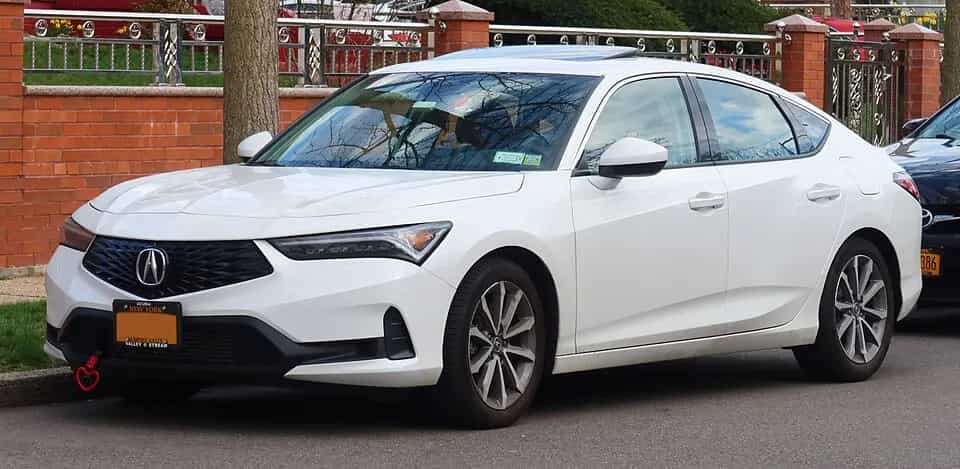
Acura Integra – used car imported from the USA
Photo: Kevauto · CC BY-SA 4.0 · Wikimedia Commons

Model history and generations

The Integra name has deep roots. The original ran from 1986 to 2001 across several generations, and the DC2 Type R with its high-revving B18C engine is still a collector favourite. Acura then retired the badge in favour of the RSX. The nameplate returned for the 2023 model year on the codename DE platform, sharing its bones with the eleventh-generation Honda Civic. Unlike the old Integra, the modern car is a five-door liftback rather than a coupe. A performance flagship, the Integra Type S, arrived for 2024 and brought back a proper 320-hp turbo engine and a six-speed manual. Because the current car is still recent, most examples on the US market are low-mileage and in strong condition.

Engines and drivetrain

The standard Integra uses Honda's 1.5-litre turbocharged four (engine family L15CA), producing around 200 hp and 192 lb-ft of torque. A CVT is standard, but the A-Spec with the Technology Package can be ordered with a genuine six-speed manual — a rarity in this class and a big reason buyers seek these cars out. Drive goes to the front wheels. The Integra Type S steps up to the 2.0-litre turbo VTEC K20C1, rated at 320 hp and 310 lb-ft, paired exclusively with a six-speed manual, a rev-match function and a helical limited-slip differential. There is no all-wheel-drive Integra; every version is front-wheel drive.

Which trim makes sense

The line-up is straightforward: base Integra, A-Spec, A-Spec with Technology Package, and the range-topping Type S. All share the five-door sportback silhouette with a hatch rather than a conventional boot lid, which makes the car more practical than its coupe-like roofline suggests. A-Spec adds larger wheels, sport styling and interior trim; the Technology Package unlocks the ELS premium audio system, a head-up display on the Type S, and the manual-transmission option on lower cars.

Supply on the US market

Because the current Integra only launched in 2022 for the 2023 model year, the American used pool is young. You will mostly find cars from 2023 to 2025 with modest mileage, many still inside their original factory warranty period in the US. Clean one-owner A-Spec examples with the manual are the most desirable and move quickly. Type S cars are scarcer and command a premium at auction. Look for well-maintained coastal or southern cars to avoid road-salt corrosion, and always pull the full history before committing.

Who benefits from importing

An imported Integra suits the driver who wants something you simply cannot register new in Germany — a Honda-derived sport compact with a stick shift, premium interior and a distinctive badge. It appeals to enthusiasts who value the manual gearbox and the Type S's limited-slip differential, and to buyers who want Civic mechanical reliability wrapped in a more upscale package. If you need a large family SUV or a diesel commuter, look elsewhere; the Integra is a focused driver's car.

Technical data

SpecificationDetail (typical US-market car)
Body style5-door liftback (sportback)
GenerationDE (from 2023 model year)
Base engine1.5 L turbo I4 (L15CA)
Base outputapprox. 200 hp / 192 lb-ft
Type S engine2.0 L turbo VTEC (K20C1)
Type S outputapprox. 320 hp / 310 lb-ft
TransmissionCVT or 6-speed manual (Type S: 6-MT only)
DrivetrainFront-wheel drive
0–60 mph (Type S)around 5 seconds
Lengthapprox. 4,720 mm
Wheelbaseapprox. 2,735 mm
FuelPetrol (premium recommended on Type S)
Seating5
Assembly plantMarysville, Ohio (USA)
Condition offeredUsed only

Known weak points and maintenance

Integra reliability is closely tied to the Honda Civic it shares its mechanicals with, which is good news. The 1.5-litre turbo engine is proven, but it does have known traits worth checking: fuel dilution of the engine oil in very short-trip, cold-climate use on early L15 units, and carbon build-up on the direct-injection valves over higher mileage. Insist on evidence of regular oil changes. The CVT is durable if serviced, but a neglected fluid history is a red flag. On manual cars, check clutch feel and the rev-match operation. Type S buyers should inspect brake and tyre wear, as these cars are often driven hard. Infotainment software glitches and the occasional rattle from interior trim are the most common owner complaints rather than mechanical faults.

US and EU spec compared

Since the Integra was never offered in Europe, there is no direct European counterpart to compare against. US cars run a mph-dominant speedometer cluster, US-spec lighting and North American emissions calibration. For German registration the car will need European lighting compliance, including a rear fog lamp and correctly coloured indicators, and the instrument display should show km/h. Parts overlap heavily with the Honda Civic, so servicing in Europe is more straightforward than the exotic badge might suggest.

The import process in detail

The process runs in a clear sequence: select the specific car and inspect its history; verify the VIN and confirm the build plant for the customs origin question; secure the purchase through escrow so funds are protected until the car is confirmed; arrange ocean freight from a US port to a European port such as Bremerhaven; complete EU customs clearance on arrival; present the car for TÜV inspection and individual approval (Einzelabnahme under §21 StVZO); and finally register it at your local authority. USCar Trader coordinates each stage and keeps you informed throughout.

What customs clearance really costs

In short: the 0% duty rate applies only with documented US origin (VIN/plant) – German import VAT of 19% is always due.

Two separate charges apply and should never be confused. First, the EU import duty: under Regulations (EU) 2026/1455 and 2026/1461, in force since 1 July 2026, cars of provable US origin can qualify for a 0% rate when transported directly and imported before 31 December 2029. The Integra is assembled in Marysville, Ohio, so a US-built car will often qualify — but only with documentary proof from the VIN and plant code. Without that proof the standard passenger-car duty applies. Second, and always, the 19% German import VAT (Einfuhrumsatzsteuer) is charged on the customs value. This VAT applies regardless of origin. USCar Trader works strictly as an intermediary and adds no hidden margin to these state charges.

TÜV, modifications and registration

Typical changes for German approval are modest: European-approved headlights or correct beam pattern, a functioning rear fog lamp, side indicator compliance and a speedometer reading in km/h. The odometer will usually be converted or documented in kilometres. Once the car passes the individual approval, you receive the paperwork needed to register and obtain German plates.

Check before you buy

Before you buy, confirm these points: run the VIN through Carfax or AutoCheck for accident and title history; verify a clean title with no salvage or flood branding; inspect the underbody for rust, especially on northern-state cars; confirm a documented service history with regular oil changes; check clutch and gearbox operation on manual cars; and photograph the odometer and plant code. A thorough pre-purchase inspection pays for itself many times over.

Common questions

Can I import a used Acura Integra to Germany?

Yes. The Integra is not sold in Europe, so importing a used car from the USA is the standard way to own one. USCar Trader handles the sourcing, shipping and approval.

Does the Acura Integra qualify for 0% EU import duty?

It can. The car is built in Ohio, so a US-origin example may qualify for the 0% rate under the 2026 regulations, but only with VIN and plant proof. The 19% import VAT still applies.

Is the Integra available with a manual gearbox?

Yes. The A-Spec with Technology Package offers a six-speed manual, and the Type S is manual only.

How reliable is the Acura Integra?

It shares proven Honda Civic mechanicals. Watch for oil dilution on short-trip cars and keep up with CVT fluid changes on automatic versions.

What is the difference between the Integra and the Type S?

The Type S uses a 320-hp 2.0-litre turbo engine, a manual gearbox and a limited-slip differential, versus the 200-hp 1.5-litre turbo of the standard car.

How long does the import take?

From purchase to German plates, expect several weeks, driven mainly by ocean freight scheduling and the TÜV appointment.

Do I pay VAT on a used import?

Yes. The 19% German import VAT is charged on every import regardless of the vehicle's origin.

Ready to start? Explore the full Acura in the Carhub, compare it with a Honda Civic Hatchback or step up to the Acura TLX, and browse current Integra listings.