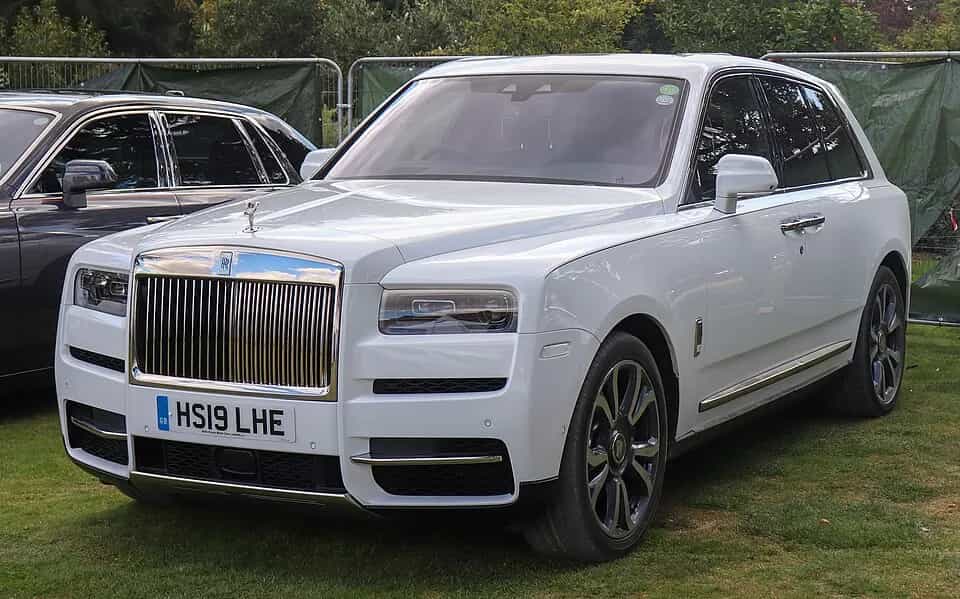
Rolls-Royce Cullinan

Importing a used Rolls-Royce Cullinan from the USA

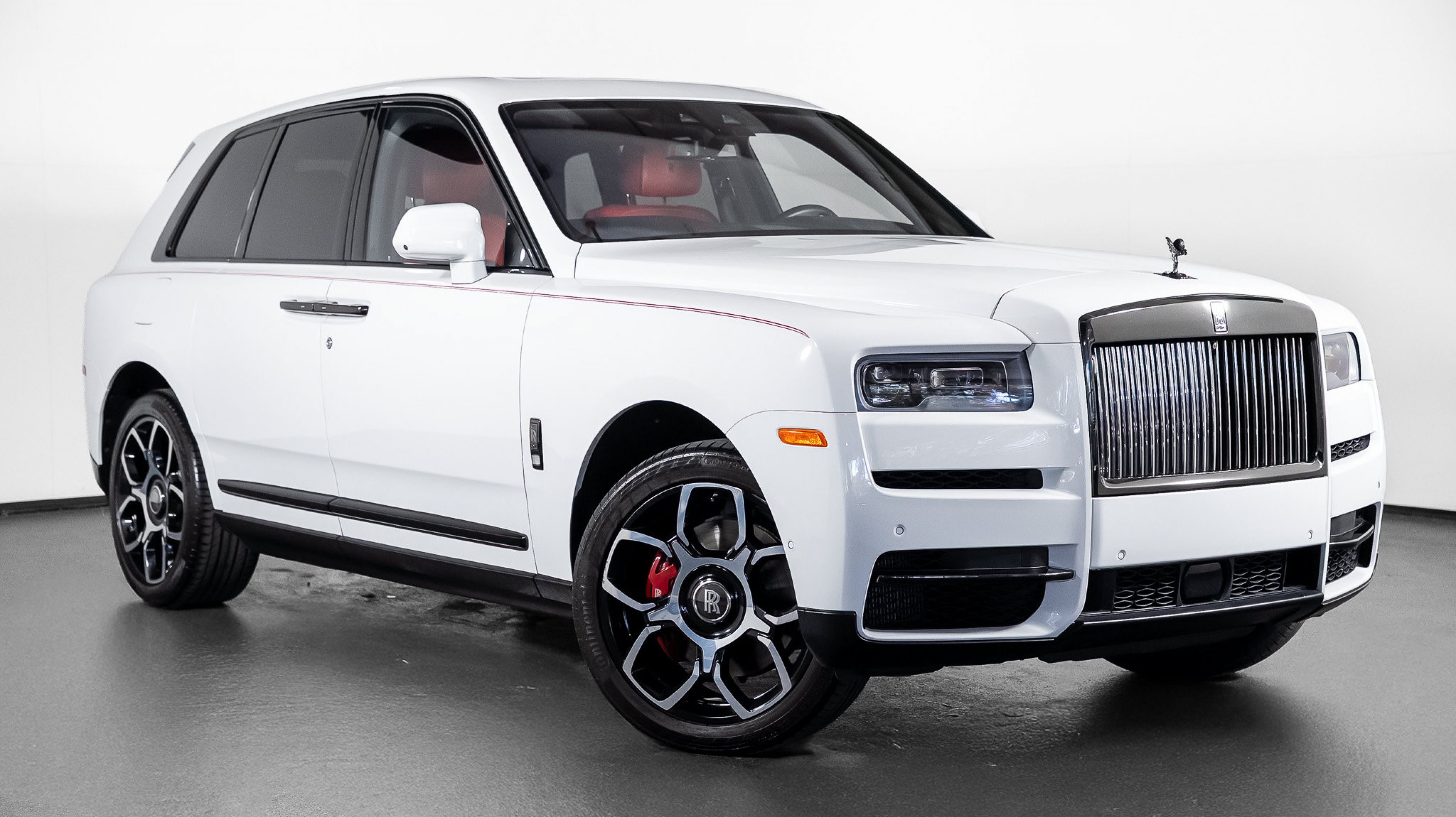
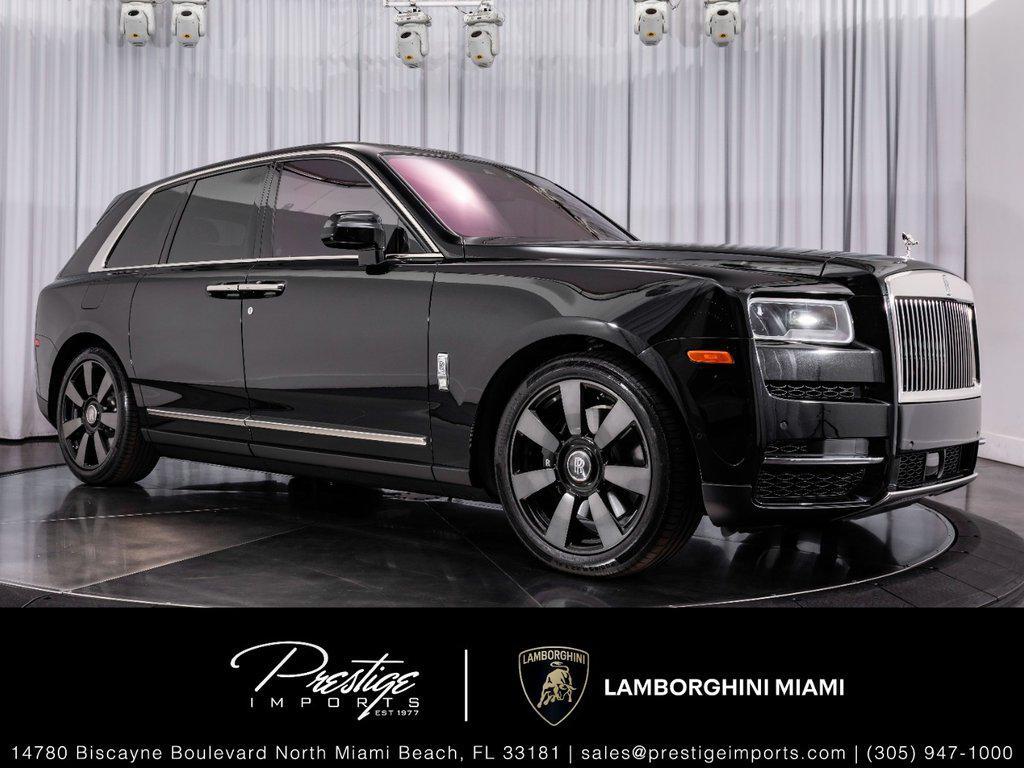
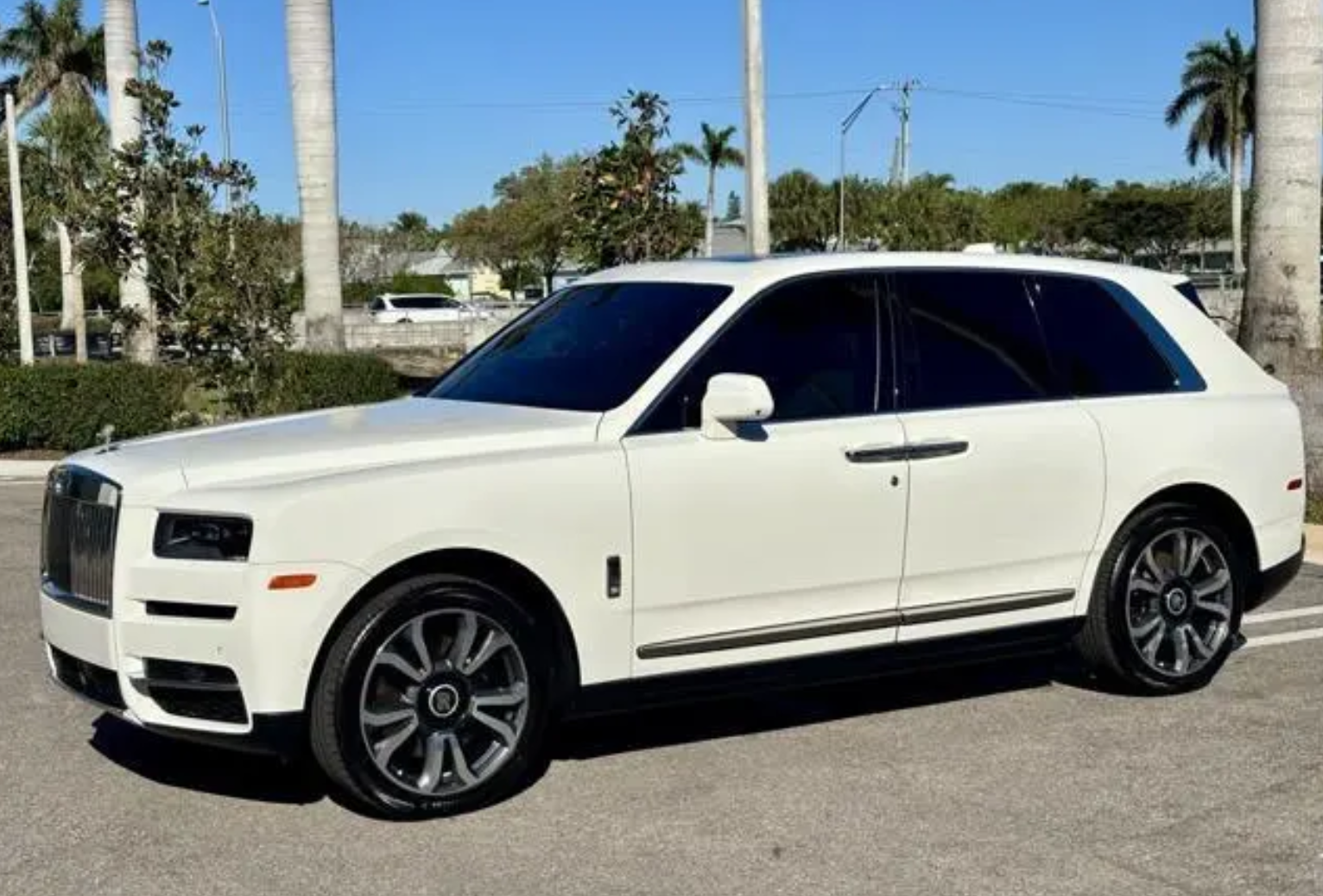
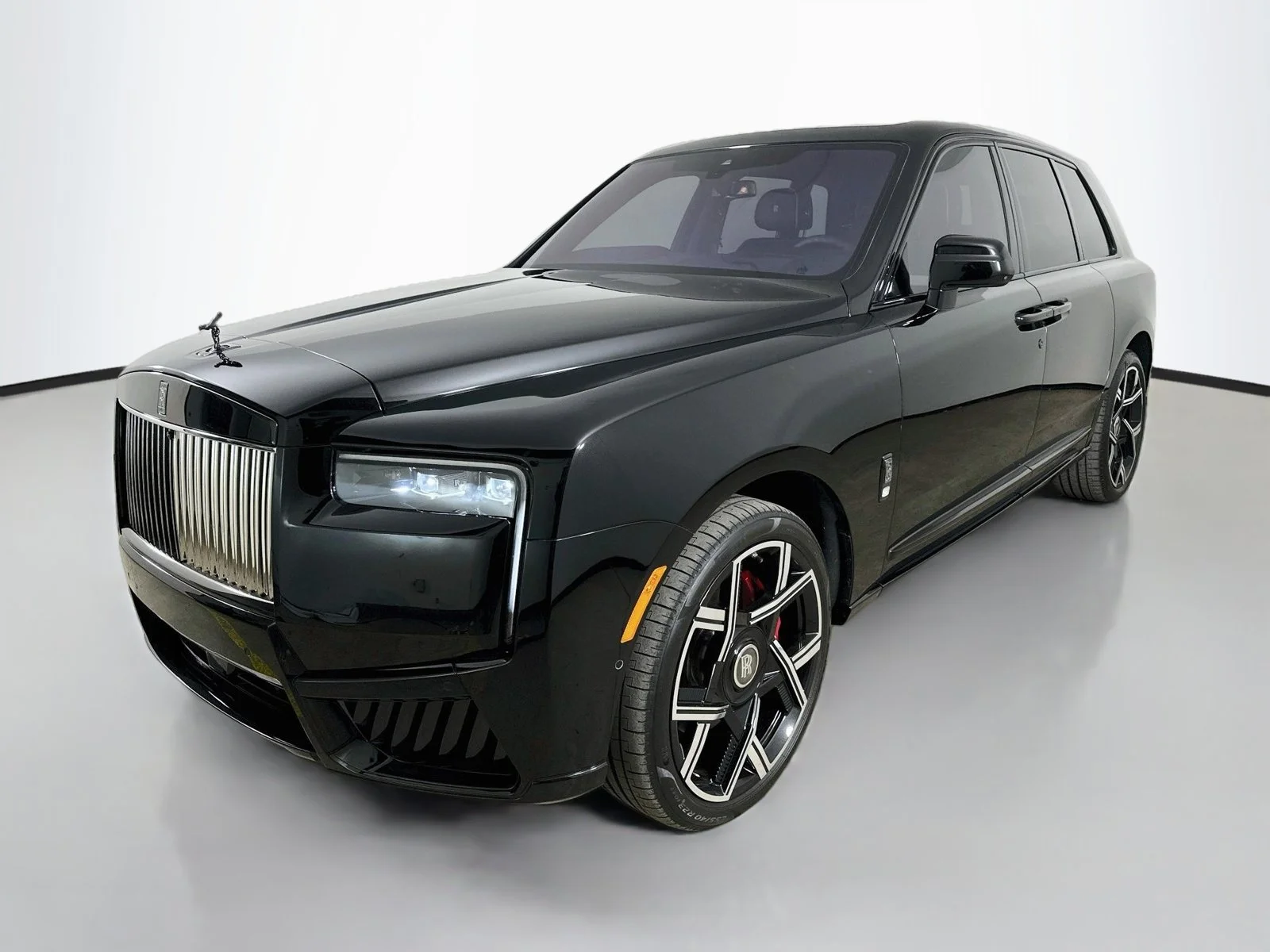
The Cullinan is the first sport-utility vehicle Rolls-Royce ever built, and it turned out to be a runaway success — a genuine Rolls-Royce raised on air springs, with a hand-finished cabin and the marque's whisper-quiet 6.75-litre V12. The United States is the Cullinan's single biggest market, which means the American used pool is unusually deep for such an exclusive car, often with high-value specification and coach-built details. If you want to import a used Rolls-Royce Cullinan from the USA, you gain access to that breadth of choice, and because early depreciation on a car this expensive is steep, a pre-owned example represents a very different proposition to a new one. USCar Trader manages the purchase and import strictly as an independent broker.

Rolls-Royce cullinan – used car imported from the USA
Photo: Vauxford · CC BY-SA 4.0 · Wikimedia Commons

Generations at a glance

The Cullinan launched in 2018 for the 2019 model year, built alongside the Phantom at Goodwood, England on Rolls-Royce's aluminium "Architecture of Luxury" spaceframe. It introduced the brand's SUV template: a commanding upright stance, rear coach (rear-hinged) doors, and a choice between a lounge-style rear bench and individual "Immersive Seating." A Black Badge version arrived in 2019 with a darker aesthetic and more assertive tuning. A comprehensively updated Series II debuted in 2024 with revised lighting, a new front treatment and interior technology upgrades, so the used market now spans both the original car and the facelift.

Powertrain lineup

Every Cullinan uses a 6.75-litre (6,749 cc) twin-turbocharged V12, producing around 563 hp and a vast 850 Nm of torque; the Black Badge raises that to roughly 600 hp and 900 Nm. Power goes through a ZF 8-speed automatic that reads the road ahead using satellite data to pre-select gears, and drive is sent to all four wheels. Despite a kerb weight comfortably over 2.6 tonnes, the Cullinan reaches 100 km/h in about 5.2 seconds and does so in near silence, thanks to self-levelling air suspension and an actively controlled anti-roll system.

Trims in the US market

The Cullinan is a single five-door SUV body offered in standard and Black Badge forms, with near-limitless Bespoke personalisation from the factory. Expect the Starlight headliner, lambswool floor mats, veneered picnic tables, a powered tailgate that doubles as event seating, and rear "Viewing Suite" chairs on some cars. US examples are frequently loaded, which works in an importer's favour.

The used market stateside

Typical import candidates are 2019–2023 cars with 10,000 to 40,000 miles (roughly 16,000–65,000 km) — genuinely low mileage for their age, since these are rarely daily-driven. Many come from California, Florida and Texas, dry-climate states that suit long-term condition. Bespoke colours and interiors are common, and Black Badge cars command their own following.

Who should import one

The Cullinan suits a buyer who wants the ultimate luxury SUV and understands the running costs that come with a hand-built V12. A used US-import example rewards those who value a specific Bespoke specification and who would rather let the first, steepest depreciation fall on the original owner. It is not a car for anyone hoping to economise on servicing, tyres or brakes — but for its intended buyer, nothing else feels quite like it.

Key specifications

AttributeDetail
Vehicle classFull-size ultra-luxury SUV
Introduced2018 (2019 model year); Series II from 2024
Body style5-door SUV with rear coach doors
Lengthapprox. 5,341 mm
Width (excl. mirrors)approx. 2,000 mm
Heightapprox. 1,835 mm
Wheelbaseapprox. 3,295 mm
Kerb weightapprox. 2,660 kg
Engine6.75 l twin-turbo V12
Powerapprox. 563 hp (600 hp Black Badge)
Torqueapprox. 850 Nm (900 Nm Black Badge)
TransmissionZF 8-speed automatic, satellite-aided
DrivetrainAll-wheel drive
0–100 km/happrox. 5.2 s
Assembly plantGoodwood, United Kingdom

How reliable is it?

Mechanically the Cullinan is built on proven BMW Group V12 and ZF gearbox foundations, so the core drivetrain is durable and the cars are produced in tiny numbers with meticulous quality control. The costs and risks lie in complexity, not fragility: the self-levelling air suspension, active anti-roll actuators and the electrically operated coach doors are expensive systems if they ever need attention. Turbochargers, coolant hoses and the extensive electronics reward preventative maintenance. Cars that sit unused can suffer battery drain and seal issues, so a service history from an authorised specialist is essential. Tyres, brake discs and routine servicing are all priced at the top of the market — budget accordingly rather than being surprised. Bought carefully and maintained properly, a used Cullinan is a dependable ultra-luxury vehicle.

What US models do differently

US-market Cullinans use mph-primary instruments, amber side-marker lamps and US headlight calibration, with bumper and lighting details set for American regulations. The infotainment, navigation mapping and radio bands may need European configuration. These are global cars mechanically, so the differences are largely about lighting, instrumentation and software rather than fundamental engineering.

Seven steps to your import

The sequence is: identify a specific car and verify its condition, specification and provenance; confirm the VIN and build plant to establish the customs origin; place funds in escrow so the seller is paid only against clean documents; arrange enclosed US transport and container ocean freight to a North Sea port; clear customs on arrival; present the car for TÜV and individual approval (Einzelabnahme, §21 StVZO); then register it. Enclosed shipping is strongly advised for a car of this value.

Customs, taxes and costs explained

Bottom line: what matters is the factory shown by the VIN – proven US origin unlocks 0% duty. The 19% import VAT always applies.

The Cullinan is built in the United Kingdom, so it is not automatically US-origin. The customs duty rate depends on the documented country of manufacture, which we confirm from the VIN and plant code. Where a US build is proven, the 0% preferential rate under Regulations (EU) 2026/1455 and 2026/1461 can apply (direct transport, until 31 December 2029); otherwise the standard third-country passenger-car rate applies. Separately and always, the 19% German import VAT (Einfuhrumsatzsteuer) is charged on the customs value — a meaningful sum on a car of this value. We never promise duty-free import and never build in a hidden margin.

German TÜV and registration

Typical approval work includes fitting or activating a rear fog lamp, adjusting headlights to European aim, confirming a km/h speed display, converting or documenting the odometer in kilometres, and providing emissions documentation. Given the car's systems, this work is best entrusted to a specialist familiar with the marque. Registration follows once TÜV issues its report.

The buyer checklist

1) Decode the VIN and confirm exact specification, Bespoke options and model year (original vs. Series II). 2) Obtain the full service history from an authorised centre. 3) Pull a Carfax or AutoCheck report for accidents, title branding and odometer accuracy. 4) Have the air suspension, coach doors and electronics inspected by a specialist. 5) Confirm the title is clean, not salvage or rebuilt. 6) Check tyre age and brake condition given replacement costs. 7) Verify all keys, tools and documentation are present.

Questions and answers

Is a used Rolls-Royce Cullinan reliable?

The core V12 and gearbox are robust; reliability depends on maintaining the complex suspension, doors and electronics through an authorised specialist.

What does it cost to run a Cullinan?

Servicing, tyres and brakes sit at the top of the market. Budget for premium maintenance rather than expecting economy-car costs.

Does a US Cullinan qualify for 0% import duty?

Only if the VIN documents a US build plant. The Cullinan is UK-built, so we check each VIN; the 19% import VAT applies regardless.

Original Cullinan or Series II?

The Series II updates lighting, the front end and interior technology; the original offers strong value. Choose by budget and taste.

How low is the mileage on used examples?

Many are exceptionally low-mileage for their age because they are rarely daily-driven, which suits an importer looking for condition.

How should the car be shipped?

Enclosed inland transport and container ocean freight are recommended to protect a vehicle of this value.

How long does the import take?

Roughly eight to fourteen weeks from purchase to German registration, depending on shipping and specialist scheduling.

Discover more at Rolls-Royce in the Carhub, compare the Rolls-Royce Ghost and, among luxury SUVs, the Mercedes-Benz GLC, or browse current Cullinan listings.