Porsche Panamera
Importing a used Porsche Panamera from the USA
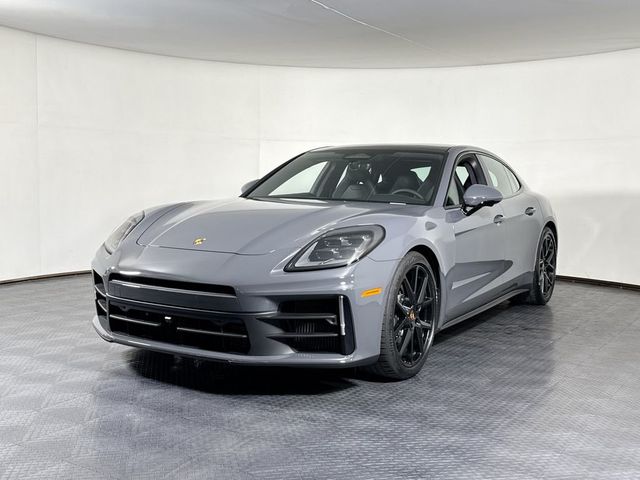
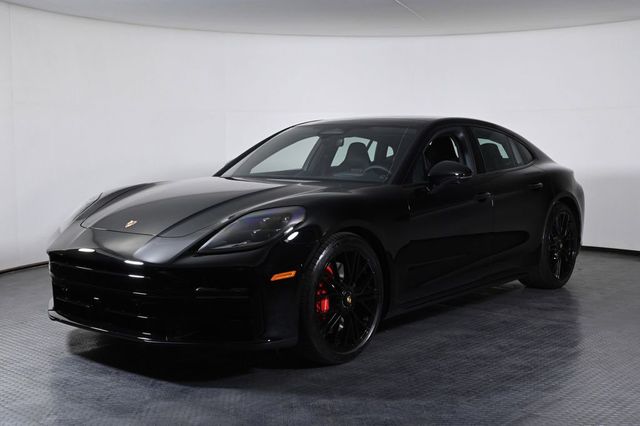
The Panamera is Porsche's four-door grand tourer — a genuine 911-adjacent driving experience with room for four adults and a hatchback boot. The American used market carries these in large numbers and in the powerful gasoline specifications that appeal to European buyers, often at attractive value once history and condition are compared. Porsche is a European brand, so the Panamera you buy in the USA was almost certainly built in Germany (Leipzig); that matters for the customs treatment, and it is the reason we always verify the VIN and plant rather than promising any particular duty outcome. USCar Trader acts strictly as your independent broker for used cars.

Production years and key changes
The first-generation 970 (2009–2016) introduced the shape, with a 2013 facelift sharpening the styling and adding models. The second-generation 971 (2017–2023) is the transformation: the MSB platform, a far more elegant body, a genuinely modern cabin with touch surfaces, and the practical Sport Turismo estate variant alongside the fastback saloon. The current 972 arrived for 2024. On the US market you will mostly encounter 970 and 971 cars, with the 971 being the sweet spot for technology and refinement.
What is under the hood
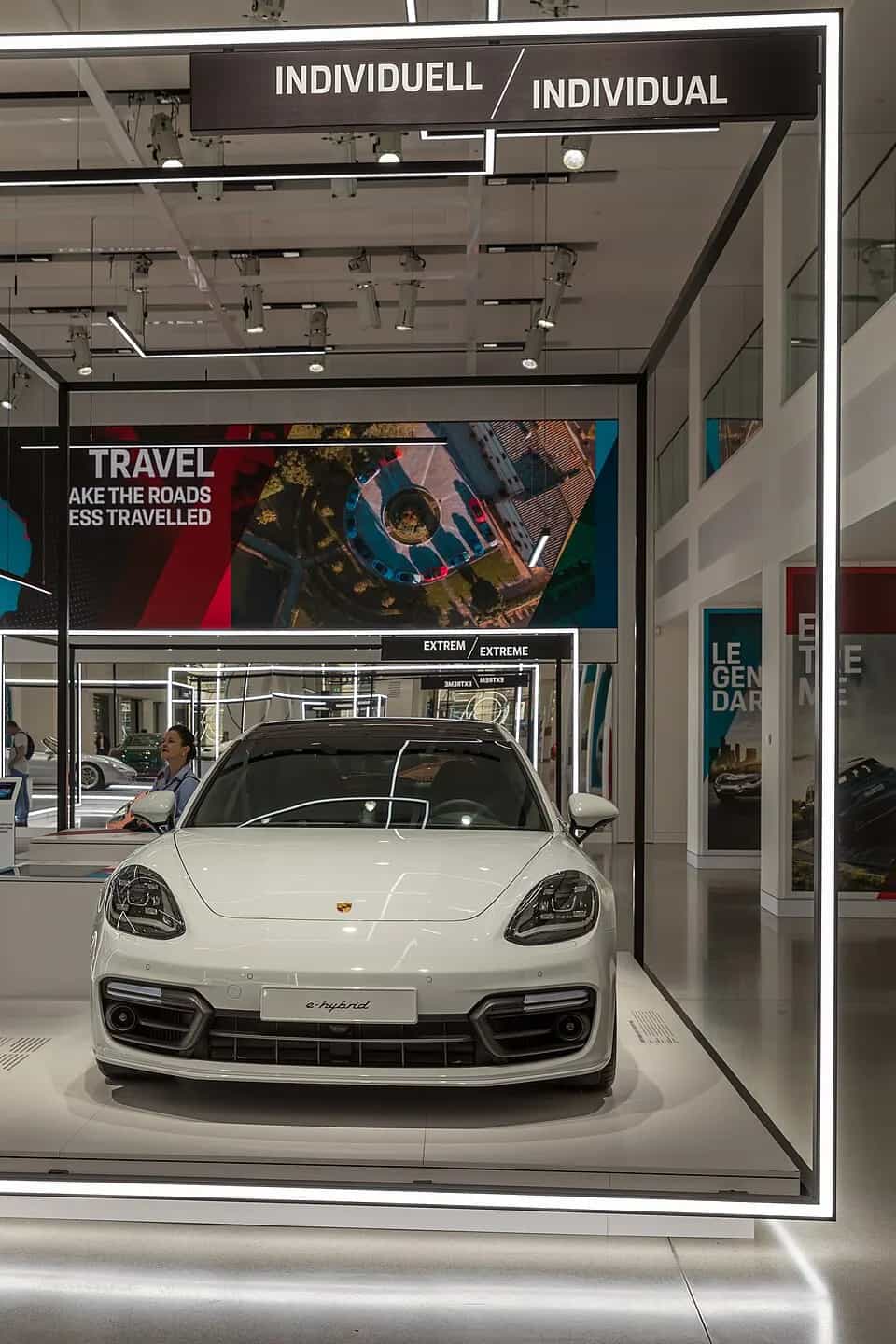
US 970 cars span a 3.6-litre naturally aspirated V6, the 4.8-litre V8 in the S, and the twin-turbo 4.8 V8 in the Turbo (around 500 hp). The 971 moved to a 2.9-litre twin-turbo V6 in the 4S (about 440 hp), a 4.0-litre twin-turbo V8 in the Turbo (around 550 hp) and the Turbo S E-Hybrid combining that V8 with an electric motor for roughly 680 hp. Every 971 uses Porsche's eight-speed PDK dual-clutch gearbox. Rear-wheel drive exists, but most US cars are the 4 / 4S all-wheel-drive versions.
Trims and body styles
Body styles are the standard fastback saloon and, on the 971, the Sport Turismo with its extended roofline and larger tailgate. Trim ladder runs from the base Panamera up through 4S, GTS and Turbo, plus the E-Hybrid models. Adaptive air suspension, rear-axle steering, the Sport Chrono package and ceramic (PCCB) brakes are the options that most change the car; note them when you evaluate a listing.
What the US market offers
Supply is healthy across the mid-Atlantic and southern states, where these cars often live a comfortable garaged life. Typical 971 cars appear with 30,000–90,000 miles, frequently one owner and dealer-serviced. Because the Panamera is a premium car, the good examples come with full documentation — exactly what you want to see before committing to import a used Panamera from the USA. Salt-belt cars deserve extra underbody scrutiny.
Who this import is for
The Panamera suits a driver who wants a true sports saloon that seats four in comfort, covers long distances effortlessly and stands apart from the usual German executive trio. If you are after the twin-turbo V8 sound and a well-optioned US car, importing gives you access to configurations that are scarce here.
Technical data and figures
| Item | Typical figure (971 Panamera 4S) |
|---|---|
| Engine | 2.9 L twin-turbo V6 (petrol) |
| Power | approx. 440 hp (324 kW) |
| Torque | approx. 550 Nm |
| Transmission | 8-speed PDK dual-clutch |
| Drive | all-wheel drive (4S) |
| Turbo engine | 4.0 L twin-turbo V8, ~550 hp |
| Length | approx. 5,049 mm |
| Width | approx. 1,937 mm |
| Wheelbase | approx. 2,950 mm |
| Kerb weight | approx. 1,900 kg |
| Body styles | fastback saloon, Sport Turismo |
| Seats | 4 (optional 4+1) |
| 0–100 km/h (4S) | approx. 4.2 s |
| Top speed (4S) | approx. 289 km/h |
| Fuel tank | approx. 75–90 L |
Reliability: trouble spots to check
The 970 V8 cars are the ones to inspect hardest: early 4.8 engines had coolant-pipe concerns, timing-chain wear can appear with neglected servicing, and the air suspension compressor and struts age. Across generations, PDK is generally strong but the mechatronic unit and clutches are expensive if abused. Direct-injection engines can build carbon on the intake valves over the years. The 971 is markedly more mature, though air suspension, PCCB brake cost and the usual German-luxury electrical niggles still apply. A Porsche specialist pre-purchase inspection is worth every cent, and a full service history is the single best predictor of a trouble-free Panamera.
US vs. Europe differences
US cars carry amber front markers, a US rear-lighting arrangement and mph-primary instruments (Porsche's digital displays make the switch to km/h simple). There is typically no separate rear fog lamp to ECE norms, and headlight aim follows SAE. On-board navigation mapping and some radio spacing are US-market. These are the points a TÜV examiner checks during the individual approval.
How the import works
Choose the exact car and specification; run a VIN and plant/origin check to establish the customs position; pay through escrow so money is released only against documents; arrange inland haulage and ocean freight (container) to a North European port; clear customs on arrival; complete the TÜV inspection and Einzelabnahme with any modifications; then register in Germany. We coordinate every link and keep you informed throughout.
Import duty, VAT and fees
In short: the 0% duty rate applies only with documented US origin (VIN/plant) – German import VAT of 19% is always due.
Keep the two charges separate. Import duty depends on the car's provable origin: the 0% rate under Regulations (EU) 2026/1455 and 2026/1461 (01 July 2026 to 31 December 2029, direct transport) applies only where the VIN/plant confirms US manufacture. The Panamera is a German-built Porsche, so US origin normally cannot be assumed — the actual plant governs the rate, and we never promise 0% or describe the import as duty-free. Separately, the 19% German import VAT (Einfuhrumsatzsteuer) always applies to the customs value plus any duty and freight.
From modifications to registration
Typical work is adding or converting a rear fog lamp, adjusting headlights to ECE aim, confirming the amber markers, and verifying the odometer in kilometres against the documented history. Non-standard wheels or lighting must be entered. The Einzelabnahme produces the paperwork the registration office needs for German plates.
Pre-buy inspection points
Match the VIN across car, title and listing. Obtain a Carfax or AutoCheck report and read accident and title-branding entries. Inspect the underbody and wheel arches for corrosion on northern cars. Confirm a complete Porsche service history, particularly for the PDK and cooling system. Verify a clean (non-salvage) title unless you knowingly accept otherwise. Test the air suspension and all driver-assist systems for faults. Have a marque specialist inspect before payment.
What buyers ask most
Can I import a used Porsche Panamera from the USA?
Yes. As a used vehicle it is fully importable; the duty rate is set by the verified origin, and 19% import VAT always applies.
Does a US-market Panamera get 0% EU duty?
Not automatically — the Panamera is built in Germany, so the plant on the VIN decides the rate. We check it per car and never assume 0%.
Which generation should I import?
The 971 (2017–2023) offers the best blend of technology, refinement and reliability; 970 cars can represent value if fully documented.
What are common Panamera problems?
Air-suspension wear, coolant-pipe issues on early V8s, PDK cost if neglected, and carbon build-up on high-mileage direct-injection engines.
Saloon or Sport Turismo?
The Sport Turismo (971 only) adds practicality and a distinctive look; the fastback is slightly lighter and cleaner in profile.
Is the Turbo S E-Hybrid worth importing?
It offers around 680 hp and strong performance, but hybrid components add complexity — insist on full history.
How much does TÜV approval involve?
Mainly lighting adjustments and documentation; a well-kept Panamera passes the Einzelabnahme without drama.
What mileage is acceptable?
Well-serviced cars at 30,000–90,000 miles are common; documentation matters more than the raw figure.
To begin, explore Porsche in the Carhub, compare rivals such as the Maserati Quattroporte, the Mercedes-Benz CLS-Class and the Audi A8, and view the current Panamera listings.