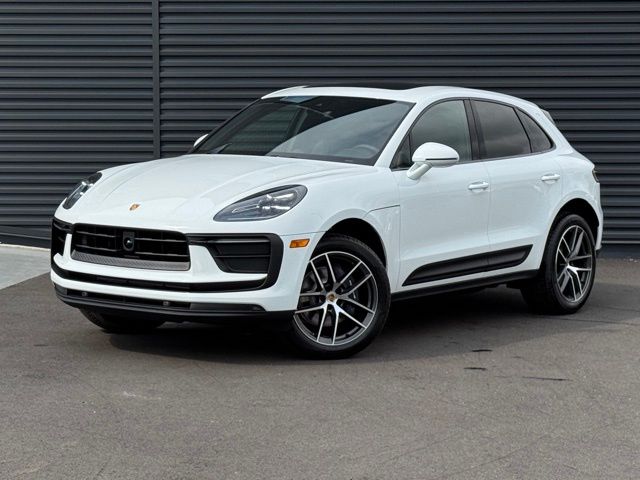
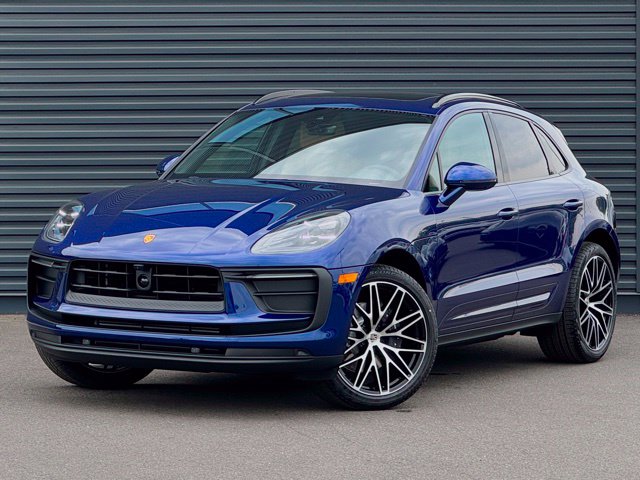
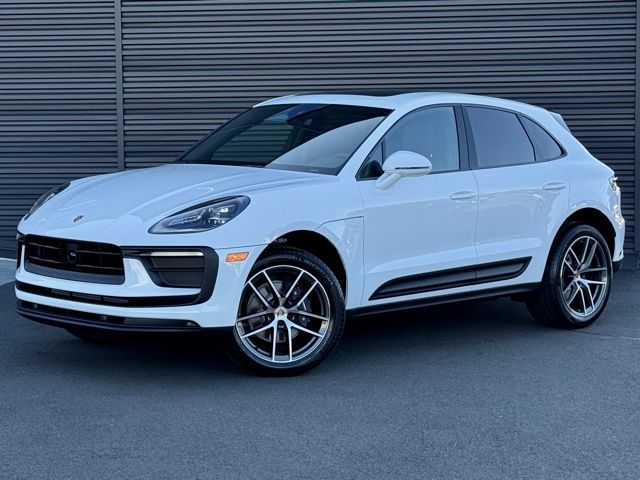
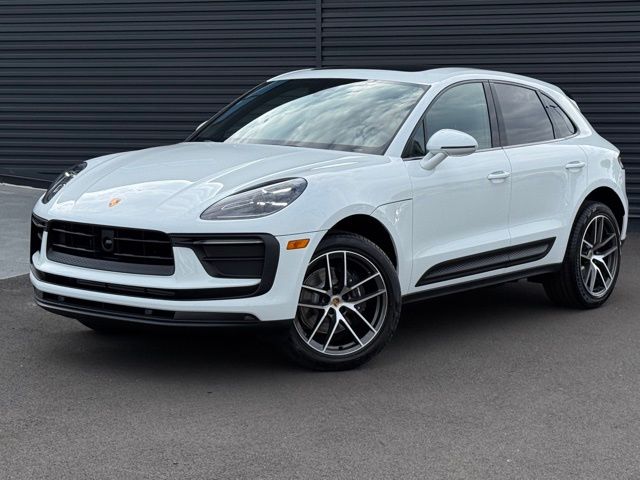
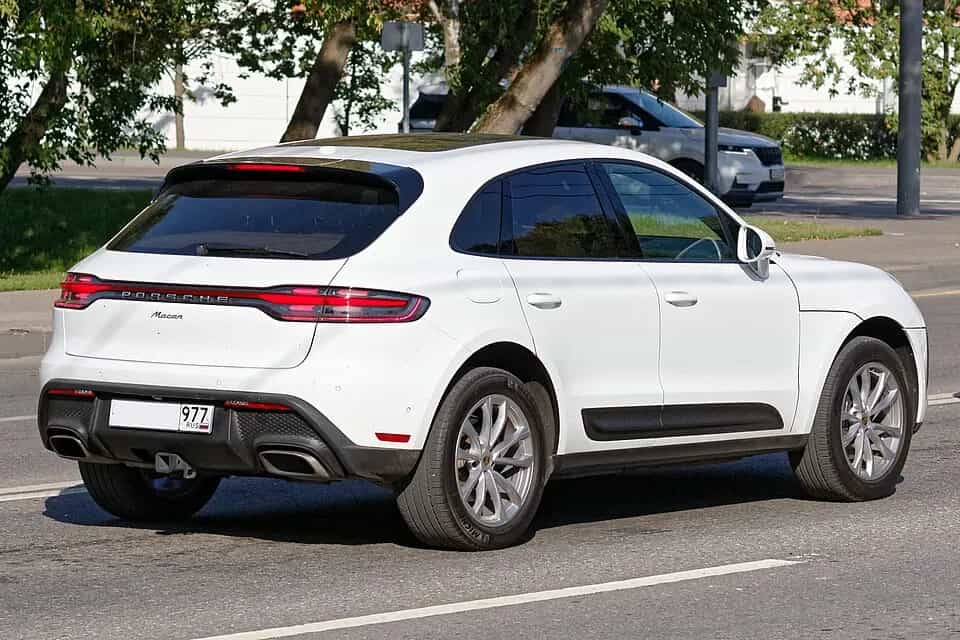
Porsche Macan
Importing a used Porsche Macan from the USA
The Macan is Porsche's compact SUV and, for many drivers, the sweet spot in the range: sports-car steering and body control in a five-door that fits real life. America bought the Macan in strength and in the punchy petrol trims Europeans favour, so the used pool is large and varied. As a European-brand vehicle, a US Macan was built in Europe (Leipzig, Germany), which is what shapes the customs treatment — and the reason we always verify the VIN and plant rather than promise a duty rate. USCar Trader acts solely as your independent broker for used cars, with no dealer margin and no manufacturer tie.

Model history and generations
The first-generation 95B launched in 2014 on a platform shared with the Audi Q5, quickly earning a reputation as the best-driving small premium SUV. A significant facelift in 2019 refreshed the styling, cabin and engine line-up, and further tweaks followed for 2022. A fully electric Macan arrived in 2024 as a separate model on a new platform; on the US used market the combustion 95B cars (2015–2021 in particular) are what you will mostly find, and they remain the enthusiast's choice.
Engines and drivetrain
US Macans span a 2.0-litre turbo four (around 245–252 hp) in the base car, a 3.0-litre single-turbo V6 in the S (about 340–348 hp), a 3.6 or later 2.9-litre twin-turbo V6 in the GTS (roughly 360–380 hp), and the 3.6/2.9 twin-turbo V6 in the Turbo (400–440 hp). Every Macan uses Porsche's seven-speed PDK dual-clutch gearbox and standard all-wheel drive with an active-hang-on centre clutch. The engines derive from the Audi/VW family but are Porsche-calibrated.
Which trim makes sense
One body style — a five-door SUV — in a clear trim ladder: Macan, Macan S, Macan GTS and Macan Turbo. Air suspension (PASM), the Sport Chrono package and larger brakes are the options that most change the driving feel; note them, along with wheel size, when assessing a listing.
Supply on the US market
Supply is excellent, especially for 2015–2021 base and S cars, with GTS and Turbo examples appearing regularly. Typical mileage runs 30,000–100,000 miles, and warm-state cars are usually free of structural rust. Because the Macan is a premium car with a real maintenance schedule, favour documented, single-owner examples when you plan to import a used Macan from the USA.
Who benefits from importing
The Macan suits a driver who wants Porsche dynamics and badge in a manageable, practical size, and who values how it drives over outright space. If you are after a specific US petrol trim — a GTS especially — importing broadens your options well beyond what the local market offers.
Technical data
| Item | Typical figure (95B Macan S) |
|---|---|
| Engine | 3.0 L single-turbo V6 (petrol) |
| Power (S) | approx. 340–348 hp |
| Torque | approx. 460 Nm |
| Transmission | 7-speed PDK dual-clutch |
| Drive | all-wheel drive |
| Base engine | 2.0 L turbo four, ~245–252 hp |
| Turbo engine | 2.9/3.6 L twin-turbo V6, up to ~440 hp |
| Length | approx. 4,696 mm |
| Width | approx. 1,923 mm |
| Wheelbase | approx. 2,807 mm |
| Kerb weight | approx. 1,865–1,990 kg |
| Seats | 5 |
| 0–100 km/h (S) | approx. 5.1 s |
| Top speed (S) | approx. 254 km/h |
| Fuel tank | approx. 65–75 L |
Known weak points and maintenance
The Macan is broadly dependable, but there are known items. The direct-injection V6 and four-cylinder engines can build carbon on the intake valves over time, and some engines consume a little oil, so check level and history. Water-pump and coolant-pipe leaks appear with age, and the PDK is strong but expensive if serviced late or abused. The transfer case / power take-off unit and the electric coolant components deserve a scan for fault codes. Early cars had occasional fuel-pump and infotainment niggles. As always with a Porsche, a full service record and a specialist pre-purchase inspection are the best predictors of a trouble-free Macan.
US and EU spec compared
US cars carry amber front markers, a US rear-lighting arrangement and mph-primary instruments (easily switched to km/h). A separate ECE rear fog lamp is usually absent, and headlight aim follows SAE rather than ECE. Navigation mapping and some radio spacing are US-market. These are the points the TÜV examiner addresses at individual approval.
The import process in detail
Select the exact car and trim; run a VIN and plant/origin check to establish the customs position; pay through escrow so funds release only against documents; arrange inland transport and ocean freight (container) to a North European port; clear customs on arrival; complete the TÜV inspection and Einzelabnahme with any modifications; then register in Germany. We coordinate every stage and keep you informed.
What customs clearance really costs
Bottom line: what matters is the factory shown by the VIN – proven US origin unlocks 0% duty. The 19% import VAT always applies.
Keep the two charges apart. Import duty depends on the car's provable origin: the 0% rate under Regulations (EU) 2026/1455 and 2026/1461 (01 July 2026 to 31 December 2029, direct transport) applies only where the VIN/plant confirms US manufacture. The Macan is German-built, so US origin normally cannot be assumed — the actual plant sets the rate, and we never promise 0% or describe an import as duty-free. Separately, the 19% German import VAT (Einfuhrumsatzsteuer) always applies to the customs value plus any duty and freight.
TÜV, modifications and registration
Typical work is adding or converting a rear fog lamp, setting headlights to ECE aim, confirming the amber markers are acceptable, and verifying the odometer in kilometres against the documented history. Aftermarket wheels or lighting are entered in the papers. The Einzelabnahme produces the documentation the registration office needs for German plates.
Check before you buy
Match the VIN across car, title and listing. Obtain a Carfax or AutoCheck report and read the accident and title-branding entries. Inspect the underbody for corrosion on northern cars. Confirm complete Porsche service history, checking oil consumption and cooling. Verify a clean, non-salvage title unless you knowingly accept otherwise. Scan for PDK and PTU fault codes and test the air suspension where fitted. Have a marque specialist inspect before payment.
Common questions
Can I import a used Porsche Macan from the USA?
Yes. As a used vehicle it is fully importable; the duty rate follows the verified origin, and 19% import VAT always applies.
Does a US-market Macan get 0% EU duty?
Not automatically — the Macan is built in Germany, so the plant on the VIN decides the rate. We check it per car and never assume 0%.
Which Macan trim should I import?
The S balances performance and running costs; the GTS is the enthusiast's pick if you find a well-kept one.
What are common Macan problems?
Intake carbon build-up, some oil consumption, water-pump and coolant leaks with age, and PDK cost if servicing is neglected.
Is the four-cylinder Macan worth importing?
It is smooth and economical, but many buyers prefer the V6 S for its character; both drive well.
How does the Macan compare to the Audi Q5?
They share a platform, but the Macan has sharper steering, firmer body control and Porsche calibration.
What mileage is acceptable?
Well-serviced cars at 30,000–100,000 miles are common; documentation matters more than the figure.
Does TÜV approval take long?
Mostly lighting adjustments and paperwork; a sound Macan clears the Einzelabnahme without difficulty.
To get started, browse Porsche in the Carhub, compare the closely related Audi Q5, the BMW X4 and the Mercedes-Benz GLC, and view the current Macan listings.