Importing a used Porsche Carrera GT from the USA
As an independent broker, USCar Trader does not own or sell these cars and takes no margin on the vehicle.
 0049 (0)89 2000 791 00
 Mo - Fr 8:00am - 8:00pm
USCar Trader import service
Choose a specific vehicle. Where data is available, its detail page shows the import cost calculation. We assess any possible duty benefit with you before purchase.
Important: A 0% EU import-duty rate may be available for a vehicle covered by Regulation (EU) 2026/1455 that has US origin and is imported directly into the EU. CETA may apply to a vehicle with preferential Canadian origin. Whether the requirements are met is assessed for the individual case. Please contact us before purchase; we review the possible duty benefit and provide non-binding support through the process. Import VAT and other costs are assessed separately.
CarHub · Porsche
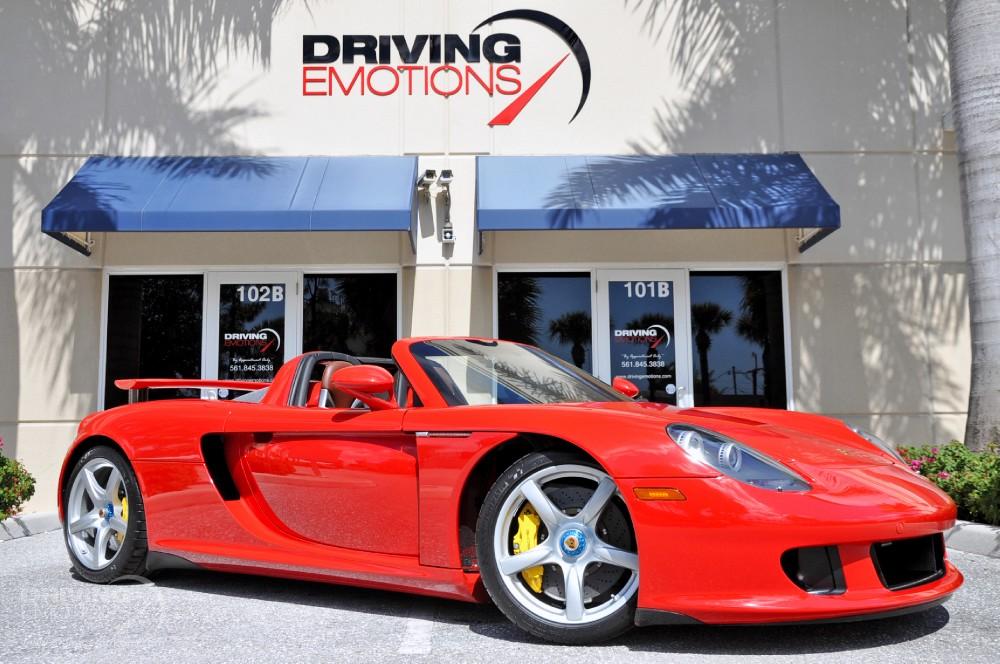
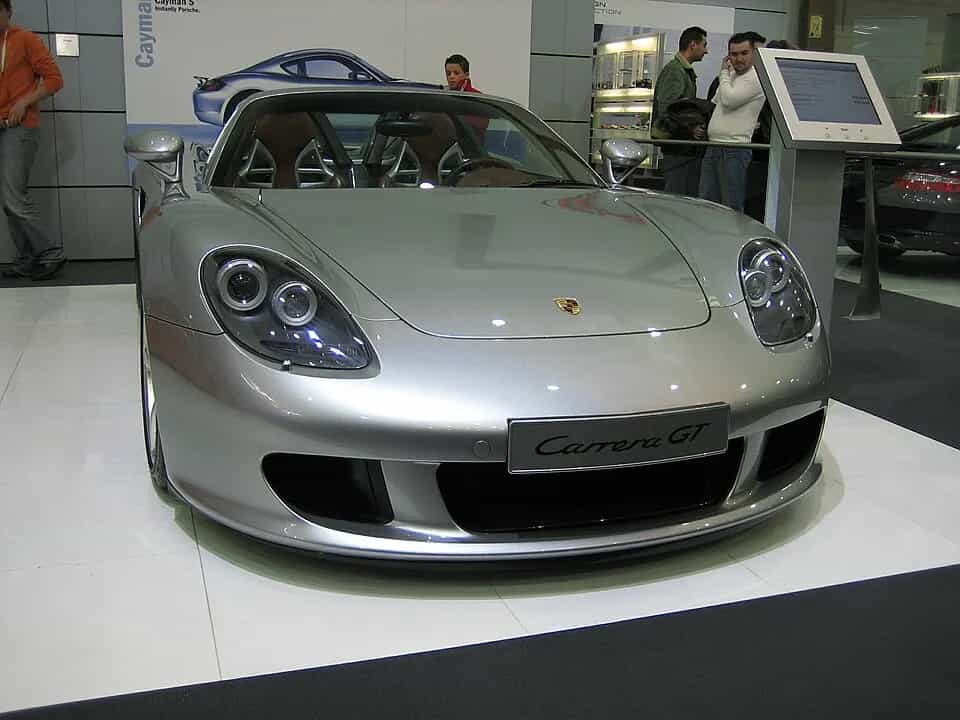
Few cars condense an era the way the Carrera GT does.
Price:669,000.00 USD
Model profile
As an independent broker, USCar Trader does not own or sell these cars and takes no margin on the vehicle.
The Carrera GT had no direct predecessor and no successor.
Powertrain and equipment
At the centre sits a 5.7-litre naturally aspirated V10, internal type 980/01, producing around 612 PS (603 hp) at 8,000 rpm and roughly 590 Nm of torque. It revs to about 8,400 rpm and drives the rear wheels only through a six-speed manual gearbox.
The Carrera GT was offered in a single body style: a two-seat, mid-engined roadster with a removable two-piece hardtop that stows in the front luggage compartment. There were no trim levels in the conventional sense. Buyers chose paint, interior leather colour and a handful of options.
Vehicle selection
The American market holds a meaningful portion of surviving cars, and many have covered very low mileage. It is common to find examples with well under 15,000 miles, often stored and lightly used. Condition ranges widely: some are collector-grade with full Porsche Classic documentation, others have been tracked or modified.
Vehicle data
| Kerb weight | Detail: approx. 1,380 kg |
|---|
| Body style | Detail: 2-seat mid-engine roadster (targa top) |
|---|---|
| Engine | Detail: 5.7 L naturally aspirated V10 (980/01) |
| Power | Detail: approx. 612 PS (603 hp) at 8,000 rpm |
| Torque | Detail: approx. 590 Nm |
| Transmission | Detail: 6-speed manual |
| Drivetrain | Detail: Rear-wheel drive |
| Production years | Detail: 2004–2006 |
|---|---|
| Chassis code | Detail: 980 |
| Redline | Detail: approx. 8,400 rpm |
| Clutch | Detail: Ceramic composite (PCCC) |
| 0–100 km/h | Detail: approx. 3.9 s |
| Top speed | Detail: approx. 330 km/h |
| Chassis | Detail: Carbon-fibre monocoque |
| Brakes | Detail: Carbon-ceramic (PCCB) |
| Units built | Detail: approx. 1,270 |
Values are reproduced verbatim from the existing article table. The documents for the specific vehicle govern.
Pre-purchase review
The V10 itself is robust when serviced, but the Carrera GT is a specialist ownership proposition. The ceramic clutch wears with clumsy use and is expensive to replace, so a clutch that already shows wear is a real cost factor.
Germany and Europe
US-market cars carry federal lighting and side marker reflectors, mph-dominant instrumentation and US emissions labelling. Bumper and headlight details can differ slightly from European specification.
For German approval the typical work centres on lighting: converting or documenting headlights and adding a rear fog lamp where required.
USCar Trader services
As a buyer based in Germany, you do not have to inspect the vehicle yourself in the United States or Canada. Within the agreed scope, USCar Trader can coordinate document review, a separately commissioned on-site inspection and purchase processing.
Covered inspection points are agreed in advance. An on-site inspection records condition at the appointment and is not a guarantee.
Next step: Before commissioning, USCar Trader and the customer agree which document, history, inspection and transaction checks suit the vehicle and are included in the service. This records what was actually checked.
Import process
Selection comes first: identify a specific car with strong history.
Questions and answers
Yes. As a used vehicle it is importable. We manage the process from US purchase to German registration as your broker, without taking a margin on the car.
No, not automatically. A 0% EU import-duty rate may be available for a vehicle covered by Regulation (EU) 2026/1455 that has US origin and is imported directly into the EU. CETA may apply to a vehicle with preferential Canadian origin. Whether the requirements are met is assessed for the individual case. Please contact USCar Trader before purchase; we review the possible duty benefit and provide non-binding support. Import VAT and other costs are assessed separately.
Import VAT and other taxes or costs are assessed separately under the applicable rules and the circumstances of the individual case. A blanket answer for every vehicle would not be reliable.
It is a wear item that is expensive to replace and sensitive to poor technique. A pre-purchase inspection should assess remaining clutch life explicitly.
Around 1,270 in total, over a short 2004–2006 run, which is why provenance and documentation matter so much.
We recommend enclosed or dedicated container shipping rather than shared RoRo, to protect the vehicle in transit.
An individual approval checks the car against German requirements, mainly lighting and documentation, before registration.
Yes, identify any modifications before purchase. Non-original changes affect both value and approval and should be documented.
More vehicles