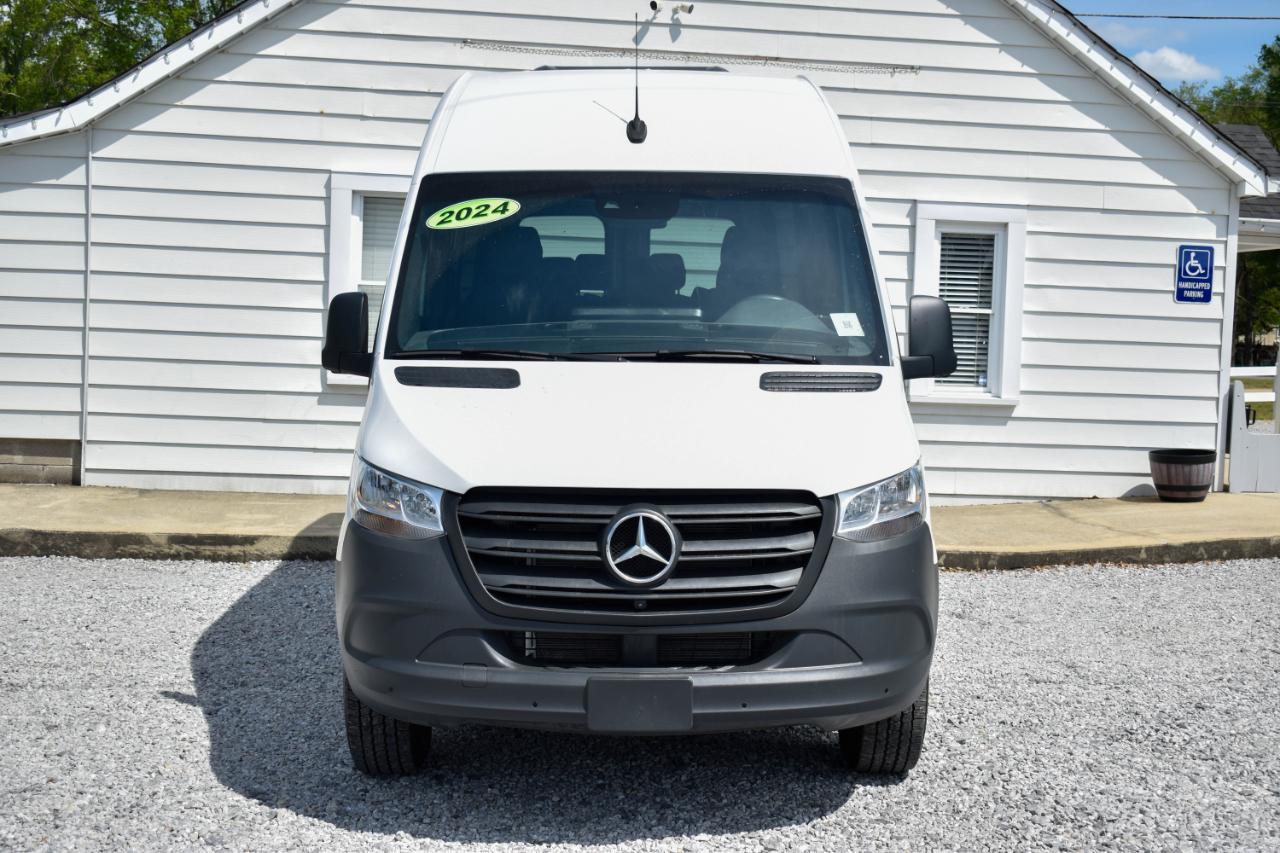
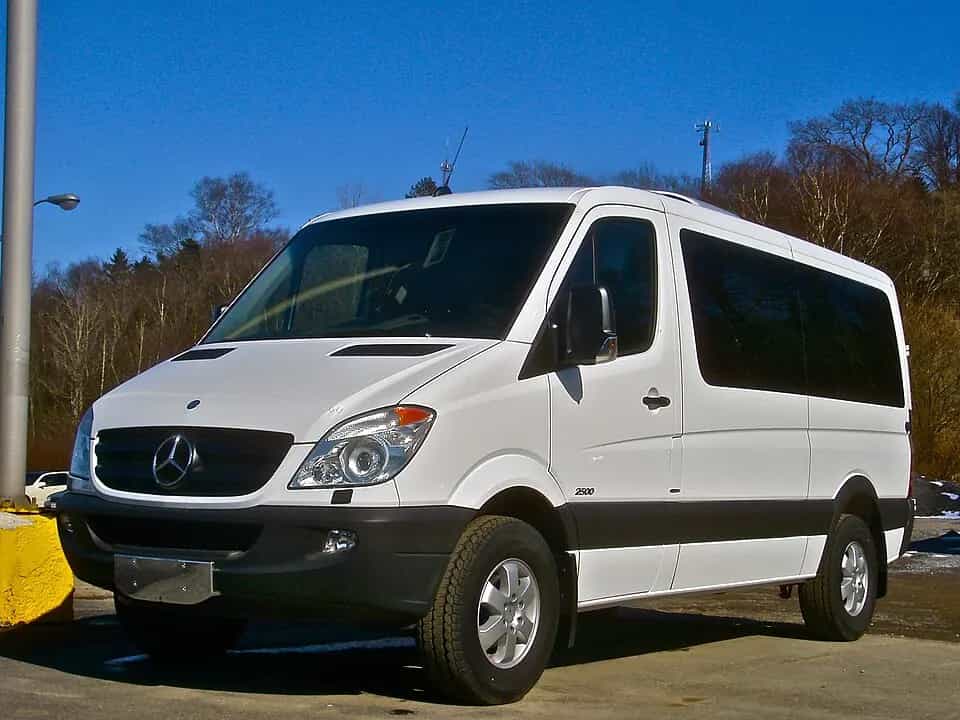
Mercedes-Benz Sprinter Passenger Van

USCar Trader import service

Import this model from the USA or Canada

Choose a specific vehicle. Where data is available, its detail page shows the import cost calculation. We assess any possible duty benefit with you before purchase.

Important: A 0% EU import-duty rate may be available for a vehicle covered by Regulation (EU) 2026/1455 that has US origin and is imported directly into the EU. CETA may apply to a vehicle with preferential Canadian origin. Whether the requirements are met is assessed for the individual case. Please contact us before purchase; we review the possible duty benefit and provide non-binding support through the process. Import VAT and other costs are assessed separately.

CarHub · Mercedes-Benz

Mercedes-Benz Sprinter Passenger Van

The American Sprinter passenger van occupies a niche that is hard to fill on the European used market: a long, tall, high-roof people-mover configured for 12 to 15 occupants, often specified with the durable V6 diesel and rear-wheel drive that North American fleets favour.

Vehicle class
Full-size passenger van
Generations (US)
NCV3 / W906 (2007–2018), VS30 / W907 (2019–)
Typical engine
3.0 L OM642 V6 turbodiesel
Power (V6 diesel)
approx. 188 hp
Mercedes-Benz Sprinter Passenger Van

Model profile

Model history and generations

Production years and key changes

Two generations dominate the used US market. The NCV3 (internal code W906, sold roughly 2007–2018) was offered in the US under the Mercedes-Benz, Dodge and Freightliner badges depending on the year. The current VS30 (W907, 2019 onward) brought the MBUX infotainment system, an electric parking brake and a wider range of driver assistance.

Powertrain and equipment

Engines, drivetrain and trims

What is under the hood

The signature engine of the NCV3 era is the 3.0-litre OM642 V6 turbodiesel, producing around 188 hp and a torque figure that makes the fully loaded van feel unstressed on the Autobahn.

Trims and body styles

US Sprinters are ordered by function rather than luxury trim. A passenger van will list its seat count (typically 12 or 15), roof height and wheelbase as the defining attributes.

Vehicle selection

North American market and suitability

What the US market offers

Fleet turnover keeps a steady supply of Sprinters aged three to eight years, and higher-mileage examples with full service records are common because these vans routinely exceed 300,000 miles in commercial use.

Who this import is for

A US Sprinter Passenger Van suits buyers who need genuine multi-seat capacity in a Mercedes with the V6 diesel, anyone building a high-roof camper on a proven platform, and operators who value a rust-free southern-state body.

Vehicle data

Technical data by generation and specification

Body and dimensions

Vehicle classFull-size passenger van
Seatingtypically 12 or 15
Wheelbase144 in / 170 in

Engine and drivetrain

Typical engine3.0 L OM642 V6 turbodiesel
Power (V6 diesel)approx. 188 hp
Alt. engines2.0 L OM654 diesel; 2.0 L turbo petrol (US)
Transmission5G-Tronic 5-spd / 7G-Tronic 7-spd automatic
DriveRWD; 4x4 (NCV3) / AWD (VS30) optional
FuelDiesel (mostly), petrol variant exists

Model and other data

Generations (US)NCV3 / W906 (2007–2018), VS30 / W907 (2019–)
Roof optionsstandard / high roof
Series1500 / 2500 / 3500
Emissions (diesel)SCR / AdBlue system
Origin (import)The assessment depends on the specific vehicle and the circumstances of the transaction. Please contact USCar Trader before purchase; we review any possible duty benefit and provide non-binding support. Import VAT and other costs are considered separately.

Values are reproduced verbatim from the existing article table. The documents for the specific vehicle govern.

Pre-purchase review

Model-specific inspection points

Reliability: trouble spots to check

The OM642 V6 is a strong engine but has known weak points that a buyer should check: oil cooler seals that seep between the cylinder banks, the notorious swirl-flap and intake manifold issues, and turbo resonator cracks. The SCR/AdBlue emissions system and the NOx sensors can trigger expensive faults if neglected.

Germany and Europe

Differences, adaptation and registration

US vs. Europe differences

US vans often run the larger V6 that has become rarer in Europe, and the option content leans toward long-distance comfort rather than payload optimisation.

From modifications to registration

Expect to convert the headlights and marker lights to ECE-compliant units, add a rear fog lamp, and have the speedometer verified or converted to km/h.

USCar Trader services

Inspection, purchase processing and escrow

As a buyer based in Germany, you do not have to inspect the vehicle yourself in the United States or Canada. Within the agreed scope, USCar Trader can coordinate document review, a separately commissioned on-site inspection and purchase processing.

  • Vehicle profile and history: The profile can show the VIN, US title status and available history records. No data source guarantees that every earlier event was reported.
  • Optional CARFAX report: Additional reported maintenance or service entries can be included. The report is not a complete service book or proof of every interval.
  • On-site inspection / USCT AutoCheck: USCar Trader can arrange a separately booked vehicle inspection. Agreed visible and accessible areas are documented. Road or functional tests require suitable access and seller approval; the visual review is not a lift inspection or workshop diagnosis.
  • Purchase processing and escrow: After approval, USCar Trader can coordinate seller contact, negotiation, contract and the escrow and import service. Fees, payment route and responsibilities are recorded in advance.
  • Recalls: Open safety recalls can be checked by VIN through the NHTSA recall search; they do not describe overall condition.

Covered inspection points are agreed in advance. An on-site inspection records condition at the appointment and is not a guarantee.

Next step: Before commissioning, USCar Trader and the customer agree which document, history, inspection and transaction checks suit the vehicle and are included in the service. This records what was actually checked.

Import process

Import, customs, costs and delivery

How the import works

The assessment depends on the specific vehicle and the circumstances of the transaction. Please contact USCar Trader before purchase; we review any possible duty benefit and provide non-binding support. Import VAT and other costs are considered separately.

Questions and answers

Common questions about importing this model

Can I import a used 15-passenger Sprinter to Germany?

Yes. The main considerations are the TUEV conversion (lighting, rear fog lamp, speedometer) and, above 3.5 tonnes, the correct driving licence for the driver.

Does this vehicle automatically qualify for a 0% import-duty rate?

No, not automatically. A 0% EU import-duty rate may be available for a vehicle covered by Regulation (EU) 2026/1455 that has US origin and is imported directly into the EU. CETA may apply to a vehicle with preferential Canadian origin. Whether the requirements are met is assessed for the individual case. Please contact USCar Trader before purchase; we review the possible duty benefit and provide non-binding support. Import VAT and other costs are assessed separately.

Is the V6 diesel reliable enough for import?

The OM642 is durable with maintenance. Have the oil cooler, turbo and swirl flaps inspected before buying.

How is the van shipped?

Usually RoRo or container from a US port to a European port, then customs clearance and inland transport.

Are US Sprinters rustier than European ones?

Often less rusty, if sourced from southern or western states that do not salt their roads.

What licence do I need to drive it?

Depends on the registered gross weight; passenger vans over 3.5 t require a higher licence class.

Can a US Sprinter be converted into a camper?

Yes, and the high-roof RWD platform is a popular base, though any conversion is inspected at registration.

How long does the whole import take?

Typically several weeks door to door, driven mostly by ocean freight and customs scheduling.

More vehicles