Mercedes-Benz SLK-Class
Importing a used Mercedes-Benz SLK from the USA
The Mercedes-Benz SLK was one of the best-selling premium roadsters in the United States for two decades, which is exactly why the American used market is such a good hunting ground for one. Sunbelt states in particular are full of low-mileage, garage-kept cars whose retractable steel roofs still work perfectly. As an independent broker for used US vehicles, USCar Trader helps German and EU buyers find a clean SLK and bring it home properly. Here is the detail you need before you commit.

From launch to today
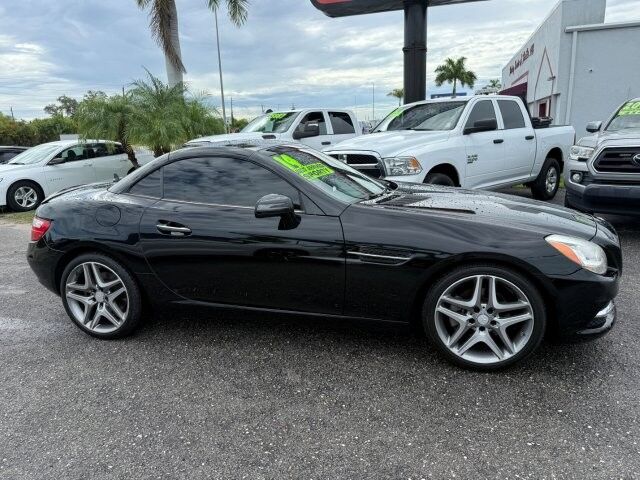
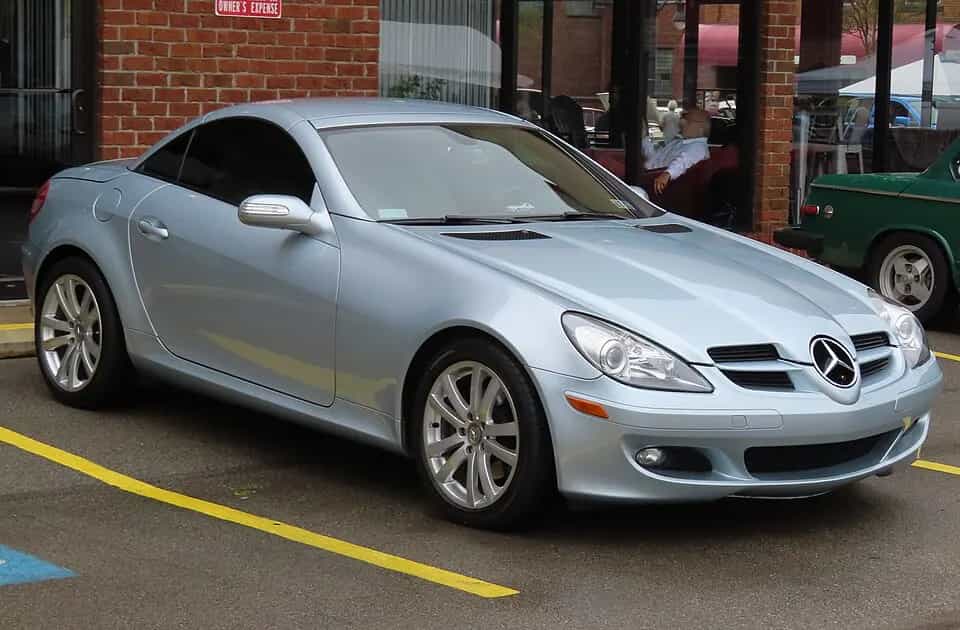
The SLK pioneered the modern folding hardtop (the "Vario-roof") when the R170 launched in 1996. The R171 followed for 2005 with a more aggressive, SLR-inspired nose and proper V6 and V8 power. The final R172 arrived in 2011, gained a wider Panamericana-style grille and downsized turbo fours, and was renamed SLC in 2016 for its last years. On the US market you will mostly encounter R171 and R172 cars, with the earlier R170 now a cheap classic. Knowing the generation tells you which engine family — and which known faults — you are dealing with.
Engines and drivetrain in detail
US R171 buyers chose between the supercharged four-cylinder SLK200/SLK280-badged cars, the 3.0 and 3.5-litre V6s (the SLK350 making up to around 300 hp), and the fire-breathing SLK55 AMG with its naturally aspirated 5.4-litre V8 of roughly 360 hp. The R172 moved to a 1.8-litre turbo four in the SLK250, kept a 3.5 V6 in the SLK350, and topped the range with an SLK55 AMG using a 5.5-litre naturally aspirated V8 of about 415–420 hp. Every SLK is rear-wheel drive. Automatics dominate the US cars — the 7G-Tronic in later models — though a six-speed manual was offered on some four- and six-cylinder cars.
Trim levels and variants
The SLK exists only as a two-seat roadster with a folding hardtop; there is no coupe or four-seat version. Equipment revolved around option packages: the Airscarf neck-level heating, heated leather, Harman Kardon audio, the panoramic glass roof option and AMG styling. Because these were aspirational second cars, US examples are frequently well specified.
Used availability in the USA
Availability is excellent. Clean R171 and R172 cars with modest mileage appear constantly, many having spent their lives in dry, warm climates. Roadsters like this tend to accumulate few miles, so 40,000–80,000-mile cars are common even on older examples. Prioritise cars from California, Arizona, Florida and Texas for the best paint and underbody condition, and always confirm the folding roof cycles fully before purchase.
When importing makes sense
The SLK suits a buyer who wants open-top motoring with the security and refinement of a metal roof, in a car that is compact, well-built and now genuinely rare in Europe in good condition. If you would rather have a solid-feeling Mercedes roadster than a softtop rival, importing a used SLK from the USA gives you access to sun-state cars that simply do not exist in the same numbers here.
Facts and figures
| Generations | R170, R171, R172 (1996–2016) |
| Body style | 2-seat roadster, folding hardtop |
| Layout | Front engine, RWD |
| SLK350 engine | 3.5L V6, approx. 272–305 hp |
| SLK55 AMG (R171) | 5.4L V8, approx. 360 hp |
| SLK55 AMG (R172) | 5.5L V8, approx. 415 hp |
| SLK250 (R172) | 1.8L turbo four, approx. 204 hp |
| Transmission | 7G-Tronic auto / 6-speed manual |
| 0–100 km/h (SLK55) | approx. 4.6 s |
| Length (R172) | approx. 4134 mm |
| Width (R172) | approx. 1810 mm |
| Wheelbase | approx. 2430 mm |
| Kerb weight | approx. 1400–1600 kg |
| Fuel | Petrol (premium) |
| Roof | Electro-hydraulic steel Vario-roof |
| Seats | 2 |
Reliability and common problems
The SLK is broadly solid, but a few items define its ownership. The Vario-roof relies on a hydraulic pump and lines that can leak with age; a roof that hesitates or stops mid-cycle needs investigation before you buy. Early R171 V6 engines (the M272, roughly 2005–2008) are associated with the well-documented balance-shaft and camshaft-sprocket wear issue — check for the relevant service or a later-corrected engine. Some R171 cars used the SBC electro-hydraulic brake system, which has a service life and can be costly if neglected. The R170 is prone to rust in the usual arches and floors, though sun-state cars are usually far cleaner. AMG V8s are strong but reward a full service history. Across all cars, check the roof, the brakes and the cooling system carefully.
How US versions differ
US SLKs carry amber side markers, US-pattern headlights, MPH-first instruments and sometimes different fog-lamp arrangements. The infotainment and, on later cars, the COMAND system use imperial units and US map data. These are all manageable conversions for German approval rather than obstacles.
From US purchase to registration
Choose a specific car and lock down its exact specification; run a VIN and plant-of-origin check plus a Carfax or AutoCheck history; agree terms and pay into secure escrow so your money is protected until the car checks out; book ocean freight; clear EU customs on arrival; present the car for TÜV and, where needed, individual approval under §21 StVZO; then register it in Germany. USCar Trader manages the chain as your intermediary.
Costs, duty and taxes at a glance
Key point: duty depends on the plant of build; only a VIN check secures the 0% rate. Import VAT of 19% applies regardless.
The SLK is built in Bremen, Germany, so it is not a US-origin vehicle. For a car without provable US origin, the standard EU third-country duty for passenger cars of 10 percent applies. The 0 percent preferential rate under Regulations (EU) 2026/1455 and 2026/1461 is limited to vehicles with provable US origin (VIN and plant), imported under direct transport within the period ending 31 December 2029 — a German-built SLK will not qualify. Separately, the 19 percent German import VAT (Einfuhrumsatzsteuer) always applies and is calculated on top. We charge no margin; you pay the car, freight, duty and VAT.
TÜV, approval and license plates
Typical work includes adding a rear fog lamp, adapting the headlights to a European beam pattern, converting the amber side markers and documenting the odometer acceptably. As a European-designed Mercedes, the SLK is easy to make compliant and parts are widely available. Registration follows once the technical approval is granted.
Pre-purchase checklist
Confirm the VIN and generation. Watch the Vario-roof complete a full open-and-close cycle. Pull a Carfax or AutoCheck report. Inspect the arches, floors and boot area for rust and roof-drain leaks. On R171 V6 cars, ask about the balance-shaft repair. Check the SBC brake status where fitted. Verify the title (clean vs. salvage) and service history.
Import FAQ
Is the SLK's folding roof reliable?
Generally yes, but the hydraulics age. Always watch a full cycle; a slow or stalling roof usually means a leaking pump or line.
Which SLK engine is the sweet spot?
The SLK350 V6 offers strong performance and a great sound without AMG running costs; the SLK55 AMG is the collector's choice.
What is the M272 balance-shaft issue?
Early R171 V6 engines can suffer premature timing-gear wear. Look for cars already repaired or built after the fix.
Does the SLK qualify for 0 percent import duty?
No. It is built in Germany, so the standard 10 percent car duty applies. The 0 percent rate is only for provable US-origin cars.
Is the 19 percent import VAT unavoidable?
Yes. The German Einfuhrumsatzsteuer of 19 percent applies to every import and is calculated separately from duty.
Manual or automatic?
Most US cars are automatic; manuals exist on some four- and six-cylinder examples and are prized by enthusiasts.
Are US SLK parts hard to get in Germany?
No. As a European Mercedes model, mechanical and body parts are readily available.
How long will the import take?
Usually several weeks after purchase, mainly depending on shipping and customs.
See more with our Mercedes-Benz in the Carhub, compare the Mercedes-Benz SL-Class, the Mercedes-Benz CLK-Class and the Porsche Boxster, or browse current SLK listings.