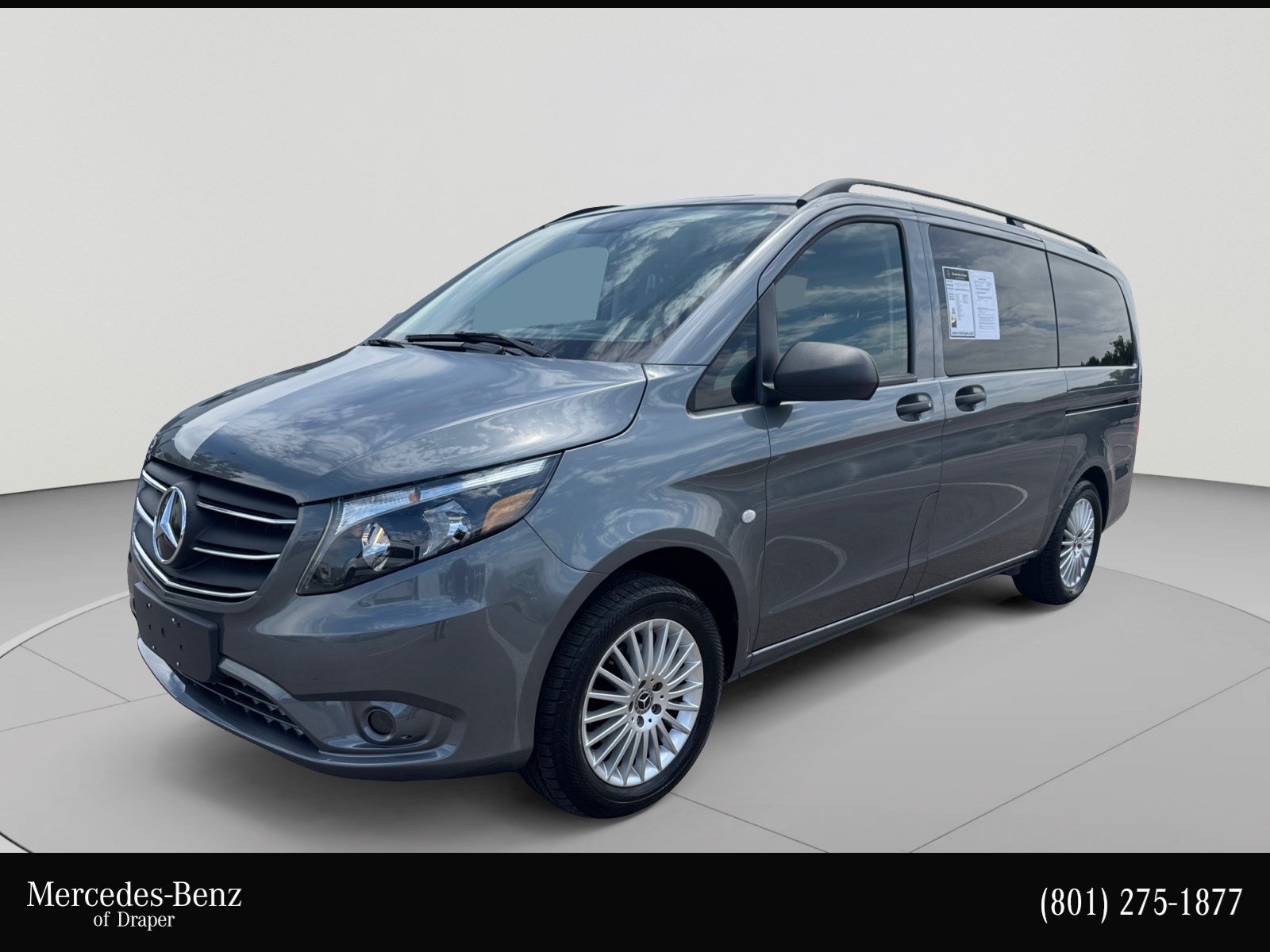
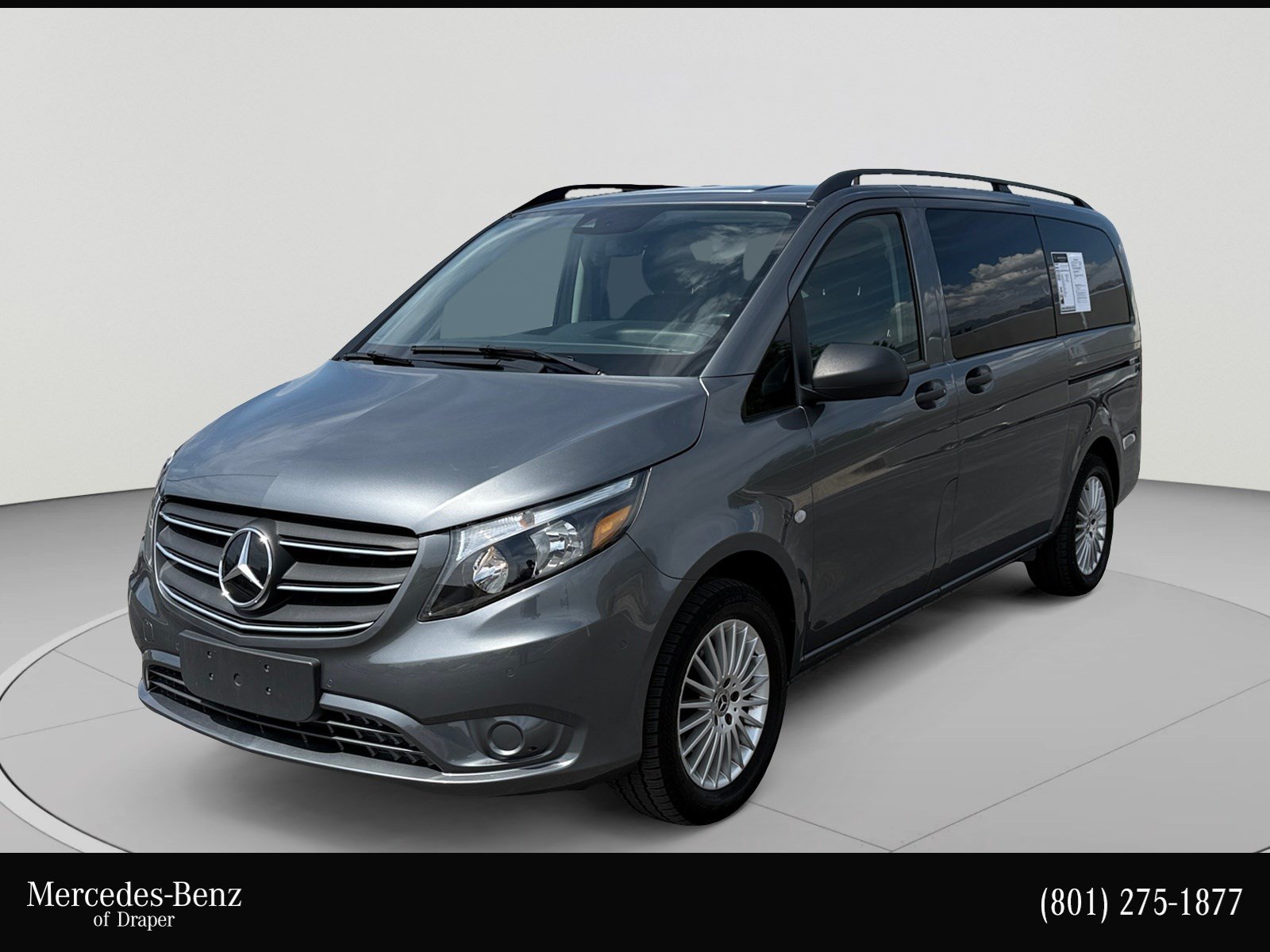
Mercedes-Benz Metris Passenger Van
Importing a used Mercedes-Benz Metris Passenger Van from the USA
The Mercedes-Benz Metris is the North American name for the mid-size van Europe knows as the Vito, and the Passenger Van version is the people-carrier configuration with seating for up to eight. It was sold in the US from 2016 to 2023 as a right-sized alternative between compact vans and the large Sprinter. If you want to import a used Metris Passenger Van from the USA, you are looking at a familiar Mercedes platform in a specification that differs in one important way from the European Vito: the US Metris was petrol-only. USCar Trader acts purely as an independent broker for used US vehicles, with no margin of its own and no Mercedes-Benz dealership tie.

From launch to today
The Metris is built on the third-generation Vito platform (internal code W447), which launched globally in 2014 and reached the US as the Metris for the 2016 model year. It was offered as a Cargo Van and as the Passenger Van (sometimes referred to as the Metris Tourer), and remained on sale through 2023 before being withdrawn from the North American market. Throughout its run it stayed mechanically consistent, which makes used examples easy to understand and cross-shop.
Engines and drivetrain in detail
Unlike the diesel-dominated European Vito, every US Metris used a 2.0-litre turbocharged four-cylinder petrol engine from Mercedes' M274 family, producing around 208 hp and 258 lb-ft of torque. Earlier cars used a related turbo four as well. Drive goes to the rear wheels through Mercedes' 7G-TRONIC seven-speed automatic (the 722.9). Rear-wheel drive gives it van-typical load behaviour and a useful towing capability. There was no diesel and no all-wheel drive in the US Metris, so every imported car will be a rear-drive petrol automatic.
Trim levels and variants
The Passenger Van came in standard and, effectively, higher-equipment forms, seating seven or eight across three rows. Typical equipment includes air conditioning (often with rear climate), a reversing camera, and Mercedes' safety systems such as crosswind assist and available active safety options. The Cargo Van was the commercial counterpart. Because it is a working van at heart, specification focuses on practicality: sliding side doors, a large tailgate or rear barn doors, and a flat, family-friendly cabin.
Used availability in the USA
Metris Passenger Vans turn up in the US used market as former shuttle, family and small-fleet vehicles, so mileage varies widely; a well-maintained ex-family or light-duty example is the target rather than a high-mileage ex-shuttle. Sun-belt cars avoid road salt and tend to have clean underbodies, which is a real benefit for a van. Because the model was discontinued after 2023, the used pool is finite and defined, which helps with searching.
When importing makes sense
The Metris Passenger Van suits a buyer who needs genuine eight-seat capacity and van practicality in a more compact, easier-to-park footprint than a Sprinter, with the reassurance of Mercedes engineering. It is well suited to large families, small transport operators and anyone who wants a petrol van in a market where diesel Vitos dominate. Its petrol-only drivetrain can also be an advantage where diesel access is a concern.
Facts and figures
| Item | Detail |
|---|---|
| Body style | Mid-size passenger van |
| Model years (US) | 2016-2023 |
| Platform | Vito W447 |
| Engine | 2.0 turbo four petrol (M274) |
| Output | approx. 208 hp |
| Torque | approx. 258 lb-ft |
| Transmission | 7G-TRONIC 7-speed automatic |
| Drivetrain | Rear-wheel drive |
| Seating | 7 or 8 |
| Length | approx. 5,140 mm |
| Wheelbase | approx. 3,200 mm |
| Payload | approx. 1,000+ kg (config dependent) |
| Towing | approx. 5,000 lb (config dependent) |
| Fuel | Petrol |
| Fuel tank | approx. 70 litres |
Reliability and common problems
The Metris is generally regarded as a durable, well-built van, and the petrol drivetrain sidesteps some of the diesel-specific issues owners of the European Vito face. Known Metris common problems centre on the M274 engine and 7G-TRONIC gearbox: the transmission's conductor plate and valve body can need attention on higher-mileage vans, the engine's timing components and balance-shaft area deserve inspection, and the usual coil, PCV and thermostat items apply to a turbo Mercedes four. Being petrol, there is no diesel particulate filter or AdBlue system to worry about, which simplifies ownership. As with any van, the priority is checking how hard the vehicle was worked; Metris reliability is strong when the service history is complete and the transmission fluid was changed on schedule.
How US versions differ
The most significant difference is the engine: the US Metris is petrol-only, whereas European Vitos are overwhelmingly diesel, so an imported Metris will feel and cost different to run than a local Vito. Expect US-spec lighting with amber markers, a miles-per-hour cluster, and a US emissions specification. The platform, doors and body are shared with the Vito, which helps enormously with parts availability and servicing in Germany.
From US purchase to registration
The sequence is: select the specific Passenger Van and confirm seating and equipment; run a VIN and origin check plus a transmission and history assessment; pay through escrow or a verified arrangement; book ocean freight to a German port; clear customs on arrival; present for TUEV and individual approval (Einzelabnahme), including seating and lighting checks; and register, noting that seat count affects the vehicle class. USCar Trader manages these steps as your broker.
Costs, duty and taxes at a glance
In short: the 0% duty rate applies only with documented US origin (VIN/plant) – German import VAT of 19% is always due.
The two charges remain separate. Import duty: the 0% EU rate for US-origin vehicles under Regulations (EU) 2026/1455 and 2026/1461 applies only where US origin is provable from the VIN and build plant, with direct transport. The Metris/Vito is built in Vitoria, Spain, so a European-built van will normally not qualify for the 0% rate, and the standard duty applies according to the plant recorded in the VIN; note that vans can fall under a different duty classification than cars. The 19% German import VAT (Einfuhrumsatzsteuer) always applies on import regardless of origin. USCar Trader adds no margin to the price.
TÜV, approval and license plates
Typical items for German approval include adapting the lighting to European requirements, adding or converting a rear fog lamp, and confirming the speedometer in km/h with the odometer documented in the correct units. Seat count and mounting must match the intended vehicle class for registration. After TUEV and any individual approval, registration proceeds.
Pre-purchase checklist
Before buying, verify: the VIN against Carfax or AutoCheck for accident and title history; a clean title; documented transmission fluid service and any conductor-plate work; engine service records and timing/balance-shaft condition; underbody and sill condition; consistent mileage; and confirmation of the exact seat configuration you need.
Import FAQ
Is the Metris the same as the Mercedes Vito?
Yes. The Metris is the North American name for the Vito, built on the same W447 platform, though the US version is petrol-only.
Does the US Metris come as a diesel?
No. Every US Metris uses a 2.0-litre turbo petrol engine; there was no diesel or all-wheel-drive option in North America.
How many people does the Passenger Van seat?
Depending on configuration, seven or eight across three rows, which is a key attraction over smaller vans.
Does the Metris qualify for 0% import duty?
Only with provable US origin from the VIN. Spanish-built vans generally do not qualify, so the standard duty applies based on the plant.
Do I still pay import VAT?
Yes. The 19% German Einfuhrumsatzsteuer applies to every import regardless of build country.
Are parts available in Germany?
Yes, because the Metris shares its platform and much of its hardware with the widely sold Vito, most parts are readily available.
What is the main reliability item to check?
The 7G-TRONIC transmission service history, including any conductor-plate work, along with the engine's maintenance records.
Is a petrol van a disadvantage in Germany?
Not necessarily; it avoids diesel particulate and AdBlue systems and can be an advantage where diesel access is restricted, though fuel consumption is higher than a diesel Vito.
See more in the Mercedes-Benz in the Carhub, compare the commercial Metris Cargo Van and the larger Sprinter Passenger Van or Sprinter Crew Van, and browse current Metris Passenger Van listings.