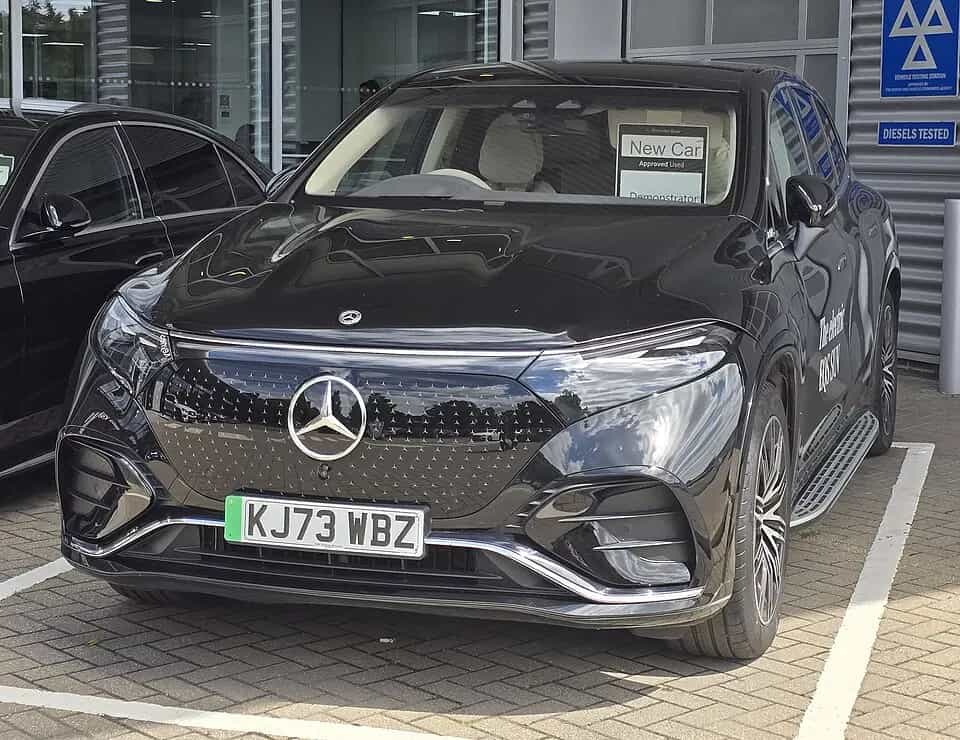
Mercedes-Benz EQS
Importing a used Mercedes-Benz EQS from the USA
The Mercedes-Benz EQS is the electric flagship of the three-pointed star — a full-size luxury sedan built from the ground up as an EV, not a converted combustion car. On the US used market it depreciates faster than in Europe, which is precisely why importing a used EQS from the USA can be attractive. USCar Trader acts purely as your broker: we find the car, verify it, and manage the import, without adding any margin to the vehicle itself. Here is what you are actually buying and how it lands on German plates.

Production years and key changes
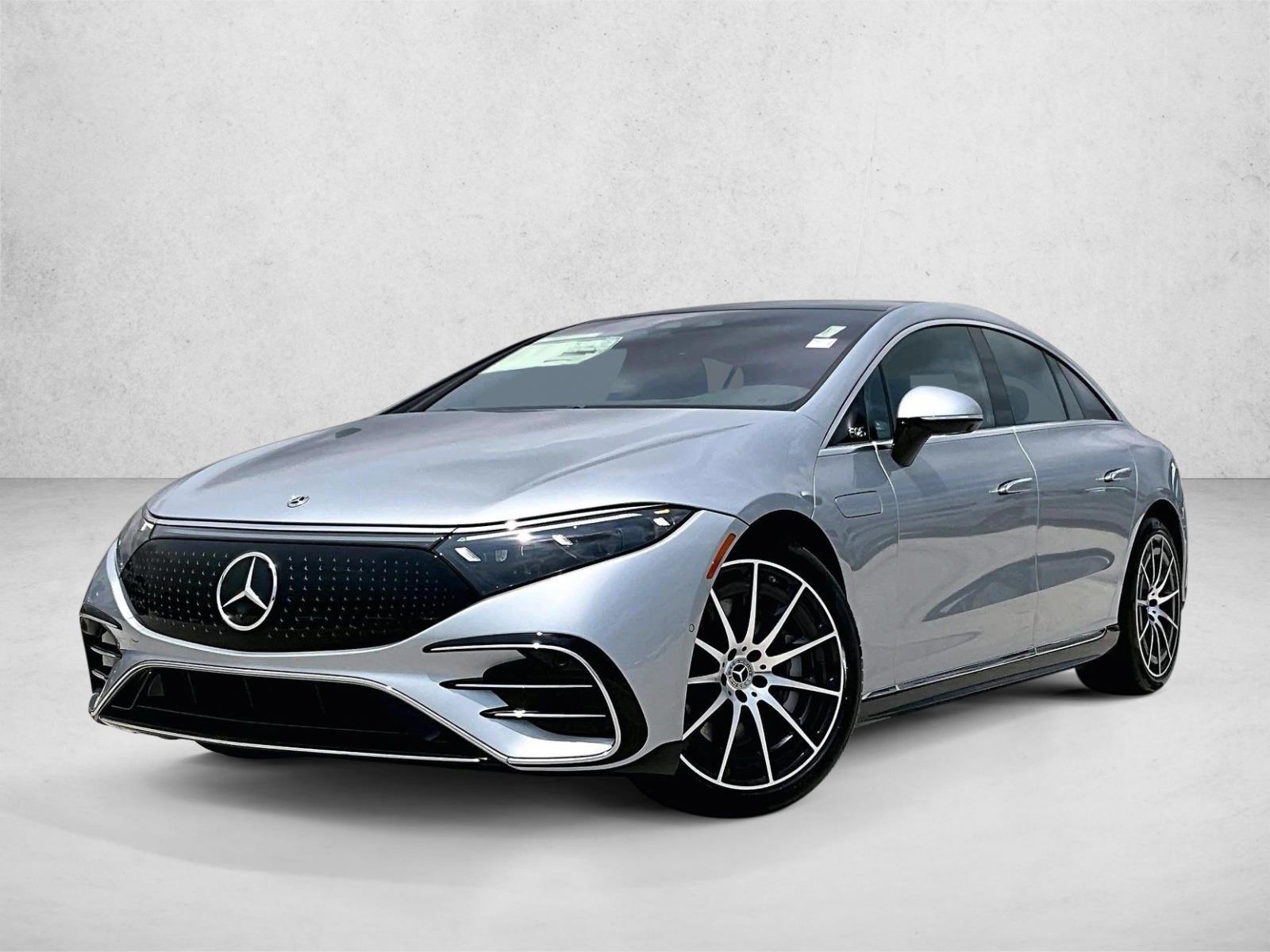
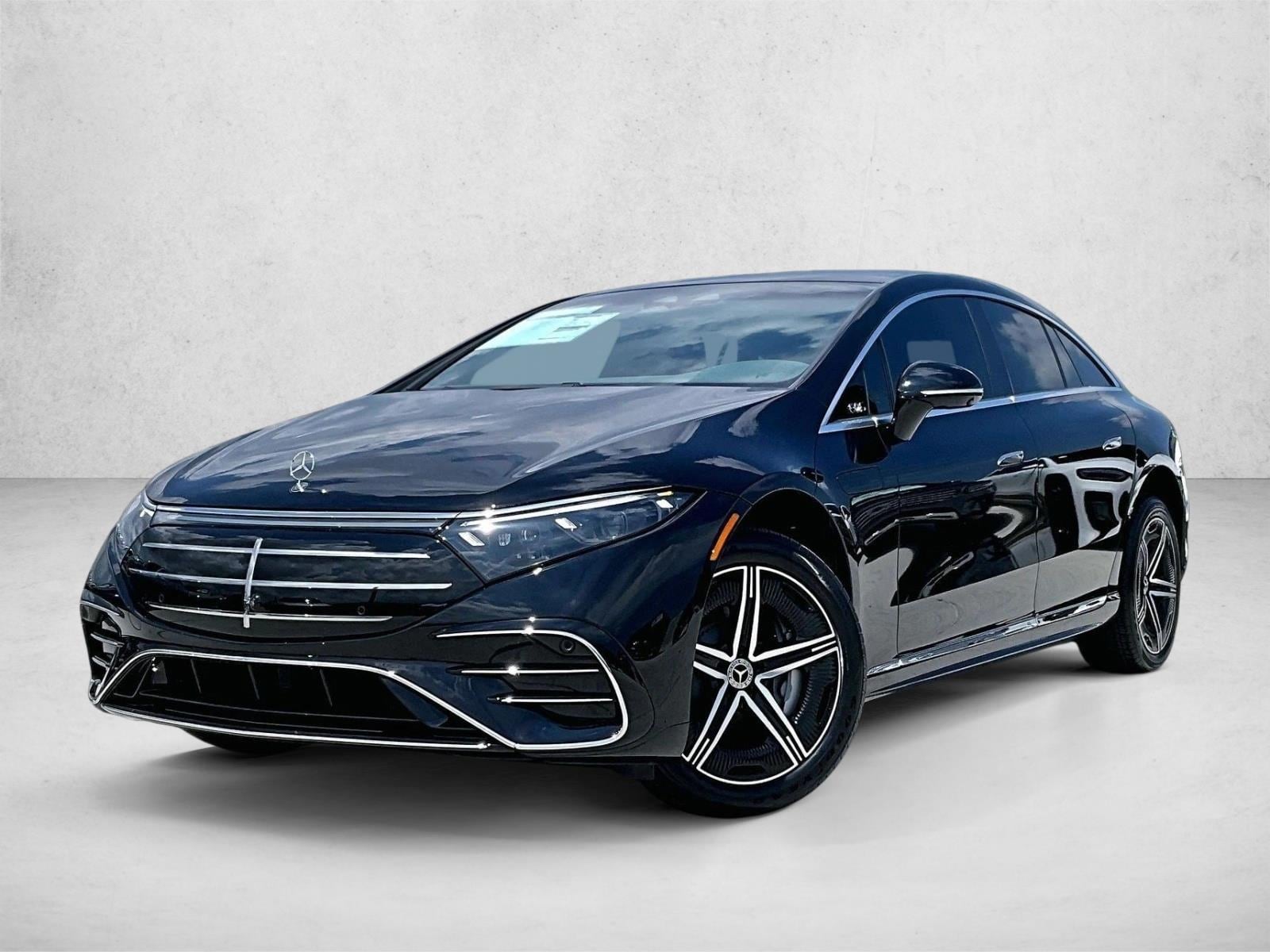
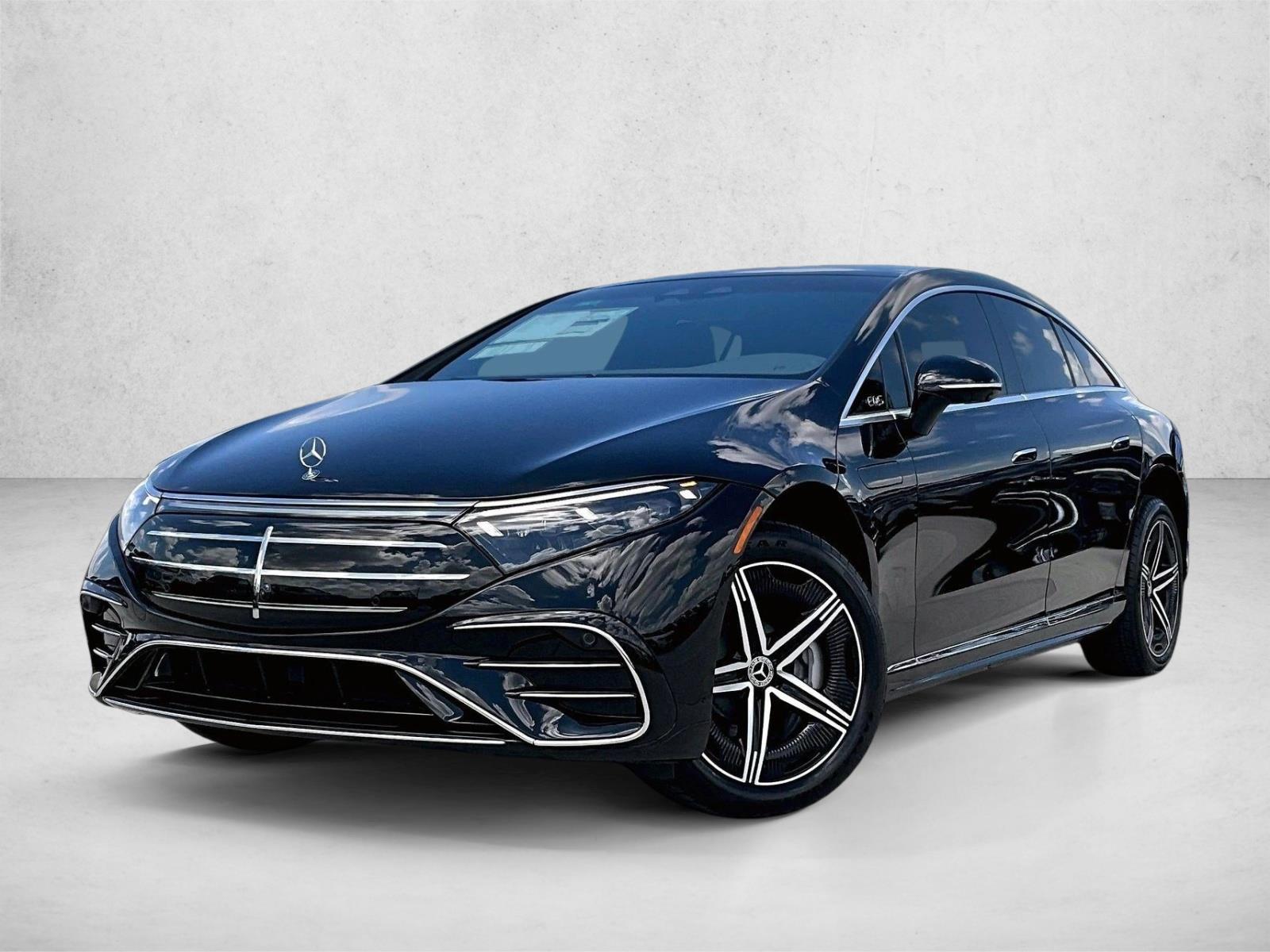
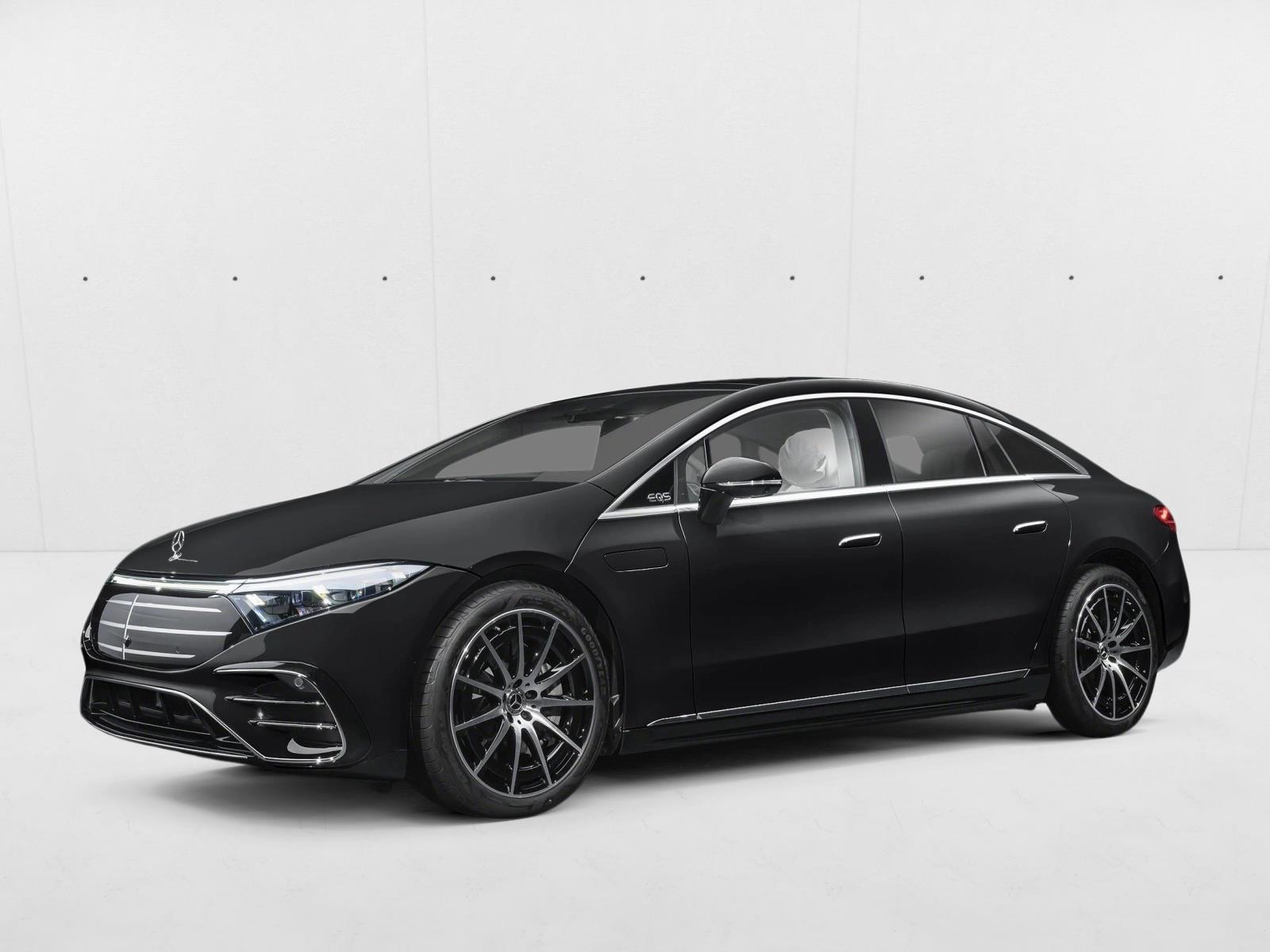
The EQS sedan (chassis code V297) launched globally in 2021 and reached US showrooms as a 2022 model, riding on the dedicated EVA2 electric platform it shares with the EQE. Its defining features are the aerodynamic "one-bow" silhouette — one of the lowest drag coefficients of any production car — and the optional 56-inch MBUX Hyperscreen spanning the dashboard. A 2025 update brought a larger battery, a restyled grille treatment, and range improvements. Note the naming: the EQS sedan is distinct from the EQS SUV, which is a separate, US-built vehicle; the sedan you are importing is the low-slung liftback.
What is under the hood
US-market EQS trims centre on the EQS 450+ (single rear motor, rear-wheel drive, roughly 355 hp), the EQS 450 4MATIC and EQS 580 4MATIC (dual-motor all-wheel drive, the 580 making around 516 hp), and the range-topping AMG EQS 53 4MATIC+ producing up to roughly 649–751 hp with boost. Energy comes from a large lithium-ion pack of about 108 kWh usable on pre-facelift cars, feeding a single-speed reduction gearbox. The rear-drive 450+ is the range champion at up to roughly 350 miles EPA. DC fast charging peaks near 200 kW, and rear-axle steering — standard or optional depending on trim — gives this long sedan a surprisingly tight turning circle.
Trims and body styles
The EQS is offered only as a five-door luxury liftback sedan. American cars are typically loaded: Hyperscreen, Burmester surround sound, rear-axle steering, air suspension (AIRMATIC), augmented-reality navigation, and executive rear seating appear frequently. A US-spec EQS often carries equipment that would be a costly options list in Europe.
What the US market offers
Availability is good in metropolitan and coastal markets where the EQS sold in volume. Because these were expensive leases, used examples commonly show low mileage and careful ownership, with many one- and two-year-old cars entering the market. Steeper US depreciation on luxury EVs is the buyer's advantage here. Prioritise cars with complete Mercedes service history and a documented battery state of health.
Who this import is for
The EQS import suits a buyer who wants a whisper-quiet, long-range electric flagship with genuine luxury presence and is comfortable with EV-specific ownership. If you want maximum car for the outlay and can charge conveniently, a used EQS from the USA is a compelling long-distance cruiser.
Technical data and figures
| Attribute | Detail (EQS sedan, V297) |
|---|---|
| Generation | V297, 2021–present |
| Body style | 5-door luxury liftback sedan |
| Platform | EVA2 (dedicated EV) |
| US trims | 450+, 450 4MATIC, 580 4MATIC, AMG EQS 53 |
| Output (450+) | approx. 355 hp, RWD |
| Output (580) | approx. 516 hp, AWD |
| Output (AMG 53) | up to approx. 751 hp with boost |
| Battery (pre-facelift) | approx. 108 kWh usable |
| Range (450+) | up to approx. 350 mi (EPA) |
| DC fast charging | up to approx. 200 kW |
| Transmission | Single-speed reduction |
| Length | approx. 5,216 mm |
| Wheelbase | approx. 3,210 mm |
| Rear-axle steering | Available/standard by trim |
| Typical build plant | Sindelfingen, Germany (verify by VIN) |
Reliability: trouble spots to check
The EQS is dense with technology, and that is where owners report the most niggles. Early MBUX and Hyperscreen software could freeze or glitch and was addressed through updates — confirm the car is on current software. The 12-volt auxiliary battery has caused wake/sleep and no-start complaints on some cars; it is a cheap check. Air suspension components and the large glass roof are worth inspecting, and the frameless doors and flush handles should be tested for correct operation in cold weather. Mechanically the drive units have proven robust; the priority on any used EQS is verifying high-voltage battery state of health and that fast-charging behaves normally.
US vs. Europe differences
US cars use amber side-marker lamps, US-specific lighting calibration, and miles-based instrumentation. The navigation and charging databases are US-oriented and are updated to European data. Charging hardware is the key practical point: US EQS cars are equipped for the North American ecosystem, so the AC and DC charging interface must be verified as compatible with European connectors, with adapters or a port change arranged where needed. Headlight aim and a rear fog lamp are usual TÜV items.
How the import works
Selection and inspection in the US, VIN and build-origin verification, escrow payment, inland haul to the export port, ocean freight to Bremerhaven, German customs clearance, TÜV technical inspection and individual approval, then local registration. We manage the full chain end to end.
Import duty, VAT and fees
Key point: duty depends on the plant of build; only a VIN check secures the 0% rate. Import VAT of 19% applies regardless.
Keep the two charges separate. The import duty: the 0% EU rate under Regulations (EU) 2026/1455 and 2026/1461 applies only with provable US origin (VIN/plant), for directly transported cars, until 31 December 2029. The EQS sedan is generally built in Sindelfingen, Germany, so its origin is not US — the applicable duty rate depends on the actual plant shown by the VIN, and we never guarantee duty-free. Separately, the German import VAT (Einfuhrumsatzsteuer) of 19% always applies, on the customs value plus duty and freight, for every import.
From modifications to registration
Expect lighting adjustments, documentation of the odometer's mile-to-kilometre conversion, verification of the charging interface, and a COC or §21 individual approval. Once passed, the car is registered locally and issued German plates.
Pre-buy inspection points
- Decode the VIN to confirm build plant and origin.
- Obtain a full Carfax/AutoCheck report for accident and title branding.
- Confirm a clean, non-salvage title.
- Verify high-voltage battery state of health and DC fast-charge function.
- Check the 12-volt battery and current MBUX software version.
- Test air suspension, frameless doors and flush handles.
- Confirm the charging interface can be adapted to European standards.
What buyers ask most
Is the EQS sedan the same as the EQS SUV?
No. The EQS sedan (V297) is a separate vehicle from the EQS SUV; this page covers the sedan.
How much range does a used EQS have?
Up to roughly 350 miles EPA for the rear-drive 450+ when new; a used car depends on battery state of health, which we check.
Will the EQS charge on European stations?
Yes, with the correct connector setup. We verify the AC/DC interface and arrange adapters or a port change where required.
Do I pay import duty on an EQS?
Likely yes, because the sedan is German-built, not US-built. The 0% EU rate needs provable US origin, so the rate depends on the VIN and plant.
Does the 19% import VAT always apply?
Yes. German import VAT applies to every import regardless of origin and is billed separately from any duty.
Are US EQS cars well equipped?
Typically very well — Hyperscreen, Burmester audio and rear-axle steering are common on US examples.
Is the EQS reliable used?
Drivetrains are solid; most complaints are software and 12-volt battery items that are checkable and fixable.
Does USCar Trader add a margin?
No. We are an independent broker with a transparent service fee and no markup on the car.
Start here: explore Mercedes-Benz in the Carhub, compare the Mercedes-Benz EQS SUV, the Mercedes-Benz EQE and the Mercedes-Benz EQE SUV, or view the current EQS listings.