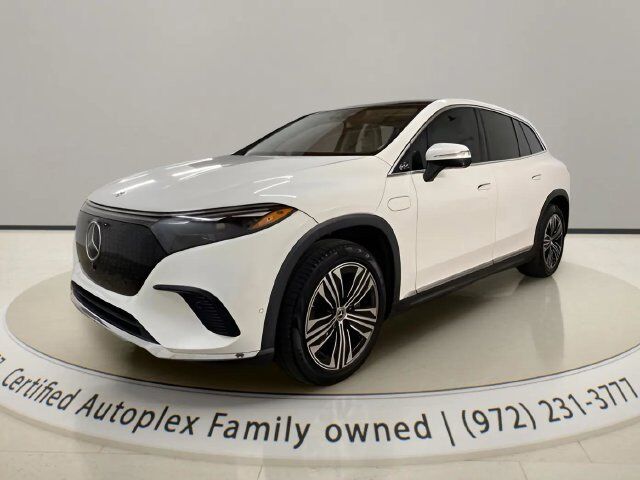
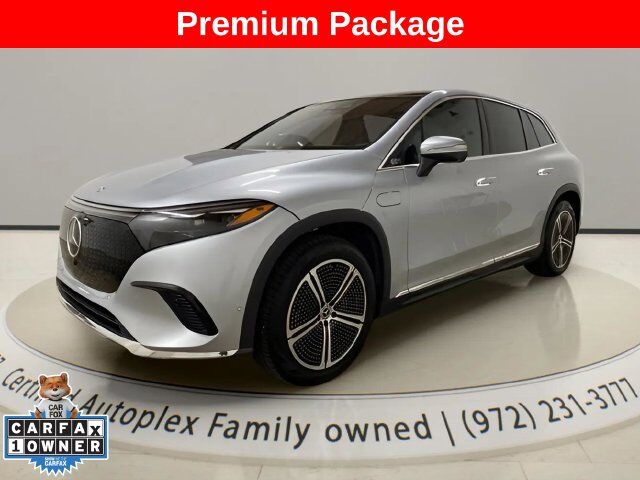
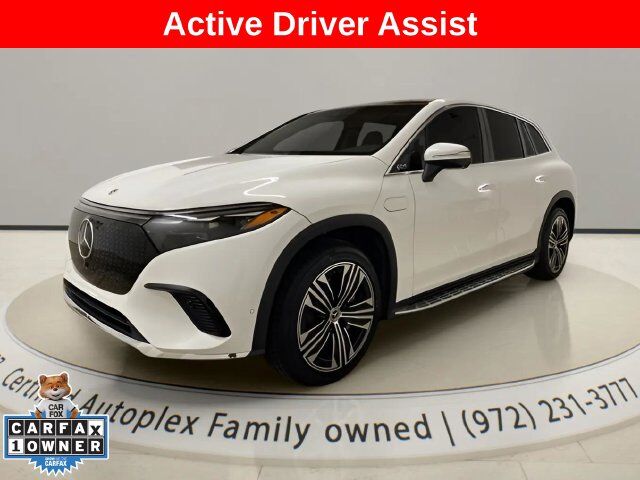
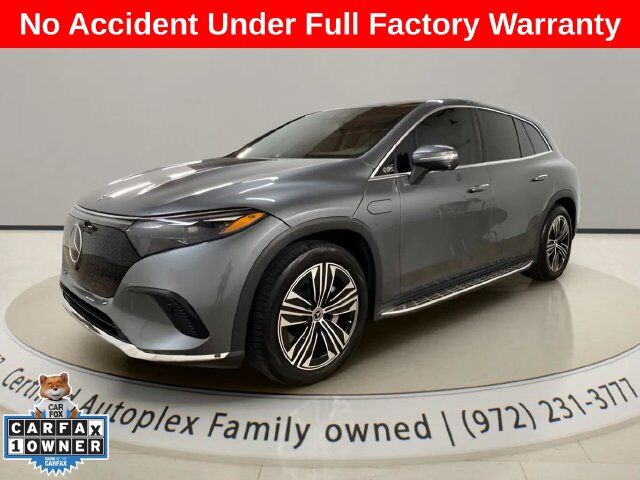
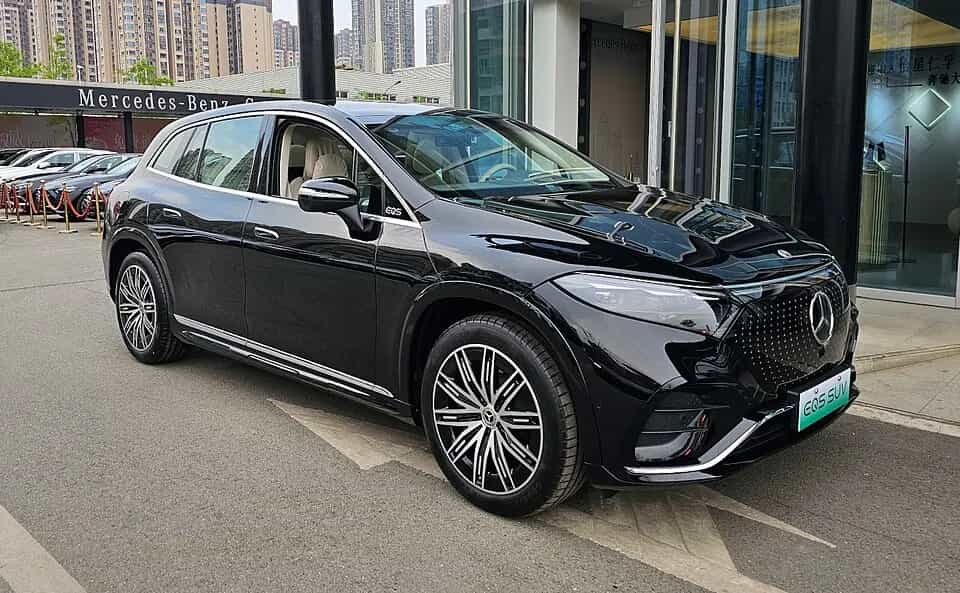
Mercedes-Benz EQS SUV
Importing a used Mercedes-Benz EQS SUV from the USA
The Mercedes-Benz EQS SUV is the electric flagship of the brand's three-row luxury range: a large, air-sprung, whisper-quiet SUV built on the dedicated EVA2 platform and aimed at buyers who want S-Class comfort with a plug. There is a detail that makes it especially interesting for European importers — the EQS SUV is assembled at Mercedes-Benz's plant in Tuscaloosa, Alabama, alongside the combustion GLE and GLS. That American origin, when confirmed by VIN and plant, is directly relevant to import duty in a way that most premium models are not. For anyone weighing whether to import a used Mercedes-Benz EQS SUV from the USA, the combination of a genuinely US-built car and a deep American used-EV market is a strong argument.

From launch to today
The EQS SUV (internal code X296) launched in 2022 as a 2023 model year, arriving after the EQS saloon and sharing its electrical architecture while adding height, a third row of seats and a more upright, family-friendly body. It sits above the smaller EQE SUV in the range. Because it is a recent model, there is only one generation so far, with annual updates to software, charging behaviour and equipment. Early cars are now entering the used market in the US as first leases end, which is what makes them available to import.
Engines and drivetrain in detail
The EQS SUV uses a large lithium-ion battery — roughly 108-118 kWh usable depending on version — feeding one or two permanently excited synchronous motors. The EQS 450+ is the single-motor, rear-drive model at around 355 hp; the EQS 450 4MATIC adds a front motor for all-wheel drive at similar output; the EQS 580 4MATIC is the dual-motor performance version at roughly 536 hp; and the Mercedes-AMG EQS 53 tops the range with substantially more power. The car uses a 400-volt architecture with DC fast charging around 200 kW, air suspension (AIRMATIC) and rear-axle steering of up to around 10 degrees, which makes a vehicle over five metres long remarkably manoeuvrable.
Trim levels and variants
Body-wise the EQS SUV is a single five-door shape, offered with five or seven seats. Trim and option content is where US cars vary: the enormous MBUX Hyperscreen (three displays under one glass panel) is a signature option, along with Burmester 3D audio, rear-seat entertainment, a head-up display, augmented-reality navigation and various driver-assistance packages. US-market cars are frequently very well equipped, and the seven-seat layout is common on the family-oriented American examples.
Used availability in the USA
America was one of the launch markets for the EQS SUV, and many were leased, which now feeds a steady flow of low-mileage, well-kept cars back into the used pool. Typical import candidates are one- to three-year-old vehicles with modest mileage and full Mercedes service history. Battery health is the key data point on any used EV, so prioritise cars with documented service and, where available, a state-of-health readout. Cars from mild climates avoid the battery stress of extreme heat.
When importing makes sense
The EQS SUV suits the buyer who wants a genuinely large, silent, long-range electric luxury SUV and who can use its space and comfort. Because it is US-built, it is also one of the more logical premium EVs to import on customs grounds — subject to VIN confirmation. It is not a car for anyone who needs a compact vehicle or who lacks convenient charging.
Facts and figures
| Specification | Mercedes-Benz EQS SUV (representative) |
|---|---|
| Body style | Five-door electric SUV, 5 or 7 seats |
| Platform | EVA2 dedicated EV architecture |
| Battery (usable) | approx. 108-118 kWh |
| Architecture | 400 V |
| Motors | Single (RWD) or dual (4MATIC) |
| Power (450+) | approx. 355 hp |
| Power (580 4MATIC) | approx. 536 hp |
| DC fast charging | up to approx. 200 kW |
| EPA range | approx. 285-305 miles (version dependent) |
| Length | approx. 5,125 mm |
| Wheelbase | approx. 3,210 mm |
| Rear-axle steering | up to approx. 10 degrees |
| Suspension | AIRMATIC air suspension |
| Kerb weight | approx. 2,800 kg |
| Assembly plant | Tuscaloosa, Alabama, USA |
Reliability and common problems
As a recent model, the EQS SUV has limited long-term data, but the early ownership picture is informative. The most frequent complaints concern software rather than hardware: MBUX glitches, occasional infotainment or Hyperscreen reboots, and charging behaviour that improved through over-the-air updates — so confirm the car is on current software. The 12-volt auxiliary battery, as on many complex Mercedes models, can cause electrical niggles if weak. The vehicle's considerable weight is hard on tyres, and the air suspension is a long-term maintenance item to watch as cars age. Battery degradation so far appears modest, but a state-of-health check remains the single most important inspection on any used EQS SUV.
How US versions differ
US-market cars carry amber side markers, headlamps aimed for right-hand traffic, mph instrumentation and North American navigation and connectivity settings. Charging hardware is a practical point: US EQS SUVs use a CCS1 (Combo 1) inlet, whereas Europe uses CCS2 (Combo 2), so a physical adapter or inlet solution is needed for AC and DC charging on the German network. This is a well-understood step for imported EVs but must be planned for. Otherwise the car is mechanically identical to European examples of the same specification.
From US purchase to registration
The route is: choose a specific car and confirm version, battery and options; run a VIN and origin check to confirm US assembly (critical here for duty); use escrow to protect payment; arrange ocean freight, following the required handling rules for a high-voltage vehicle; complete customs clearance at an EU port; present for TUEV and individual approval, including the charging solution; and register in Germany. USCar Trader coordinates each step as an independent broker with no margin.
Costs, duty and taxes at a glance
Remember: no origin proof, no 0% duty – and 19% German import VAT is due on every import.
Here the American assembly matters. Because the EQS SUV is built in Tuscaloosa, Alabama, a specific example whose US origin is proven by VIN and plant may enable the 0% preferential EU import duty under Regulations (EU) 2026/1455 and 2026/1461 (in force since 1 July 2026, requiring provable US origin and direct transport, valid until 31 December 2029). This is not automatic and never guaranteed — it depends entirely on the documentation for that individual car, and some units may be built elsewhere. Regardless of the duty outcome, the 19% German import VAT (Einfuhrumsatzsteuer) always applies, calculated separately on the customs value plus any duty. We never promise duty-free import and never add a margin.
TÜV, approval and license plates
Typical adaptation covers headlight conversion or adjustment for left-hand traffic, fitting a rear fog lamp, documenting the odometer and speedometer (mph versus km/h), and providing a compatible CCS2 charging solution. The examiner will check the high-voltage system documentation, lighting and side markers. Because the car is closely related to the European EQS SUV, homologation is generally straightforward once these items are handled.
Pre-purchase checklist
Confirm the essentials: 1) the VIN matches the title and, importantly, shows US plant assembly; 2) a Carfax or AutoCheck report shows no salvage, flood or accident history; 3) a battery state-of-health readout is available and satisfactory; 4) the car is running current software with no open recalls; 5) the title status is clean, not salvage or rebuilt; 6) all charging functions and the 12-volt system work correctly; 7) tyres and air suspension are in good order given the weight.
Import FAQ
Can the EQS SUV really qualify for 0% import duty?
Potentially yes, because it is assembled in Alabama. It is never guaranteed — the 0% preference depends on proving US origin for that specific VIN and plant. The 19% import VAT always applies regardless.
Will US charging work in Germany?
US cars use the CCS1 inlet, so a CCS2 adapter or inlet solution is required to charge on the European network. This is a standard part of importing a US EV.
How is battery health on used cars?
Early degradation appears modest, but always obtain a state-of-health reading before purchase — it is the most important check on any used EV.
Which version should I import?
The 450+ maximises range and value; the 580 4MATIC adds performance and all-wheel drive; the AMG EQS 53 is the high-performance flagship.
Is the software an issue?
Early cars had MBUX and charging quirks resolved by updates, so confirm the car runs current software.
Does it seat seven?
Yes, a seven-seat layout is available and common on US family cars; five-seat versions also exist.
Will it pass TUEV?
Yes, with lighting adaptation, a rear fog lamp and a compliant charging solution, given its close relation to the European model.
How long does the import take?
Typically several weeks from purchase to registration, determined mainly by shipping, high-voltage handling and customs.
To get started, see Mercedes-Benz in the Carhub, compare the Mercedes-Benz EQS, the Mercedes-Benz EQE SUV and the Mercedes-Benz EQB, or view the current EQS SUV listings.