Mercedes-Benz E-Class

Importing a used Mercedes-Benz E-Class from the USA

The E-Class is the executive sedan that built the modern Mercedes reputation, and the American used market holds it in large numbers, often in specification and condition you rarely see at home. As an independent broker for used US vehicles, USCar Trader sources the exact E-Class you want from private sellers, auctions and franchise trade-ins across the United States, then handles the paperwork, freight and German approval. We do not sell new cars and we take no hidden margin on the vehicle. If you are searching for how to import a used E-Class from the USA, the sections below cover the generations, engines and the real cost drivers before you commit.

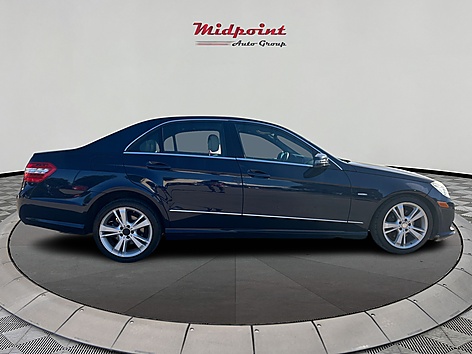
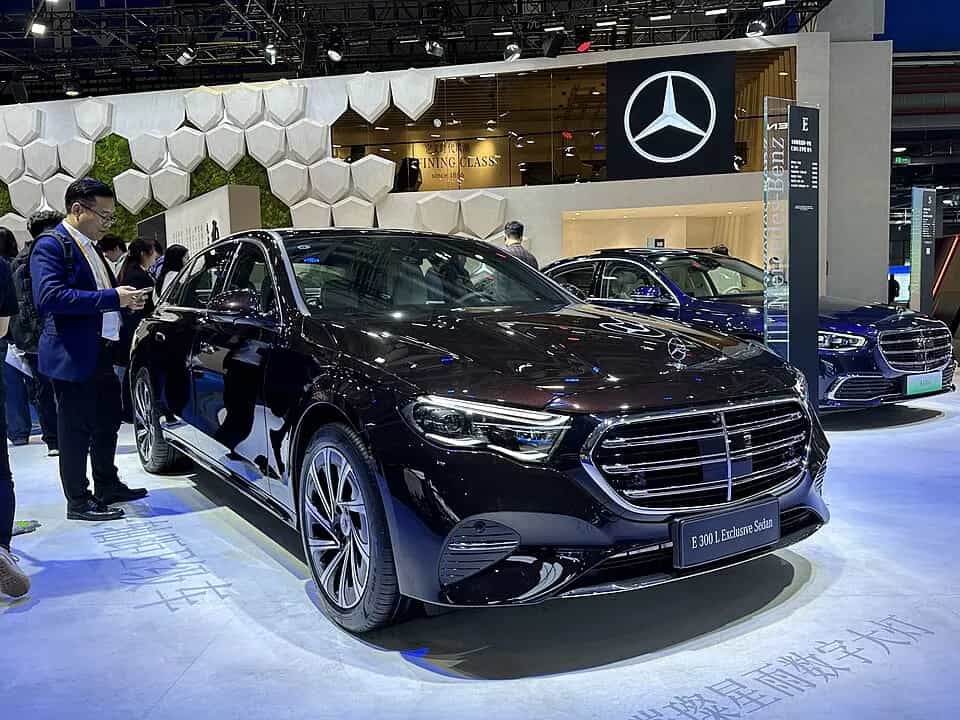
Mercedes-Benz E-Class – used car imported from the USA
Photo: JustAnotherCarDesigner · CC0 · Wikimedia Commons

Model history and generations

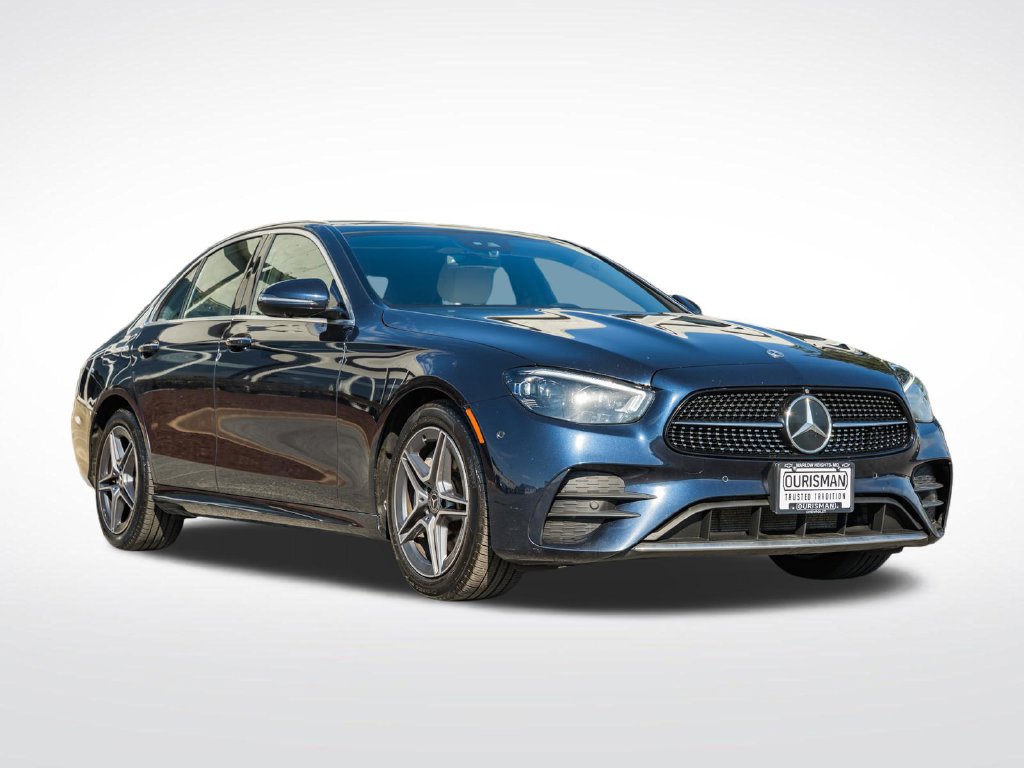
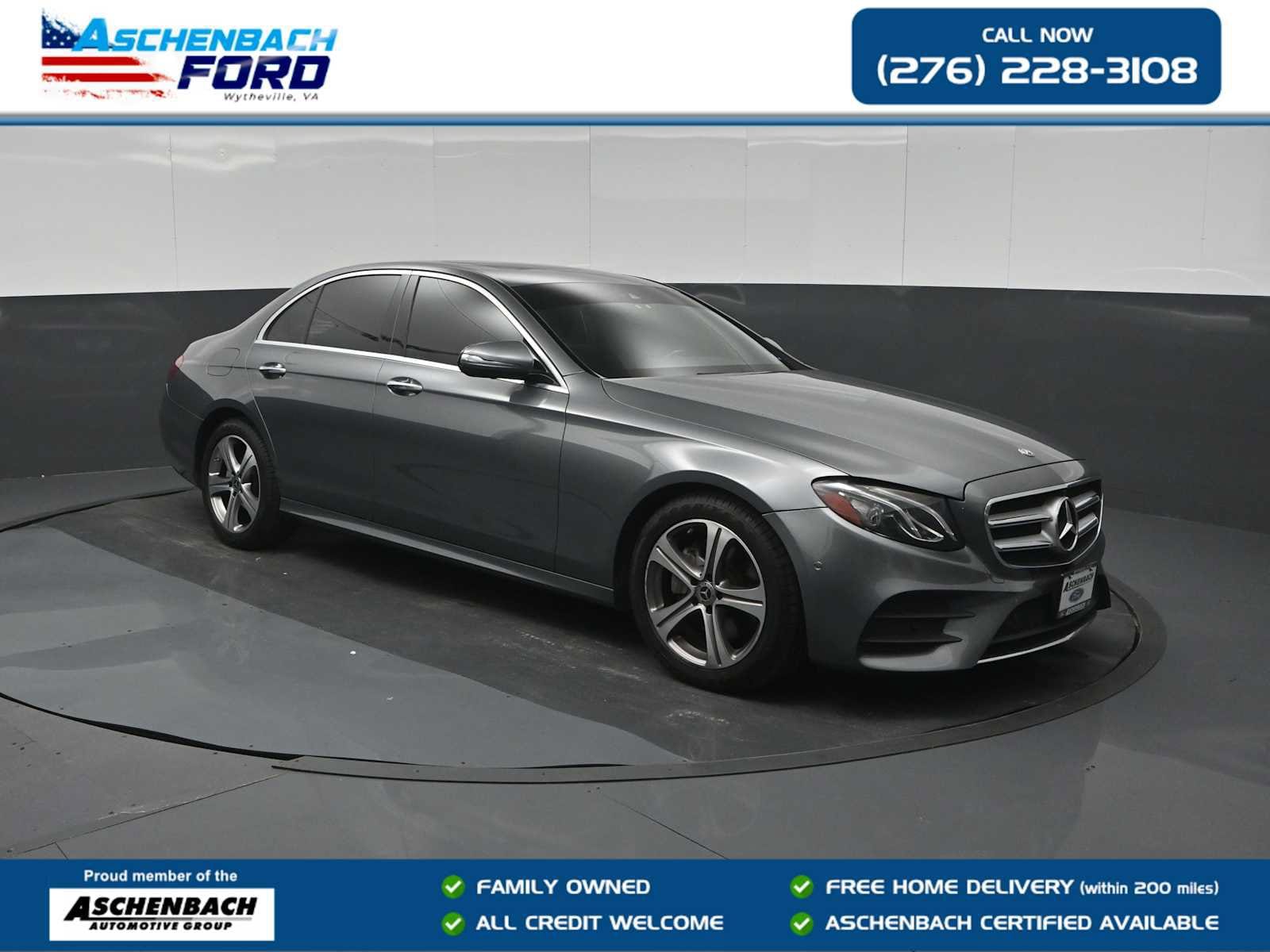
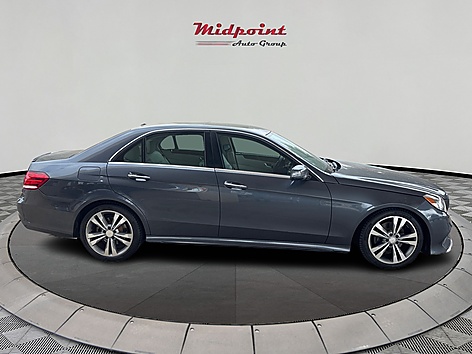
Four generations are relevant to the US used market. The W211 (2003-2009) introduced the twin-headlamp face and the much-discussed SBC brake system. The W212 (2010-2016) brought sharper styling, a facelift in 2014 that switched to single-lens headlamps, and a wide engine range. The W213 (2017-2023) is the volume seller today: a genuinely modern car with the twin-screen widescreen cockpit, 9-speed automatic and mild-hybrid inline-six options. The current W214 (2024 on) adds the MBUX Superscreen and further electrification. In the US the E-Class was sold as a sedan, a wagon (badged E-Class Wagon and the raised All-Terrain), plus a coupe and cabriolet that were later spun off into the CLE.

Engines and drivetrain

W213 US cars centre on the E300 with the 2.0-litre M264 turbo four (around 241 hp), the E400 and later E450 with a 3.0-litre biturbo V6 (M276, 329-362 hp) succeeded by the smooth M256 turbocharged inline-six with EQ Boost. AMG variants matter to importers: the E43 (3.0 biturbo V6, ~396 hp), the E53 (electrified inline-six, ~429 hp) and the E63 S with the hand-built 4.0-litre M177 twin-turbo V8 producing 603 hp and standard 4MATIC+ all-wheel drive. Earlier W212 cars offered the 3.5 V6 E350, the 4.7 V8 twin-turbo E550 and the 5.5 V8 biturbo E63. The 9G-Tronic nine-speed automatic and 4MATIC AWD are common on later cars; many US sedans are rear-drive.

Which trim makes sense

US trim naming follows engine badge rather than European equipment lines. Expect Luxury and Sport appearance packages, the AMG Line, the Premium and Exclusive option bundles, Burmester audio, panoramic roof, air-suspension (Airmatic) on higher trims and the driver-assistance package. The wagon and All-Terrain are comparatively rare and sought after. Coupe and cabriolet bodies exist for W212 and W213 before the CLE took over.

Supply on the US market

Volume is the advantage. Three- to seven-year-old W213 sedans are plentiful, frequently one-owner lease returns with complete service history and moderate highway mileage. Southern and western states supply rust-free examples; a Carfax or AutoCheck report will show accident and title status. AMG models are far more available in the US than in Germany, which is the main reason importers look west for an E53 or E63 S.

Who benefits from importing

Import a used E-Class from the USA if you want a specific AMG or 4MATIC configuration, a colour and trim combination that is scarce here, or simply a well-kept low-owner car at a transparent, broker-brokered price. Buyers who value a documented history and are comfortable with a defined import timeline benefit most.

Technical data

ItemTypical figure (W213 E450 4MATIC)
Body stylesSedan, wagon/All-Terrain, coupe, cabriolet
Generations (US)W211, W212, W213, W214
Engine (E450)3.0 L turbo inline-six, EQ Boost
Powerapprox. 362 hp
Transmission9G-Tronic 9-speed automatic
DriveRear-wheel or 4MATIC AWD
0-100 km/happrox. 5.1 s (E450)
Lengthapprox. 4,935 mm
Wheelbaseapprox. 2,939 mm
Kerb weightapprox. 1,850-1,950 kg
FuelPetrol (US diesel rare)
AMG top modelE63 S, 4.0 V8 biturbo, 603 hp
Seats5
InfotainmentMBUX twin 12.3-inch displays (late W213)

Known weak points and maintenance

The modern E-Class is solid but not faultless. On older M272 V6 cars (W211 era, roughly 2005-2008) the balance-shaft gear wear is a known and expensive fault, so check the engine number range. W211 also has the SBC hydraulic brake system, which has a service life and can trigger warnings. Across W212 and W213 watch for minor oil weeping from the valve covers, occasional Airmatic air-suspension leaks on equipped cars, and the odd 9G-Tronic conductor-plate or valve-body niggle. The 48-volt mild-hybrid starter-generator on some inline-six cars can throw faults. None of this is unusual for the class, and a documented service history plus a cold-start inspection resolves most concerns around E-Class reliability and common problems.

US and EU spec compared

US cars run amber rear indicators and often lack the separate rear fog lamp required for German registration; the headlights are US-spec beam pattern. Speedometers read primarily in mph, tyre-pressure and units are US settings, and DAB radio is usually absent. Engine and safety hardware are otherwise shared globally, which keeps individual approval straightforward. Some driver-assistance features are region-coded but generally re-enabled during registration.

The import process in detail

Selection: we agree the exact car and budget. VIN and origin check: we read the VIN to confirm build plant and equipment. Escrow: funds are held securely until the car is confirmed. Ocean freight: container or RoRo from a US port to Bremerhaven or Rotterdam. Customs clearance: import declaration on arrival. TUEV/individual approval: technical inspection and any conversions. Registration: German plates once the vehicle documents are complete.

What customs clearance really costs

Key point: duty depends on the plant of build; only a VIN check secures the 0% rate. Import VAT of 19% applies regardless.

Two charges are separate and must not be confused. The EU import duty on passenger cars is normally 10 percent, but a 0 percent rate can apply for vehicles with provable US origin under Regulations (EU) 2026/1455 and 2026/1461 (in force since 1 July 2026, direct transport, until 31 December 2029). The E-Class is a German-built model in most cases, so the VIN and plant code decide eligibility and we never promise a duty-free result. The 19 percent German import VAT (Einfuhrumsatzsteuer) always applies and is calculated on the customs value plus duty and freight. We quote both lines transparently with no dealer margin added.

TUEV, modifications and registration

Typical work before approval: fit a rear fog lamp and, where needed, adapt the rear lighting, adjust or replace headlights to the correct beam pattern, and document the odometer in kilometres. The TUEV inspects brakes, emissions and identity against the vehicle data. Once passed, the car is registered on German plates.

Check before you buy

Confirm the full 17-digit VIN and decode the build plant. Order a Carfax or AutoCheck history for accidents, title and mileage. Verify a clean (not salvage or rebuilt) title. Inspect for rust on subframe and underbody despite southern origin. Check service records and last major service. Confirm Airmatic and 9G-Tronic behaviour on a test drive. Photograph interior wear against the stated mileage.

Common questions

Can I import any used E-Class from the USA?

Yes, any road-legal used E-Class can be imported. Eligibility for the 0 percent duty depends on provable US origin, which we check via the VIN.

Will I pay import duty on an E-Class?

Possibly. The standard car duty is 10 percent; 0 percent applies only with documented US origin. The VIN and plant code determine this, so we verify before quoting.

Does the 19 percent import VAT always apply?

Yes. The German Einfuhrumsatzsteuer of 19 percent is charged on every import, separate from any customs duty.

Are US AMG models worth importing?

Often yes, because E43, E53 and E63 S cars are more plentiful and better specified on the US market than at home.

What about the odometer in miles?

The car keeps its mph cluster; the reading is documented and, where required, a kilometre display is arranged during approval.

How long does the import take?

Typically several weeks from purchase to German registration, driven mainly by ocean freight and inspection scheduling.

Is a rear fog lamp really required?

Yes, German registration requires a rear fog lamp, which US cars usually lack and we retrofit.

Can you check the history before I pay?

Yes. We review the VIN and a Carfax or AutoCheck report and hold funds in escrow until the car is confirmed.

Ready to start? Browse the Mercedes-Benz in the Carhub, compare related models such as the C-Class Sedan, the CLS-Class and the GLC, or view the current E-Class listings.