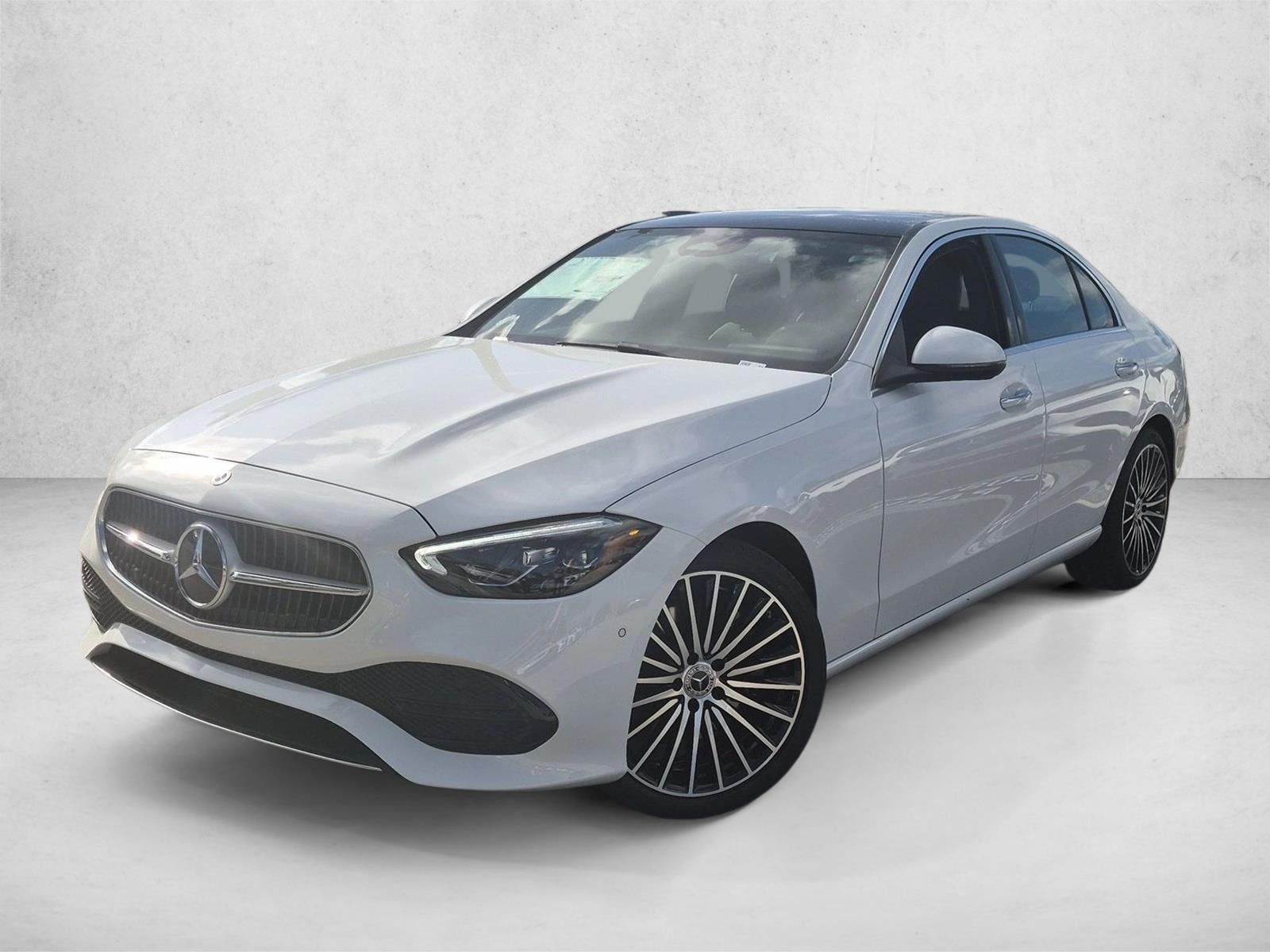
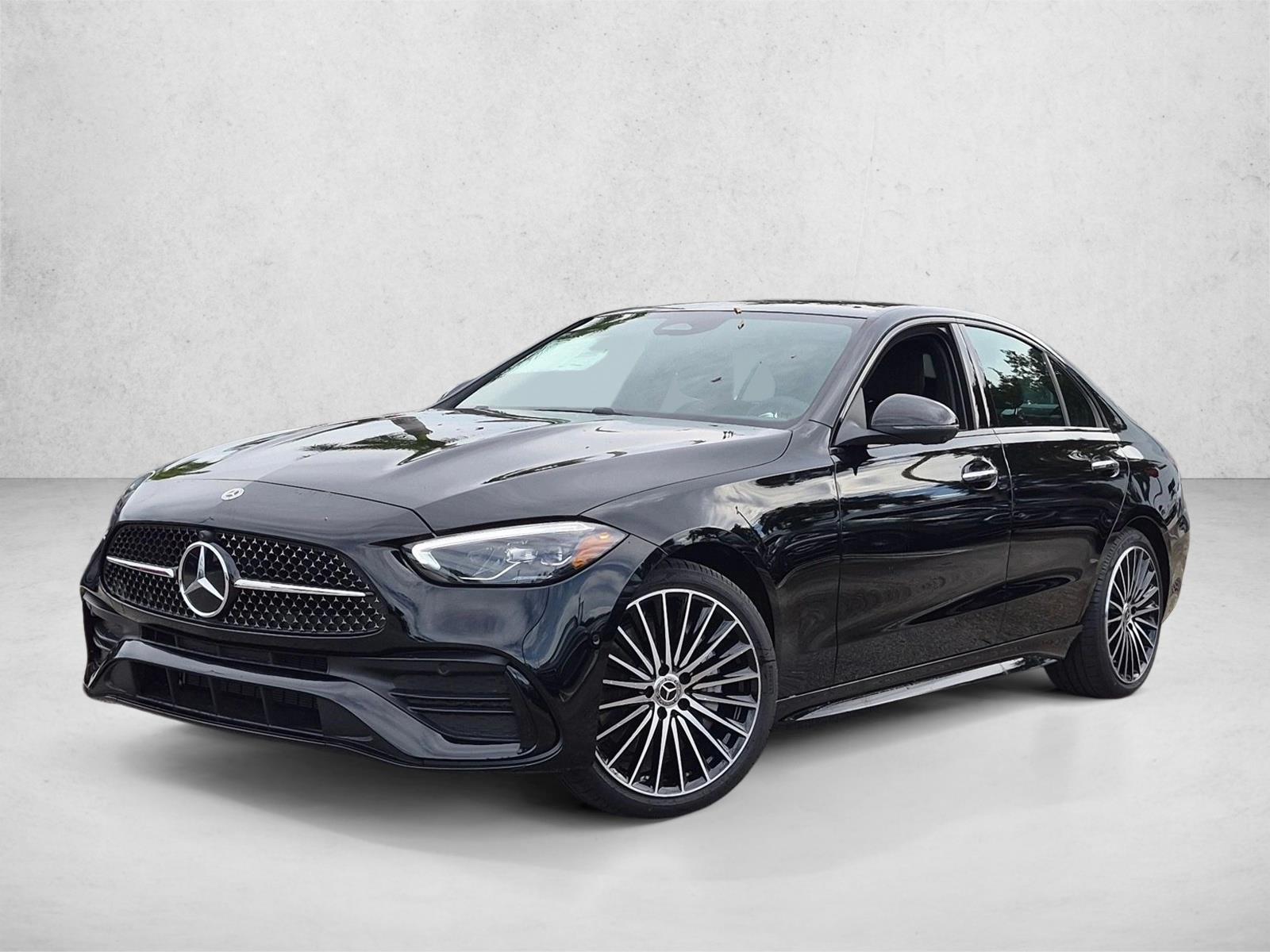
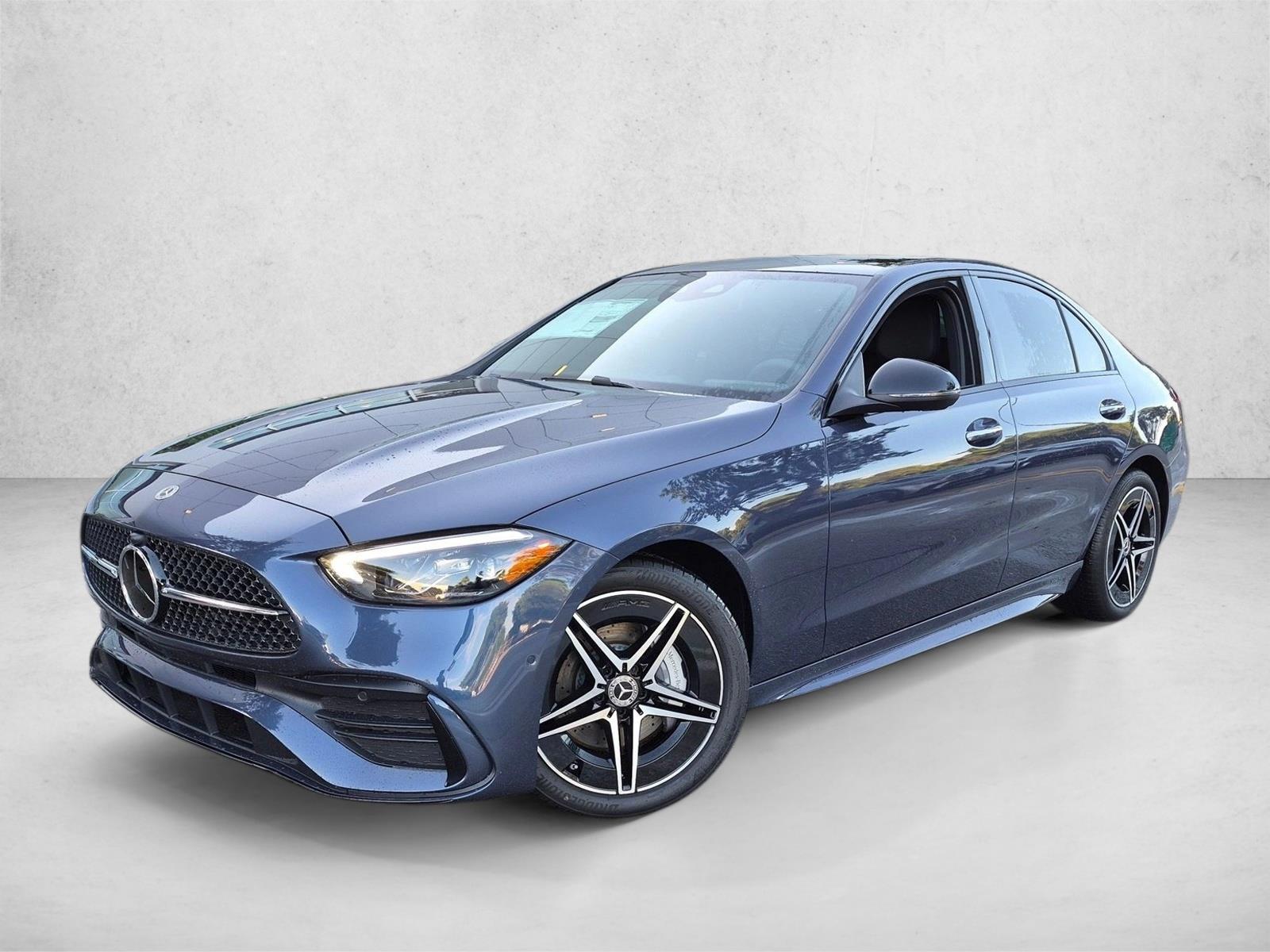
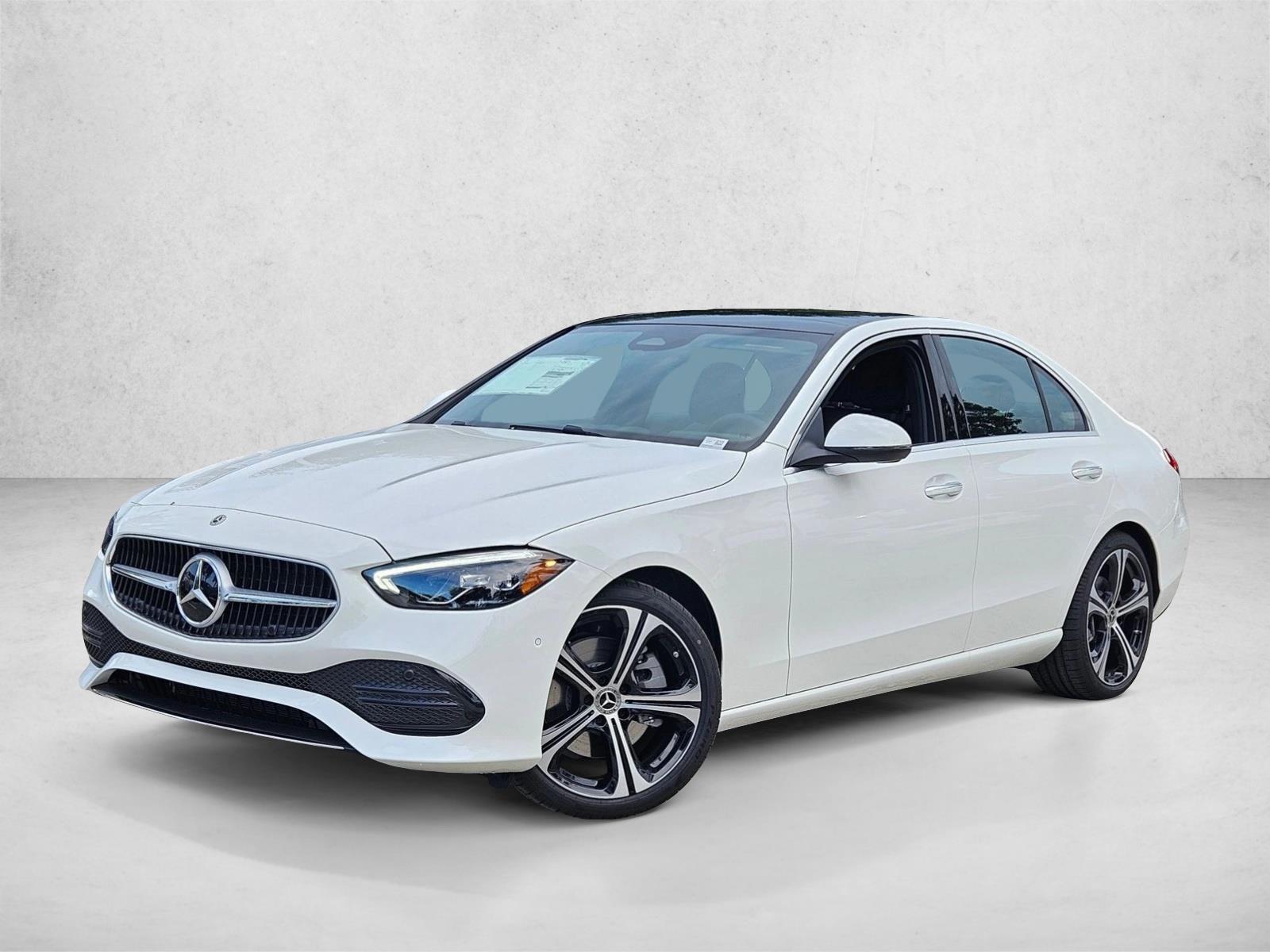
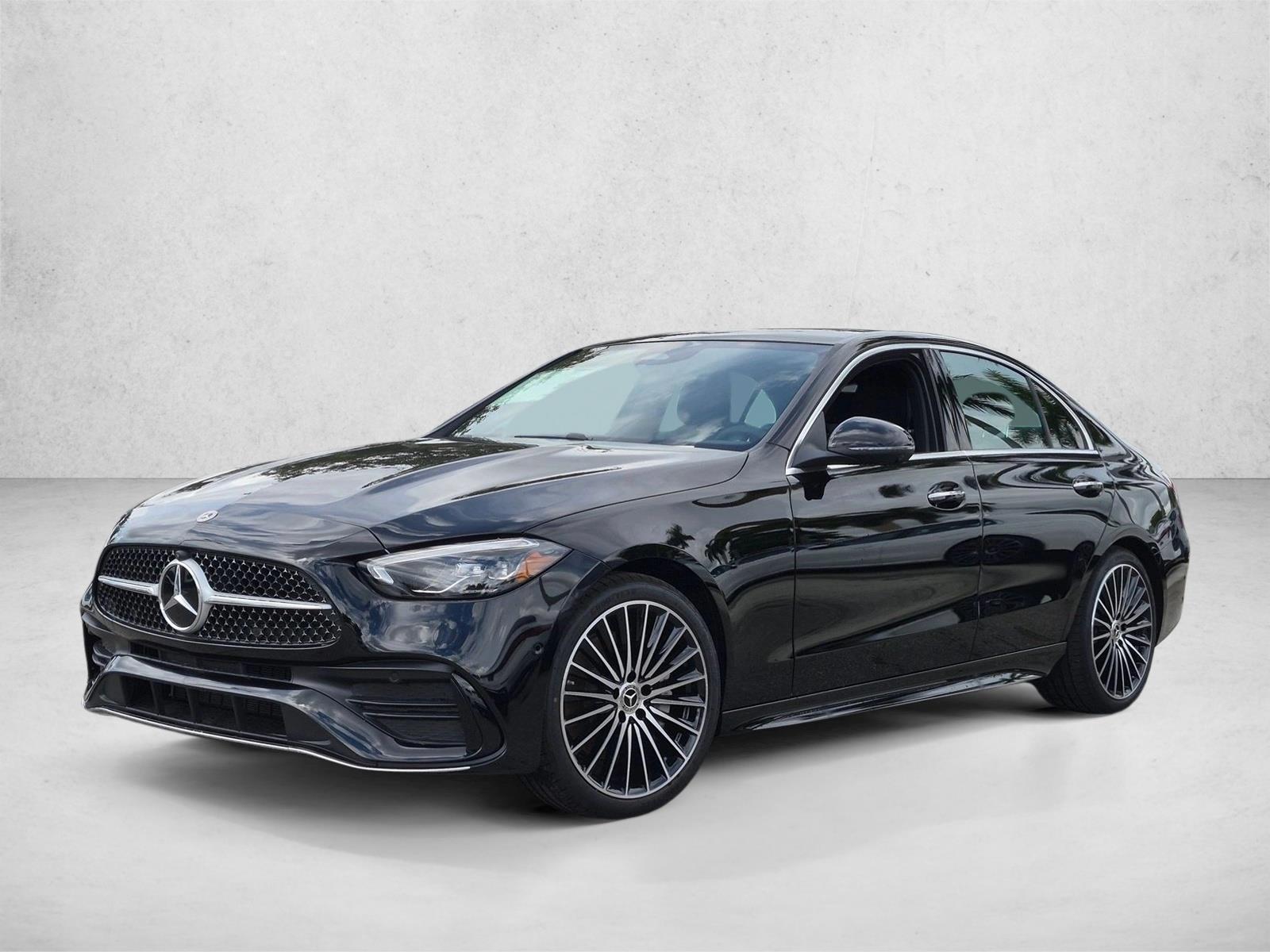
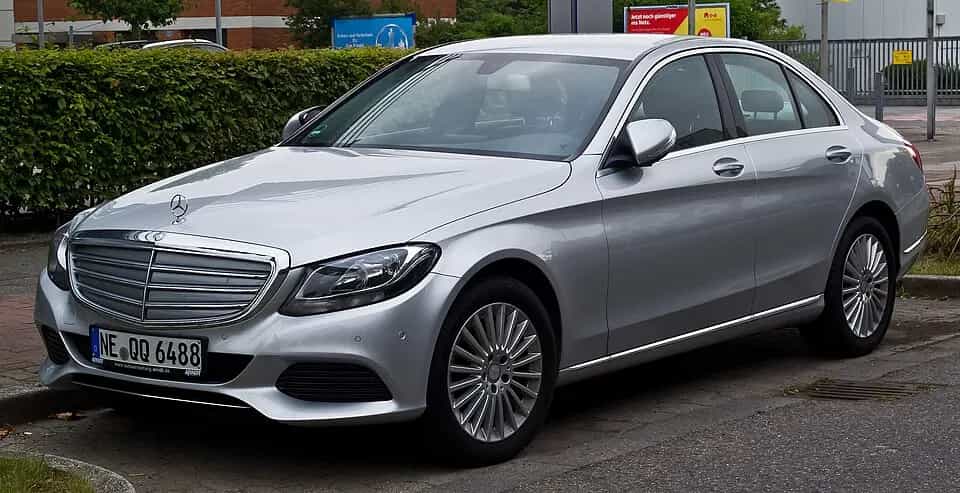
Mercedes-Benz C-Class
Importing a used Mercedes-Benz C-Class from the USA
The C-Class is the car that carries Mercedes-Benz into the mainstream, and the American market treats it exactly that way: high volumes, generous equipment, and a steady stream of off-lease examples flowing back into the used market every three years. For a German buyer that supply is the whole point. A used C-Class sourced in the USA is often better specified than a comparable European car of the same age, and because so many were leased, mileage tends to be moderate and service history well documented. One detail matters before anything else on a Mercedes, though: the C-Class sold in North America between roughly 2015 and 2021 was assembled at the Mercedes plant in Vance, Alabama, so its VIN can point to a US build. Whether that unlocks the 0% EU import duty depends entirely on what the VIN and plant records actually show, which is the first thing we check.

Model history: years and generations
The modern C-Class runs across four core generations relevant to import. The W203 (2000–2007) is now a classic-leaning choice. The W204 (2007–2014) introduced a stiffer body and the widely used M271 four-cylinder. The W205 (2014–2021) is the sweet spot on the US used market: cleaner styling, an air-sprung option, and the first C-Class built in Alabama for North America. The current W206 (2021 onward) went fully to four-cylinder power with 48-volt mild-hybrid assistance and a portrait touchscreen. Coupe and cabriolet bodies (C205/A205) ran alongside the W205 sedan and are common in the States.
Engines, transmissions and drive
US-market C-Class cars are dominated by the C300, powered by the 2.0-litre turbo four (M274 in the W205, M254 in the W206) making roughly 241–255 hp. Above it sat the C400/C450 and later C43 AMG with the 3.0-litre M276 biturbo V6 (around 362–385 hp), and the fire-breathing C63/C63 S with the hand-built 4.0-litre M177 biturbo V8 (469–503 hp). A C350e plug-in hybrid also appeared. Transmissions moved from the 7G-Tronic seven-speed to the 9G-Tronic nine-speed automatic. Rear-wheel drive is standard; 4MATIC all-wheel drive is extremely common on US cars because of the climate, which many German buyers actually prefer.
Equipment lines and body styles
American C-Class trims center on the C300 in Sport and Luxury lines, then the AMG-Line-equipped C43 and the standalone C63. Sedans dominate the volume; coupes and cabriolets are plentiful and photogenic. Typical US equipment includes the Premium package (Burmester audio, keyless go), the panoramic roof, heated and ventilated seats, head-up display and driver-assistance bundles. Because these were option-heavy lease cars, a well-loaded C300 from Florida or California is easy to find.
The US used market
Off-lease three-to-five-year-old C300 4MATIC sedans form the backbone of the US supply, usually with moderate highway mileage and complete Mercedes dealer service records. Southern and West Coast cars are the ones to target for corrosion-free underbodies. AMG variants command more attention and warrant a closer look at tires, brakes and any track history. Condition ranges widely, which is exactly why a documented history report and pre-purchase inspection earn their keep here. This page discusses availability and condition only, not European pricing.
Is an import right for you?
Import a used C-Class from the USA if you want a compact executive Mercedes with rich equipment and a traceable one-owner lease history, and you are comfortable letting the VIN decide the customs outcome rather than assuming it. The 4MATIC cars suit German winters; the C43 and C63 suit buyers who specifically want the American-market performance versions that were sold in strong numbers stateside.
Specs at a glance
| Item | Typical figures (US-market) |
|---|---|
| Generations | W203, W204, W205 (2015–2021), W206 (2021–) |
| Body styles | Sedan, coupe, cabriolet |
| Base engine | 2.0 L turbo I4 (M274/M254) |
| Base output | approx. 241–255 hp |
| AMG C43 engine | 3.0 L biturbo V6 (M276) |
| AMG C63 engine | 4.0 L biturbo V8 (M177), up to 503 hp |
| Transmission | 7G-Tronic / 9G-Tronic automatic |
| Drivetrain | RWD or 4MATIC AWD |
| Fuel | Petrol (plus C350e PHEV) |
| Length (W205 sedan) | approx. 4,686 mm |
| Wheelbase | approx. 2,840 mm |
| Kerb weight | approx. 1,540–1,800 kg |
| Fuel tank | approx. 66 L |
| US assembly (W205) | Vance, Alabama (VIN-dependent) |
| Seating | 5 (sedan) |
Common issues buyers should know
The C-Class is generally solid, but there are known weak points worth checking. On W205 M274 engines, watch for oil leaks around the timing cover and camshaft position sensors, and confirm the balance-shaft area on very early builds. The 9G-Tronic is durable when serviced but valve-body issues and rough low-speed shifts appear on neglected cars. Panoramic roof drains can clog and leak, staining headliners. COMAND infotainment and the electric steering column adjuster occasionally fail. On AMG V8 cars, inspect for coolant weeping and heat-related wear. Documented fluid changes, a recent transmission service and a leak-free engine bay are the signals of a good example.
Differences from the European version
American C-Class cars use amber-free rear turn signals in some years, different headlight aiming, and mph-primary instruments; daytime-only running lights and the missing rear fog lamp are typical items TÜV will flag. Equipment logic differs too — US cars often bundle features Europeans paid separately for. Radio frequency bands and the eCall setup differ, though neither blocks registration.
Import step by step
The process runs in a clear sequence: model and VIN selection; VIN and plant-of-build origin check to establish the customs position; a funded escrow so your money is protected until the car is verified; inland transport to the US port and ocean freight (usually RoRo or container) to Bremerhaven or Rotterdam; customs clearance on arrival; TÜV inspection and individual approval (Einzelabnahme) where needed; then German registration. We coordinate each handoff so nothing stalls at the port.
Customs and taxes: what applies
Key point: duty depends on the plant of build; only a VIN check secures the 0% rate. Import VAT of 19% applies regardless.
Two charges are separate and must be treated separately. The EU import duty on passenger cars is normally 10% of the customs value, but a 0% rate applies where genuine US origin is proven via VIN and plant records under the temporary Regulations (EU) 2026/1455 and 2026/1461 (in force since 1 July 2026, direct transport, through 31 December 2029). A US-assembled W205 C-Class can qualify; nothing is guaranteed until the VIN is verified. On top of the customs value plus any duty, the 19% German import VAT (Einfuhrumsatzsteuer) always applies. We pass costs through transparently, with no hidden margin.
Modifications and single-vehicle approval
Expect to add a rear fog lamp, adjust or replace headlights for European beam pattern, and confirm the speedometer reads in km/h (or add a conversion). The odometer is checked for plausibility against the history report. Once the individual approval and the certificate of conformity route are settled, the car is registered like any other vehicle.
What to verify before buying
Before committing, verify these: (1) the full VIN and plant of build for the customs position; (2) a Carfax or AutoCheck report for accidents, title and odometer history; (3) a clean, non-salvage title; (4) complete Mercedes service records, especially transmission and spark-plug intervals; (5) underbody and wheel-arch condition on any non-Southern car; (6) no active warning lights and a recent diagnostic scan; (7) tire, brake and suspension wear, particularly on AMG variants.
Common questions
Can I import a used C-Class from the USA duty-free?
Not automatically. The 0% EU duty applies only when US origin is proven from the VIN and plant records. Many US-market W205 cars were built in Alabama and can qualify, but it is confirmed case by case, and the 19% import VAT still applies.
Which C-Class years are best on the US market?
The 2015–2021 W205, especially the C300 4MATIC, offers the best mix of supply, equipment and value with off-lease history.
Are US C-Class cars left-hand drive?
Yes, all US-market cars are left-hand drive, which is correct for Germany.
What are the common problems on a used C-Class?
Engine oil leaks, panoramic roof drain clogs, occasional infotainment faults and neglected-transmission shift quality are the main ones to check.
Does the C300 come with all-wheel drive?
Many US cars are 4MATIC all-wheel drive, which suits German conditions; rear-wheel-drive cars also exist.
How long does the import take?
Typically several weeks from purchase to registration, driven mostly by ocean freight and clearance timing.
Will I pay German import VAT?
Yes. The 19% Einfuhrumsatzsteuer always applies on import, separate from any customs duty.
Can the AMG C63 be registered in Germany?
Yes, after TÜV individual approval and the usual lighting and documentation adjustments.
Explore the full Mercedes-Benz in the Carhub, compare closely related models such as the CLA, the GLC and the CLS-Class, or browse current C-Class listings.