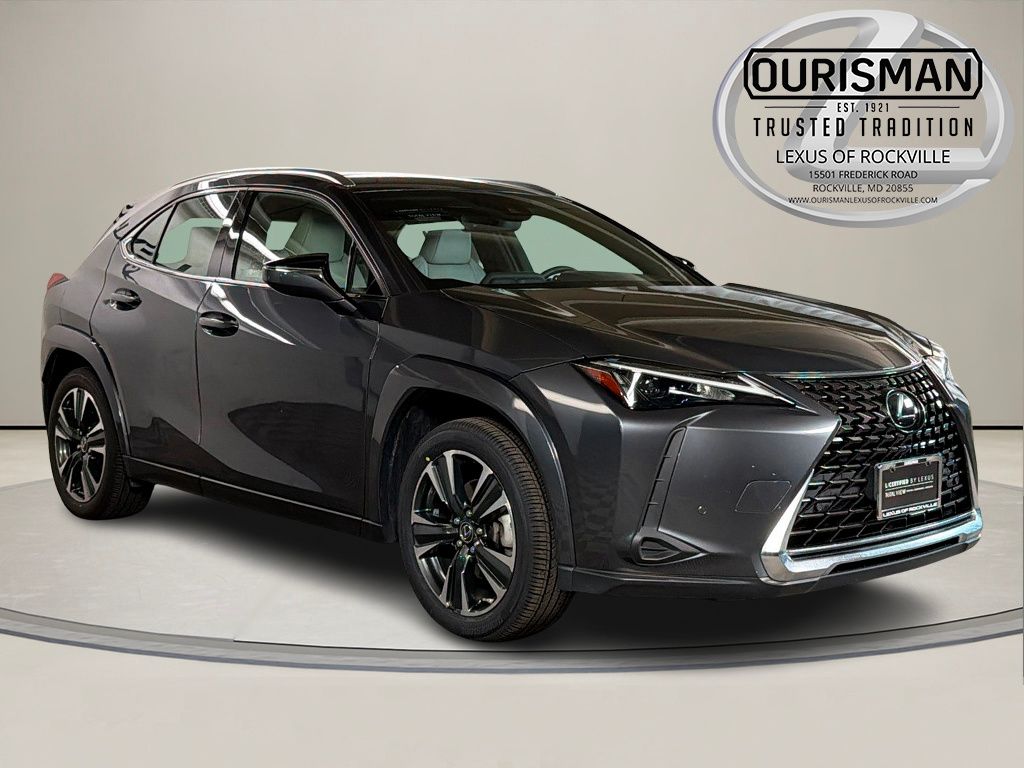
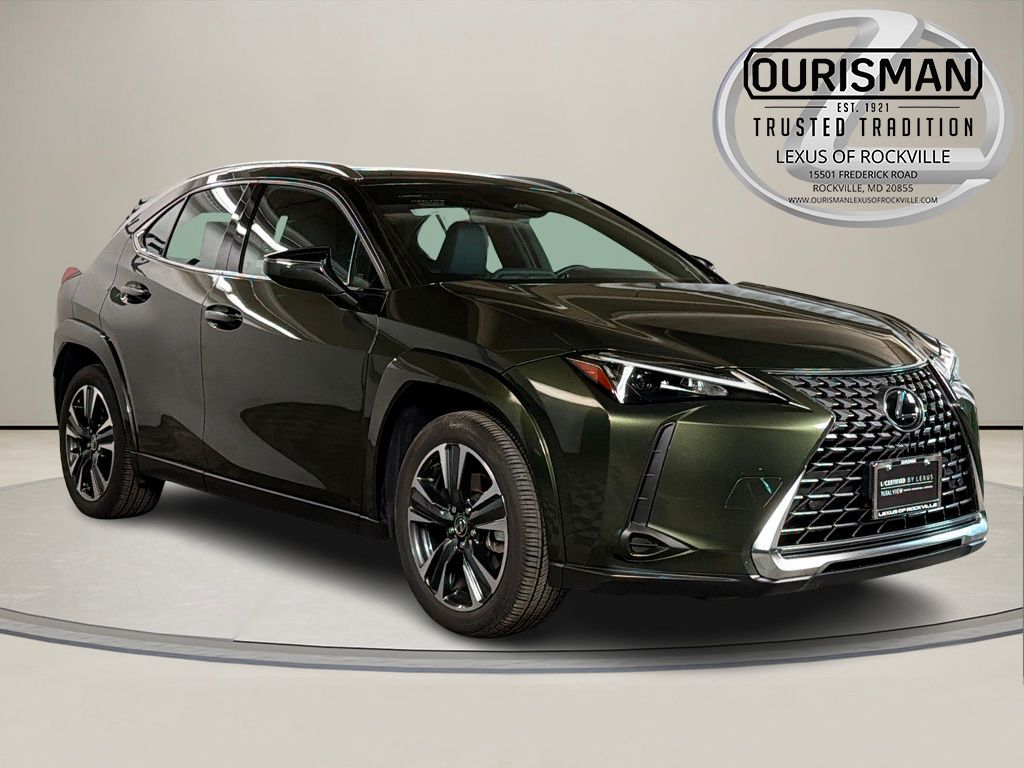
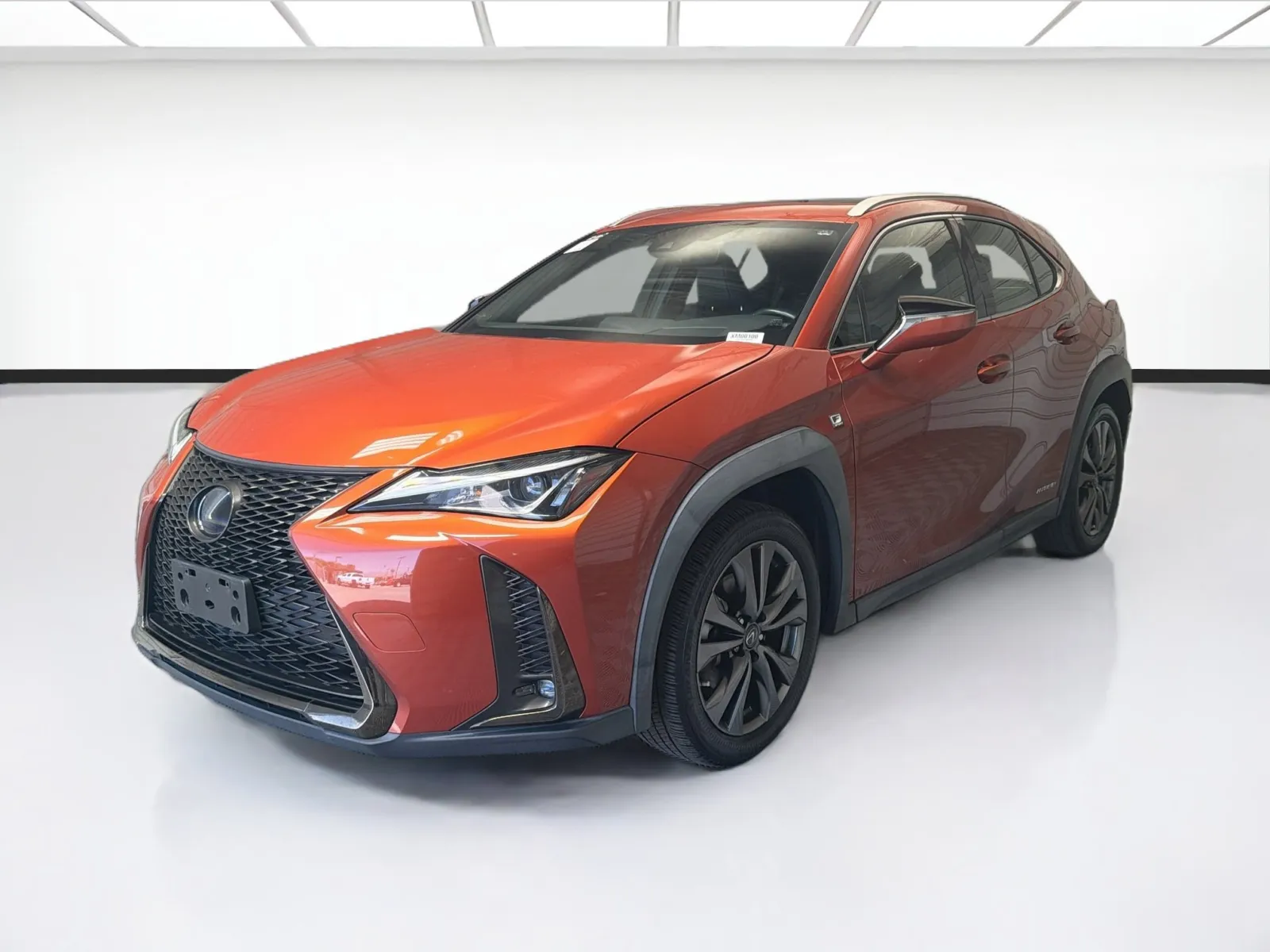
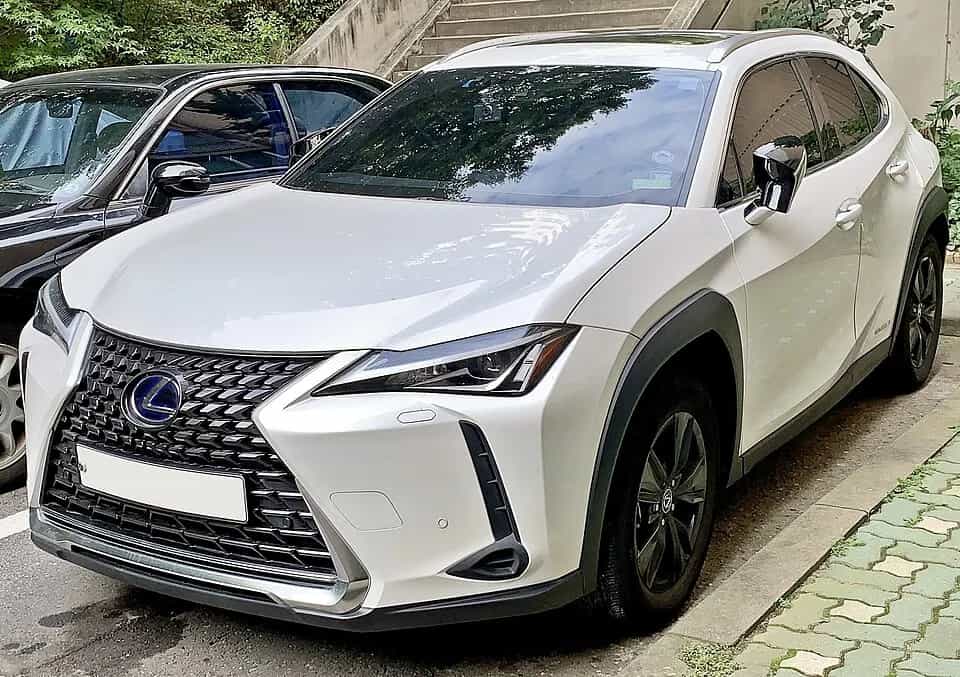
Lexus UX Hybrid
Importing a used Lexus UX Hybrid from the USA
The Lexus UX is the smallest crossover the brand builds, and in the North American market it was sold almost entirely as a self-charging hybrid. That makes the used US pool an interesting hunting ground for a compact, frugal luxury SUV with a full Lexus service record. As an independent broker, USCar Trader sources these cars for German and EU buyers, checks the VIN and the build origin before you commit, and keeps the process transparent from the first quote to the registration paperwork. Below is what actually matters when you set out to import a used Lexus UX Hybrid from the USA.

Model history and generations
The UX arrived for the 2019 model year, built on Toyota's GA-C platform — the same architecture underneath the Corolla and C-HR — but wrapped in a genuinely premium cabin. In the US, Lexus initially offered two lines: the front-drive UX 200 with a 2.0-litre petrol four and a CVT, and the UX 250h hybrid. The non-hybrid UX 200 was quietly dropped after 2020, so from the 2021 model year onward practically every US-market UX is a hybrid. A mid-cycle update in 2023 sharpened the infotainment (finally a touchscreen instead of the fiddly trackpad on many trims) and streamlined the range around the hybrid drivetrain. For 2025 the car became the UX 300h, adopting Toyota's fifth-generation hybrid system with more combined power. When you shop the US market you are mostly looking at 2019–2024 UX 250h examples, with the newer 300h appearing gradually.
Engines and drivetrain
The UX 250h pairs a 2.0-litre Atkinson-cycle four (engine code A25A-based, marketed by Lexus as part of its Dynamic Force family) with two electric motor-generators and a small nickel-metal-hydride or lithium-ion battery, depending on year. System output is about 181 hp (135 kW), sent through an electronically controlled CVT. Most US UX 250h cars carry Lexus's E-Four all-wheel drive, which adds a separate electric motor on the rear axle rather than a mechanical driveshaft — useful traction in light snow without the weight of a conventional AWD system. The later UX 300h steps up to roughly 196 hp. Fuel economy is the headline: US EPA figures land around 40+ mpg combined, which translates to genuinely low real-world consumption on the German Autobahn's slower stretches and in city traffic.
Which trim makes sense
The UX is offered only as a five-door subcompact crossover. US trim walks typically run from the base UX to Premium and Luxury (later F Sport Design and F Sport Handling grades on some years). F Sport cars add adaptive dampers on the Handling package, unique seats, and cosmetic tweaks. Popular options to look for on a US car include the Mark Levinson audio system, a head-up display, blind-spot monitoring, and the larger touchscreen on facelifted cars. Because these were premium purchases when new, many US UX Hybrids are well specified.
Supply on the US market
Supply of the UX in the States is steady rather than huge — it was never a volume seller like a RAV4 — but clean, low-mileage examples turn up regularly at Lexus franchise trade-ins and off-lease auctions. Typical import candidates are three to six years old with 30,000 to 80,000 miles. Lease returns from coastal states tend to be rust-free and dealer-maintained. Because the hybrid battery and drivetrain are shared with millions of Toyota hybrids, service history is easy to verify and parts are not exotic. Avoid ex-rental or heavily optioned salvage cars unless the price reflects it.
Who benefits from importing
A used Lexus UX Hybrid suits a buyer who wants a small, quiet, economical premium crossover that fits German cities and parking, values Lexus reliability over outright performance, and likes the idea of a hybrid that never needs plugging in. It is not a long-distance tow vehicle or a back-road weapon — it is a sensible, refined daily driver. If that description fits, the US market can offer well-kept cars with a clear paper trail.
Technical data
| Body style | 5-door subcompact luxury crossover |
| Platform | Toyota GA-C |
| US model years | 2019–present |
| Engine (UX 250h) | 2.0 L Atkinson-cycle inline-4 + hybrid |
| System output (250h) | approx. 181 hp (135 kW) |
| System output (300h) | approx. 196 hp |
| Transmission | Electronic CVT (e-CVT) |
| Drive | FWD or E-Four electric AWD |
| 0–60 mph | approx. 8.3–8.6 s |
| US EPA economy | ~41 mpg combined |
| Length | approx. 4,495 mm |
| Wheelbase | approx. 2,640 mm |
| Kerb weight | approx. 1,540–1,620 kg |
| Cargo (rear seats up) | approx. 486 L (VDA-adjusted lower) |
| Fuel type | Petrol hybrid (self-charging) |
| Build origin | Japan (Kyushu/Miyawaka) |
Known weak points and maintenance
The UX Hybrid is one of the more dependable cars in this class, and Lexus UX reliability generally scores well in US owner surveys. The hybrid system is mature and long-lived. That said, a few Lexus UX common problems are worth checking. Early infotainment units (2019–2021) were slow and the trackpad interface frustrates many owners — confirm which system a car has. Some owners report software glitches with the touchscreen and occasional Bluetooth dropouts. The 12-volt auxiliary battery can weaken and cause no-start or warning cascades; it is a cheap fix but easy to overlook. Tyre wear on E-Four cars and the firm ride on 18-inch wheels are comfort niggles rather than faults. Check that the hybrid system health report is clean and that scheduled inverter-coolant service has been done.
US and EU spec compared
US-market UX Hybrids run amber front side markers and different rear lighting, and they lack a rear fog lamp — both items your inspection engineer will expect to see corrected. Headlights are set up for right-hand traffic. Infotainment and navigation are US-region; European map data and DAB+ radio may need attention. Otherwise the mechanical package is identical, and the hybrid drivetrain requires no conversion.
The import process in detail
The path runs: vehicle selection with USCar Trader, VIN and origin check to establish the actual build plant, secure payment via escrow, booking of container or RoRo ocean freight to a German port (typically Bremerhaven), customs clearance on arrival, technical inspection and individual approval (TÜV/§21), then local registration. We coordinate the shipping and the paperwork so the car reaches you road-legal.
What customs clearance really costs
In short: the 0% duty rate applies only with documented US origin (VIN/plant) – German import VAT of 19% is always due.
Two charges apply on entry. The first is the EU import duty. Because the UX is built in Japan, a US-registered example does not carry US origin, so the reduced 0% rate under Regulations (EU) 2026/1455 and 2026/1461 — which applies only to vehicles with provable US origin — will normally not apply; the standard passenger-car rate is charged instead. The second is the German import VAT (Einfuhrumsatzsteuer) at 19%, which always applies regardless of origin. We calculate both separately and pass them through at cost, with no broker margin on taxes.
TÜV, modifications and registration
Typical changes for the individual approval are the addition of a rear fog lamp, adjustment or replacement of the headlights for right-hand traffic, side-marker handling, and confirmation that the speedometer reads correctly (the US odometer will show miles). A COC is rarely available for US cars, so a full technical assessment is standard. Once TÜV signs off, registration proceeds normally.
Check before you buy
Before committing to any US UX, verify the VIN against the build plant; pull a full Carfax or AutoCheck history for accident, title and odometer records; confirm a clean (not salvage or rebuilt) title; check for the hybrid system health report and inverter-coolant service; inspect underbody and suspension for rust on cars from northern states; confirm which infotainment generation is fitted; and photograph tyres and brakes for genuine remaining life.
Common questions
Is a used Lexus UX Hybrid a good import from the USA?
Yes, for buyers wanting a small, economical premium crossover. The drivetrain is proven and US service records are usually easy to verify.
Does the UX Hybrid qualify for 0% EU import duty?
Usually not, because it is built in Japan. The 0% rate needs provable US origin; we check each VIN and tell you the applicable rate before you buy.
Do I always pay German import VAT?
Yes. The 19% Einfuhrumsatzsteuer applies to every import regardless of origin and is calculated separately.
What mileage is normal on a US UX?
Three-to-six-year-old cars commonly show 30,000–80,000 miles; the hybrid system copes well with higher mileage when serviced.
Does the hybrid battery need replacing soon?
The UX battery is long-lived; a healthy car with a clean system report should give years of service. We check battery health during inspection.
Can the US infotainment be used in Germany?
It works, but navigation is US-region and DAB+ may be absent. This is a common, manageable retrofit point.
How long does the whole import take?
From purchase to German plates, expect roughly eight to twelve weeks depending on shipping schedules and inspection slots.
Is USCar Trader a Lexus dealer?
No. We are an independent broker for used US vehicles, with no manufacturer partnership and no margin on taxes or duty.
Ready to start? Browse Lexus in the Carhub, compare the closely related Lexus NX Hybrid, the electric Lexus RZ and the larger Lexus RX Hybrid, or view current Lexus UX Hybrid listings and request a quote.