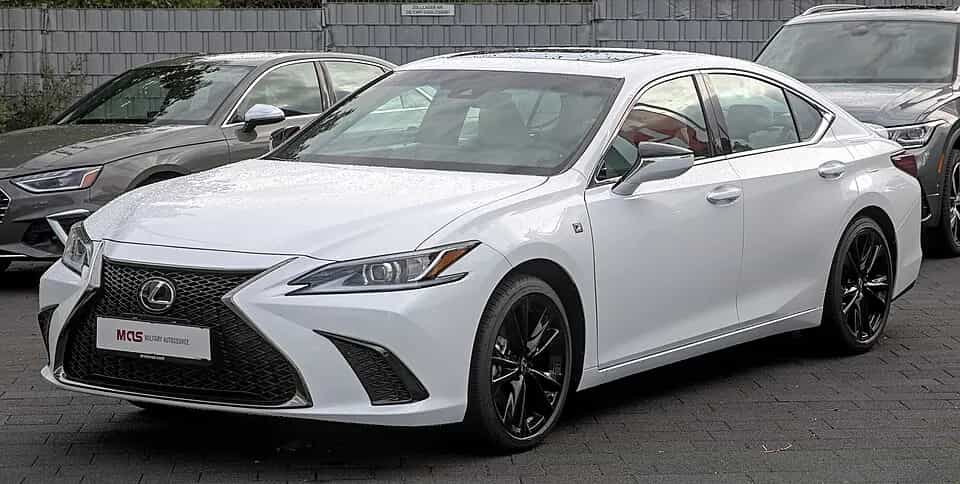
Lexus ES
Importing a used Lexus ES from the USA
The Lexus ES is one of the most widely traded near-luxury sedans in North America, which means a deep, liquid used market and plenty of choice for a European buyer. As an independent import broker, USCar Trader sources used ES sedans on your behalf, handles the paperwork and shipping, and never adds a hidden vehicle margin. If you want a quiet, comfortable front-wheel-drive Lexus with proven mechanicals, the ES is a sensible target for a US import. Below is what actually matters when you import a used Lexus ES from the USA: which generation to look for, how the engines and hybrid system behave, and how the origin of the car affects the customs rate.

From launch to today
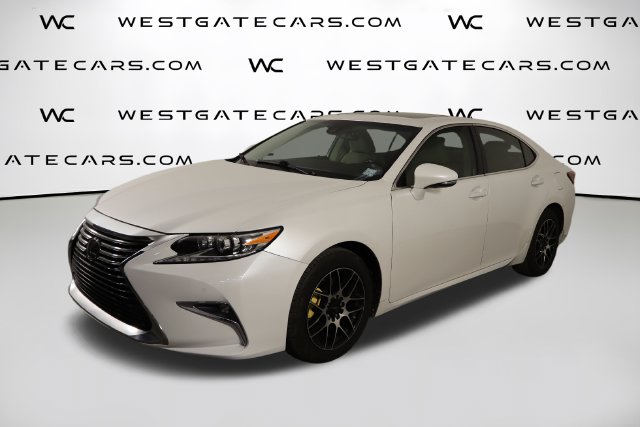
Two generations dominate the current used pool. The sixth generation (XV60, 2013 to 2018) moved the ES onto the larger Avalon/Camry platform and introduced the ES 300h hybrid alongside the familiar ES 350 V6. From roughly 2015 these cars were assembled at Toyota's Georgetown, Kentucky plant for the North American market. The seventh generation (XZ10, 2019 onward) is a sharper, lower car on the GA-K platform, with the ES 350, the ES 300h hybrid and, from 2021, an all-wheel-drive ES 250 with a four-cylinder engine. A 2022 facelift added a touchscreen you can actually reach and updated driver-assist. For import, the exact build plant on the VIN matters more than the trim badge, because it decides the customs rate.
Engines and drivetrain in detail
The ES 350 uses Toyota's 2GR series 3.5-litre V6, rated around 268 hp in the sixth generation and 302 hp (2GR-FKS with direct and port injection) in the seventh, paired with a six-speed automatic on older cars and a smooth eight-speed on the newer ones. The ES 300h combines a 2.5-litre Atkinson-cycle four (A25A-FXS on the latest cars) with an eCVT hybrid transaxle for a combined output near 215 hp and genuinely low real-world consumption. All of these are front-wheel drive; only the ES 250 adds AWD through a conventional four-cylinder and eight-speed automatic. None of these powertrains are turbocharged, which is part of why the ES has such a strong reliability reputation.
Trim levels and variants
The ES is a four-door sedan only. US trims range from the well-equipped base car through Luxury and Ultra Luxury, with the F Sport adding adaptive dampers, unique seats and cosmetic changes rather than more power. American cars are frequently loaded: ventilated seats, a panoramic view monitor, Mark Levinson audio and the full Lexus Safety System+ suite are common even on mid trims, so a used US ES often arrives better equipped than a comparable European car.
Used availability in the USA
Supply is excellent. The ES sells in large volumes across the US, so you can be selective on colour, trim and history. Typical import candidates are three- to seven-year-old cars with moderate highway mileage; many are single-owner lease returns. Rust is rarely an issue on cars from the southern and western states, which is where you should focus. Expect clean interiors and full digital service records for cars that stayed within the Lexus dealer network.
When importing makes sense
The used ES suits a buyer who wants a comfortable, low-drama executive sedan and is happy with front-wheel drive. If you cover a lot of distance and want low running costs, target an ES 300h. If you want effortless refinement and don't mind fuel bills, the ES 350 V6 is one of the smoothest six-cylinders in its class. Either way, the point of importing is choice and specification, not a bargain guarantee.
Facts and figures
| Attribute | Typical used Lexus ES (7th gen) |
|---|---|
| Body style | Four-door sedan |
| Platform | Toyota GA-K |
| ES 350 engine | 3.5 L V6 (2GR-FKS) |
| ES 350 output | approx. 302 hp |
| ES 300h engine | 2.5 L four + hybrid (A25A-FXS) |
| ES 300h combined output | approx. 215 hp |
| ES 250 engine | 2.5 L four, AWD |
| Transmission | 8-speed auto / eCVT (hybrid) |
| Drive | Front-wheel (AWD on ES 250) |
| Length | approx. 4,975 mm |
| Wheelbase | approx. 2,870 mm |
| Fuel | Petrol / petrol-hybrid |
| Seating | 5 |
| Assembly | Kyushu (JP) / Georgetown (US) |
Reliability and common problems
Lexus ES reliability is a genuine strength; the V6 and hybrid drivetrains are among the most durable in the segment. That said, do your homework. Sixth-generation V6 cars can develop oil consumption or weeping VVT and cam-cover seals with age. Water pumps on the 2GR eventually leak. Infotainment on 2013 to 2018 cars uses the frustrating Remote Touch mouse controller, and some units suffer screen delamination or Bluetooth glitches. On hybrids, the 12-volt auxiliary battery is a common no-start culprit and is cheap to replace; the traction battery itself typically lasts well. Check for uneven front tyre wear (control-arm bushings) and confirm the brakes have been serviced, since regenerative systems can let pads corrode from underuse.
How US versions differ
US ES sedans run amber rear turn signals in many cases but often lack a rear fog lamp, use MPH-primary instruments and carry US-spec headlight beam patterns. The infotainment may default to US navigation maps and radio bands. None of this is a barrier, but the lighting and speedometer items are exactly what the German TUEV will look at during individual approval.
From US purchase to registration
The process is straightforward when it is sequenced properly: select the car, verify the VIN and build plant and pull a Carfax or AutoCheck history, secure the deal through escrow rather than a wire to an unknown seller, book roll-on/roll-off or container ocean freight to a North Sea port, clear German customs on arrival, present the car for TUEV individual approval (Einzelabnahme) with any required modifications done, and finally register it. USCar Trader coordinates these steps as your broker; you stay the buyer of record.
Costs, duty and taxes at a glance
In short: the 0% duty rate applies only with documented US origin (VIN/plant) – German import VAT of 19% is always due.
Two charges apply and they are separate. First, the EU import duty: since 1 July 2026 a 0% rate is available under Regulations (EU) 2026/1455 and 2026/1461, but only for a car of provable US origin, shown by the VIN and plant code and shipped in direct transport. A Georgetown-built ES can qualify; a Japan-built ES does not and is dutiable at the standard passenger-car rate of 10%. Because the ES was built in both countries, the origin check is decisive here. Second, the 19% German import VAT (Einfuhrumsatzsteuer) always applies, regardless of origin. We never promise duty-free status and we quote both items transparently, with no vehicle margin from us.
TÜV, approval and license plates
Typical work is limited: adapt or replace headlights where the beam pattern is non-compliant, fit or activate a rear fog lamp, and have the odometer and any displays evaluated. The mechanicals rarely need attention. Once the TUEV issues the individual approval, registration at your local office follows normally.
Pre-purchase checklist
Confirm the VIN matches the title and note the build plant. Pull a full Carfax/AutoCheck for accidents, title brands and odometer consistency. Inspect for underbody rust (favour southern/western cars). Verify service history, especially hybrid coolant and 12V battery on ES 300h. Check tyres and brakes for age-related wear. Confirm the title is clean, not salvage or rebuilt, unless you knowingly accept it.
Import FAQ
Can I import a used Lexus ES from the USA duty-free?
Not automatically. The 0% EU duty applies only to a car of provable US origin. A Kentucky-built ES may qualify; a Japan-built ES is dutiable at 10%. The 19% import VAT always applies.
Which ES engine is best for import?
The ES 300h hybrid for low running costs, the ES 350 V6 for maximum smoothness. Both are highly reliable.
Is the ES available with all-wheel drive?
Only the four-cylinder ES 250 (2021 onward) offers AWD; the V6 and hybrid are front-wheel drive.
Are US Lexus ES sedans well equipped?
Usually yes. American cars often carry ventilated seats, premium audio and the full safety suite even on mid trims.
What are common Lexus ES problems?
Age-related oil seepage and water-pump leaks on the V6, the 12V battery on hybrids, and older infotainment quirks. Nothing systemic.
How long does the import take?
Typically several weeks, driven mainly by ocean freight scheduling and TUEV appointment availability.
Does USCar Trader sell new Lexus cars?
No. We are an independent broker for used US vehicles only, with no manufacturer partnership and no vehicle margin.
Ready to start? Browse Lexus in the Carhub, compare related sedans such as the Lexus IS, the Lexus GS and the flagship Lexus LS, or view current ES listings.