Model history and generations
The TX is still in its first generation, so there are no confusing model-year jumps to untangle. It shares the TNGA-K platform with the Toyota Grand Highlander and is assembled at Toyota's plant in Princeton, Indiana.
 0049 (0)89 2000 791 00
 Mo - Fr 8:00am - 8:00pm
USCar Trader import service
Choose a specific vehicle. Where data is available, its detail page shows the import cost calculation. We assess any possible duty benefit with you before purchase.
Important: A 0% EU import-duty rate may be available for a vehicle covered by Regulation (EU) 2026/1455 that has US origin and is imported directly into the EU. CETA may apply to a vehicle with preferential Canadian origin. Whether the requirements are met is assessed for the individual case. Please contact us before purchase; we review the possible duty benefit and provide non-binding support through the process. Import VAT and other costs are assessed separately.
CarHub · Lexus
The TX is Lexus's answer to the American demand for a genuinely spacious three-row luxury SUV, and it arrived late in 2023 as a 2024 model.

Price:79,315.00 USD
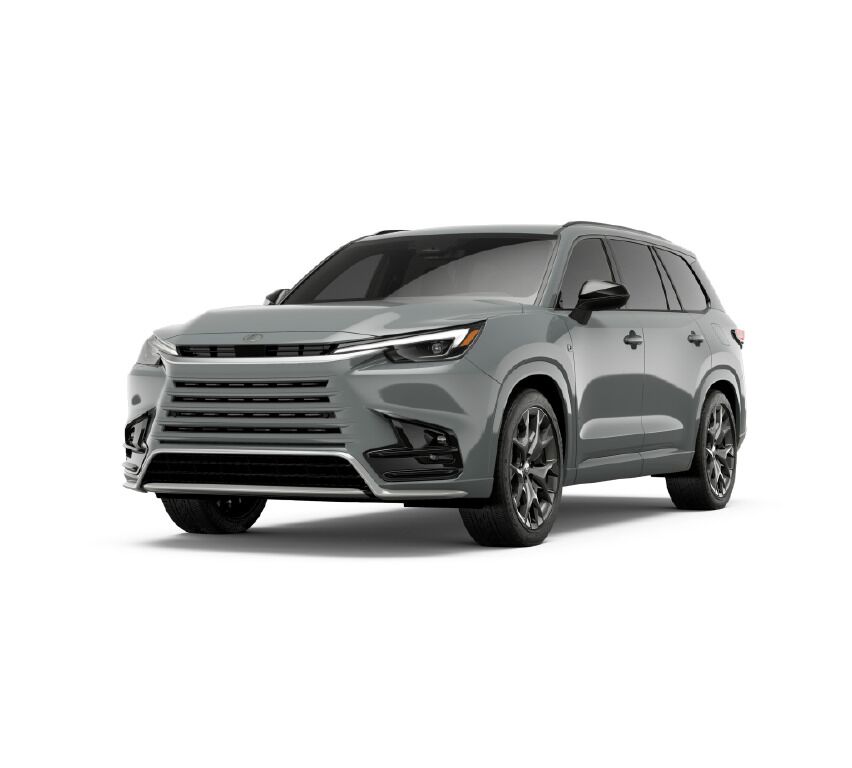
Price:76,650.00 USD

Price:82,792.00 USD

Price:80,967.00 USD

Price:78,306.00 USD

Model profile
The TX is still in its first generation, so there are no confusing model-year jumps to untangle. It shares the TNGA-K platform with the Toyota Grand Highlander and is assembled at Toyota's plant in Princeton, Indiana.
Powertrain and equipment
The TX 500h pairs a 2.4-litre turbocharged four-cylinder with a hybrid system for a combined output of around 366 hp, driving all four wheels through a six-speed automatic with an integrated electric motor and Lexus's DIRECT4 all-wheel-drive control.
The TX is offered only as a five-door, three-row SUV — there is no coupe or short-wheelbase variant. Trim walk in the US runs from Premium and Luxury on the TX 350 and TX 500h up to the fully loaded TX 550h+ Luxury.
Vehicle selection
Supply is genuinely national in the States, with the largest concentrations in the sunbelt and the coasts where Lexus sells heavily.
The TX Hybrid makes sense for families who want three usable rows, a refined electrified drivetrain and Lexus reliability, and who cannot find the car locally because it was never sold new in Europe.
Vehicle data
| Body style | Detail (US-market TX Hybrid): Three-row luxury SUV, 5-door |
|---|---|
| Seating | Detail (US-market TX Hybrid): 6 or 7 |
| Length | Detail (US-market TX Hybrid): approx. 5,150 mm |
| TX 500h engine | Detail (US-market TX Hybrid): 2.4 L turbo I4 + hybrid |
|---|---|
| TX 500h output | Detail (US-market TX Hybrid): ~366 hp combined |
| TX 550h+ engine | Detail (US-market TX Hybrid): 3.5 L V6 plug-in hybrid |
| TX 550h+ output | Detail (US-market TX Hybrid): ~404 hp combined |
| TX 550h+ EV range | Detail (US-market TX Hybrid): ~33 mi (EPA) |
| Transmission | Detail (US-market TX Hybrid): 6-speed auto (500h) / eCVT (550h+) |
| Drive | Detail (US-market TX Hybrid): AWD (DIRECT4) |
| Fuel | Detail (US-market TX Hybrid): Petrol-electric hybrid / plug-in hybrid |
| Platform | Detail (US-market TX Hybrid): TNGA-K (shared with Grand Highlander) |
|---|---|
| Assembly plant | Detail (US-market TX Hybrid): Princeton, Indiana, USA |
| Introduced | Detail (US-market TX Hybrid): 2023 (2024 model year) |
| Warranty (US new) | Detail (US-market TX Hybrid): Hybrid components long-term coverage |
Values are reproduced verbatim from the existing article table. The documents for the specific vehicle govern.
Pre-purchase review
The 2.4-litre turbo four also serves in other Toyota and Lexus models, and the hybrid architecture descends from a system Toyota has refined over two decades, so catastrophic failures are rare. Early-build software glitches around the infotainment and the digital instrument cluster are the most commonly reported niggles, usually resolved by dealer updates.
Germany and Europe
US-market headlights use the FMVSS/SAE beam pattern, which differs from the ECE pattern required in the EU, so they may need adjustment or replacement with ECE-compliant units for registration.
Typical work for approval includes fitting or activating a rear fog lamp, adapting the headlights or replacing them with ECE-compliant units, confirming the tyre and rim ratings, and converting the odometer reading to kilometres for the documents.
USCar Trader services
As a buyer based in Germany, you do not have to inspect the vehicle yourself in the United States or Canada. Within the agreed scope, USCar Trader can coordinate document review, a separately commissioned on-site inspection and purchase processing.
Covered inspection points are agreed in advance. An on-site inspection records condition at the appointment and is not a guarantee.
Next step: Before commissioning, USCar Trader and the customer agree which document, history, inspection and transaction checks suit the vehicle and are included in the service. This records what was actually checked.
Import process
The assessment depends on the specific vehicle and the circumstances of the transaction. Please contact USCar Trader before purchase; we review any possible duty benefit and provide non-binding support. Import VAT and other costs are considered separately.
Questions and answers
No. The TX was developed for North America and is not part of Lexus Europe's line-up, which is why importing a used one from the USA is the practical way to own it here.
No, not automatically. A 0% EU import-duty rate may be available for a vehicle covered by Regulation (EU) 2026/1455 that has US origin and is imported directly into the EU. CETA may apply to a vehicle with preferential Canadian origin. Whether the requirements are met is assessed for the individual case. Please contact USCar Trader before purchase; we review the possible duty benefit and provide non-binding support. Import VAT and other costs are assessed separately.
Import VAT and other taxes or costs are assessed separately under the applicable rules and the circumstances of the individual case. A blanket answer for every vehicle would not be reliable.
The 500h is a conventional hybrid with a 2.4-litre turbo four, while the 550h+ is a V6 plug-in hybrid with a larger battery and around 33 miles of electric range.
Depending on trim it seats six with captain's chairs or seven with a middle bench, across three rows.
Yes, once lighting and documentation are brought to ECE standard during the individual approval; the seating and driver-assistance systems are not obstacles.
Usually in a container or via RoRo from a US port, with inland transport arranged to the loading port first.
No. USCar Trader is an independent broker for used US vehicles, with no manufacturer partnership and no margin on the car.
More vehicles