Lexus RC
Importing a used Lexus RC from the USA
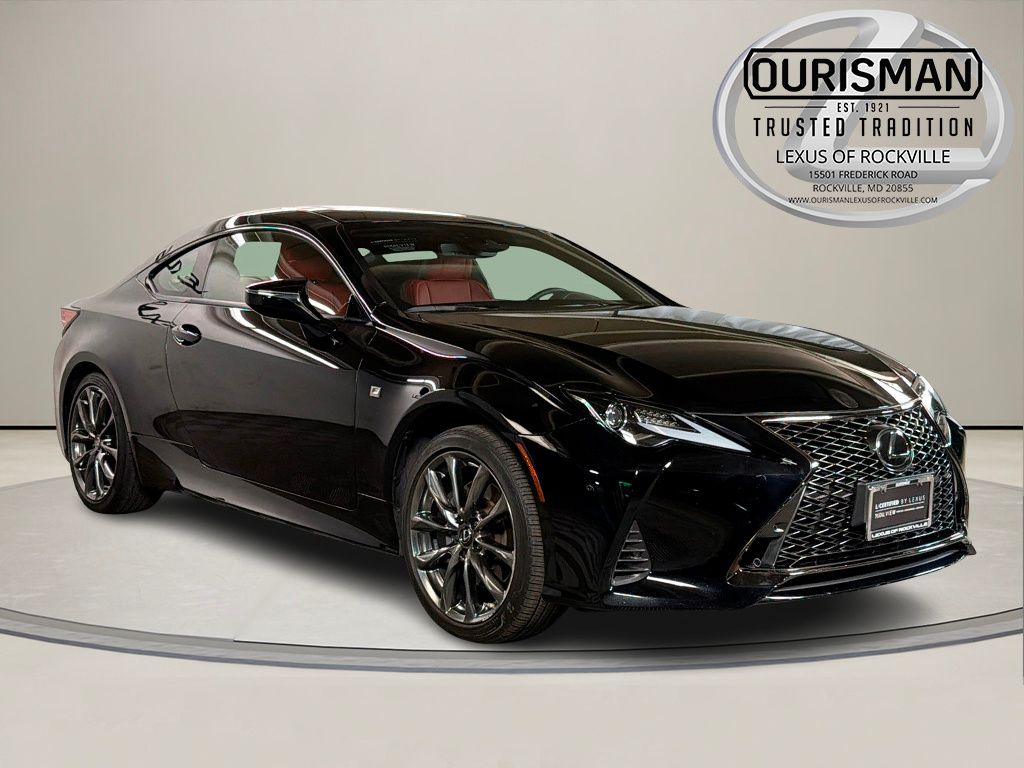
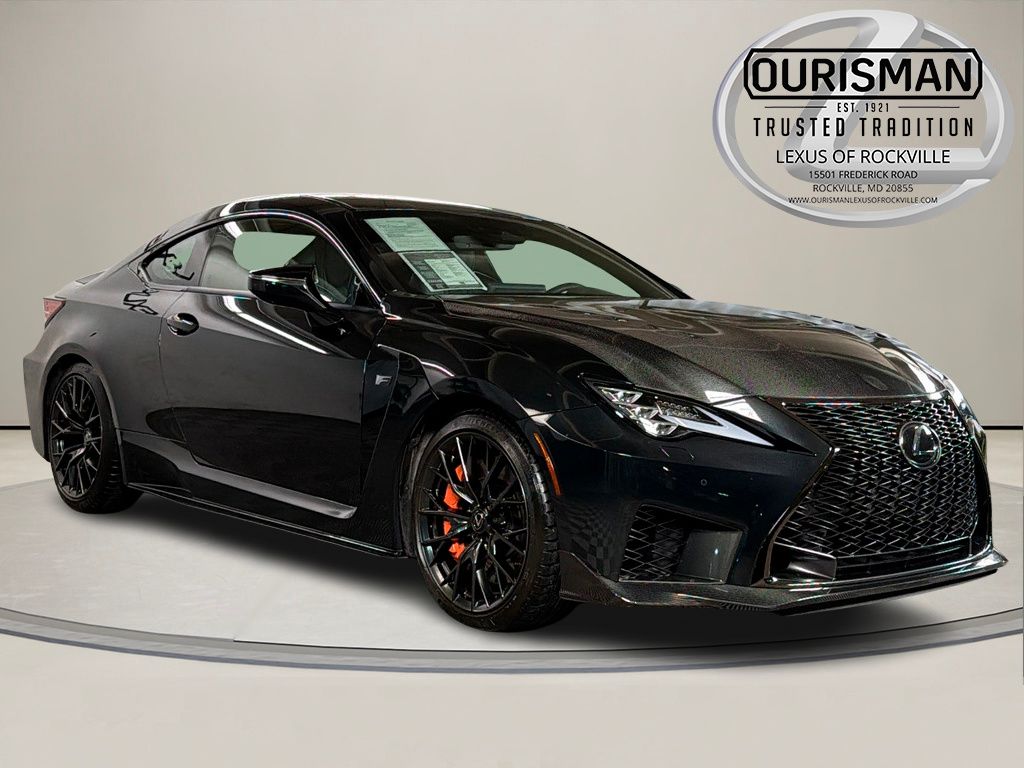
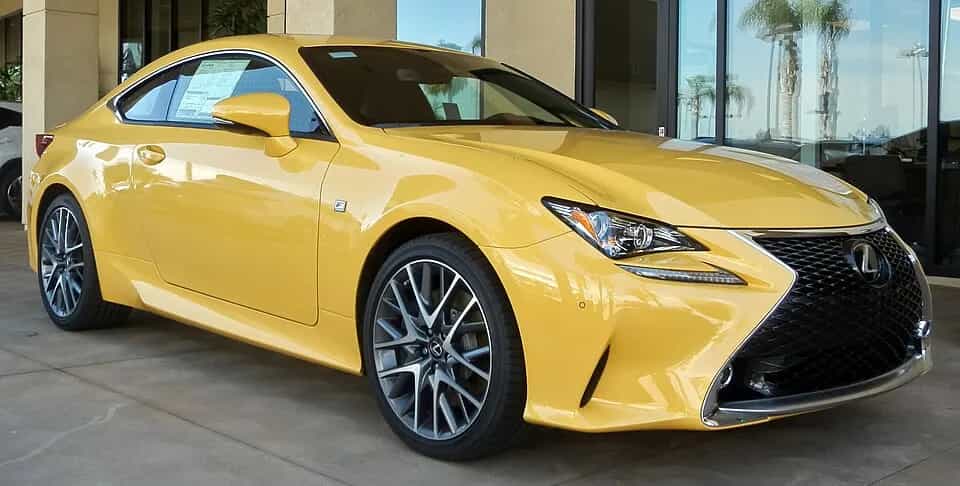
The Lexus RC is the two-door coupe that Lexus built to give its IS sedan a sharper, more emotional counterpart. In the United States it sold in far greater numbers and in a wider spread of trims than it ever did in Germany, which is exactly why the American used market is worth a look for anyone who wants a well-kept RC 350 or the naturally aspirated V8 RC F. As an independent broker, USCar Trader helps German and EU buyers source, inspect and import a used Lexus RC coupe from the USA, then walks the car through customs, TÜV and registration. This page lays out the generations, the engines, what the US used pool actually looks like, and the honest weak points before you commit.

Model history and generations
The RC launched for the 2015 model year (production from late 2014) and, unusually, was assembled from three different platforms: the front section came from the GS, the centre from the previous IS convertible, and the rear from the current IS. That mongrel structure gave it a stiff, planted feel. The car received its most obvious update for the 2019 model year, with a reworked spindle grille, revised suspension tuning and updated wheels. The high-performance RC F arrived alongside the standard car in 2015 and gained a lighter, more focused Track Edition for 2020. Lexus kept the RC in production far longer than most rivals kept their compact coupes, so the used pool spans roughly a decade of largely unchanged mechanicals — good news for parts and familiarity.
Engines and drivetrain
The US line-up is straightforward once you learn the naming. Early cars used the RC 200t badge (2016–2017) with the 2.0-litre 8AR-FTS turbo four producing 241 hp; from 2018 that same car was renamed RC 300 (rear-wheel drive). Confusingly, the AWD RC 300 uses a detuned 3.5-litre 2GR-FKS V6 with around 260 hp. The core enthusiast choice is the RC 350: the 3.5-litre V6 makes 306–311 hp, driving through an eight-speed automatic on rear-wheel-drive cars and a six-speed on all-wheel-drive versions. At the top sits the RC F with the 5.0-litre 2UR-GSE V8 — a naturally aspirated engine making 467–472 hp, paired to an eight-speed automatic and rear-wheel drive. There is no manual and no diesel; every US RC is petrol with a torque-converter automatic.
Which trim makes sense
The RC is only ever a two-door, four-seat coupe — no convertible, no fastback. American buyers configured them with F Sport packages (adaptive variable suspension, unique grille mesh, sport seats), the Premium package, and on the RC F, options such as the Torque Vectoring Differential and carbon-fibre roof and spoiler. Because US spec sheets ran generously, imported cars frequently arrive with heated and ventilated seats, the Mark Levinson audio system, blind-spot monitoring and a head-up display already fitted — equipment that was often costly or optional on European coupes.
Supply on the US market
RC coupes are plentiful across the sun-belt states, and the typical used example is a 2015–2020 RC 350 F Sport or RC 300 with moderate mileage, since many were leased and driven gently. RC F examples are rarer and command attention, especially clean, unmodified cars with documented service. Look for California, Arizona and Texas cars for dry, rust-free underbodies. Mileage on well-kept examples is often lower than a comparable German coupe of the same age because the RC was frequently a second or weekend car. Condition, service history and an unbranded title matter far more than a few thousand extra kilometres.
Who benefits from importing
Importing a used Lexus RC from the USA makes sense if you want a comfortable, reliable coupe with genuine Lexus build quality and a naturally aspirated engine that is increasingly hard to find new. It suits the buyer who prizes long-term dependability over outright track pace, and the RC F specifically appeals to those chasing a high-revving V8 without turbo lag. If you need a practical daily with rear-seat room or a manual gearbox, look elsewhere — but as a durable, characterful grand tourer, the RC rewards a careful import.
Technical data
| Item | Detail |
|---|---|
| Generation / years | Single generation, 2015–present (facelift 2019) |
| Body style | 2-door, 4-seat coupe |
| Engines (US) | 2.0 turbo I4; 3.5 V6; 5.0 V8 (RC F) |
| Power output | 241 hp (RC 300) / 306–311 hp (RC 350) / 467–472 hp (RC F) |
| Transmission | 8-speed automatic (RWD) / 6-speed automatic (AWD) |
| Drivetrain | Rear-wheel drive or all-wheel drive |
| 0–100 km/h | approx. 4.2 s (RC F) / 5.8 s (RC 350) |
| Top speed | approx. 270 km/h (RC F) / 230 km/h (RC 350, limited) |
| Length | approx. 4695 mm |
| Wheelbase | 2730 mm |
| Curb weight | approx. 1680–1795 kg |
| Fuel tank | 66 litres |
| Trunk volume | approx. 340 litres |
| Assembly | Japan (Tahara / Toyota Motor Kyushu) |
| Fuel type | Petrol |
Known weak points and maintenance
Lexus RC reliability is a genuine strength; this is one of the more trouble-free coupes on the used market. The 2GR V6 and 2UR-GSE V8 are stout, long-lived engines with no widespread failure pattern. The most common owner complaints are ergonomic rather than mechanical: the Remote Touch touchpad infotainment is fiddly to use on the move, and the run-flat tyres fitted to F Sport cars give a firm ride and are expensive to replace. On higher-mileage cars, check the adaptive dampers for leaks, listen for worn front control-arm bushings, and confirm the brakes on RC F examples have not been cooked by track use. Regular oil changes and fresh brake fluid keep these cars healthy well past 150,000 km.
US and EU spec compared
US-market RCs run amber rear turn signals combined into the tail lamps and lack a rear fog light, both of which are addressed at approval. Speedometers read primarily in mph, and the daytime running light and headlight aiming follow US rules. On the upside, American cars are frequently loaded with equipment — Mark Levinson audio, ventilated seats, head-up display — that lifts a well-optioned import above a comparably priced European car. The telematics and some connected services are US-specific and may not function in Europe, which is normal and does not affect the car's core functions.
The import process in detail
The process runs in a clear sequence: you select a car from US listings or dealer stock; we verify the VIN and the build/plant origin; funds are held in escrow until the vehicle and paperwork check out; the car is booked onto ocean freight to a European port (typically Bremerhaven); it clears customs on arrival; it goes through TÜV and an individual approval (Einzelabnahme per §21 StVZO) with any required modifications; and finally you register it at your local authority. USCar Trader coordinates each stage and keeps the documentation aligned so nothing stalls at the border.
What customs clearance really costs
In short: the 0% duty rate applies only with documented US origin (VIN/plant) – German import VAT of 19% is always due.
Two separate charges apply on import. First, customs duty: the Lexus RC is built in Japan, so it does not qualify as US-origin. The standard EU third-country duty for passenger cars — currently 10 percent on the customs value — applies. The 0 percent US-origin preference under Regulations (EU) 2026/1455 and 2026/1461 (in force since 1 July 2026 for directly transported US-built vehicles) does not apply to a Japanese-built car; we never promise duty-free clearance and always confirm origin from the VIN and plant code. Second, and always, the 19 percent German import VAT (Einfuhrumsatzsteuer) is charged on the customs value plus duty and freight. These are pass-through government charges; USCar Trader adds no margin to them.
TÜV, modifications and registration
Typical changes for approval are the rear fog lamp, headlight adjustment or replacement to European aiming, sometimes side marker/turn-signal changes, and confirmation of the odometer and speedometer. The car's mileage is documented from Carfax/AutoCheck and the physical cluster to satisfy the inspector. Once the individual approval (Einzelabnahme) is issued, you receive the paperwork needed for registration and can insure and plate the car.
Check before you buy
Before you buy, work through these: confirm the VIN matches every document and the dashboard; pull a full Carfax or AutoCheck history for accidents, title branding and mileage consistency; inspect the underbody and wheel wells for rust, favouring dry southern-state cars; verify service records, particularly on an RC F; check title status is clean (no salvage, flood or rebuilt brand); on the RC F, inspect brakes and tyres for track abuse; and photograph the odometer against the reported mileage.
Common questions
Can I import a Lexus RC from the USA to Germany?
Yes. A used Lexus RC can be imported, cleared through customs, approved via individual TÜV inspection and registered in Germany. USCar Trader manages the full chain as your broker.
Does the Lexus RC qualify for 0 percent import duty?
No. The RC is built in Japan, so it is not US-origin and the standard 10 percent passenger-car duty applies. The 0 percent preference is only for provably US-built vehicles.
Is the Lexus RC reliable?
Yes, it is one of the more dependable coupes on the used market, with robust V6 and V8 engines and few chronic faults beyond fiddly infotainment and firm-riding run-flat tyres.
Which engine should I look for?
The RC 350's 3.5 V6 offers the best balance of performance and running costs; the RC F's 5.0 V8 is the enthusiast pick if you want a naturally aspirated soundtrack.
How much is the import VAT?
The German import VAT (Einfuhrumsatzsteuer) is 19 percent, charged on the customs value plus duty and freight. It always applies and is stated separately from duty.
What modifications does TÜV require?
Usually a rear fog lamp, European headlight aiming, and confirmation of the speedometer and odometer; occasional lighting changes complete the individual approval.
How long does the import take?
Ocean freight and clearance typically take several weeks; total time from purchase to German plates depends on port schedules and the approval appointment.
Are US cars better equipped than European ones?
Often yes — American RCs frequently carry Mark Levinson audio, ventilated seats and a head-up display as standard or common options.
Explore more Lexus in the Carhub, compare the flagship Lexus LC, the earlier Lexus SC and the related Lexus IS sedan, or browse the current Lexus RC listings.