Lexus IS

Importing a used Lexus IS from the USA

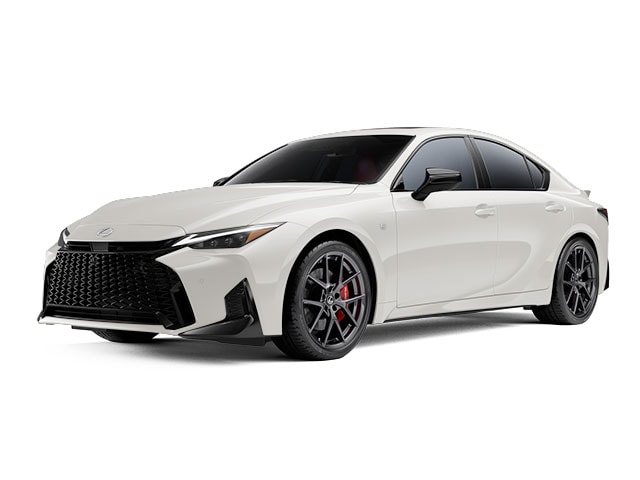
The Lexus IS is the brand's compact rear-drive sports sedan, a considered alternative to the German establishment that has always sold in far greater numbers in the United States than in Europe. That imbalance is exactly what makes it interesting to import: the US used market is deep, the cars are well-kept, and there are versions, including a naturally aspirated V8, that Europe rarely saw. Importing a used Lexus IS from the USA lets a German buyer tap into that supply, with the neutral origin and Japanese build meaning the customs side needs a proper look.

Lexus is – used car imported from the USA
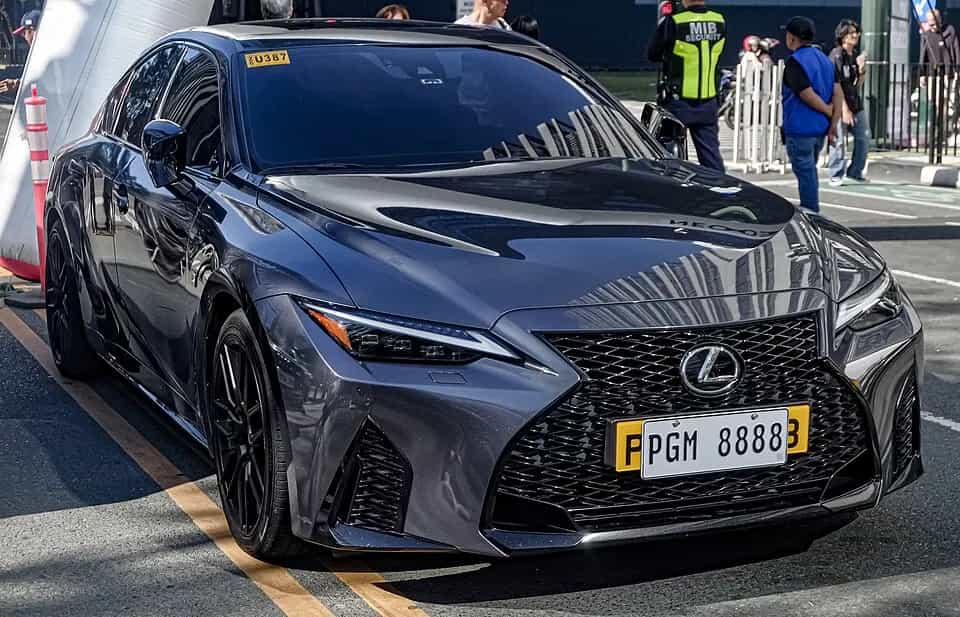
Photo: Ethan Llamas · CC BY-SA 4.0 · Wikimedia Commons

Production years and key changes

The IS badge dates back to 1999, but the cars most relevant for import today are the second generation (XE20, 2006 to 2013) and especially the third generation (XE30), which launched for 2014 and, unusually, has stayed in production through extensive facelifts. The XE30 received major updates for 2017 and a comprehensive refresh for 2021 that brought a wider track, retuned chassis, a new touchscreen and revised styling. Because Lexus kept the XE30 running for so long, a used IS can be anything from an early 2014 car to a nearly current example, all sharing the same fundamental platform.

What is under the hood

The US IS line-up is engine-rich. The IS 300 came with either a 2.0-litre turbocharged four (in rear-drive form) making around 241 hp, or a 3.5-litre V6 in all-wheel-drive form. The IS 350 uses the well-regarded 3.5-litre 2GR naturally aspirated V6 with roughly 311 hp, in rear- or all-wheel drive. Rear-drive V6 cars use an eight-speed automatic; all-wheel-drive cars use a six-speed. The headline act is the IS 500 F Sport Performance, introduced for 2022, which drops in the 5.0-litre 2UR-GSE V8 with around 472 hp, a rare naturally aspirated V8 sports sedan in the modern era. There is no diesel.

Trims and body styles

The IS is a four-door compact sports saloon only; there is no wagon or coupe in this generation (the coupe became the separate RC). US trims centre on the base car and the popular F Sport, which adds adaptive dampers on some versions, unique styling, sport seats and a configurable digital instrument display. The IS 500 sits at the top as a dedicated V8 model. Well-equipped cars add the Mark Levinson audio system, blind-spot monitoring and the fuller driver-assist suite.

What the US market offers

The IS is a staple of the US used market, with strong volumes of IS 300 and IS 350 cars across the XE30 run. Typical mileage reflects commuter and enthusiast use, and Lexus's reputation means many have full service histories. F Sport cars are especially common. The IS 500 is rarer and holds its value. Condition tends to be good, helped by the model's durability, though as sporty cars some have been driven hard, so history matters.

Who this import is for

The Lexus IS suits a buyer who wants a compact rear-drive luxury sedan with proven reliability, a refined cabin and, in IS 350 and IS 500 form, a characterful naturally aspirated engine that is increasingly hard to find. It rewards drivers who prize long-term dependability and a distinctive alternative to the usual compact executive saloons. Buyers who need a wagon, a diesel, or class-leading rear-seat space should look elsewhere; the IS is deliberately a driver's sedan.

Technical data and figures

Body style4-door compact sports sedan
LayoutFront engine, RWD or AWD
IS 300 (turbo)2.0 L turbo I4, approx. 241 hp
IS 300 AWD / IS 3503.5 L V6 (2GR), approx. 260-311 hp
IS 5005.0 L V8 (2UR-GSE), approx. 472 hp
Transmission8-speed auto (RWD) / 6-speed auto (AWD)
0-100 km/h (IS 500)Approx. 4.5 s
Length (XE30, 2021+)Approx. 4,710 mm
WheelbaseApprox. 2,800 mm
Kerb weightApprox. 1,600-1,765 kg
Boot capacityApprox. 480 L
Fuel tankApprox. 66 L
Seating5
FuelPetrol
OriginTypically built in Tahara, Japan

Reliability: trouble spots to check

The IS is one of the more dependable cars in its class, and the 2GR V6 in particular has an excellent long-term record. That said, there are known items. Early 2GR-FSE V6 engines could suffer oil leaks from the timing-cover area; the port-and-direct-injection later engines can build up some carbon over time. Some owners report water-pump wear, dashboard and trim rattles, and infotainment that feels dated on pre-2021 cars with the touchpad controller. The turbo four is generally solid but less characterful. When researching Lexus IS reliability and common problems, prioritise service history, evidence of timely oil changes, cooling-system condition and, on hard-driven F Sport cars, brake and tyre wear. Overall running costs and durability are a genuine strength.

US vs. Europe differences

US IS models run US-spec lighting without a rear fog lamp, amber side markers and US beam patterns that need adapting for approval. Infotainment, radio raster and navigation are set for North America. Some driver-assist calibrations are US-specific, and displays default to US units. The IS 500 V8 and certain engine and trim combinations were never offered new in Germany, which is part of the appeal but also means parts and familiarity should be planned for.

How the import works

Begin by selecting the right IS and engine. Run a VIN and origin check; the IS is typically built in Japan, so this step decides the customs rate. Pay through secure escrow, book ocean freight to a German port, then clear customs on arrival. Present the car for TUEV individual approval, carry out any required modifications, and register it with your local authority.

Import duty, VAT and fees

Remember: no origin proof, no 0% duty – and 19% German import VAT is due on every import.

USCar Trader acts as an independent broker and takes no margin on the vehicle. Two separate charges apply on import. The customs duty depends on the provable origin: for a car with documented US origin, Regulations (EU) 2026/1455 and 2026/1461 allow a 0% rate from 1 July 2026 under direct transport and valid VIN/plant proof, in force until 31 December 2029. Because the Lexus IS is typically manufactured in Japan rather than the USA, the standard duty rate normally applies and must be confirmed against the actual VIN, never assumed. Separately, the 19% German import VAT (Einfuhrumsatzsteuer) applies on the customs value in every case, regardless of origin. We never describe an import as duty-free or guaranteed.

From modifications to registration

Typical work includes adapting the headlights, fitting a rear fog lamp, and confirming metric speedometer and odometer readings. Lighting and any US reflectors are checked. Once TUEV issues the individual approval, you register the car and receive German plates.

Pre-buy inspection points

Confirm the VIN and build plant. Order a Carfax or AutoCheck history for accidents and title status. Verify oil-change and cooling-system service, especially on V6 and V8 cars. Inspect for signs of hard driving on F Sport and IS 500 examples. Check the title is clean, not salvage or flood. Test all electronics and the adaptive dampers where fitted.

What buyers ask most

Will I pay import duty on a Lexus IS?

Probably yes. The IS is typically built in Japan, so the standard duty usually applies unless a US-origin VIN can be proven.

Does the 19% import VAT always apply?

Yes. The German import VAT of 19% applies on every import regardless of the duty rate.

Is the Lexus IS reliable?

Yes, it is among the most dependable in its class, with the 2GR V6 especially well regarded.

Can I import the IS 500 V8?

Yes. The naturally aspirated V8 IS 500 is a US-market car and a prime candidate for import.

Which engine should I look for?

The IS 350 with the 2GR V6 blends performance and reliability; the IS 500 is the enthusiast's choice.

Is there an all-wheel-drive version?

Yes. IS 300 AWD and IS 350 AWD use a V6 and a six-speed automatic.

Was the IS sold new in Germany?

Only in limited form and only certain versions; many US engine and trim combinations were never officially offered here.

How long does the import take?

Typically several weeks from purchase to registration, driven by ocean freight and the TUEV appointment.

Explore more with Lexus in the Carhub, compare the Lexus ES and the Lexus RC, or browse the current Lexus IS listings.