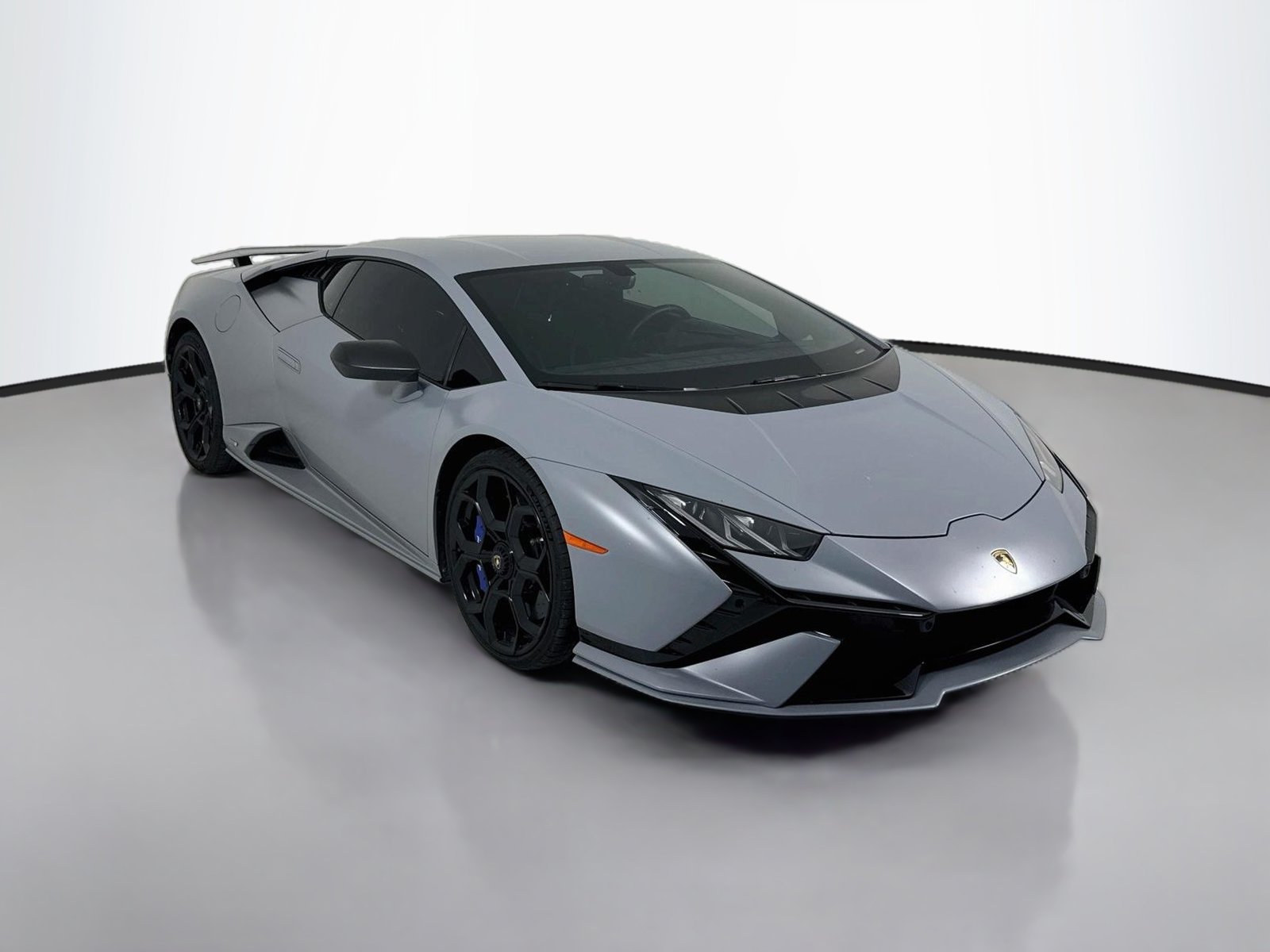
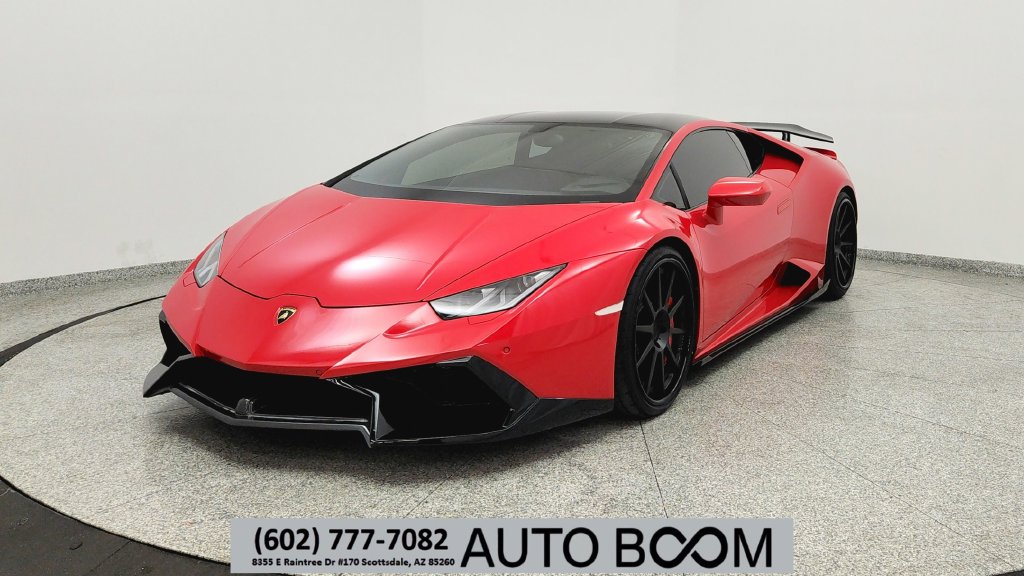
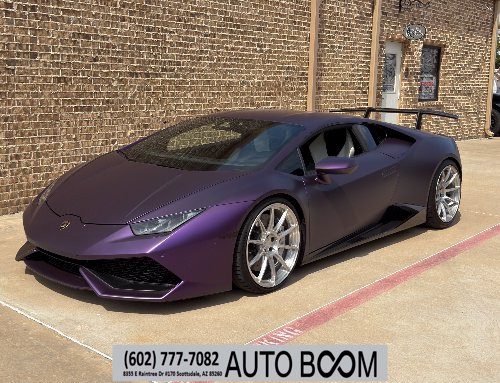
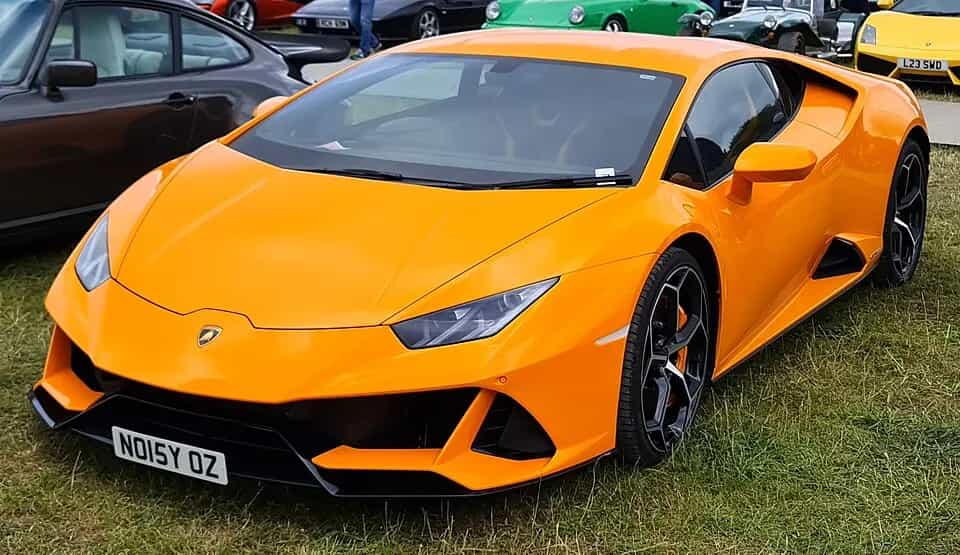
Lamborghini Huracan
Importing a used Lamborghini Huracán from the USA
The Huracán is the naturally aspirated V10 Lamborghini that a whole generation grew up idolising — the successor to the Gallardo and, for many, the last of the truly analogue-feeling junior supercars before turbocharging and hybridisation took over. The United States is the single largest market for these cars, which means the American used pool is deep, varied and full of desirable specifications, from early LP610-4 coupés to EVO, Performante and rear-drive Tecnica cars. USCar Trader acts as an independent broker for used vehicles only: we source, verify and manage the import, with no margin on the car and no new-car dealing.

From launch to today
The Huracán launched for 2014 as the LP610-4, replacing the Gallardo on an all-new aluminium-and-carbon chassis shared with the Audi R8. A rear-wheel-drive LP580-2 followed for purists. The Performante arrived in 2017 with active aerodynamics (ALA) and a famous Nürburgring lap. For 2019 the range was refreshed as the EVO — rear-wheel steering, a new infotainment screen and the Performante's 640-hp tune across the line. Later came the track-focused STO, the road-and-gravel Sterrato, and the EVO-replacing Tecnica. Spyder (convertible) versions accompanied most coupés throughout the run, which ended around 2024.
Engines and drivetrain in detail
Every Huracán uses a 5.2-litre naturally aspirated V10 — no turbos, no hybrid assistance — mounted behind the seats and revving beyond 8,000 rpm. Output ranges from 602 hp in the rear-drive LP580-2, through 610 hp in the original LP610-4, to 640 hp in the Performante, EVO, STO and Tecnica. Drive goes through a seven-speed dual-clutch (LDF) transmission to either all four wheels via an electronically controlled clutch pack, or to the rear axle alone in the RWD cars. The soundtrack and throttle response of this engine are the whole point; it is one of the last of its breed.
Trim levels and variants
Body styles are coupé and Spyder (folding soft-top). The performance ladder runs base (LP610-4 / EVO AWD), rear-drive (LP580-2 / EVO RWD / Tecnica), the aero-focused Performante, the hardcore STO and the off-road-styled Sterrato. US cars are usually generously optioned — carbon-ceramic brakes, lifting front axle, sports exhaust, carbon interior packages and bold paint-to-sample colours are common, and Lamborghini's Ad Personam programme means no two are quite alike.
Used availability in the USA
America bought Huracáns in large numbers, so availability is strong across every variant and model year from 2015 onward. Mileage is typically low — these are weekend and collection cars — and condition is often excellent, though some see track use, which you should identify early. The breadth of colours and options in the US pool is a genuine advantage: rare specs and desirable configurations that are scarce in Germany turn up regularly. As always with supercars, provenance and accident history matter more than the odometer.
When importing makes sense
A used US-import Huracán suits the enthusiast who wants a specific variant or colour that is hard to find domestically, or who simply wants a wider choice at the used end of the market. It rewards owners who will service it properly and drive it as intended. It is not the car for someone chasing low running costs — tyres, brakes and major services are expensive — but for a naturally aspirated V10 experience, few things compete, and the American market is the best hunting ground.
Facts and figures
| Attribute | Figure |
|---|---|
| Body styles | 2-door coupé / Spyder convertible |
| Production run | 2014–2024 (successor to Gallardo) |
| Engine | 5.2 L naturally aspirated V10 (petrol) |
| Output range | 602 hp (LP580-2) to 640 hp (Performante/EVO/STO/Tecnica) |
| Torque | approx. 560 Nm |
| Transmission | 7-speed dual-clutch (LDF) |
| Drivetrain | All-wheel drive or rear-wheel drive (variant dependent) |
| 0–100 km/h | approx. 2.9–3.4 s depending on variant |
| Top speed | above 320 km/h (variant dependent) |
| Redline | around 8,500 rpm |
| Brakes | Carbon-ceramic (standard or optional by variant) |
| Chassis | Aluminium/carbon hybrid (shared with Audi R8) |
| Length | approx. 4,459 mm |
| Seating | 2 |
Reliability and common problems
By supercar standards the Huracán is relatively dependable, sharing much of its engineering with the Audi R8, but a few Huracán common problems and cost items stand out. The seven-speed dual-clutch can be jerky at low speed when cold — normal to a degree — but hard-launched cars can wear clutches early, so a clutch-life readout is worth requesting. The naturally aspirated V10 is strong, though it consumes oil and demands strict service intervals; coil packs and the (later dry-sump) oil system deserve attention. The front lift system, if fitted, can develop leaks. Carbon-ceramic brakes and staggered tyres are very expensive consumables. Watch for kerbed wheels, front-splitter and underbody damage, and any signs of hard track use.
How US versions differ
US cars have amber side markers, US headlight aiming and a rear fog-lamp configuration that must be brought into line for German approval; the daytime running and marker behaviour also differs. Instruments read in miles and the telematics are US-region. Mechanically the car is the same as a European Huracán, and Lamborghini's network services these cars in Germany without difficulty, though parts and labour are priced accordingly.
From US purchase to registration
Select the right used car (variant, colour, history); run a thorough VIN and origin check; place funds in escrow; ship by enclosed container ocean freight to a port such as Bremerhaven; clear customs with origin-correct duty and 19% import VAT; pass the TÜV individual approval (Einzelabnahme); register and plate the car.
Costs, duty and taxes at a glance
Remember: no origin proof, no 0% duty – and 19% German import VAT is due on every import.
Two charges, always shown separately. The EU import duty on the vehicle: the 0% rate under Regulations (EU) 2026/1455 and 2026/1461 (in force since 1 July 2026, direct transport, until 31 December 2029) applies only where US origin is provable by VIN and build plant. The Huracán is built in Sant'Agata Bolognese, Italy, so US origin cannot be shown and the standard passenger-car import duty applies. Separately and always, the 19% German import VAT (Einfuhrumsatzsteuer) applies on top. We never promise duty-free treatment and take no margin on these public charges.
TÜV, approval and license plates
Expect lighting compliance work: rear fog lamp, headlight beam pattern and side markers. The odometer is registered in kilometres. On a low-volume supercar, the individual approval may require documentation such as a certificate of conformity or manufacturer data; we prepare this. The car must pass the Einzelabnahme before registration.
Pre-purchase checklist
1) Decode the VIN and confirm the exact variant and options. 2) Obtain a Carfax or AutoCheck plus any service and accident records. 3) Confirm a clean, non-salvage title. 4) Request a clutch-wear and service-history readout. 5) Inspect front splitter, underbody and wheels for damage. 6) Check for signs of track use and paintwork repairs. 7) Verify the front-lift system, brakes and tyre condition.
Import FAQ
Which Huracán versions can I import from the USA?
The full range appears in the US market — LP610-4, LP580-2, EVO (AWD/RWD), Performante, STO, Sterrato, Tecnica, plus Spyder variants.
Does the Huracán qualify for 0% EU import duty?
No. It is built in Italy, so US origin cannot be proven; the standard passenger-car duty applies and the 19% import VAT is charged separately.
Is the Huracán reliable for a supercar?
Relatively, thanks to shared Audi R8 engineering. Budget for oil use, service intervals, clutches, brakes and tyres, and verify history.
Is the V10 really naturally aspirated?
Yes. Every Huracán uses a 5.2-litre naturally aspirated V10 with no turbocharging or hybrid assistance.
Can I get a rear-wheel-drive Huracán?
Yes — the LP580-2, EVO RWD and Tecnica are rear-drive and popular with drivers who want a more playful character.
Should I worry about track use?
It is worth investigating. Track cars can have worn clutches, brakes and tyres; a clutch-life readout and service records help you assess this.
How should a Huracán be shipped?
Enclosed container freight is the sensible choice for a supercar, protecting paint and low bodywork in transit.
How long does the whole import take?
Usually several weeks, driven by shipping and the TÜV individual approval, plus any documentation needed for a low-volume model.
Start with Lamborghini in the Carhub, compare the Lamborghini Urus, the Ferrari 296 and the McLaren 750S, and browse current Huracán listings.