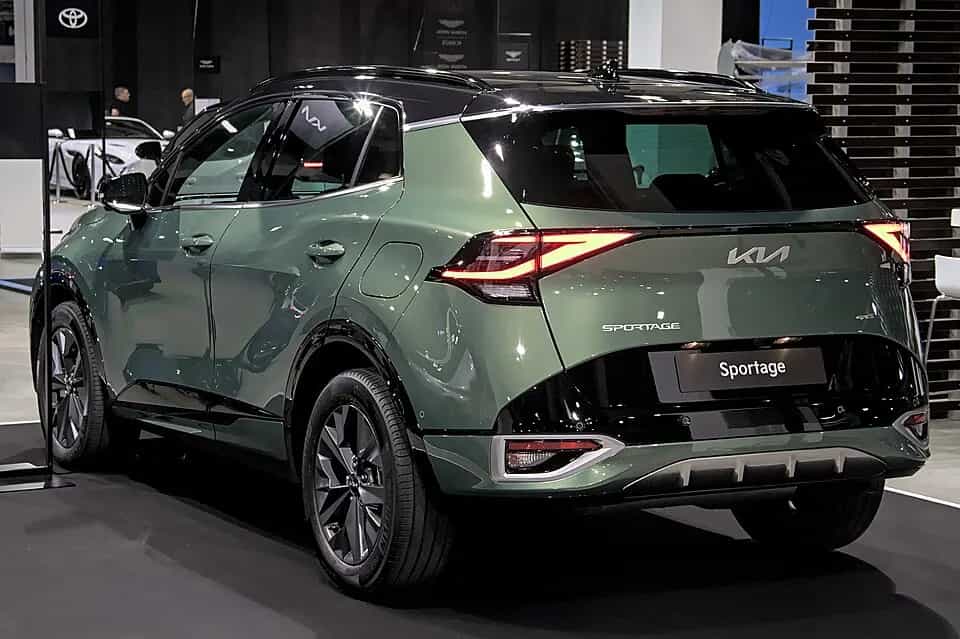
Kia Sportage HEV

Importing a used Kia Sportage HEV from the USA

The Kia Sportage Hybrid sits in an interesting spot for German and EU buyers who follow the US market. The current fifth-generation Sportage (internal code NQ5) launched for the American 2023 model year with an angular, wide-body look and a hybrid drivetrain that Kia never sold in exactly the same specification everywhere. A used Sportage HEV coming out of the States is typically a low-mileage, well-equipped compact SUV, and the growing pool of two- and three-year-old examples makes it a realistic import candidate. As an independent broker, USCar Trader sources these cars for you, handles the logistics and paperwork, and never adds a hidden dealer margin — you pay the seller, the freight and the taxes.

Kia Sportage HEV – used car imported from the USA
Photo: Alexander Migl · CC BY-SA 4.0 · Wikimedia Commons

Model history and generations

The Sportage has run through five generations since 1993, but the hybrid is a recent chapter. The fourth generation (QL, 2016–2021) offered only combustion engines in North America. The fifth-generation NQ5, which arrived in the US for 2023, introduced the Sportage Hybrid alongside a plug-in hybrid variant. It rides on Hyundai-Kia's N3 platform, shares its running gear with the Hyundai Tucson Hybrid, and grew notably in wheelbase, which freed up rear legroom and cargo space. A mild facelift and trim reshuffles have followed, but mechanically the hybrid has stayed consistent, which is good news for parts and service predictability once the car is in Europe.

Engines and drivetrain

The Sportage HEV uses Kia's Smartstream 1.6-litre turbocharged four-cylinder (T-GDi) paired with a single electric motor integrated into a conventional six-speed automatic — not a CVT. Combined system output is around 227 hp (169 kW) with roughly 350 Nm of torque. US cars are offered with front-wheel drive or a full-time electronic AWD system. Because the hybrid uses a real torque-converter-style automatic rather than a planetary eCVT, it drives more like a normal turbo SUV than a Toyota-style hybrid, which many European buyers prefer. The separate Sportage Plug-in Hybrid raises output to about 261 hp and adds a larger battery for electric-only running.

Which trim makes sense

The Sportage HEV is a five-door compact SUV only; there is no coupe or long-wheelbase body. US hybrid trims are typically LX, EX and SX-Prestige, climbing from cloth seats and an 8-inch screen to a dual 12.3-inch curved display, ventilated leather seats, a Harman Kardon sound system, a 360-degree camera and a panoramic sunroof. American cars often carry the larger infotainment and driver-assistance packages as standard on higher trims, which is worth checking on the window sticker before you commit.

Supply on the US market

Because the hybrid only appeared for 2023, the used pool skews young: expect 2023–2024 cars with 15,000 to 60,000 miles. Many were leased or used as family vehicles, so condition is generally good, though salt-belt cars from the Midwest and Northeast can show underbody corrosion. Southern and West Coast examples tend to be cleaner. Availability is decent but thinner than for the gasoline Sportage, so a targeted search pays off.

Who benefits from importing

An imported Sportage HEV makes sense if you want a specific US trim or colour combination, or you simply find the right car at the right total cost after freight and taxes. It suits buyers who value a smooth automatic hybrid with genuine AWD and a long factory warranty history. Keep in mind that the hybrid is built in Korea, not the US, so the origin question below matters for how the customs duty is calculated.

Technical data

Body style5-door compact SUV
GenerationFifth (NQ5), from MY2023
Engine1.6 L turbo I4 (Smartstream T-GDi) + electric motor
System outputapprox. 227 hp (169 kW)
System torqueapprox. 350 Nm
Transmission6-speed automatic (motor integrated)
DrivetrainFWD or electronic AWD
Battery~1.49 kWh (HEV), lithium-ion
Lengthapprox. 4,660 mm
Wheelbaseapprox. 2,755 mm
Cargo (rear seats up)approx. 1,100+ L
Fuel economy (US)approx. 38–43 mpg combined
Seating5
US trims (HEV)LX, EX, SX-Prestige

Known weak points and maintenance

The NQ5 Sportage is still young, so long-term data is limited, but a few patterns have emerged. Early cars had infotainment and software quirks that later over-the-air or dealer updates addressed. The 1.6 T-GDi is a direct-injection engine, so intake-valve carbon build-up is a known long-term consideration; regular oil changes and occasional highway running help. The six-speed automatic can feel slightly hesitant at low speed but is mechanically robust. Watch for panoramic sunroof drainage and check that the 12-volt and high-voltage systems have no stored fault codes. Overall the Sportage HEV reliability record so far is solid, and Kia's long factory warranty is a reassuring backdrop even if it does not transfer identically to Europe.

US and EU spec compared

US-market cars run amber rear turn signals in many cases but often lack a rear fog lamp and use different headlight beam patterns, all of which the TÜV will scrutinise. The instrument cluster shows miles per hour and the trip computer defaults to US units. Some driver-assistance features are calibrated for US road markings. None of this is a barrier, but each item is a small job during type approval.

The import process in detail

The process runs from selection to registration: you pick a car (we help vet listings), we verify the VIN and build origin, funds move through escrow for security, the car is booked onto an ocean container or RoRo vessel, it clears German customs on arrival, then goes through TÜV and individual approval (Einzelabnahme), and finally you register it at your local authority. USCar Trader coordinates each stage.

What customs clearance really costs

In short: the 0% duty rate applies only with documented US origin (VIN/plant) – German import VAT of 19% is always due.

Two separate charges apply. First, the import duty: the 0% EU rate for US-origin vehicles under Regulations (EU) 2026/1455 and 2026/1461 applies only where US build origin is provable by VIN and plant, with direct transport, and only until 31 December 2029. The Sportage HEV is generally built in Korea, so it usually does not qualify for the 0% US-origin rate — its duty depends on its actual country of manufacture. We check this per VIN so there are no surprises. Second, and always, the 19% German import VAT (Einfuhrumsatzsteuer) is charged on the customs value. These are pass-through state charges; we add no margin on top.

TÜV, modifications and registration

Typical changes include adding or enabling a rear fog lamp, adjusting or replacing headlights to meet European beam requirements, and confirming the speedometer reads correctly. The odometer must be documented in the file, and the car's original US title and export paperwork are part of the approval. Once the TÜV issues its report, registration is straightforward.

Check before you buy

Before you buy, confirm: (1) the VIN matches all documents and the plant of manufacture; (2) a clean Carfax or AutoCheck history with no salvage or flood branding; (3) no underbody or subframe rust on salt-belt cars; (4) complete service records, especially oil changes for the turbo engine; (5) a clear, transferable title with no liens; (6) that the high-voltage battery shows no fault codes; and (7) that all recall work has been completed.

Common questions

Is the Kia Sportage HEV eligible for 0% EU import duty?

Usually not, because the hybrid is built in Korea rather than the US. The 0% rate applies only to provable US-origin vehicles. We verify each VIN before quoting.

Does the 19% import VAT always apply?

Yes. German import VAT is charged on every private import regardless of origin, calculated on the customs value.

How old are typical imported Sportage HEV examples?

Mostly 2023–2024 cars, since the hybrid only launched for that model year. Mileage commonly ranges from 15,000 to 60,000 miles.

Is the hybrid automatic reliable?

It uses a conventional six-speed automatic with the motor integrated, which is durable and drives normally. Early software quirks were addressed by updates.

Will the US warranty help me in Germany?

Coverage generally does not transfer identically across regions, so treat the car as out of warranty in Europe and budget for normal maintenance.

Does it need a rear fog lamp for TÜV?

Often yes. Many US cars lack one, so it is a common small modification during type approval.

Can I choose front-wheel or all-wheel drive?

Both are available on US cars. We can target the drivetrain you prefer during the search.

How long does the whole import take?

From purchase to registration it typically runs several weeks to a few months, driven mainly by shipping schedules and TÜV appointments.

Ready to start? Browse Kia in the Carhub, compare it with the related Kia Sportage, Kia Sorento and Kia Niro, or view the current Sportage HEV listings.