Generations at a glance
Sold in Korea as the K7, the Cadenza reached the US market for the 2014 model year. The first generation ran from 2014 to 2016 with sharp, restrained styling and a strong V6.
 0049 (0)89 2000 791 00
 Mo - Fr 8:00am - 8:00pm
USCar Trader import service
Choose a specific vehicle. Where data is available, its detail page shows the import cost calculation. We assess any possible duty benefit with you before purchase.
Important: A 0% EU import-duty rate may be available for a vehicle covered by Regulation (EU) 2026/1455 that has US origin and is imported directly into the EU. CETA may apply to a vehicle with preferential Canadian origin. Whether the requirements are met is assessed for the individual case. Please contact us before purchase; we review the possible duty benefit and provide non-binding support through the process. Import VAT and other costs are assessed separately.
CarHub · Kia
The Kia Cadenza is the quietly capable full-size sedan that Kia sold in America as its near-luxury flagship, and it was never offered to German buyers under that name.

Price:20,345.00 USD

Price:14,990.00 USD
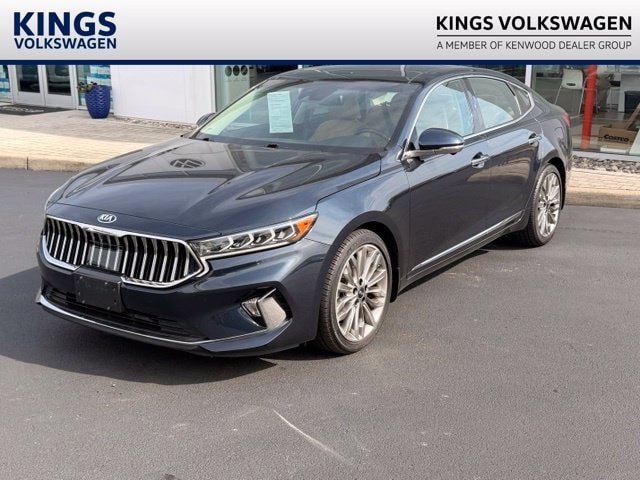
Price:24,948.00 USD
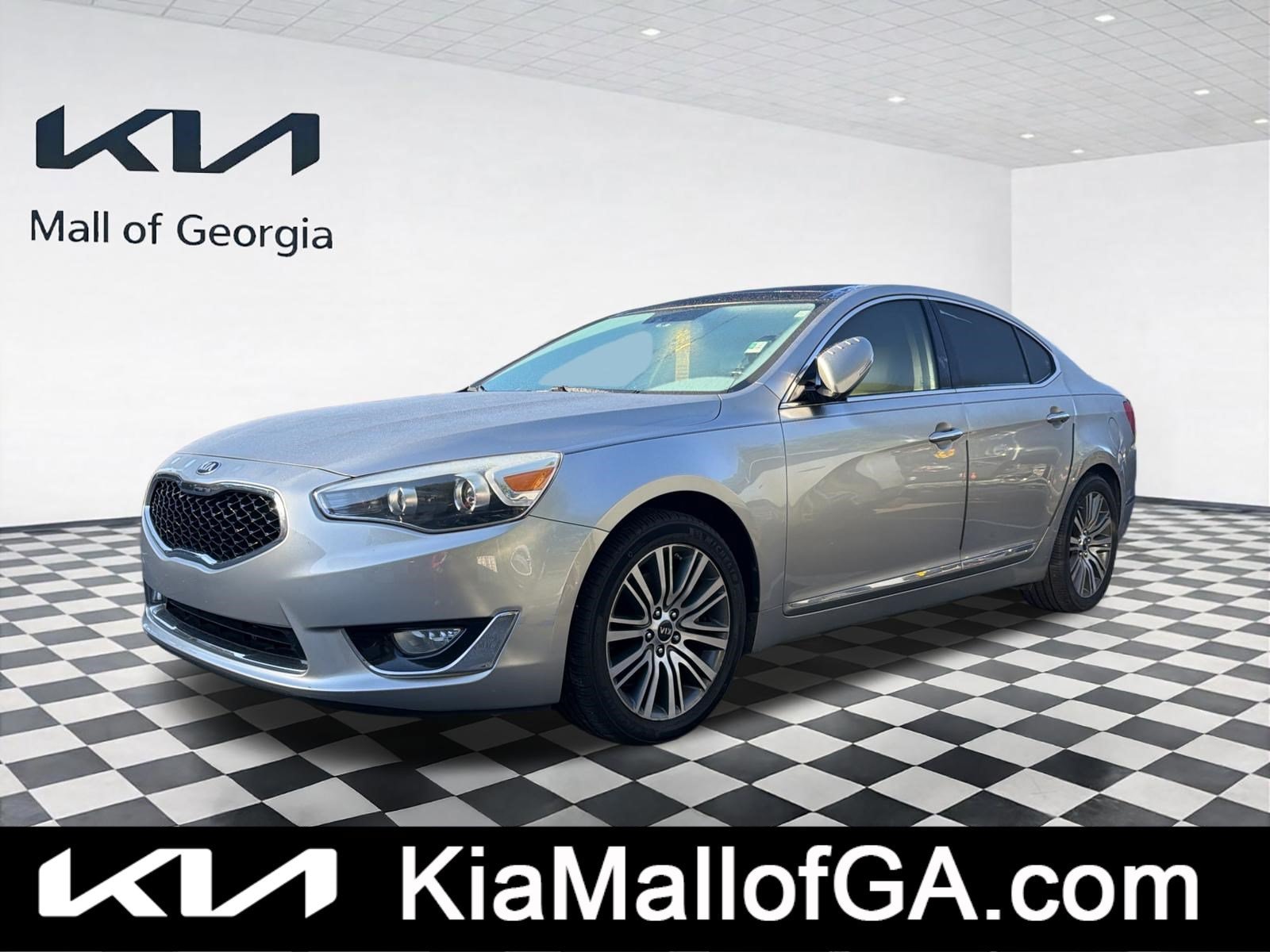
Price:11,543.00 USD

Price:7,500.00 USD
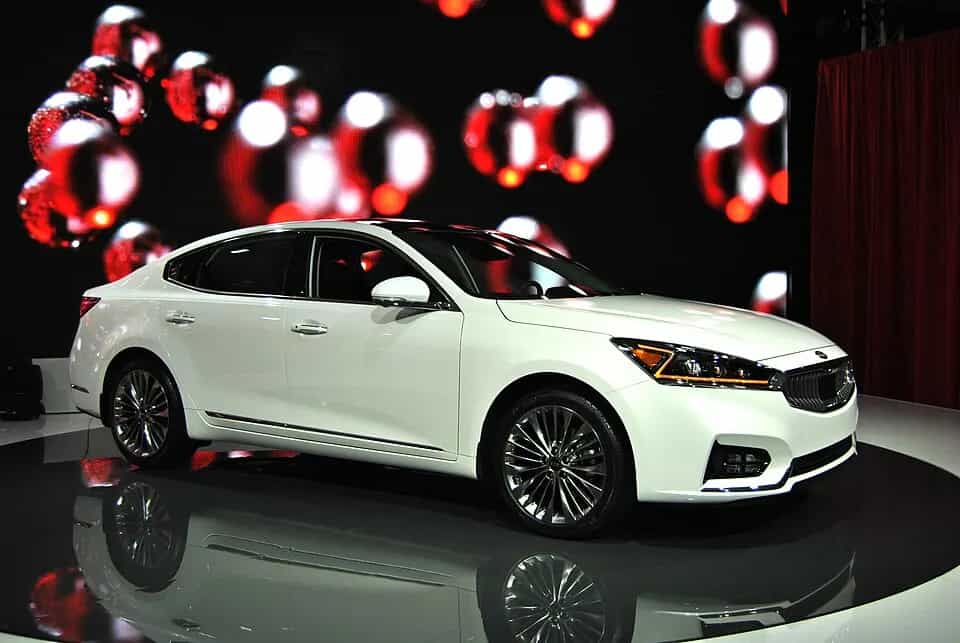
Model profile
Sold in Korea as the K7, the Cadenza reached the US market for the 2014 model year. The first generation ran from 2014 to 2016 with sharp, restrained styling and a strong V6.
Powertrain and equipment
Across its US life the Cadenza was powered by Hyundai-Kia's 3.3-litre Lambda II V6, producing roughly 290 hp in the first generation and about 290 hp in a smoother, more efficient tune in the second.
The Cadenza is a single body style: a large front-drive four-door sedan. US trims typically ran from a well-equipped base through Premium, Technology and the top SXL, the latter adding Nappa leather, a panoramic roof, ventilated seats, a premium audio system and full driver-assistance features.
Vehicle selection
The Cadenza sold in modest numbers, so it is not everywhere, but clean second-generation cars from 2017 to 2020 turn up regularly at US auctions and dealers.
The Cadenza suits a buyer who wants a large, quiet, well-equipped sedan with a proven V6 and does not need a premium German badge.
Vehicle data
| Body style | Full-size four-door sedan |
|---|---|
| Length | approx. 4,990 mm |
| Wheelbase | approx. 2,845 mm |
| Kerb weight | approx. 1,650 kg |
| Seats | 5 |
| Engine | 3.3 L Lambda II V6 |
|---|---|
| Power | approx. 290 hp |
| Transmission (1st gen) | 6-speed automatic |
| Transmission (2nd gen) | 8-speed automatic |
| Drive | Front-wheel drive |
| Fuel type | Petrol |
| Home-market name | Kia K7 |
|---|---|
| Generations | 1st 2014-2016, 2nd 2017-2020 |
| 0-60 mph | approx. 6.5 s |
| Top trim | SXL / SXL Limited |
Values are reproduced verbatim from the existing article table. The documents for the specific vehicle govern.
Pre-purchase review
For the Kia Cadenza, the agreed inspection plan focuses in particular on vehicle history, visible body and underbody condition, fluid leaks, warning messages, tyres, brakes and accessible suspension components. USCar Trader can document these points through a separately commissioned on-site inspection; inaccessible areas or unauthorised road tests are explicitly recorded as unchecked.
Germany and Europe
US Cadenza cars carry US lighting with amber indicators and no rear fog lamp, an mph-primary instrument cluster, and US-market telematics and radio bands.
Typical work covers headlight conversion to an ECE beam pattern, fitting a rear fog lamp, adapting amber markers as required, and confirming a km/h speedometer.
USCar Trader services
As a buyer based in Germany, you do not have to inspect the vehicle yourself in the United States or Canada. Within the agreed scope, USCar Trader can coordinate document review, a separately commissioned on-site inspection and purchase processing.
Covered inspection points are agreed in advance. An on-site inspection records condition at the appointment and is not a guarantee.
Next step: Before commissioning, USCar Trader and the customer agree which document, history, inspection and transaction checks suit the vehicle and are included in the service. This records what was actually checked.
Import process
The process is the same reliable sequence.
Questions and answers
Yes. The Cadenza was a US-market model, so it comes in through private import, and we handle sourcing, shipping and German approval for you.
No, not automatically. A 0% EU import-duty rate may be available for a vehicle covered by Regulation (EU) 2026/1455 that has US origin and is imported directly into the EU. CETA may apply to a vehicle with preferential Canadian origin. Whether the requirements are met is assessed for the individual case. Please contact USCar Trader before purchase; we review the possible duty benefit and provide non-binding support. Import VAT and other costs are assessed separately.
Import VAT and other taxes or costs are assessed separately under the applicable rules and the circumstances of the individual case. A blanket answer for every vehicle would not be reliable.
The 2017-2020 second generation is quieter and better equipped, with the eight-speed automatic; the 2020 facelift adds the latest assistance features.
The Lambda V6 is generally durable, but check recall and oil-consumption campaign history before buying any example.
Many mechanical parts are shared with Hyundai and Kia models sold in Europe, which helps, though some Cadenza-specific trim comes from the USA or Korea.
Yes. Without EU type approval the Cadenza goes through Einzelabnahme at TUEV, which is standard for US imports.
Available VIN, title and history information can be reviewed in the vehicle profile. USCar Trader can also arrange a separately booked on-site inspection within a scope agreed in advance.
More vehicles