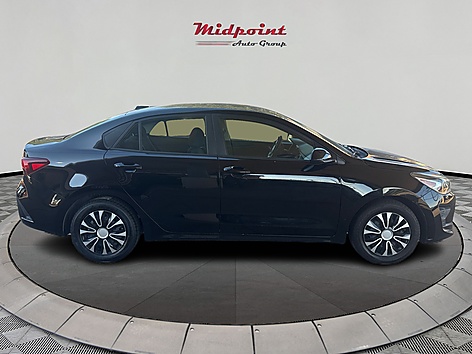
Kia Rio

Importing a used Kia Rio from the USA

The Kia Rio is a small, efficient subcompact that has long been a value benchmark, and while it was also sold in Europe, some buyers specifically want a US-market car — a particular model year, trim or a clean, low-mileage American example. USCar Trader handles that as an independent broker for used US vehicles: we locate the exact Rio, check its history and manage the import, without dealer margin and never selling new cars. The Rio is built outside the United States, so its customs treatment turns on the documented build origin, which we set out plainly below. If your goal is a specific US-spec car rather than the cheapest possible small sedan, importing can make sense despite the vehicle's modest value.

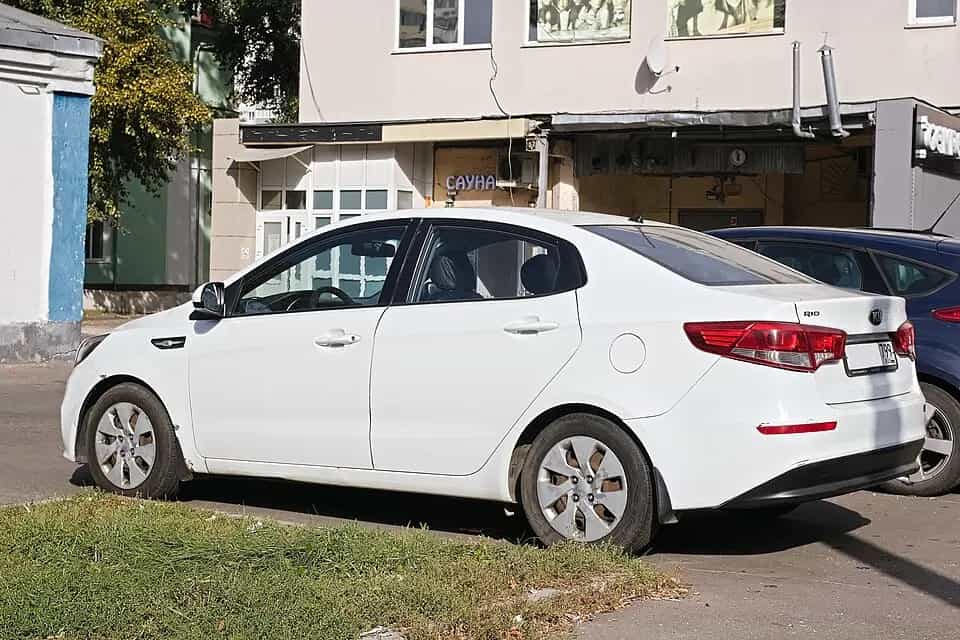
Kia rio – used car imported from the USA
Photo: Retired electrician · CC0 · Wikimedia Commons

Model history and generations

The Rio has run through four generations. The first (2000–2005) established the nameplate as a budget entry. The second (2005–2011, codename JB) modernised the car. The third (2011–2017, UB) brought sharper Peter Schreyer styling and direct-injection engines. The fourth (2017–2023, YB/SC) refined the formula with a cleaner design and, after a facelift, a more efficient continuously variable transmission. In the US, Kia offered both a four-door sedan and a five-door hatch across recent generations, and the model was withdrawn from the US line-up after the 2023 model year — so every US Rio is a used car by definition.

Engines and drivetrain

US Rios are powered by small four-cylinder petrol engines. The third generation used a 1.6-litre GDI direct-injection unit of around 138 horsepower. The fourth generation initially carried a 1.6-litre engine of roughly 130 horsepower, later revised to a Smartstream 1.6 with around 120 horsepower prioritising efficiency. Transmissions include a six-speed manual and a six-speed automatic on earlier cars, with the facelifted fourth-gen switching to an Intelligent Variable Transmission (IVT, a type of CVT). Drive is to the front wheels only. There is no diesel, hybrid or all-wheel-drive version in the US range — the Rio's appeal is simplicity and low running costs.

Which trim makes sense

US Rios came as a sedan and, in some years, a 5-door hatch. Trim levels were typically LX, S and, on the fourth generation, a well-equipped top grade adding features such as a touchscreen with Apple CarPlay and Android Auto, alloy wheels and forward-collision warning. Equipment is straightforward rather than luxurious; the higher trims are the ones worth targeting for creature comforts and safety tech. When you browse US inventory you are mainly choosing model year, trim and body style.

Supply on the US market

The United States has a broad supply of used Rios, most of them fourth-generation cars from roughly 2018 to 2023, with a spread of mileages from low-use rentals and one-owner commuters to higher-mileage examples. As an inexpensive car it was often used as basic transport, so condition and history vary widely — careful selection matters. Dry-state cars present cleanest. Because the Rio was fleet- and rental-friendly, multi-owner histories are common, making a thorough records check essential. We keep European prices out of this section, since the landed figure depends on the specific car, freight and duties.

Who benefits from importing

Importing a Rio makes most sense when you want a particular US-market example — a specific year, trim, colour or an unusually clean, low-mileage car — rather than simply the lowest price on a small sedan. It suits buyers who value fuel economy, easy parking and low maintenance, and who like the idea of a tidy American-spec subcompact that stands slightly apart from the European norm. If your priority is only the cheapest possible small car, a locally sold example may be more economical once import costs are counted; we will always be candid about that.

Technical data

Body styleSubcompact sedan (US 5-door also offered)
Generations2000–2023 (four generations)
AssemblySohari (Gwangmyeong), South Korea and other plants
Gen 3 engine1.6 L GDI four-cylinder
Gen 3 outputapprox. 138 hp
Gen 4 engine1.6 L four-cylinder (later Smartstream)
Gen 4 outputapprox. 120–130 hp
Transmissions6-speed manual, 6-speed automatic, later IVT (CVT)
DriveFront-wheel drive
Seating5
FuelPetrol
Length (sedan)approx. 4,065 mm
Curb weightapprox. 1,150–1,250 kg
Fuel tankapprox. 45 l
Fuel economyStrong; subcompact class

Known weak points and maintenance

The Rio is generally a dependable, low-cost car, and Kia Rio reliability is one of its selling points, but a few Kia Rio common problems are worth knowing. Direct-injection 1.6 engines can accumulate intake-valve carbon over long intervals and are sensitive to oil-change discipline; a clean maintenance record is the best safeguard. Some owners report interior rattles, basic ride refinement and road noise typical of the class. The IVT transmission on later cars should shift smoothly without shudder on a test drive. Check the 12-volt battery, brakes and tyres as normal wear items. As with any budget car used hard, the condition of the individual example matters far more than the model's overall reputation.

US and EU spec compared

US Rios use miles-per-hour clusters, amber or red rear turn signals depending on year, no rear fog lamp, and US-band radio and navigation. The infotainment and telematics are US-configured. These are routine conversion points addressed during individual approval rather than serious obstacles.

The import process in detail

The sequence is the same as for any US import: select the exact Rio; verify the VIN and build origin; pay securely via escrow; arrange inland transport and ocean freight to a European port such as Bremerhaven; clear customs; complete the TÜV inspection and individual approval (Einzelabnahme); and register for German plates. We manage each handover and the paperwork.

What customs clearance really costs

Remember: no origin proof, no 0% duty – and 19% German import VAT is due on every import.

Keep the two charges separate. The EU import duty can be 0% only for vehicles of proven US origin imported with direct transport under Regulations (EU) 2026/1455 and 2026/1461 (in force since 1 July 2026 through 31 December 2029). The Rio is built in Korea (and, in some cases, other non-US plants), so a Korean-built car does not qualify for the US preference — the rate depends on the actual plant shown by the VIN and origin documents, and we never call an import duty-free or guaranteed. Separately and always, the 19% German import VAT (Einfuhrumsatzsteuer) applies to the customs value. Because the Rio is a low-value car, these charges and the fixed logistics costs weigh more heavily in the overall equation, which we will explain honestly for your specific case. We add no margin.

TÜV, modifications and registration

Typical changes are lighting-related: adding a rear fog lamp, adapting turn-signal colour where needed, and setting a correct headlight beam pattern, plus confirming a km/h speedometer. The odometer reading and history are verified. After the TÜV issues the individual approval, the car is registered and plated.

Check before you buy

Before buying a US Rio, check these: confirm the VIN and documented build origin (Korean assembly means the US duty preference will not apply automatically); obtain a full Carfax or AutoCheck history for accidents, title status and mileage consistency; rule out salvage, rebuilt or flood titles, which are more common on inexpensive cars; inspect for rust and prior accident repair; review oil-change and service records given the direct-injection engine; and, on IVT cars, test-drive for smooth, shudder-free operation.

Common questions

Is it worth importing a car as inexpensive as the Rio?

It makes sense when you want a specific US-market example — a certain year, trim or a very clean car. For the lowest possible price on a small sedan, a locally sold example may cost less once import charges are added.

Which engine does the US Rio use?

Recent US Rios use a 1.6-litre four-cylinder, around 130 hp in early fourth-gen cars and about 120 hp in the later efficiency-focused Smartstream version.

Does it qualify for 0% EU import duty?

Not automatically. The Rio is built in Korea, so the US-origin preference does not apply; the rate depends on the documented plant. We never promise duty-free import.

Do I still pay German import VAT?

Yes. The 19% Einfuhrumsatzsteuer applies to every import and is calculated separately from any duty.

Is the Rio reliable?

Generally yes, especially with disciplined oil changes on the direct-injection engine. Condition of the individual car is decisive.

Manual or automatic?

Both existed on earlier cars; the facelifted fourth generation uses an IVT (CVT). Check for smooth operation on the test drive.

Is the Rio still sold in the US?

No. Kia withdrew it from the US line-up after the 2023 model year, so all US cars are used.

Sedan or hatchback?

Both were offered in the US in recent generations. The sedan is the more common configuration on the used market.

See more Kia in the Carhub, compare the larger Kia Forte and the hatchback Kia Rio 5-Door, look at the related Hyundai Accent, or view current Kia Rio listings.