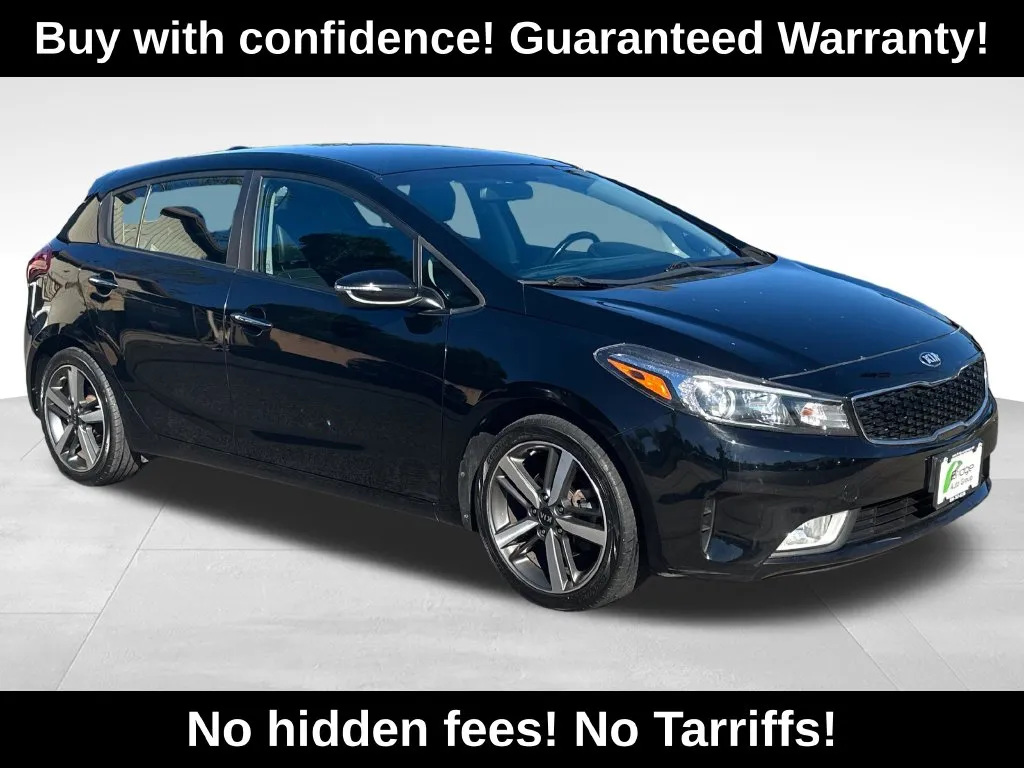
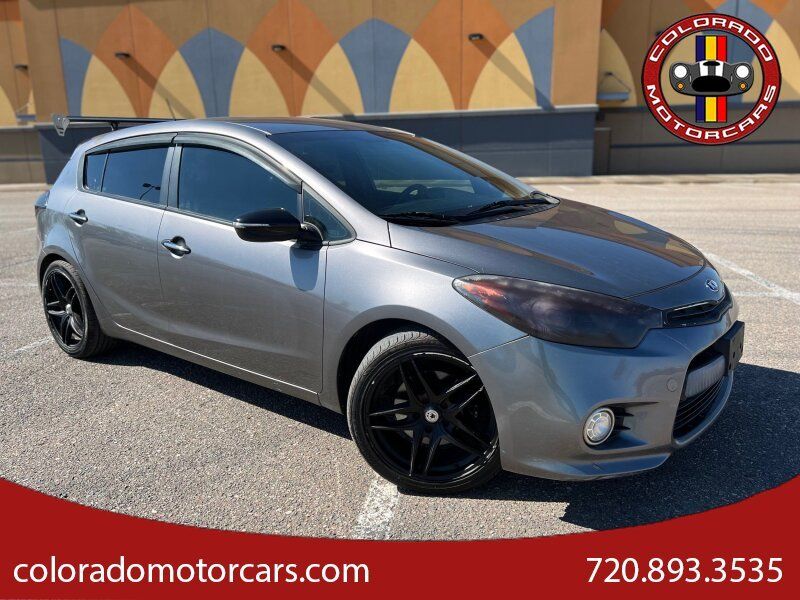
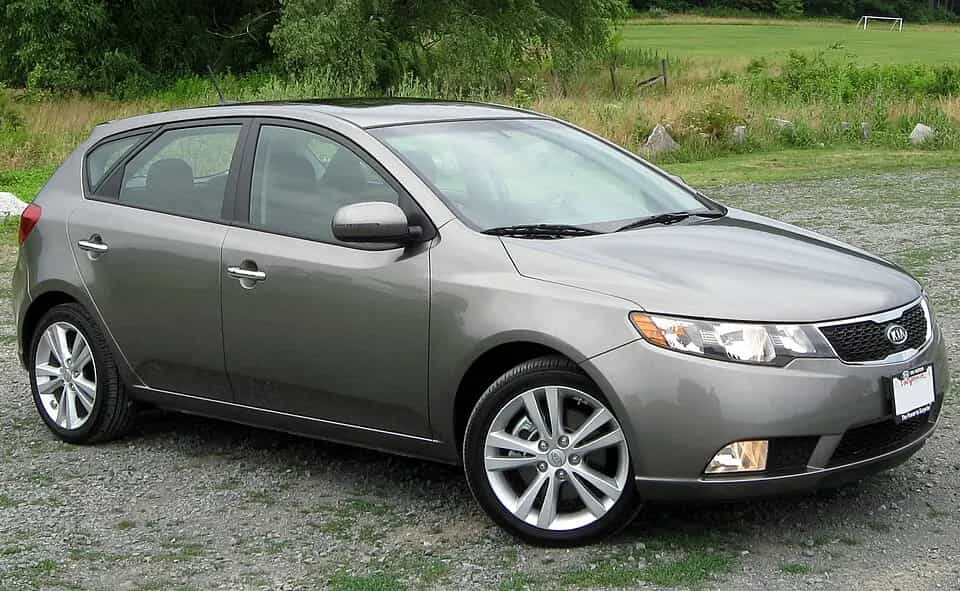
Kia Forte5
Importing a used Kia Forte5 from the USA
The Kia Forte5 is the five-door hatchback member of the Forte compact family, and it was very much a North-American product — the "Forte5" name itself was used in the US and Canada rather than in Europe, where related Kia hatchbacks wore different badges. That makes importing a used Forte5 from the USA the natural way for a German buyer to get one: the model was sold in real volume across the Atlantic, so the used pool is far larger there than anything you will find domestically. USCar Trader acts purely as an independent broker for used vehicles, sourcing and verifying the car for you without acting as a dealer or taking a margin.

Production years and key changes
In the US the Forte5 hatchback ran through the second-generation Forte (YD) era, roughly the 2014 to 2018 model years, sitting alongside the Forte sedan and the two-door Forte Koup. It offered the practicality of a hatchback tailgate and folding rear seats on the compact Forte platform. A mid-cycle refresh in 2017 brought revised styling, updated infotainment with a larger touchscreen on higher trims, and newer safety options. After 2018 Kia moved the compact line toward the third-generation Forte sedan and the sportier GT variants, so the Forte5 hatch is a defined, self-contained model to shop for.
What is under the hood
Two petrol engines cover the range. Entry cars use the 2.0-litre Nu four-cylinder (multi-point or GDI depending on year), making roughly 164–173 hp, paired with a six-speed manual or six-speed automatic. The car to seek out is the SX, powered by the 1.6-litre Gamma turbocharged GDI four producing about 201 hp and a healthy torque plateau, matched to either a six-speed manual or a seven-speed dual-clutch transmission depending on year and market. All Forte5 models are front-wheel drive. The turbo SX turns an otherwise sensible hatch into a genuinely brisk little car without straying into hot-hatch running costs.
Trims and body styles
The body is a single five-door hatchback shape. Trims in the US typically ran LX at the value end, EX in the middle with more comfort and convenience features, and the SX as the turbocharged flagship with sport seats, unique wheels, flat-bottom steering wheel on later cars and firmer tuning. Popular options across the range included a sunroof, heated seats, navigation and upgraded audio, all tracking the US trim ladder rather than European spec sheets.
What the US market offers
Forte5 availability in the States is solid, particularly the more common LX and EX cars, with SX turbos appearing regularly among enthusiast-owned examples. Typical cars now show moderate to higher mileage given the model's age, so condition and service history matter more than badge. Many were sold in warmer states as affordable commuters, which helps underbody condition for an import. Expect a spread from clean, one-owner examples to well-used daily drivers.
Who this import is for
A used Forte5 suits a buyer who wants a practical, well-equipped compact hatchback that is uncommon in Germany, or specifically the SX turbo as an affordable warm hatch that Europe never sold under this name. It is a pragmatic import rather than a collector piece, so it makes most sense when you find a clean, honestly priced car with good history. Buyers needing all-wheel drive or a large boot should look at an SUV instead.
Technical data and figures
| Attribute | Detail (typical US Kia Forte5) |
|---|---|
| Generation | Second-generation Forte (YD), ~2014–2018 |
| Body style | 5-door hatchback |
| Base engine | 2.0 L Nu four-cylinder |
| Base power | ~164–173 hp |
| Turbo engine (SX) | 1.6 L Gamma T-GDI four-cylinder |
| SX power | ~201 hp |
| Transmissions | 6-speed manual, 6-speed automatic, 7-speed DCT (turbo) |
| Drivetrain | Front-wheel drive |
| Fuel | Petrol (premium recommended on turbo) |
| Seating | 5 |
| Length | ~4,350 mm |
| Wheelbase | ~2,700 mm |
| Boot (seats up) | ~660 L class |
| Wheels | 16–18 inch by trim |
| Country of build | South Korea (neutral origin — verify by VIN) |
Reliability: trouble spots to check
The Forte5 is generally a dependable compact, but there are sensible checks. Both engines use gasoline direct injection, so on higher-mileage GDI cars watch for intake-valve carbon build-up, which can show as rough idle or hesitation and is resolved with a walnut-blast cleaning. On the 1.6 turbo, confirm the car was run on quality fuel with regular oil changes and inspect for any turbo oil weeping. On DCT cars, check for smooth low-speed engagement, as dual-clutch units dislike a history of neglect. Electrical items — infotainment, Bluetooth, and the occasional sensor — are the usual minor niggles. A documented service record is the single best predictor of a trouble-free car.
US vs. Europe differences
US Forte5s carry amber side-marker lights, headlamp aim for right-hand traffic, mph-first instruments and no rear fog lamp. Infotainment uses US navigation maps and radio bands. Because the Forte5 name and this exact hatch configuration were North-American, some parts and trim references will be US-specific, though the underlying Forte mechanicals are widely shared. None of this prevents German approval; it simply defines the conversion work.
How the import works
The route is straightforward: (1) selection — you pick a listing or we source a car; (2) VIN and origin check — history, title and the plant of manufacture are confirmed; (3) escrow — your funds are protected until the car is secured; (4) ocean freight — container or RoRo shipping to a German port; (5) customs clearance — duty assessed against true origin and the 19% import VAT calculated; (6) TÜV / individual approval — lighting and any required changes certified; (7) registration at your local Zulassungsstelle.
Import duty, VAT and fees
Bottom line: what matters is the factory shown by the VIN – proven US origin unlocks 0% duty. The 19% import VAT always applies.
The Forte5 is built in South Korea, so this is an origin="neutral" case: the applicable import duty depends on the vehicle's actual origin as proven by the VIN, not on the fact that it ships from the USA. The preferential 0% EU rate under Regulations (EU) 2026/1455 and 2026/1461 applies only where genuine US origin can be proven for a directly transported vehicle; a Korean-built Forte5 will normally attract the standard passenger-car duty instead. The 19% German import VAT (Einfuhrumsatzsteuer) is due in every case and is stated separately. We never describe an import as "duty-free" and we add no margin — duty and VAT appear as their own line items.
From modifications to registration
Typical German approval work includes converting the headlights for right-hand traffic, adding a rear fog lamp, verifying the speedometer in km/h, and confirming the odometer reading. Any aftermarket wheels, exhaust or lighting are documented so they can be entered on the papers or removed. A stock Forte5 clears individual approval without difficulty.
Pre-buy inspection points
Before buying, confirm: the full VIN and plant code; a clean Carfax or AutoCheck report free of salvage, flood or accident branding; the title status; complete service history, especially oil changes on the turbo and DCT behaviour; underbody condition on any snow-state car; and whether the engine and transmission are stock. A US pre-purchase inspection is money well spent on an older compact.
What buyers ask most
Why import a Kia Forte5 from the USA?
Because the Forte5 hatch and its name were North-American, so the US used market is the practical place to find one, especially the turbocharged SX.
Does the 0% EU import duty apply to a Forte5?
Only with provable US origin. The Forte5 is Korean-built, so it is usually assessed at the standard duty rate; the 19% import VAT always applies.
Which Forte5 engine is best?
The 1.6 turbo SX offers the most performance at around 201 hp, while the 2.0 is cheaper to insure and run for buyers who just want a practical hatch.
What are the common Forte5 problems?
GDI intake carbon build-up on higher-mileage cars, turbo maintenance on the SX and smooth-engagement checks on DCT models are the main items.
Will a US Forte5 pass German TÜV?
Yes, after lighting conversion, a rear fog lamp and a km/h speedometer are sorted during individual approval.
How long does shipping take?
Ocean freight to a German port typically takes a few weeks, after which customs clearance and inland transport follow.
Is the Forte5 reliable?
Generally yes when serviced; a documented maintenance history is the best assurance of a trouble-free car.
To get started, explore Kia in the Carhub, compare the related Kia Forte and the sporty Kia Stinger, or the hatch rival Volkswagen Golf GTI, and view current Forte5 listings.