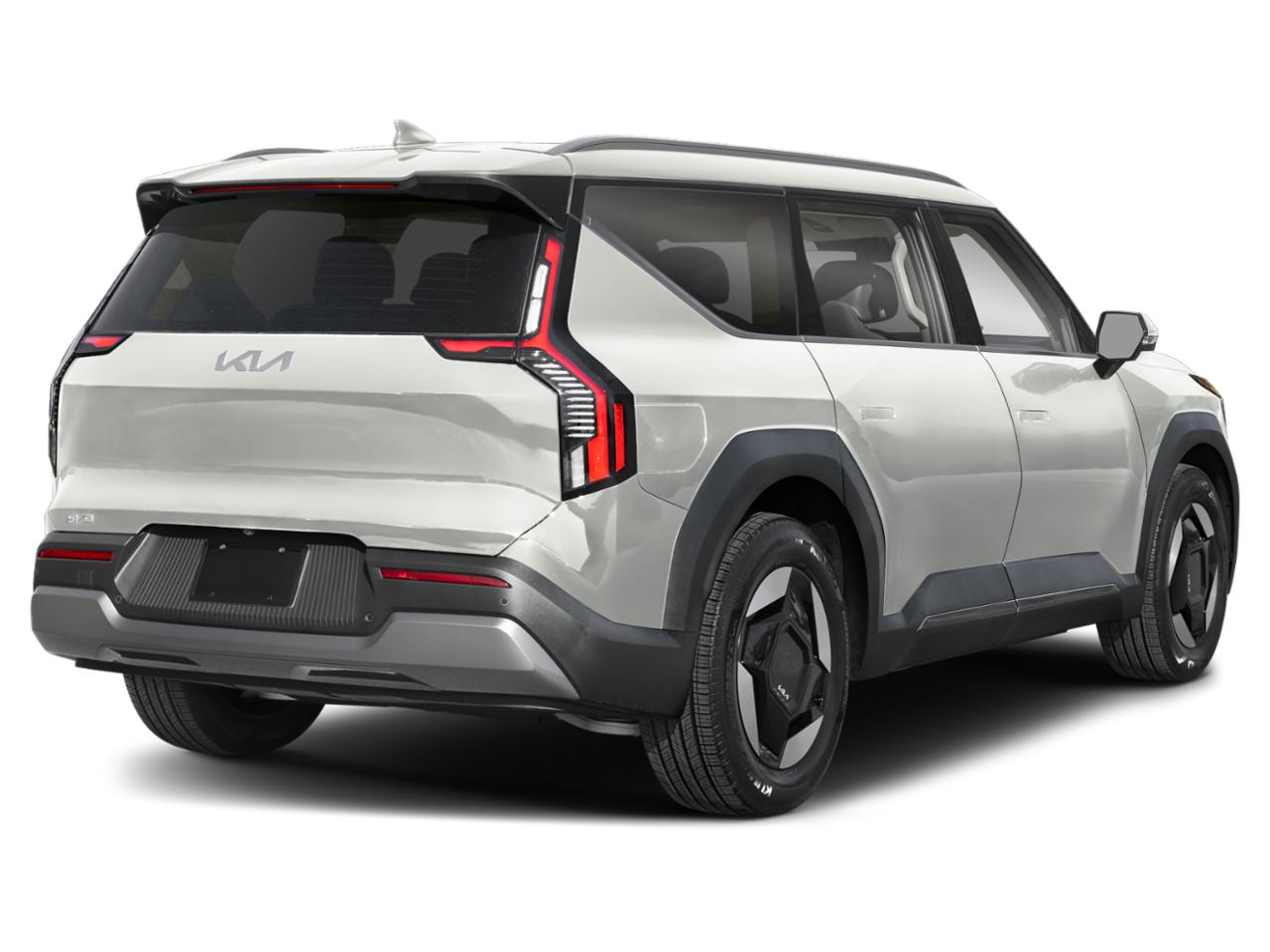
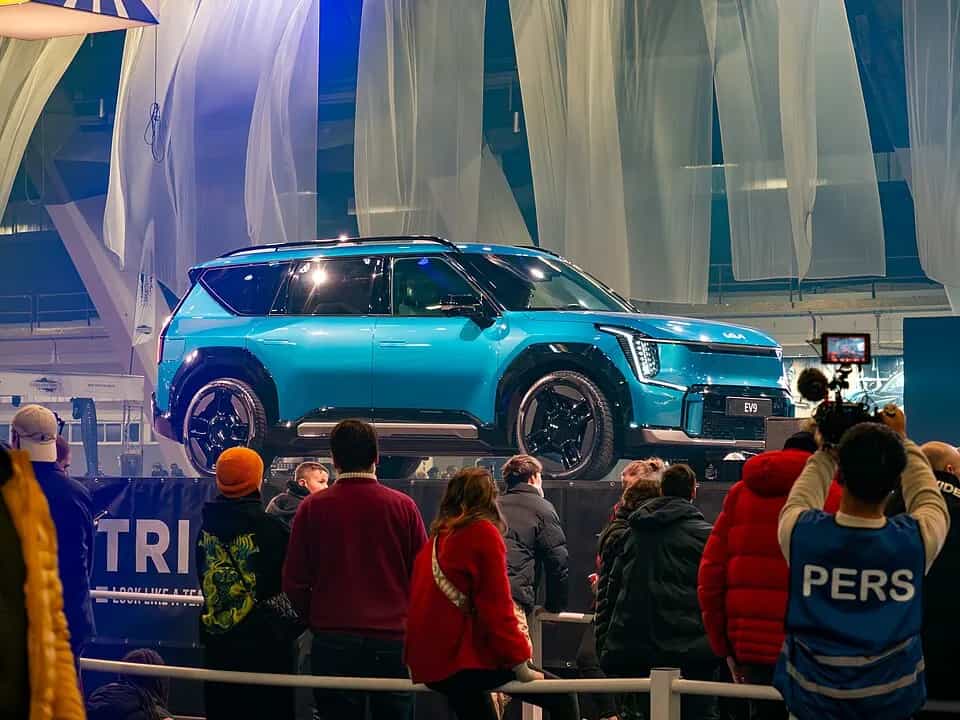
Kia EV9
Importing a used Kia EV9 from the USA
The Kia EV9 is a full-size, three-row electric SUV, and it is one of the most family-friendly EVs Kia has ever built. The American used market is starting to hold a useful supply as early lease and first-owner cars come back. USCar Trader operates as an independent broker for used vehicles only: no dealer stock, no margin on the car, no manufacturer partnership. We source, vet and ship the EV9 you choose from the USA to Germany or the EU. Below is a grounded look at the car, its known issues, and the import process.

Generations at a glance
The EV9 arrived for the 2024 model year as Kia's flagship electric SUV, built on the same 800-volt E-GMP platform as the EV6 but scaled up to a boxy, three-row body. It seats six or seven depending on configuration and slots above the EV6 as the brand's family hauler. Because it is a recent model, all used examples are relatively new, and Kia added US assembly at its West Point, Georgia plant during 2024, which is relevant to origin and customs as explained below.
Powertrain lineup
The EV9 uses a large battery of roughly 99.8 kWh gross. The entry Light Long Range is single-motor rear-wheel drive with about 215 hp; the dual-motor all-wheel-drive versions (Wind, Land, GT-Line) produce around 379 hp with a strong torque figure that makes the big SUV genuinely brisk. As with the EV6, the 800-volt architecture allows rapid DC charging, with a 10-to-80-percent top-up achievable in roughly 25 minutes on a high-power charger under good conditions. Range on the long-range versions reaches around 500 km on the WLTP cycle depending on wheels and drivetrain.
Trims in the US market
US trims run Light, Light Long Range, Wind, Land and GT-Line. Higher trims add features such as the dual 12.3-inch curved displays, a head-up display, second-row captain's chairs with available swivel function, ventilated seats, a heat pump and the vehicle-to-load power capability. All are three-row SUVs; the choice is mainly six- versus seven-seat layout and single- versus dual-motor drive.
The used market stateside
As a newer model, used EV9 supply is smaller than for long-established SUVs but growing steadily, with early 2024 cars now appearing. Expect low-mileage examples, often in well-equipped Wind, Land and GT-Line trims. Battery state of health should be excellent on such young cars, but you should still verify it. Cars from dry, warm states avoid road salt, which matters for the underbody and battery casing.
Who should import one
Import a used EV9 if you need a spacious, three-row electric SUV with fast charging and a premium-feeling cabin, and you want something less common on German roads than the established European electric SUVs. It suits families and buyers who prioritise space and comfort. If you want a smaller, sportier EV, the EV6 is the better fit.
Key specifications
| Item | Detail (long range, typical) |
|---|---|
| Body style | Full-size three-row electric SUV |
| Platform | E-GMP, 800-volt |
| Battery | approx. 99.8 kWh gross |
| Output (RWD) | approx. 215 hp |
| Output (AWD) | approx. 379 hp |
| Drive | RWD or dual-motor AWD |
| DC fast charging | up to ~210 kW, 10-80% ~25 min |
| Range (WLTP, long range) | up to approx. 500-541 km |
| Length | approx. 5,010 mm |
| Wheelbase | approx. 3,100 mm |
| Seating | 6 or 7 |
| Boot (behind 3rd row) | approx. 333 L + front trunk |
| Fuel | Electric |
| Launch | 2024 model year |
| Assembly | South Korea; US (West Point, Georgia) from 2024 |
How reliable is it?
The Kia EV9 is too new to have a long reliability record, but it shares much of its E-GMP hardware with the EV6, so the same watch points apply. The Integrated Charging Control Unit (ICCU) is the main one: this component can fail across E-GMP vehicles, and Kia has addressed it through recalls and updates, so confirm the relevant recall work is complete on any EV9 you consider. Early software teething on infotainment and driver assistance is common on new models and is usually resolved with over-the-air or dealer updates. On such young cars, check that all recalls and software campaigns have been applied, verify battery state of health, and inspect the low-slung front for parking damage. Otherwise the EV9 has few wear parts and should prove low-maintenance.
What US models do differently
US EV9s use North American CCS1 charging hardware, so plan an adapter or conversion for European CCS2 charging. Instruments read in miles, there is no standard rear fog lamp, and telematics and radio bands are US-configured. All are handled during conversion and approval. Feature content largely mirrors European cars since the EV9 is sold globally.
Seven steps to your import
Selection: we shortlist the trim, seating layout and drivetrain, and review battery health. VIN and origin check: we decode the VIN to confirm whether the car was built in Korea or the US plant, which is decisive for the customs rate. Escrow: funds stay protected until verification. Ocean freight: the EV9 ships by container or RoRo to a German port. Customs clearance: duty and VAT are declared on arrival. TUEV and individual approval: inspection and documentation, including charging compatibility. Registration: German plates follow once the paperwork is complete.
Customs, taxes and costs explained
Remember: no origin proof, no 0% duty – and 19% German import VAT is due on every import.
Two charges are separate. Import duty: the 0% rate under Regulations (EU) 2026/1455 and 2026/1461 (in force from 1 July 2026 to 31 December 2029, direct transport) applies only to vehicles of provable US origin. The EV9 is unusual because Kia builds it both in South Korea and, from 2024, at West Point, Georgia. A US-built EV9 can support the 0% rate once the plant is confirmed from the VIN, while a Korean-built car normally attracts the standard rate. We verify the plant per car and never promise duty-free status. Import VAT: the 19% German Einfuhrumsatzsteuer is always due. Every charge is an official pass-through with no margin.
German TÜV and registration
Typical work covers a rear fog lamp, ECE-compliant lighting, the odometer documented in kilometres, and confirmation of European charging compatibility. The individual approval (Einzelabnahme per §21 StVZO) records the specification for registration.
The buyer checklist
Match the VIN to the title and build, and note the assembly plant. Order a Carfax or AutoCheck report for accident, title and odometer history. Confirm a clean, non-salvage title, especially important for flood or battery damage on an EV. Verify the ICCU recall and all software campaigns are complete. Ask for a battery state-of-health readout. Inspect the low front bumper and underbody. Confirm the charging port and plan the CCS2 solution.
Questions and answers
Can a Kia EV9 qualify for 0% import duty?
Possibly. Kia builds the EV9 in both Korea and Georgia, USA. A US-built car can support the 0% rate once the plant is confirmed from the VIN; a Korean-built car normally attracts the standard rate. The 19% import VAT always applies.
How many seats does the EV9 have?
Six or seven, depending on whether the second row has captain's chairs or a bench. Both layouts are three-row.
Can I charge a US EV9 in Europe?
Yes, with the right setup. It uses CCS1 hardware, so plan an adapter or conversion for European CCS2 charging, which we address during approval.
Is the EV9 reliable?
It is new, but shares proven E-GMP hardware. Confirm the ICCU recall and software updates are done and verify battery health.
How does it compare to the EV6?
The EV9 is larger, with three rows and more space; the EV6 is smaller and sportier. Choose by how much room you need.
How long does the import take?
Usually a few weeks from purchase to registration, depending on shipping and the approval appointment.
Start here: browse Kia in the Carhub, compare the Kia EV6, the Hyundai IONIQ 9 and the Chevrolet Blazer EV, or view current Kia EV9 listings.