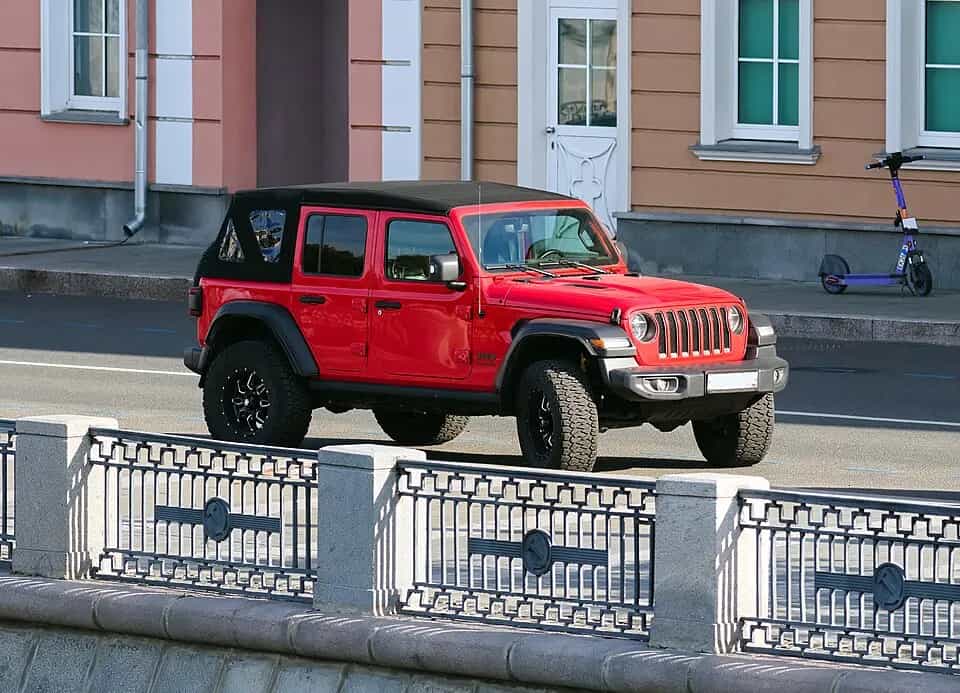
Jeep Wrangler

Importing a used Jeep Wrangler from the USA

The Wrangler is the vehicle that most defines Jeep: a solid-axle, removable-roof, removable-door 4x4 that has kept its silhouette for decades while modernising underneath. American-market Wranglers arrive with engine and trim combinations — the 392 Hemi, specific Rubicon packages, certain option groups — that European buyers often cannot get locally. If you want to import a used Jeep Wrangler from the USA, the US supply is vast and, because the Wrangler is built in Toledo, Ohio, a VIN with a US plant code frequently supports the 0% EU import duty, checked per individual car.

Jeep Wrangler – used car imported from the USA
Photo: Retired electrician · CC0 · Wikimedia Commons

Model history: years and generations

Modern Wranglers span the TJ (1997–2006), the JK (2007–2018, which introduced the four-door Unlimited and made the Wrangler a mainstream seller), and the current JL (2018 on). The JL brought a lighter body, better on-road manners, the 2.0-litre turbo four, a 4xe plug-in hybrid and the wild Rubicon 392 with a 6.4 Hemi. Two-door and four-door (Unlimited) bodies run through the JK and JL; this page covers the Wrangler line broadly, with the JK and JL the most commonly imported.

Engines, transmissions and drive

The 3.6-litre Pentastar V6 (around 285 hp) is the mainstay across JK (from 2012) and JL. The JL added the 2.0-litre turbocharged four (about 270 hp with eTorque mild-hybrid assistance) and the 4xe plug-in hybrid pairing that turbo with electric drive. At the top sits the Rubicon 392 with the 6.4-litre Hemi V8, roughly 470 hp — a factory V8 Wrangler that is a genuine rarity in Europe. Transmissions are six-speed manual or the ZF/845RE-based eight-speed automatic. All are part-time four-wheel drive with a two-speed transfer case; Rubicons add front and rear lockers, a disconnecting front sway bar and heavier Dana 44 axles.

Equipment lines and body styles

Two-door and four-door Unlimited bodies, soft top or hard top (including the JL Sky one-touch power roof). Trims include Sport, Sport S, Willys, Sahara, Rubicon and special editions. Rubicon is the off-road benchmark; Sahara leans on-road comfort. Factory lockers, 33-inch tyres and low gearing on the Rubicon are the features enthusiasts import for.

The US used market

Wrangler supply in the States is huge and prices hold well, especially for Rubicons and low-mileage four-doors. Because so many Wranglers are lightly modified, a documented, rust-free, near-stock example with full history is the easier import; heavily built rigs need more approval paperwork. Sun Belt cars are the pick for a clean frame.

Is an import right for you?

The Wrangler is for the buyer who wants genuine open-air, go-anywhere character and strong residual values, and who is willing to accept a firmer ride and more road noise than a conventional SUV. Rubicon and 392 buyers import specifically for capability or the V8; the V6 and 2.0T suit everyday use, and the 4xe suits those wanting lower running costs.

Specs at a glance

ItemDetail (typical, JL)
Body2-door / 4-door (Unlimited) 4x4, removable roof & doors
Engine (V6)3.6 L Pentastar, ~285 hp
Engine (turbo)2.0 L turbo I4 (eTorque), ~270 hp
Engine (392)6.4 L Hemi V8, ~470 hp
4xe2.0T plug-in hybrid, ~375 hp combined
Transmission6-speed manual / 8-speed automatic
DrivetrainPart-time 4WD, 2-speed transfer case
AxlesDana 30/35 (Sport) or Dana 44 (Rubicon)
SuspensionCoil springs, live axles
Length~4.33 m (2dr) / ~4.88 m (4dr)
Kerb weight~1,850–2,250 kg
Fuel tank~66–81 L
FuelPetrol (4xe = plug-in hybrid)
Seating4 (2dr) / 5 (4dr)

Common issues buyers should know

The 3.6 Pentastar is a proven engine, though earlier JK versions had cylinder-head issues later resolved, and the family can develop oil-cooler housing leaks. The JL had some early-build teething faults — occasional "stalling" fuel/engine software issues and reports of ticking on certain Pentastars — mostly addressed under recall/TSB, so check the VIN's recall history. As with any solid-axle Wrangler, "death wobble" (a front-end shimmy from worn steering/suspension parts) can occur and is repairable; check the track bar, ball joints and steering damper. The 2.0T is generally strong but keep to oil-change intervals given the turbo. The 4xe's high-voltage battery is a long-term consideration. Watch soft tops for leaks, and inspect the frame and body for rust despite galvanising. Well-maintained Wranglers are dependable and hold value strongly.

Differences from the European version

US Wranglers use amber/combined rear lamps, US-pattern headlights, no rear fog lamp and mph clusters. The big draw is engine and trim availability — the 392 V8 above all — while the trade-offs are fuel use and, on the V8, high German road tax. Confirm emissions documentation for registration.

Import step by step

Select the specific Wrangler, then we run the VIN and origin check (plant code, Carfax/AutoCheck, title), move funds through escrow, transport the Jeep to a US port and ship it by ocean freight to Bremerhaven or Rotterdam. On arrival we handle customs clearance, then the car goes through TUEV and individual approval (Einzelabnahme) before your local registration.

Customs and taxes: what applies

Bottom line: what matters is the factory shown by the VIN – proven US origin unlocks 0% duty. The 19% import VAT always applies.

Two separate items. EU import duty: under Regulations (EU) 2026/1455 and 2026/1461, in force since 1 July 2026 for directly transported goods until 31 December 2029, a US-origin Wrangler can qualify for 0% — verified per VIN, never promised up front. Separately, the 19% German import VAT (Einfuhrumsatzsteuer) always applies on the customs value. Shipping, port and clearance fees plus our transparent service fee complete the cost; there is no hidden margin on the car.

Modifications and single-vehicle approval

Typical work: converting rear lighting to European indicator behaviour, adding a rear fog lamp, adjusting or replacing headlights for the correct beam, and documenting the odometer in km. Lifts, oversized tyres, bumpers and light bars need ABE or single-part approval, which we help arrange ahead of the inspection.

What to verify before buying

  • Confirm the US VIN and plant code for the duty question.
  • Get a Carfax/AutoCheck history and confirm a clean (non-salvage) title.
  • Check all recalls are closed, especially on early JL cars.
  • Inspect the front end for death-wobble wear.
  • Inspect frame and body for rust; prefer Sun Belt cars.
  • Assess any modifications for TUEV feasibility and documentation.
  • Verify service history and matching mileage; check roof/doors and seals.

Common questions

Which Wrangler engine should I import?

The 3.6 V6 is the versatile all-rounder; the 2.0T adds mild-hybrid smoothness; the 392 6.4 V8 is the rare, high-performance choice; the 4xe suits lower running costs.

What is Wrangler "death wobble"?

A front-end shimmy from worn steering/suspension parts on solid-axle Jeeps. It is repairable — inspect the front end before buying.

Is the Wrangler US-built?

Yes, it is built in Toledo, Ohio. A US plant code often supports 0% EU duty, verified on the individual VIN.

Do I always pay import VAT?

Yes. The 19% German Einfuhrumsatzsteuer always applies and is charged separately from any duty.

Can a lifted Wrangler pass TUEV?

Usually yes, but each modification needs documentation (ABE or single-part approval). Near-stock cars are simpler and cheaper to approve.

Is the Rubicon worth importing?

For serious off-road use, yes — factory lockers, a disconnecting sway bar and Dana 44 axles are hard to replicate cheaply.

Do Wranglers hold their value?

Strongly, especially Rubicons and low-mileage four-doors, which is part of the appeal.

How is it shipped to Germany?

By ocean freight (RoRo or container) from a US port to Bremerhaven or Rotterdam, then customs clearance.

See the full Jeep in the Carhub, compare the Wrangler 4-Door, the Wrangler 2-Door and the Gladiator where available, or browse the current Wrangler listings.