Jeep Wagoneer

Importing a used Jeep Wagoneer from the USA

The revived Wagoneer is a full-size, three-row American SUV built to take on the Chevrolet Tahoe and Ford Expedition, and it was designed first and foremost for the US market. It was never a mainstream sight in Germany, so importing a used one from the States is the realistic way to get a large, well-equipped Wagoneer at all. USCar Trader operates as an independent broker, finding the specific Wagoneer you want and handling freight, customs and TÜV approval, without ever being a dealer or carrying stock.

Jeep Wagoneer – used car imported from the USA
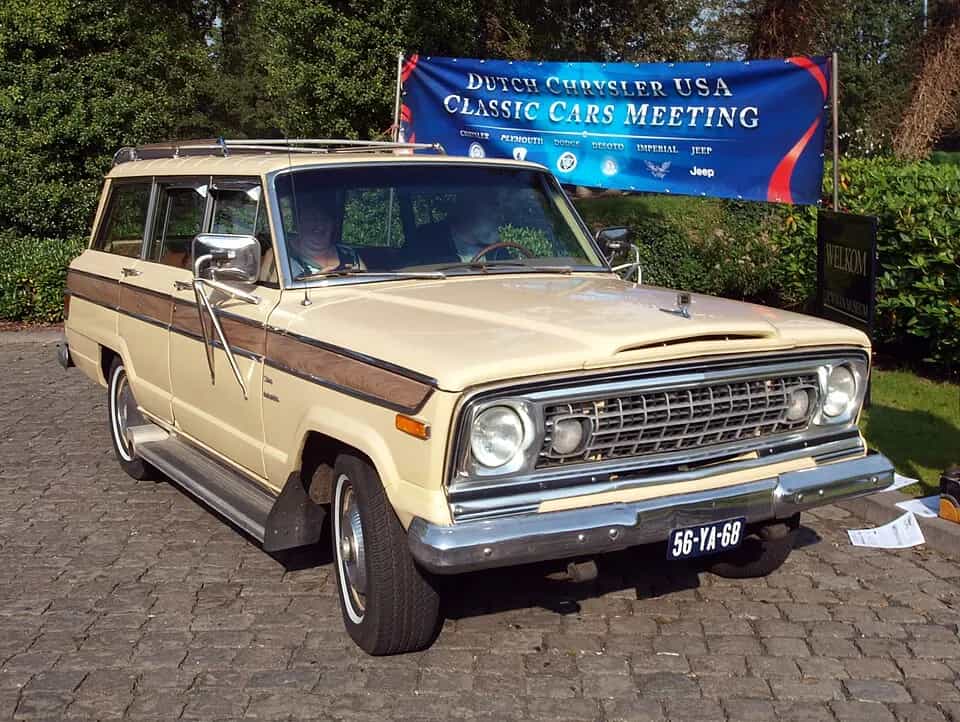
Photo: AlfvanBeem · CC0 · Wikimedia Commons

Generations at a glance

The modern Wagoneer (platform code WS) launched for the 2022 model year, reviving a badge last used in the 1990s. It is offered as the standard Wagoneer and the more luxurious Grand Wagoneer, with a long-wheelbase Wagoneer L and Grand Wagoneer L added for 2023 to stretch cargo and third-row space. This is a body-on-frame SUV, not a car-based crossover, sharing much of its engineering philosophy with the Ram 1500. For the 2023 model year Jeep began switching from the V8 to the twin-turbo inline-six Hurricane engine, a significant change buyers should note when shopping by year.

Powertrain lineup

Early 2022 Wagoneers used the 5.7-litre Hemi V8 with eTorque mild-hybrid assistance, making 392 hp and 404 lb-ft. The Grand Wagoneer stepped up to the 6.4-litre Hemi V8 with 471 hp. From 2023, the 3.0-litre twin-turbo Hurricane inline-six took over, in standard output (about 420 hp) and a high-output version (about 510 hp) for Grand Wagoneer models. All use the eight-speed TorqueFlite automatic and are available with rear-wheel drive or one of several four-wheel-drive systems, including a two-speed transfer case with low range on the more capable configurations.

Trims in the US market

The Wagoneer is a large three-row SUV seating seven or eight. Trims span Series I, II and III on the Wagoneer, rising to the plush Grand Wagoneer with Obsidian and Series III appointments, quilted leather, a passenger-side dashboard screen and a premium audio system. The long-wheelbase L variants add meaningful cargo room behind the third row.

The used market stateside

As a recent model, the used pool is growing steadily, with plenty of 2022 to 2024 examples between 15,000 and 50,000 miles, many coming off lease in good condition. Buyers should decide between the earlier Hemi V8 cars and the newer Hurricane six-cylinder models, as they drive and sound quite differently. Southern-state cars offer the cleanest examples.

Who should import one

A used Wagoneer from the USA suits a buyer who needs genuine three-row, full-size space with American luxury and towing muscle, in a package that German dealers essentially never offered. It is a strong choice for large families or anyone who tows and wants a comfortable, high-equipment SUV.

Key specifications

GenerationWS (2022–present)
Body styleFull-size 3-row SUV, 7–8 seats
ConstructionBody-on-frame
V8 (2022)5.7 L Hemi eTorque, 392 hp / 404 lb-ft
Grand Wagoneer V86.4 L Hemi, 471 hp
Inline-six (2023+)3.0 L Hurricane twin-turbo, approx. 420–510 hp
Transmission8-speed automatic (TorqueFlite)
DrivetrainRWD or 4WD, low range available
Max towingup to approx. 10,000 lb (approx. 4,536 kg)
Fuel typePetrol (mild hybrid V8)
Length (Wagoneer)approx. 5,453 mm
Length (Wagoneer L)approx. 5,646 mm
Curb weightapprox. 2,700–2,900 kg
Fuel tankapprox. 100 L
Seating7 or 8

How reliable is it?

As a newer model the long-term record is still forming, but some patterns have emerged. Early 2022 cars saw several recalls, including issues with the electrical architecture and warning-message glitches, so confirm campaigns are closed. Owners have reported infotainment and software bugs on the large multi-screen system, occasional electrical faults, and the expected thirst of a heavy full-size SUV, especially with the V8. The 5.7 Hemi is a known quantity but check for lifter and eTorque-related issues; the newer Hurricane six is powerful but has a shorter track record. Given the weight, inspect brakes, tyres and suspension carefully on higher-mileage cars.

What US models do differently

US Wagoneers run mph instruments, US lighting without a standard rear fog lamp, and infotainment tuned for the American market. The sheer size means parking sensors and cameras are set up to US norms. All of this can be adapted for German registration, though the vehicle's dimensions are worth bearing in mind for European roads and garages.

Seven steps to your import

We begin by confirming the exact car and its build. The VIN and origin check establishes plant and history, then secure escrow protects the payment. The Wagoneer is loaded onto ocean freight to a European port such as Bremerhaven, cleared through German customs, prepared and taken through TÜV single-vehicle approval (Einzelabnahme) where required, and finally registered for German plates.

Customs, taxes and costs explained

In short: the 0% duty rate applies only with documented US origin (VIN/plant) – German import VAT of 19% is always due.

The Wagoneer is built in Warren, Michigan, so a VIN confirming US assembly can qualify for the 0% EU import duty under Regulations (EU) 2026/1455 and 2026/1461, which apply to vehicles of provable US origin shipped directly, effective 1 July 2026 to 31 December 2029. This is never guaranteed and depends on documented origin from the VIN and plant data. Separately, the 19% German import VAT (Einfuhrumsatzsteuer) always applies on import, in addition to any duty. USCar Trader passes these government charges through with no markup.

German TÜV and registration

Approval usually means adapting the headlights to the European beam pattern, fitting or activating a rear fog lamp, and ensuring the speedometer reads km/h. The odometer is documented and converted to kilometres where needed. Given the size, weight class and any towing setup are confirmed for the registration. Once the inspection passes, the car is registered at the Zulassungsstelle.

The buyer checklist

1. Decode the VIN to confirm Warren build, engine (V8 or Hurricane) and trim. 2. Pull a Carfax or AutoCheck history for accidents, title and odometer. 3. Confirm all recalls, especially the early electrical campaigns, are closed. 4. Test the multi-screen infotainment for faults and software currency. 5. On V8 cars, check for lifter and eTorque issues. 6. Inspect brakes, tyres and suspension given the vehicle's weight. 7. Verify the title is clean, not salvage or rebuilt.

Questions and answers

Is the Jeep Wagoneer reliable?

It is too new for a long-term verdict, but early cars had electrical recalls and software bugs, so buy one with completed campaigns and a clean history.

V8 or Hurricane six-cylinder?

The 2022 Hemi V8 has a familiar character and sound; the 2023-on Hurricane twin-turbo six is more powerful and efficient but newer to the market.

Can a used Wagoneer qualify for 0% EU import duty?

Often yes, since it is US-built, but only with VIN-proven US origin and compliant direct transport. It is never promised in advance.

Does the 19% import VAT always apply?

Yes, the German Einfuhrumsatzsteuer of 19% is due on every import in addition to any duty.

How much can a Wagoneer tow?

Properly equipped, up to about 10,000 lb (roughly 4,536 kg).

What is the difference between Wagoneer and Grand Wagoneer?

The Grand Wagoneer is the more luxurious, more powerful version with higher-end materials, more screens and a larger engine.

Is the Wagoneer too big for German roads?

It is a genuine full-size SUV, so consider parking and garage dimensions; the long-wheelbase L is larger still.

How long does the import take?

Usually several weeks after purchase, mostly determined by shipping and customs.

Start here: explore Jeep in the Carhub, compare related models such as the Grand Wagoneer L, the Wagoneer L or the Grand Cherokee L, and view current Wagoneer listings.