Jeep Liberty

Importing a used Jeep Liberty from the USA

Sold in North America as the Liberty and elsewhere as the Cherokee (KJ/KK), this is the compact Jeep that replaced the beloved XJ Cherokee for the 2002 model year. It is a proper body-on-frame-influenced 4x4 with real off-road hardware, and it has a following among buyers who want an honest, mechanical Jeep without the size of a Grand Cherokee. USCar Trader is an independent broker for used US vehicles; we do not sell new cars and add no margin to the vehicle. Because Liberty production was primarily American, the customs situation is favourable but still depends on documenting the exact plant for your car.

Jeep liberty – used car imported from the USA
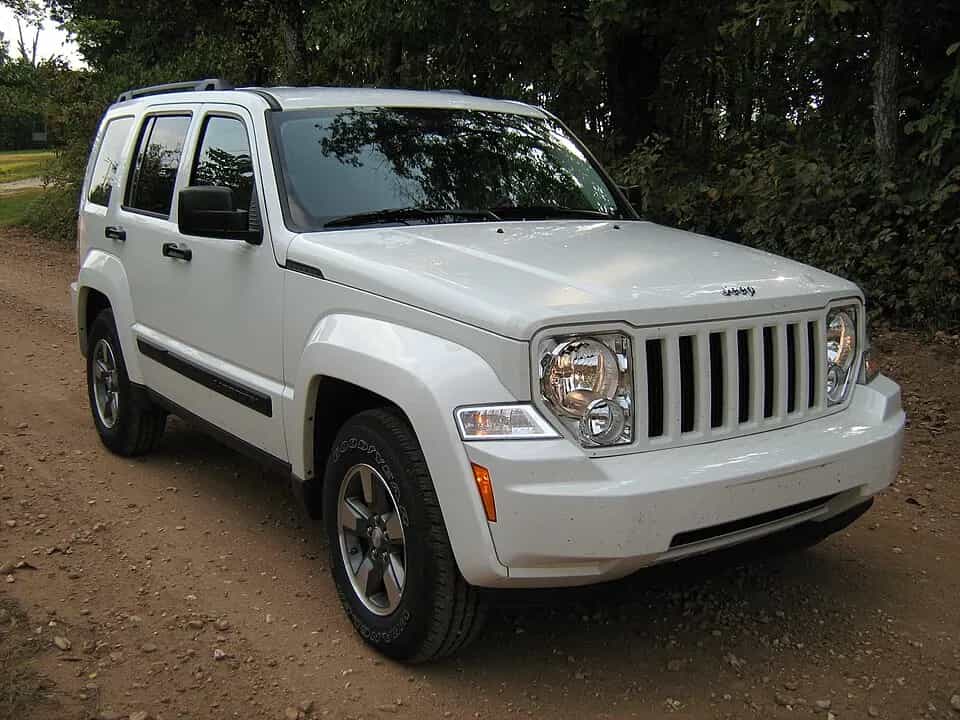
Photo: Christopher Ziemnowicz (CZmarlin) · Public domain · Wikimedia Commons

From launch to today

The Liberty ran across two generations. The first, KJ, covered 2002 to 2007 and is instantly recognisable by its round headlights and rounded body — a softer, more road-friendly shape than the boxy XJ it replaced. The second, KK, ran from 2008 to 2012 with squared-off styling, a flatter roof and a more modern interior. Both were compact five-seat SUVs aimed at buyers who wanted genuine trail capability in a manageable footprint. Production centred on Toledo, Ohio, the historic home of Jeep.

Engines and drivetrain in detail

On the KJ, the workhorse engines were the 2.4-litre PowerTech four (around 150 hp) and, far more common, the 3.7-litre PowerTech V6 (around 210 hp). A 2.8-litre CRD turbodiesel from VM Motori was offered in some markets, producing roughly 160 hp with strong torque — a variant of particular interest to European buyers who want a diesel Liberty. The KK simplified the range around the 3.7-litre V6. Transmissions were four- and later five-speed automatics, with a manual on some early cars. Four-wheel drive came via Command-Trac (part-time) or the full-time Selec-Trac system, and the Liberty retained a low range, which is more than many modern crossovers can claim.

Trim levels and variants

The Liberty was a five-door SUV only. Trims ran through Sport, Limited and, on the KJ, the off-road-oriented Renegade with skid plates and a more rugged look. Early KJs even offered a novel Sky Slider full-length canvas roof. Equipment was modest but honest: this was a tool as much as a family car, and the higher trims added leather, alloys and better audio without ever becoming plush.

Used availability in the USA

The Liberty is now a genuinely used-market vehicle, with all examples over a decade old. Supply in the US is plentiful and prices are low, but condition is everything at this age. The best cars come from dry southern and western states where the frames and bodies stay clean; midwestern and north-eastern cars can hide serious corrosion. Mileage varies enormously, so a documented service history and a proper underbody inspection matter far more than the odometer alone.

When importing makes sense

A Liberty suits someone who wants an affordable, genuinely capable compact 4x4 with old-school mechanicals and low-range gearing, or an enthusiast after the CRD diesel or a clean Renegade. It is not for buyers who prioritise refinement or fuel economy. If you want a simple Jeep you can work on and take off the tarmac, importing a used Liberty from the USA is a sensible route to a rust-free example.

Facts and figures

Vehicle classCompact SUV / 4x4
US model years2002–2012
GenerationsKJ (2002–2007), KK (2008–2012)
Main engine3.7 L PowerTech V6, approx. 210 hp
Alternative petrol2.4 L PowerTech I4, approx. 150 hp (KJ)
Diesel (some markets)2.8 L CRD, approx. 160 hp
Transmission4-/5-speed automatic, some manual
Drivetrain4x4 (Command-Trac / Selec-Trac), with low range
Length (KK)approx. 4,470 mm
Wheelbaseapprox. 2,694 mm
Curb weightapprox. 1,850–2,000 kg
Seating5
Towingup to approx. 5,000 lbs (V6)
FuelPetrol (or diesel CRD)
Country of assemblyToledo, Ohio, USA

Reliability and common problems

The Liberty is mechanically robust but has well-documented weak points. The 3.7-litre V6 can suffer valve-seat drops and elevated oil consumption on neglected engines, so a compression or leak-down check is wise. Front-end wear is common — ball joints, control-arm bushings and wheel bearings — and the window regulators are a known failure. The TIPM (Totally Integrated Power Module) can cause frustrating electrical faults on later cars. Cooling systems deserve attention, and on the CRD diesel the usual turbo and injector checks apply. Above all, inspect for rust: rear frame sections, subframe mounts and the fuel-filler area are the classic rot spots.

How US versions differ

A US Liberty uses amber side markers, an mph speedometer and US headlight aim, and lacks a rear fog lamp. The CRD diesel was engineered with European markets in mind, which can make that variant slightly easier to live with here, but every US car still needs the standard lighting and documentation work for German registration.

From US purchase to registration

The path is unchanged: select a specific Liberty, run the VIN and origin check, purchase through escrow, ship by ocean freight to a European port, clear customs, present the car for TÜV individual approval (Einzelabnahme), and register. On an older vehicle the pre-purchase inspection carries extra weight, since condition — not age — determines whether the project is worthwhile.

Costs, duty and taxes at a glance

Bottom line: what matters is the factory shown by the VIN – proven US origin unlocks 0% duty. The 19% import VAT always applies.

Liberty production was concentrated in Toledo, Ohio, so most cars are of US origin — but this must be proven for your specific vehicle through the VIN and plant code, not assumed. Where US origin is documented, the 0% preferential duty under Regulations (EU) 2026/1455 and 2026/1461 can apply for direct imports within the 2026–2029 window; where it cannot be proven, the standard 10% passenger-car duty applies. We never call an import duty-free or guaranteed. Separately and in every case, the 19% German import VAT (Einfuhrumsatzsteuer) applies on the customs value plus duty and freight. All charges are passed through with no margin.

TÜV, approval and license plates

Expect to retrofit a rear fog lamp, adapt the headlights, and document the odometer reading. On a vehicle of this age, the inspector will look closely at corrosion, brakes and emissions documentation during individual approval before the registration papers are issued.

Pre-purchase checklist

Confirm the VIN matches the car and title; obtain a Carfax or AutoCheck report and check for salvage, flood or odometer issues; inspect the rear frame and subframe mounts for rust; verify the 3.7 V6's oil consumption and cooling health; check front-end components for play; review service history; and confirm the title is clean rather than branded.

Import FAQ

Where was the Jeep Liberty built?

Primarily in Toledo, Ohio, so most examples are of US origin — though this must be documented per car via the VIN.

Can I get the 0% import duty?

Only where US origin is proven for your specific car and the import is direct within the 2026/1455 and 2026/1461 window. Otherwise the standard 10% duty applies.

Do I still pay VAT?

Yes. The 19% German import VAT (Einfuhrumsatzsteuer) always applies.

Is the Liberty the same as the Cherokee?

Yes. It was sold as Liberty in North America and as Cherokee (KJ/KK) in other markets.

What is the CRD diesel?

A 2.8-litre VM Motori turbodiesel of about 160 hp offered in some markets, appealing to European buyers wanting a diesel Liberty.

What are the main problems to watch?

Rear-frame rust, 3.7 V6 valve-seat and oil issues, front-end wear, window regulators and TIPM electrical faults.

Is it capable off-road?

Yes. It retains low-range four-wheel drive, unlike many modern crossovers.

Can USCar Trader manage the import?

Yes. As an independent broker we handle sourcing, escrow, freight, customs and TÜV coordination.

Start here: Jeep in the Carhub, compare the Liberty with the Jeep Patriot or the Jeep Compass, and browse current Liberty listings.