Importing a used Genesis G90 from the USA
Because the G90 is a low-volume flagship, individual cars vary a lot in specification, engine and generation.
 0049 (0)89 2000 791 00
 Mo - Fr 8:00am - 8:00pm
USCar Trader import service
Choose a specific vehicle. Where data is available, its detail page shows the import cost calculation. We assess any possible duty benefit with you before purchase.
Important: A 0% EU import-duty rate may be available for a vehicle covered by Regulation (EU) 2026/1455 that has US origin and is imported directly into the EU. CETA may apply to a vehicle with preferential Canadian origin. Whether the requirements are met is assessed for the individual case. Please contact us before purchase; we review the possible duty benefit and provide non-binding support through the process. Import VAT and other costs are assessed separately.
CarHub · Genesis
The Genesis G90 is Hyundai's flagship luxury sedan and the car the brand uses to prove it can build a genuine rival to the German full-size establishment.
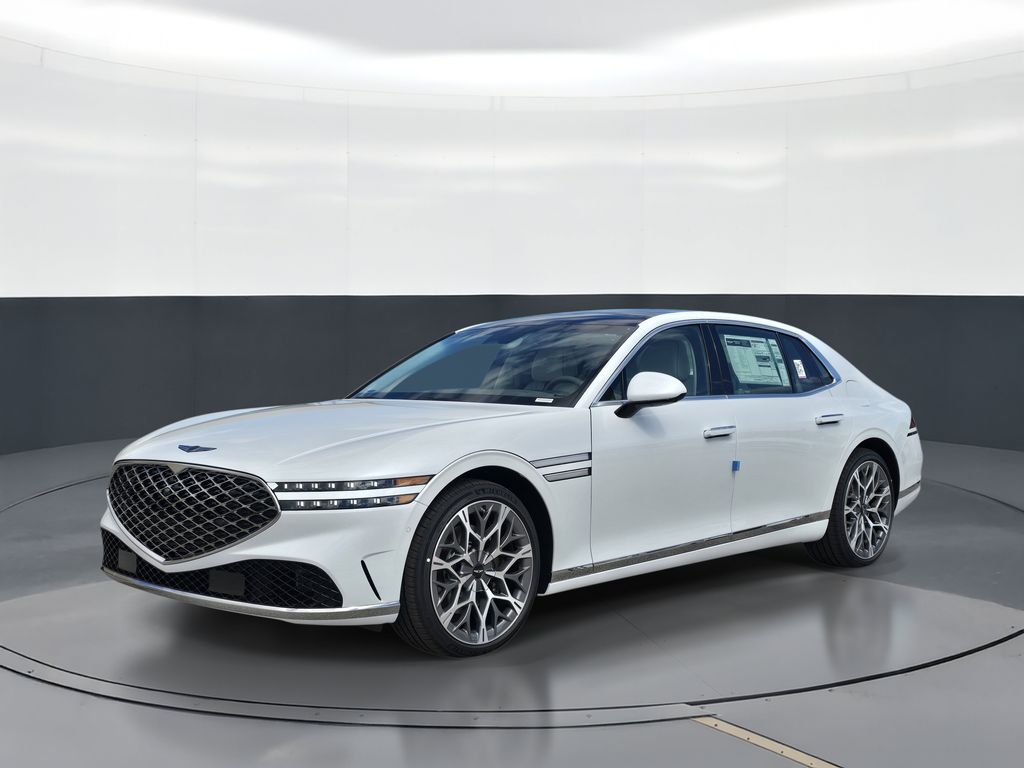
Price:102,587.00 USD
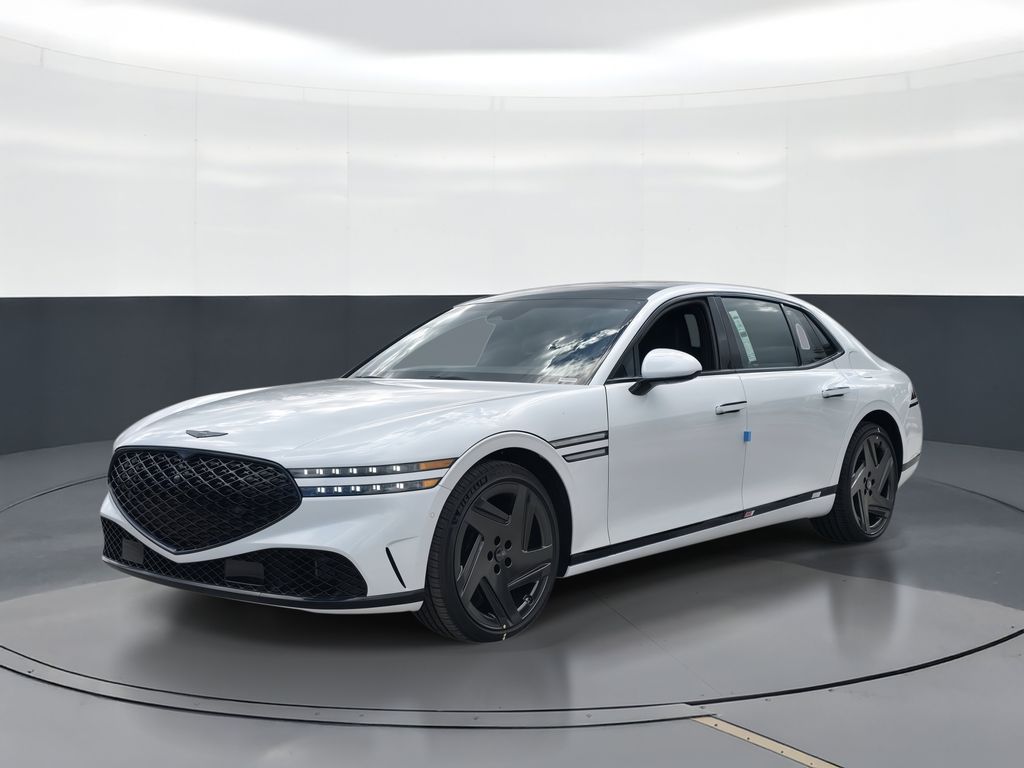
Price:105,212.00 USD
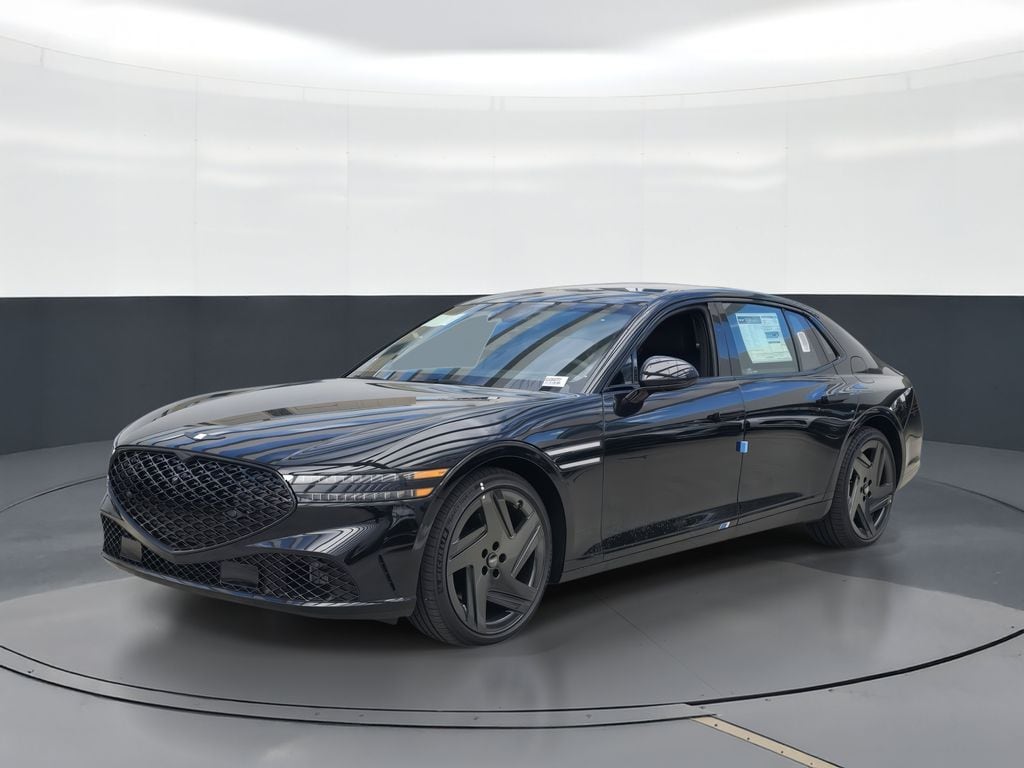
Price:105,277.00 USD
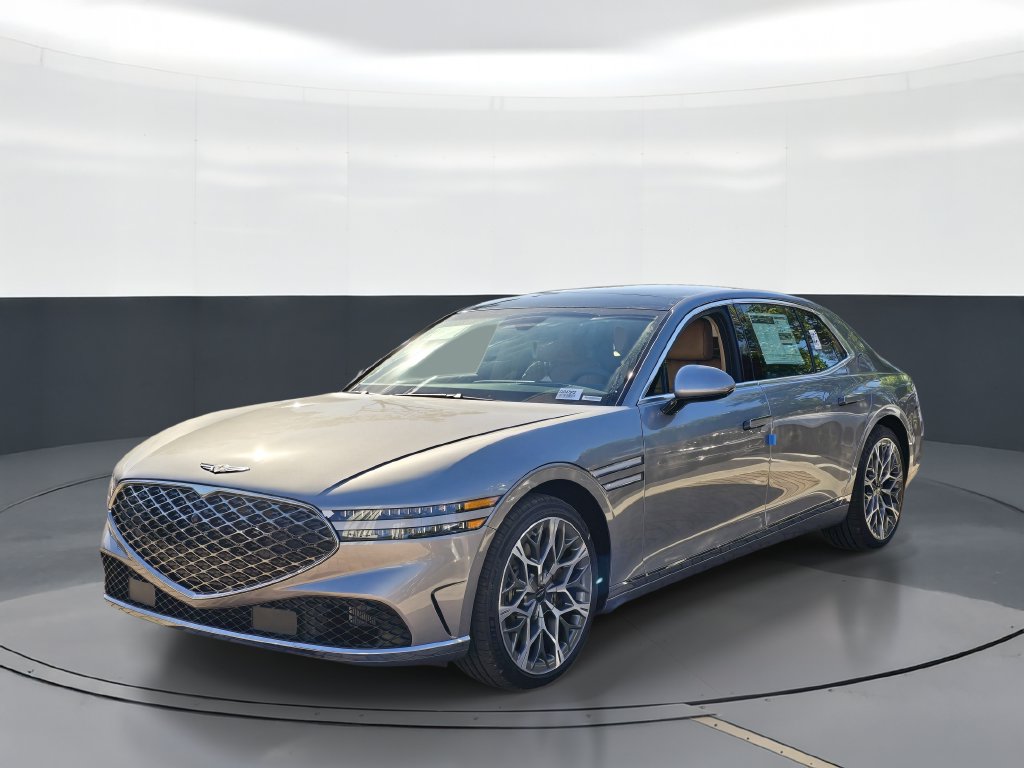
Price:102,582.00 USD
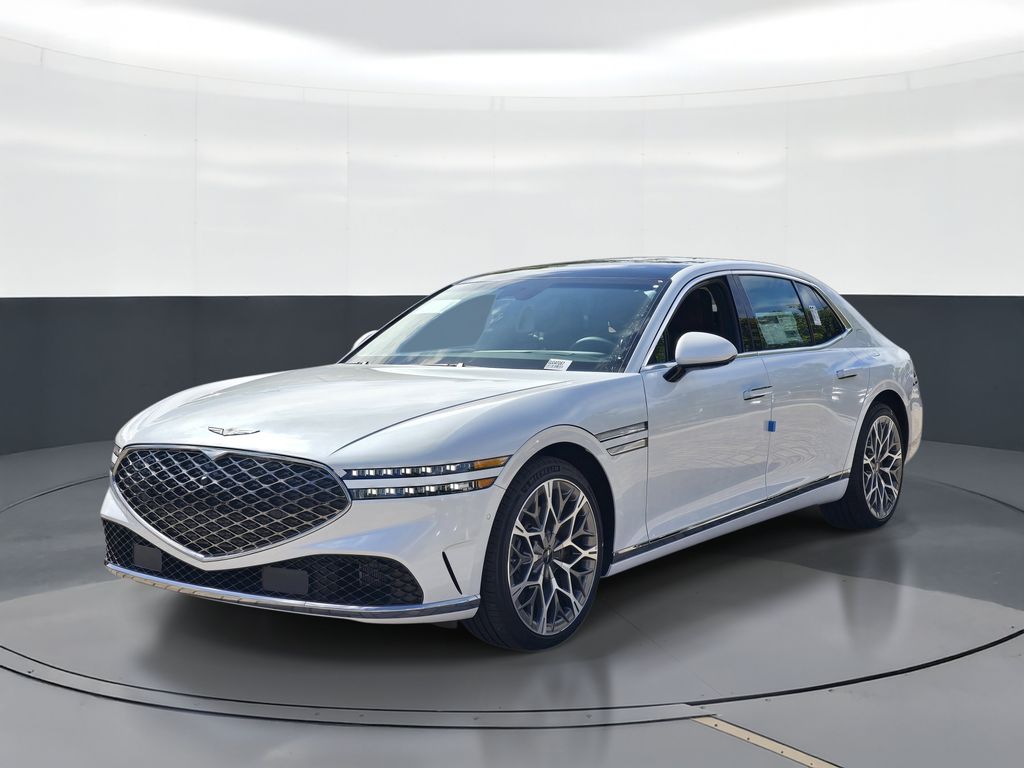
Price:102,587.00 USD
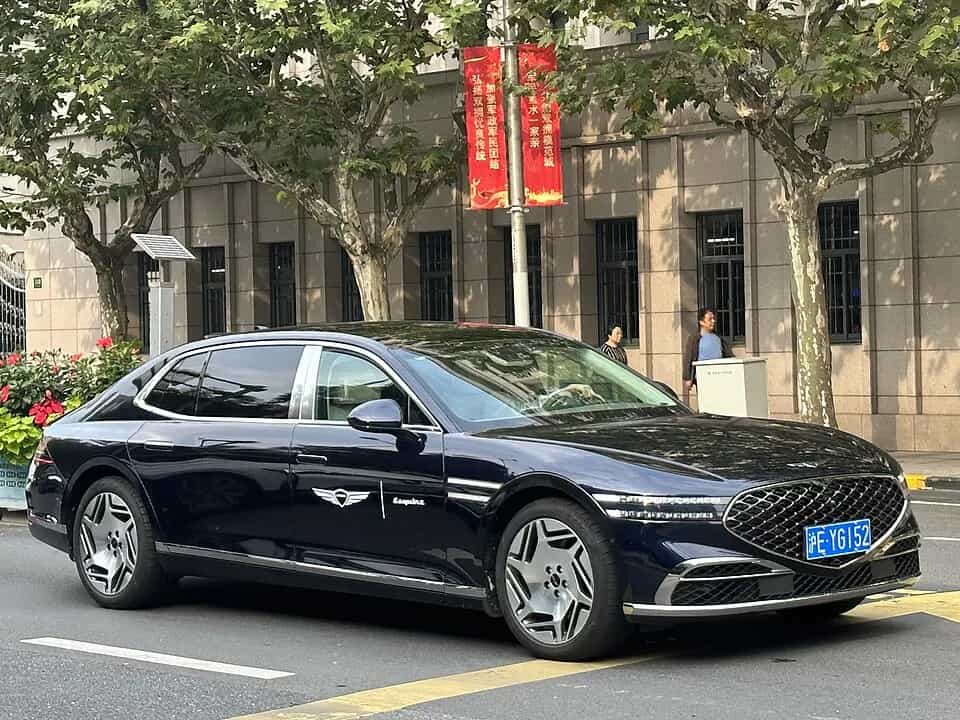
Model profile
Because the G90 is a low-volume flagship, individual cars vary a lot in specification, engine and generation.
The first-generation G90 (chassis HI) launched for the 2017 model year, initially still wearing the Hyundai name in some markets before Genesis became a standalone brand.
Powertrain and equipment
First-generation US G90s came with two petrol engines: a 3.3-litre twin-turbo V6 (Lambda) making around 365 hp, and a naturally aspirated 5.0-litre V8 (Tau) producing roughly 420 hp. Both drive through an eight-speed automatic, with rear-wheel drive standard and HTRAC all-wheel drive optional.
The G90 is a full-size four-door sedan only.
Vehicle selection
Because the G90 depreciates quickly and sells in small numbers, the used pool is limited but tends to be high quality. Typical import candidates are two to six years old with low to moderate mileage, often one-owner cars maintained at Genesis service. Southern-state cars offer rust-free bodies, which matters given the complex underbody hardware.
Vehicle data
| Body style | Detail (US-market G90): Full-size luxury sedan |
|---|---|
| Kerb weight | Detail (US-market G90): approx. 2,100-2,300 kg |
| Length (gen 1) | Detail (US-market G90): approx. 5,205 mm |
| Length (gen 2) | Detail (US-market G90): approx. 5,275 mm (SWB) |
| Wheelbase | Detail (US-market G90): approx. 3,160-3,180 mm |
| Seating | Detail (US-market G90): 4-5 |
| Engines (gen 1) | Detail (US-market G90): 3.3 L TT V6 / 5.0 L V8 |
|---|---|
| Engine (gen 2) | Detail (US-market G90): 3.5 L TT V6, opt. e-Supercharger |
| Power (V6 TT) | Detail (US-market G90): approx. 365-375 hp |
| Power (5.0 V8) | Detail (US-market G90): approx. 420 hp |
| Transmission | Detail (US-market G90): 8-speed automatic |
| Drivetrain | Detail (US-market G90): RWD or HTRAC AWD |
| Fuel tank | Detail (US-market G90): approx. 73-77 L |
| Fuel | Detail (US-market G90): Petrol |
| 0-100 km/h | Detail (US-market G90): approx. 5.3-6.0 s |
|---|
Values are reproduced verbatim from the existing article table. The documents for the specific vehicle govern.
Pre-purchase review
The G90 has a strong reliability reputation for a flagship, helped by proven Hyundai-Genesis powertrains and a comprehensive warranty history in the US. Known G90 problems tend to be electronic rather than mechanical: infotainment glitches, occasional sensor faults in the extensive driver-assistance suite, and air suspension components (where fitted) that can eventually need attention on high-mileage cars.
Germany and Europe
The G90 was never sold widely in Germany, so a US import brings a car most local workshops rarely see.
Typical work includes adapting the lighting to European standards, fitting a rear fog lamp, and documenting the odometer in kilometres.
USCar Trader services
As a buyer based in Germany, you do not have to inspect the vehicle yourself in the United States or Canada. Within the agreed scope, USCar Trader can coordinate document review, a separately commissioned on-site inspection and purchase processing.
Covered inspection points are agreed in advance. An on-site inspection records condition at the appointment and is not a guarantee.
Next step: Before commissioning, USCar Trader and the customer agree which document, history, inspection and transaction checks suit the vehicle and are included in the service. This records what was actually checked.
Import process
The assessment depends on the specific vehicle and the circumstances of the transaction. Please contact USCar Trader before purchase; we review any possible duty benefit and provide non-binding support. Import VAT and other costs are considered separately.
Questions and answers
The 5.0 V8 offers smooth naturally aspirated character; the twin-turbo V6 is quicker and more efficient. Choose by priority and check service history either way.
Yes, it rates well for a flagship. Most issues are electronic rather than drivetrain-related.
No, not automatically. A 0% EU import-duty rate may be available for a vehicle covered by Regulation (EU) 2026/1455 that has US origin and is imported directly into the EU. CETA may apply to a vehicle with preferential Canadian origin. Whether the requirements are met is assessed for the individual case. Please contact USCar Trader before purchase; we review the possible duty benefit and provide non-binding support. Import VAT and other costs are assessed separately.
Parts for this low-volume flagship are less common locally, so a capable specialist is advisable.
Expect significant fuel consumption typical of a large petrol V8 luxury sedan.
Both are available used; the second generation (2023 on) is far more advanced but pricier.
Yes, after lighting adaptation, a rear fog lamp and a standard individual approval.
Very. US cars are typically loaded, which is a key reason to import one.
More vehicles