Genesis G70
Importing a used Genesis G70 from the USA
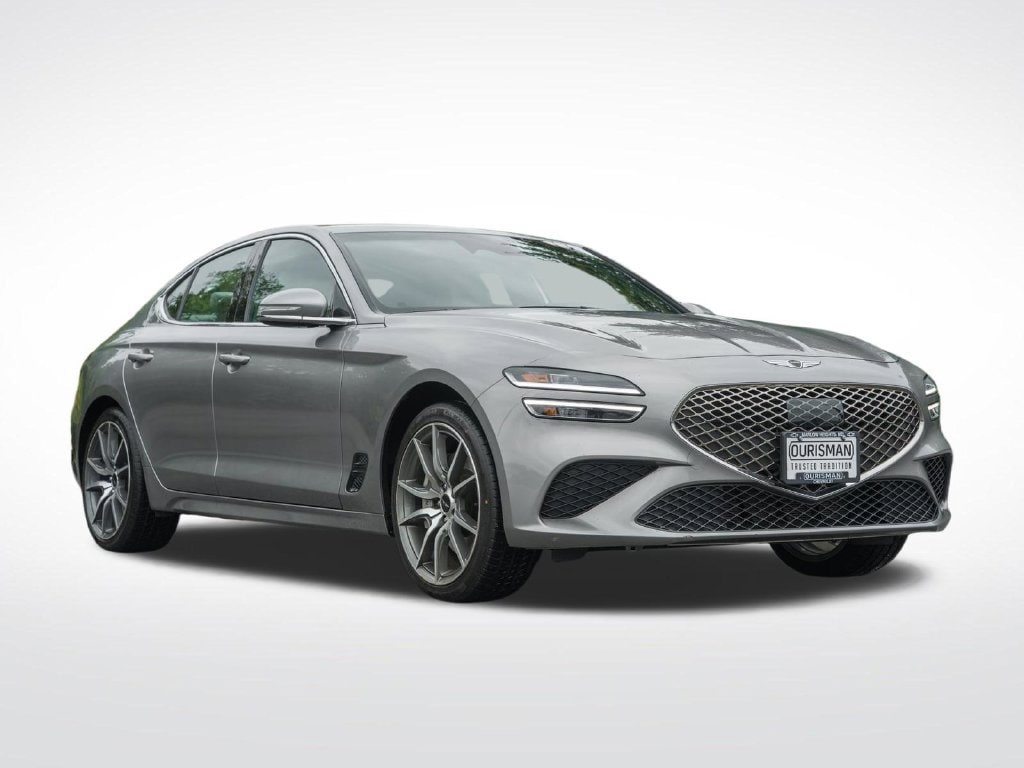
The Genesis G70 is the car that announced Hyundai's luxury division as a serious rival to the German compact sport sedans. Sharp rear-drive-based chassis, an available twin-turbo V6, and a cabin that punches well above its price — it earned real praise on the US market, where Genesis sells strongly and the used supply is now healthy. Because Genesis has no European retail presence in the way the German brands do, importing a used G70 from the USA is often the most realistic way to own one in Germany. As an independent broker, USCar Trader finds, checks and ships these cars. Note upfront: the G70 is built in Korea, so its origin is neutral for customs — the VIN and plant decide the duty. Details below.

Production years and key changes
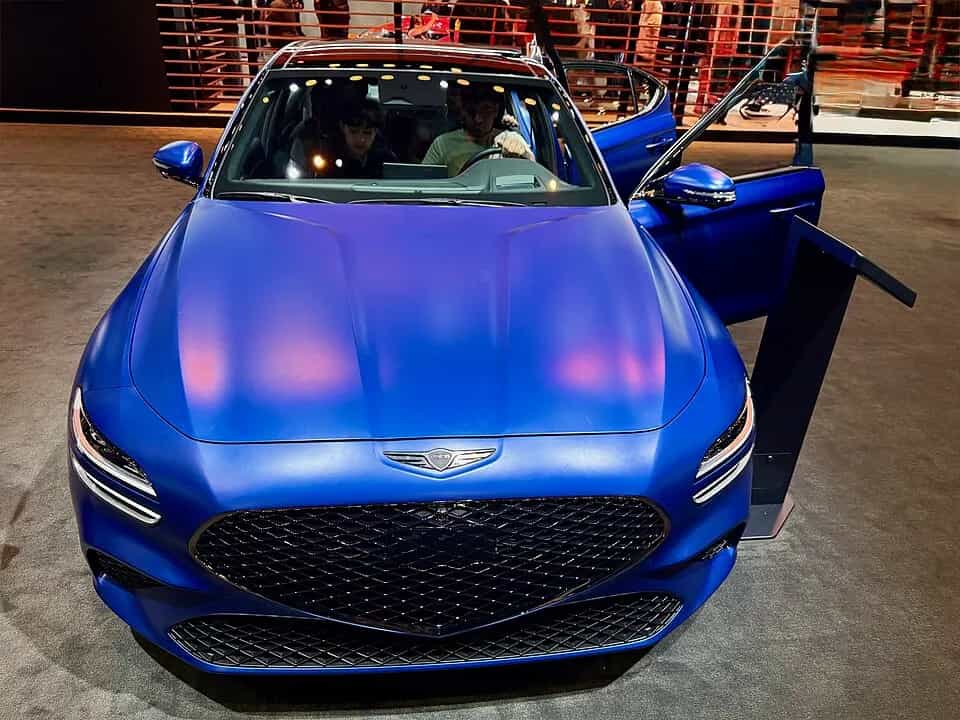
The G70 launched for the 2019 model year on the rear-drive-biased platform shared with the Kia Stinger, and received a significant facelift for 2022 with the brand's twin-line 'Quad Lamp' front and rear lighting, a larger central touchscreen and a fully digital instrument cluster. It has stayed a single generation through its life, evolving by update rather than redesign. A Sport Prestige and various Sport packages sharpened the look and equipment over the years. For import buyers, the post-2022 facelift cars bring the most modern interior technology and the strongest visual identity.
What is under the hood
Two turbo petrol engines define the US G70. The entry unit began as a 2.0-litre turbo four (around 252 hp) and, from the 2022 facelift, was replaced by a 2.5-litre turbo four producing roughly 300 hp. The flagship is the 3.3-litre twin-turbo V6 making about 365 hp and 510 Nm — the engine that gives the G70 genuine performance-sedan pace. All US G70s use an eight-speed torque-converter automatic. Rear-wheel drive is standard; all-wheel drive (HTRAC) is widely available and, for German winters, worth prioritising. A limited-slip differential, Brembo brakes and adaptive dampers appeared on higher-spec Sport cars. This is a proper driver's sedan, not a softened cruiser.
Trims and body styles
The US G70 is a four-door sedan only — the Shooting Brake estate was never sold in North America, so do not expect to find one among US imports. Trim structure evolved but generally spanned an entry car, a well-equipped mid trim and Sport / Sport Prestige / 3.3T Sport at the top, the latter adding the V6, adaptive suspension, Brembo brakes, quilted Nappa leather, a head-up display and premium audio. Because Genesis loaded these cars generously, even mid-trims feel plush. Match the trim and the engine to what you want: 2.5T for balance, 3.3T for performance.
What the US market offers
The US is the G70's biggest market, so lease returns and one-owner cars appear regularly, often with complete dealer service histories under the strong US Genesis warranty. Typical import candidates fall in the roughly 25,000–110,000 km range. As a premium sedan, many were garaged and well kept; southern and western cars again avoid the salt-belt rust risk. Look for the AWD 3.3T Sport if you want the halo specification, or a clean 2.5T for a more economical daily. Documentation and a clean title matter more than chasing the lowest mileage.
Who this import is for
A used G70 suits the buyer who wants German-rival driving dynamics and a genuinely upscale cabin without the mainstream badge — someone cross-shopping a used 3 Series, C-Class or A4 but wanting something rarer on European roads. The 3.3T rewards enthusiasts; the AWD versions suit year-round use. It is less suited to buyers needing big rear-seat or boot space, since the G70 is compact inside. For distinctive, well-built, rear-drive sport-sedan character, importing a used G70 from the USA is a compelling case.
Technical data and figures
| Attribute | Typical figure (Genesis G70) |
|---|---|
| Body style | 4-door compact luxury sport sedan |
| Base engine (pre-2022) | 2.0 L turbo 4-cyl, ~252 hp |
| Base engine (2022+) | 2.5 L turbo 4-cyl, ~300 hp |
| Top engine | 3.3 L twin-turbo V6, ~365 hp / 510 Nm |
| Transmission | 8-speed automatic |
| Drivetrain | Rear-wheel drive; AWD (HTRAC) available |
| 0–100 km/h (3.3T) | approx. 4.7–5.0 s |
| 0–100 km/h (2.0T) | approx. 6.0–6.4 s |
| Length | approx. 4,685 mm |
| Wheelbase | approx. 2,835 mm |
| Kerb weight | approx. 1,650–1,820 kg |
| Boot volume | approx. 300 L |
| Fuel | Petrol |
| Seats | 5 |
| Build location | Ulsan, South Korea |
Reliability: trouble spots to check
The G70 is generally reliable and shares proven Hyundai/Genesis powertrains, but there are items to check. The 2.0-litre Theta II turbo four was, in some Hyundai/Kia applications, associated with the wider engine-bearing recall programme; verify recall completion by VIN even though the G70's tune differs. On the 3.3-litre twin-turbo, follow strict oil-change discipline and inspect for oil weeping around the turbos at higher mileage. Other points: early infotainment and digital-cluster software quirks resolved by updates; occasional electrical gremlins on early 2019 cars; brake dust and rotor wear on Brembo-equipped Sport models driven hard; and the usual direct-injection carbon build-up over time. The eight-speed automatic is robust. For a used G70, a fully documented dealer service history and completed recalls are the reassurance you want.
US vs. Europe differences
US-market G70s run mph-primary clusters, US lighting logic (side markers, DRL, often amber indicators), North American radio bands and US-calibrated driver assistance. Some infotainment features and connected services are region-locked to the US. None of this blocks registration, but the lighting and instrument conformity must be addressed during approval. Equipment content and package names differ from any grey-market European Genesis.
How the import works
1) Selection — we shortlist suitable used G70 listings from US auctions and Genesis dealers. 2) VIN and origin check — we read the VIN and plant code; the G70 is Korean-built, which sets the customs treatment. 3) Escrow — funds held until the car is verified and released. 4) Ocean freight — container or RoRo to a North European port such as Bremerhaven. 5) Customs clearance — declaration with origin-correct duty plus 19% import VAT. 6) TUEV / individual approval — inspection and modifications for §21. 7) Registration — at your local Zulassungsstelle.
Import duty, VAT and fees
Bottom line: what matters is the factory shown by the VIN – proven US origin unlocks 0% duty. The 19% import VAT always applies.
Two separate charges, never blended into a margin. First the customs duty: the 0% preferential rate under EU Regulations 2026/1455 and 2026/1461 (in force since 1 July 2026, direct transport, valid to 31 December 2029) applies only to vehicles of provable US origin. The G70 is built in Ulsan, South Korea, so a US-origin claim will generally not succeed — meaning the standard EU third-country rate for passenger cars (10%) will typically apply. We never describe this as duty-free or guaranteed; the VIN and plant code are decisive. Second, and always: the German import VAT (Einfuhrumsatzsteuer) of 19%, calculated on the customs value plus duty and freight. Both are shown as separate line items so there is no ambiguity.
From modifications to registration
Typical work includes fitting or activating a rear fog lamp, confirming headlight beam compliance, ensuring the speedometer reads km/h, and preparing documentation for §21 individual approval. The odometer is recorded and cross-checked with the US history. After TUEV issues its report, registration proceeds normally.
Pre-buy inspection points
- Decode the VIN to confirm engine, drivetrain and build.
- Pull a full Carfax or AutoCheck history for accidents and title.
- Confirm a clean title, not salvage or rebuilt unless deliberate.
- Inspect for rust; favour southern/western cars.
- Review the service history, especially oil changes on 3.3T cars.
- Verify all recalls are completed via VIN.
- On Sport models, check brakes and tyres for hard use.
What buyers ask most
Does a US-purchased G70 qualify for 0% import duty?
Usually no. The G70 is built in South Korea, so US origin generally cannot be proven and the standard 10% passenger-car rate typically applies. It is never duty-free or guaranteed. The 19% VAT always applies.
Is the Genesis G70 reliable?
Yes, broadly. Proven powertrains; check completed recalls, 3.3T oil-change history and early-car software updates.
Should I get the 2.0T, 2.5T or 3.3T?
The 2.5T (2022+) is the balanced daily choice; the 3.3T twin-turbo V6 is the performance flagship at around 365 hp.
Is all-wheel drive available?
Yes. HTRAC AWD is widely offered and is worth prioritising for German winters; standard drive is rear-wheel.
Was the G70 Shooting Brake sold in the US?
No. Only the sedan was sold in North America, so US imports are sedans.
How practical is the G70?
It is compact inside with a modest boot. If you need large rear-seat or luggage space, a bigger sedan may suit you better.
Can a US G70 be registered in Germany?
Yes, after TUEV individual approval and the usual lighting and speedometer conformity work.
Do I pay VAT even if duty were 0%?
Yes. The 19% import VAT is separate from duty and always applies.
Ready to look? Browse Genesis in the Carhub, compare the larger Genesis G80 and the Genesis GV70 SUV, cross-shop the Audi A4, or view current G70 listings and let USCar Trader handle the import.