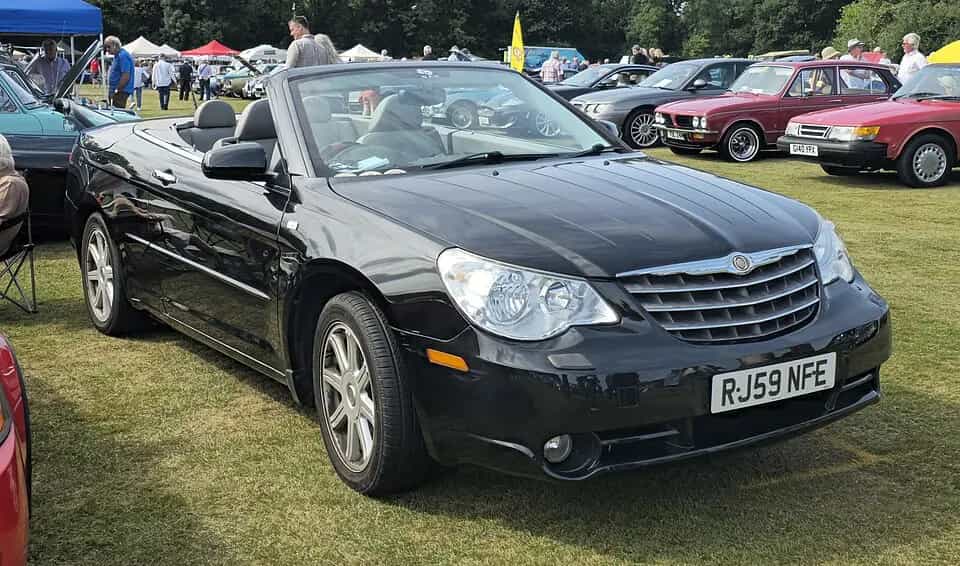
Chrysler Sebring
Importing a used Chrysler Sebring from the USA
The Sebring is quintessentially American: an affordable, comfort-focused convertible and coupe that sold in huge numbers across the United States and was a fixture of the US rental and cruising scene. That popularity is exactly why the American used market is the natural place to import one — supply is broad, and warm-state cars offer the rust-free bodies and healthy soft-tops that matter most on an open car. Buyers in Germany looking for a relaxed, easygoing US convertible rather than a taut European sports car will find the Sebring an honest, characterful choice. USCar Trader works purely as an independent broker, sourcing individual used cars for private buyers.

Generations at a glance
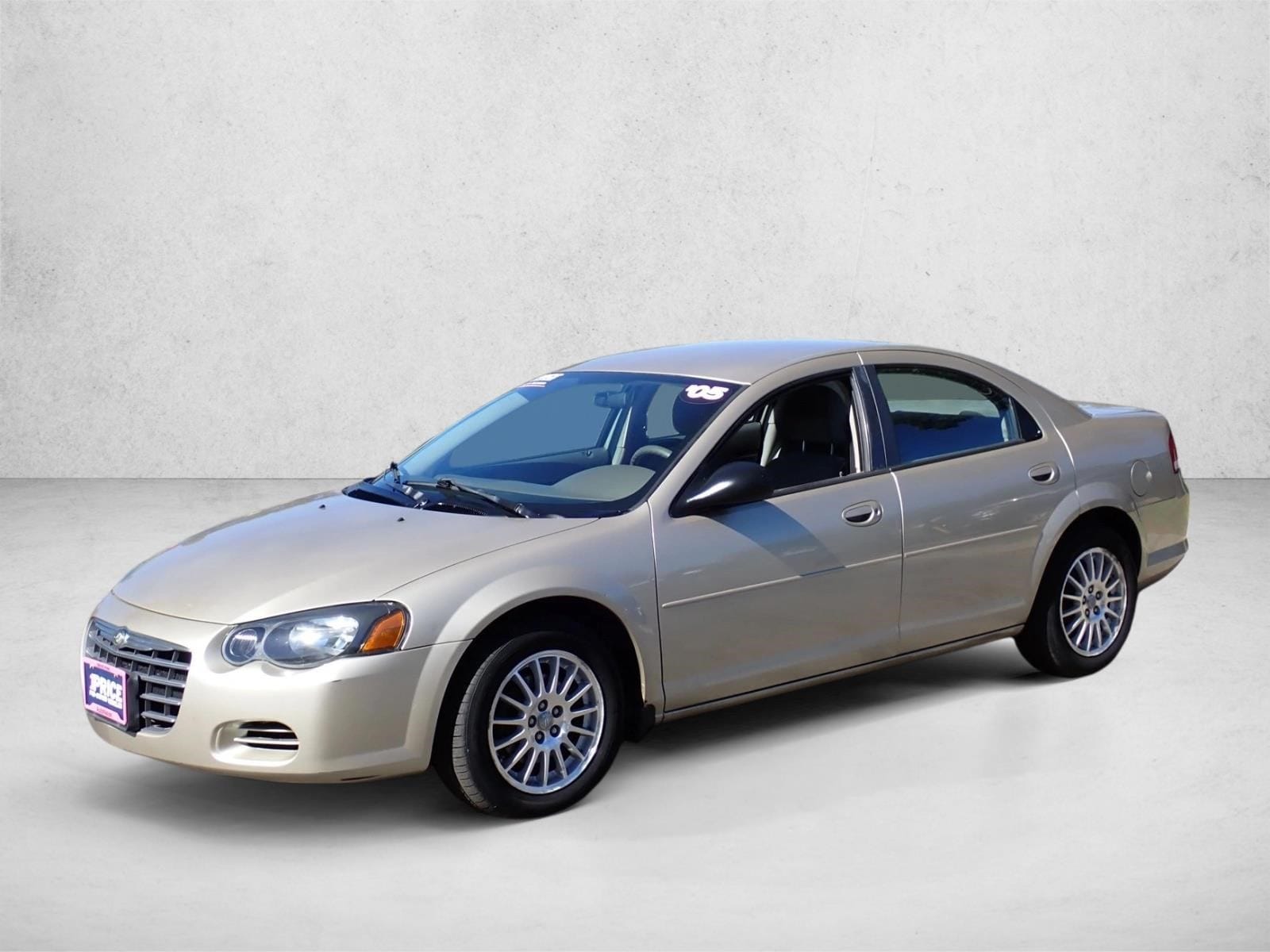
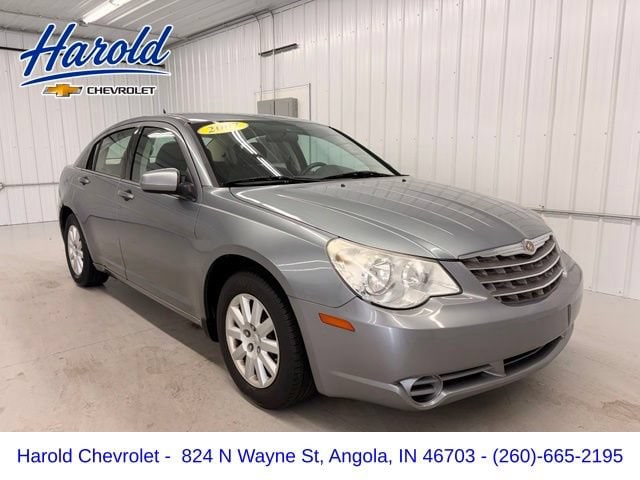
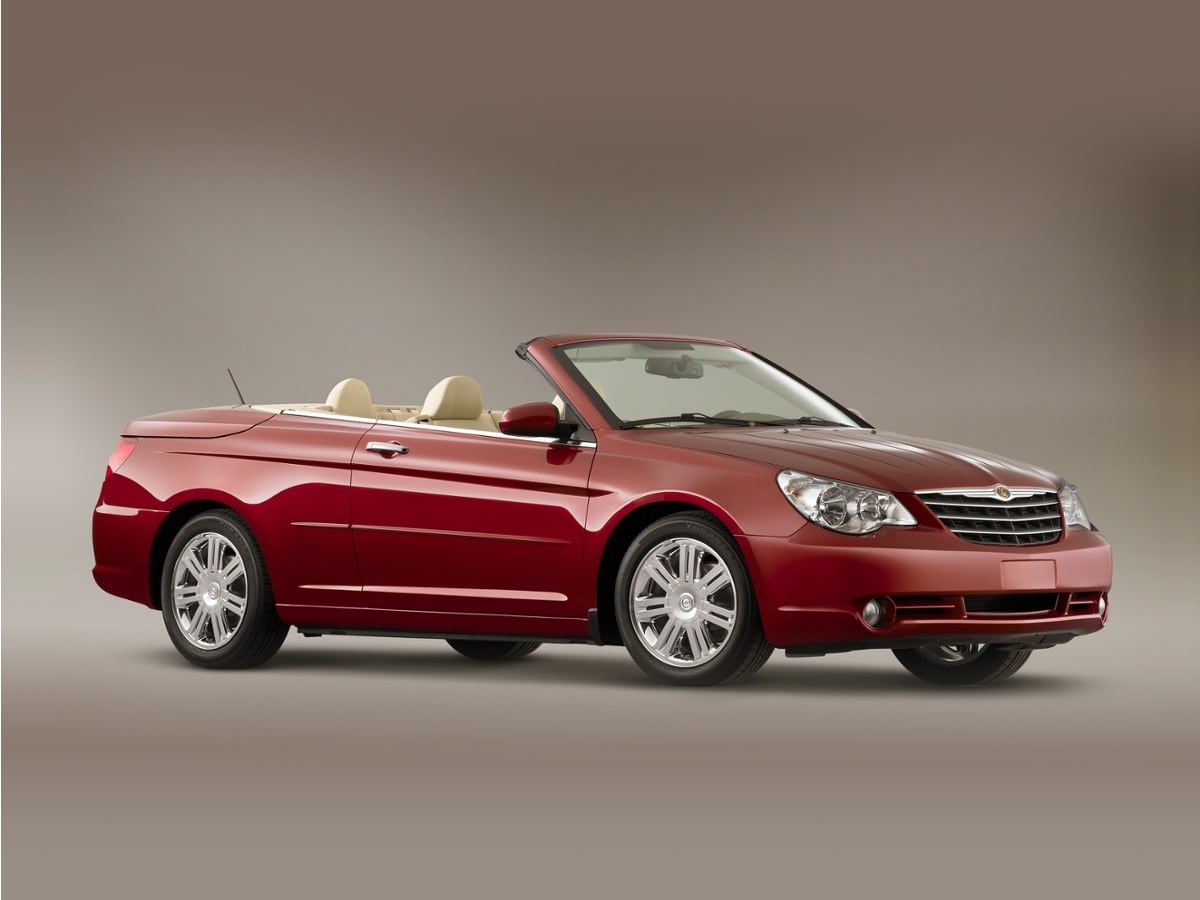
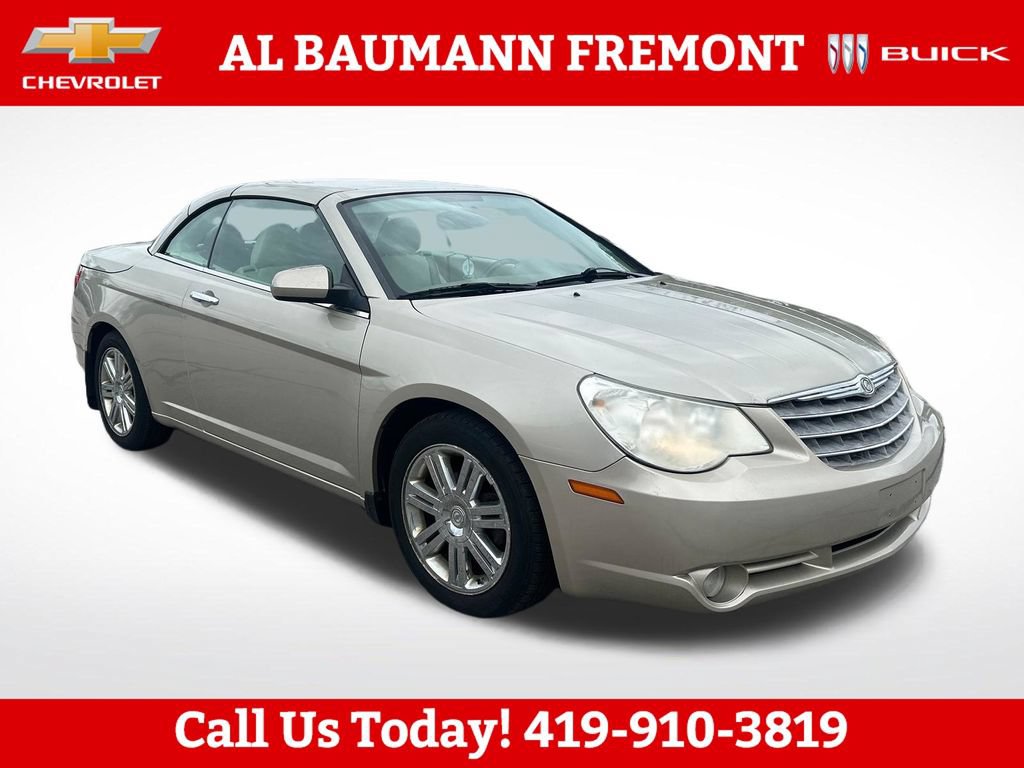
Three generations carry the Sebring name. The first (1995–2000) split into a coupe built on Mitsubishi underpinnings at Diamond-Star Motors and a separate JX convertible derived from the Cirrus sedan. The second (2001–2006) covered sedan, coupe and convertible, with the coupe again sharing Mitsubishi engineering. The third (2007–2010, platform JS) narrowed to sedan and convertible, and offered a notable feature: an optional retractable hardtop alongside the traditional soft-top and a body-colour vinyl roof. The convertible is the version that travels best as an import, being the most distinctive and enjoyable.
Powertrain lineup
US Sebrings were front-wheel drive with automatic transmissions in the vast majority of cases. Second-generation cars offered a 2.4-litre four-cylinder, a 2.7-litre V6 and a Mitsubishi-sourced 3.0-litre V6. The third generation used the 2.4-litre "World" four (around 173 hp), the 2.7-litre V6 (around 189 hp) and a 3.5-litre V6 (around 235 hp) on the top Limited convertible, matched to a four- or six-speed automatic depending on engine. For an import, the 3.5 V6 offers the most relaxed cruising, while the four-cylinder is the simplest and most economical.
Trims in the US market
Across the range the relevant body styles for a European buyer are the convertible and, on the earlier cars, the coupe. Trim ladders ran through base, Touring and Limited, the Limited convertible bringing the retractable hardtop option, leather, heated seats and the larger engine. Because so many were sold, finding a specific colour and roof combination is realistic rather than a long hunt.
The used market stateside
Supply is plentiful and prices in the States are modest, which makes condition the deciding factor rather than availability. Southern and south-western cars are the ones to target for a sound convertible top or a properly sealing hardtop and a corrosion-free floor. Mileages vary widely; many were used as second cars or rentals, so a documented, single-owner example is worth seeking out. Check that the convertible mechanism and the climate system both work before committing.
Who should import one
The Sebring suits the buyer who wants a comfortable, unintimidating American convertible for relaxed summer driving rather than back-road sharpness. It appeals to fans of US cruising character, to those who want an affordable open-top with four seats, and to anyone who values the retractable hardtop of the later Limited. If your priority is easygoing top-down motoring over outright handling, it fits perfectly.
Key specifications
| Body styles | Convertible; coupe (earlier gens); sedan |
| Generations | 1st 1995–2000; 2nd 2001–2006; 3rd (JS) 2007–2010 |
| Four-cylinder | 2.4 L I4 (~173 hp on 3rd gen) |
| V6 options | 2.7 L V6 (~189 hp); 3.0 L Mitsubishi V6; 3.5 L V6 (~235 hp) |
| Transmission | 4-speed auto; 6-speed auto (3.5 V6) |
| Drivetrain | Front-wheel drive |
| Convertible roofs | Fabric soft-top; optional retractable hardtop; vinyl |
| Length (JS convertible) | approx. 4.94 m |
| Wheelbase (JS) | approx. 2.77 m |
| Curb weight | approx. 1,600–1,750 kg |
| Fuel tank | approx. 64 L |
| Seating | 4 |
| 0–100 km/h (3.5 V6) | approx. 8 s |
| Boot (roof up) | usable; reduced with hardtop stowed |
| Fuel | Gasoline |
How reliable is it?
The most important Sebring reliability topic is the 2.7-litre V6. It is notorious for oil sludge and timing-chain problems when oil changes were neglected, which can lead to serious engine damage — so on any 2.7 car, insist on documented, regular oil changes and listen for timing-chain rattle. The 2.4 four-cylinder and the 3.5 V6 are the safer choices for longevity. Third-generation interiors drew criticism for hard, low-grade plastics, so expect the cabin to feel budget rather than premium; check switchgear and trim for wear. On convertibles, exercise the roof fully: the retractable hardtop has more motors and sensors that can fail, while the soft-top's seals and rear window should be checked for leaks. General Chrysler electrical niggles — window regulators, the TIPM power module on later cars, and HVAC blend doors — are worth verifying.
What US models do differently
US Sebrings run amber-integrated rear indicators, DOT headlights, an mph cluster and typically no rear fog lamp — all items for German approval. The cars are conventional petrol front-drivers with no European diesel counterpart, so adaptation is mainly about lighting and documentation rather than mechanicals.
Seven steps to your import
Choose a documented convertible and confirm condition, especially the roof; decode the VIN and confirm the assembly plant, which sets the customs treatment; use escrow to protect payment; ship by container or RoRo from a US port to Bremerhaven; clear German customs; present for TÜV and individual approval (§21 StVZO Einzelabnahme); then register locally.
Customs, taxes and costs explained
Remember: no origin proof, no 0% duty – and 19% German import VAT is due on every import.
Duty and VAT are stated separately. The 0% import duty under Regulations (EU) 2026/1455 and 2026/1461 (in force since 1 July 2026, direct transport, valid to 31 December 2029) applies only where US origin is provable via the VIN and plant. The Sebring was built in the USA (Sterling Heights, Michigan), so a US-origin car can qualify for 0% — but this is confirmed per VIN and never guaranteed in advance. Independently of origin, the 19% German import VAT (Einfuhrumsatzsteuer) always applies to the customs value plus freight. We never advertise duty-free status and add no margin.
German TÜV and registration
Typical work includes adding or converting a rear fog lamp, adapting the rear indicators, fitting or confirming headlights suitable for right-hand traffic, and verifying a km/h speedometer scale. On the convertible, the roof — soft-top or retractable hardtop — must operate fully for inspection. The recorded odometer figure is documented and carried into the German papers.
The buyer checklist
1) Decode the VIN and confirm the plant and exact engine. 2) Obtain a Carfax or AutoCheck report for accidents, title status and mileage. 3) On a 2.7 V6, demand oil-change history and check for timing-chain rattle. 4) Fully cycle the convertible roof and check seals or the hardtop mechanism. 5) Inspect the floor and sills for rust despite the dry-state advantage. 6) Confirm the title is clean unless a salvage car is a knowing choice. 7) Test the climate system and electric windows.
Questions and answers
Which Sebring engine should I avoid?
Approach the 2.7-litre V6 with caution unless the oil-change history is impeccable; the 2.4 four and the 3.5 V6 are safer bets.
Can an imported Sebring get 0% duty?
It can, because it was built in the USA, but only when US origin is proven through the VIN and plant. The 19% import VAT still applies.
Soft-top or retractable hardtop?
The hardtop gives better security and refinement but adds mechanical complexity; the soft-top is simpler and lighter. Both need a full function check.
Is the Sebring a sporty car?
Not really — it is a comfort-oriented cruiser, best enjoyed for relaxed top-down driving rather than sharp handling.
How is the interior quality?
Later cars were criticised for cheap plastics, so judge the cabin in person and check for wear and rattles.
Will it pass German TÜV?
Yes, with the standard lighting adaptations and an individual approval; the roof must work fully.
Are parts easy to get?
Mechanical parts are widely available thanks to shared Chrysler and Mitsubishi components; some trim pieces are easier to source from the US.
How long does the import take?
Generally several weeks from US port to German registration, mostly dependent on freight and customs.
See more in the Chrysler in the Carhub, compare it with the Chrysler Crossfire, the Chrysler 200 and the Chrysler 300, or browse the current Sebring listings.