Chrysler Pacifica Hybrid
Importing a used Chrysler Pacifica Hybrid from the USA
The Chrysler Pacifica Hybrid is the rare plug-in hybrid built around a genuine seven-seat minivan body, and it barely exists on European roads. That scarcity is exactly why buyers ask us to source one from North America: on the US used market it is a mainstream family vehicle with real depth of inventory, whereas in Germany it is close to a novelty. As an independent broker for used US vehicles, USCar Trader helps you find, vet and ship a specific car — we do not hold stock, take no dealer margin, and we never sell new vehicles. Note one thing up front: the Pacifica is assembled in Windsor, Ontario, Canada, so its customs treatment hinges entirely on the documented build origin, which we cover in detail below.

Model history: years and generations
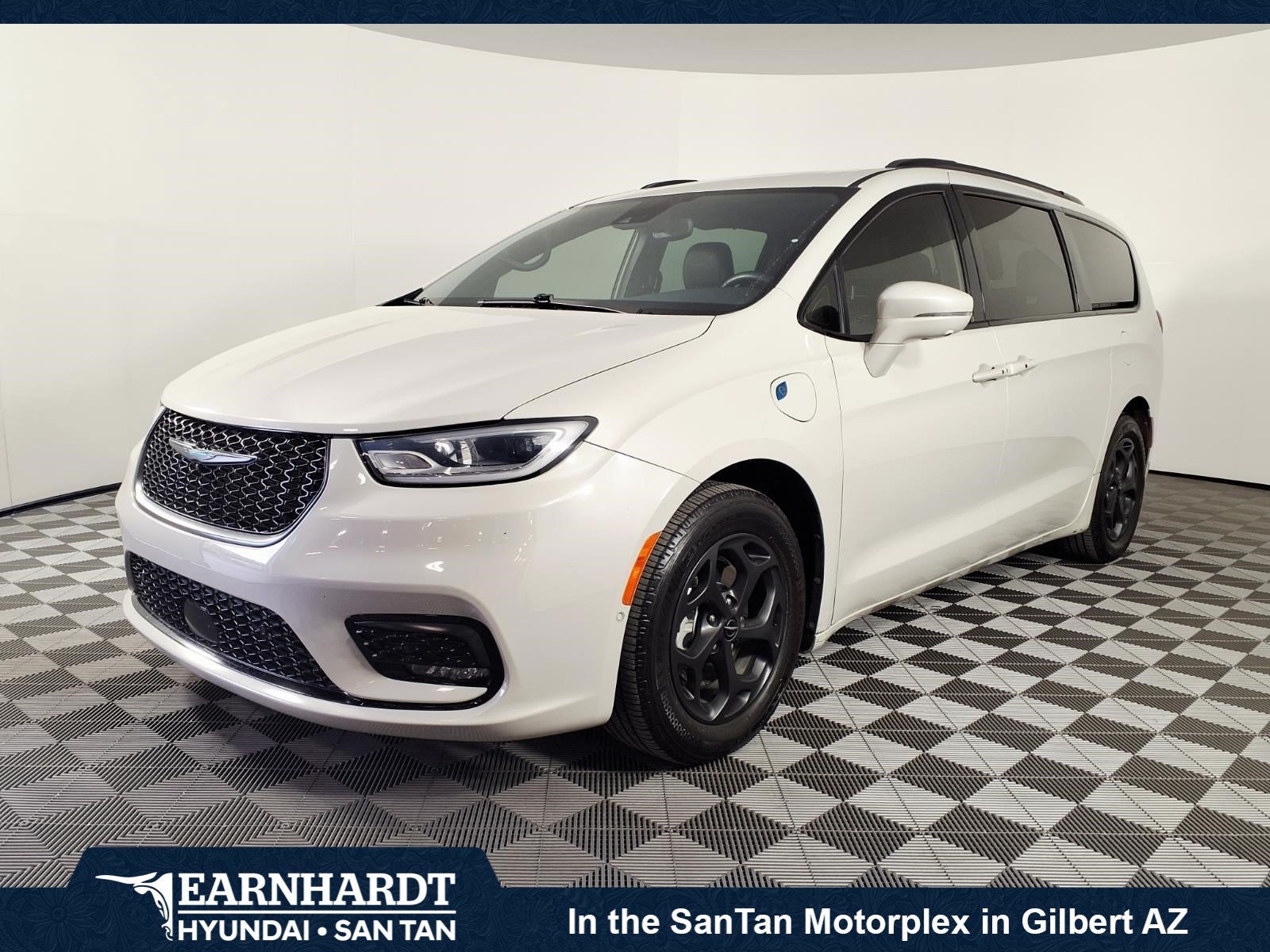
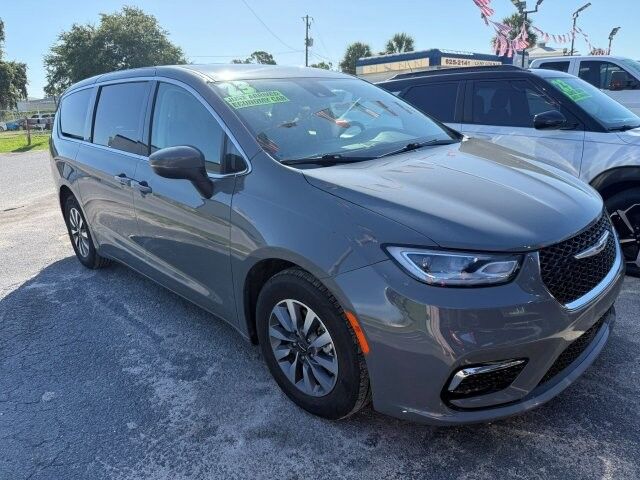
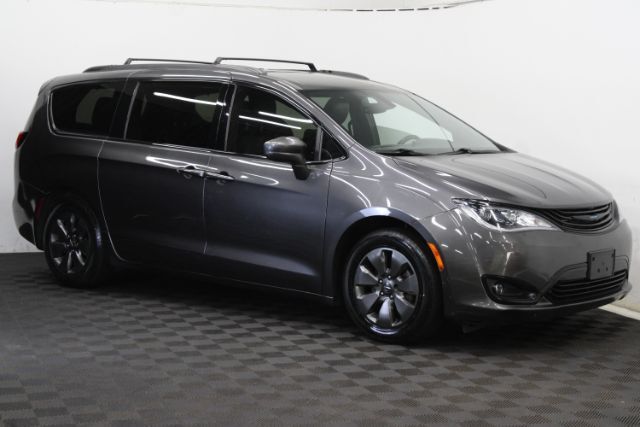
Chrysler launched the Pacifica for the 2017 model year on the new RU platform, retiring the long-running Town & Country nameplate. The Pacifica Hybrid arrived alongside it as Chrysler's first electrified minivan and, despite the simple "Hybrid" badge, it is technically a plug-in hybrid (PHEV). A mid-cycle refresh for the 2021 model year brought a new dashboard, the Uconnect 5 infotainment system, revised styling and the option of all-wheel drive on gasoline models — though the Hybrid remained front-wheel drive throughout. Trim structure evolved from Touring and Limited into a broader range topped by the plush Pinnacle. When you shop the US market you are essentially choosing between the 2017–2020 first look and the cleaner, better-equipped 2021-onward cars.
Engines, transmissions and drive
The Pacifica Hybrid pairs a 3.6-litre Pentastar V6 running on the efficient Atkinson cycle with a dual-motor eFlite electrically variable transaxle. Combined system output is roughly 260 horsepower. A 16 kWh lithium-ion battery sits under the second-row floor and delivers an EPA-rated electric range of about 51 km (32 miles) before the V6 takes over, for a total range comfortably beyond 800 km. Drive goes to the front wheels only. In everyday use the car will do the school run and the commute on battery alone, then behave like a smooth conventional hybrid on the motorway. There is no manual gearbox and no diesel option — this is a petrol-electric family hauler through and through.
Equipment lines and body styles
Only one body exists: the long-wheelbase minivan with dual power sliding doors. On the used US market the Hybrid typically appears as Touring, Touring L, Limited and, from 2022, Pinnacle. Higher trims add leather, a panoramic roof, the rear-seat entertainment system, hands-free doors and a 360-degree camera. One packaging quirk matters for European buyers: because the battery occupies the underfloor space, the Hybrid does not offer the fold-flat Stow 'n Go second-row seats found in gas Pacificas. The second row instead uses removable captain's chairs, which is worth checking against how you plan to use the cargo area.
The US used market
The United States is by far the largest source of Pacifica Hybrids anywhere. Typical listings run from around 2018 up to nearly new cars, with mileage spanning low-use lease returns in the 40,000–80,000 km bracket to higher-mileage family examples. Dry-climate cars from the Sun Belt tend to show cleaner underbodies, while northern examples can carry road-salt exposure worth inspecting. Because the Hybrid qualified for federal and often state incentives when new, many were bought and maintained by careful owners, and full dealer service histories are common. We keep this section deliberately free of European prices — those depend on the individual car, freight and duties.
Is an import right for you?
This is a vehicle for a specific buyer: a family that wants three usable rows, sliding doors and the ability to run daily errands on electricity, but finds nothing comparable offered new in Germany. If you charge at home and mostly drive locally, the Pacifica Hybrid can spend most of its life on battery power. It suits people who value practicality over badge prestige and who are comfortable with a US-market vehicle that needs a handful of technical adaptations for the TÜV. If you need all-wheel drive or intend to tow heavily, look instead at the gasoline AWD Pacifica.
Specs at a glance
| Body style | Minivan, 5 doors, dual sliding doors |
| Platform | Chrysler RU |
| Assembly | Windsor, Ontario, Canada |
| Powertrain | Plug-in hybrid (PHEV) |
| Engine | 3.6 L Pentastar V6, Atkinson cycle |
| System output | approx. 260 hp combined |
| Electric motors | Dual-motor eFlite transaxle |
| Battery | 16 kWh lithium-ion |
| Electric range (EPA) | approx. 51 km / 32 miles |
| Transmission | Electrically variable (EVT) |
| Drive | Front-wheel drive |
| Seating | 7 (2-2-3) |
| Fuel tank | approx. 62 l |
| Length | approx. 5,176 mm |
| Curb weight | approx. 2,440 kg |
Common issues buyers should know
Overall the Pacifica Hybrid is durable, but a few Pacifica Hybrid common problems are well documented. The early 2017–2018 cars were subject to a recall involving a hybrid battery diode that could cause the vehicle to stall; verify the recall was completed. Uconnect infotainment glitches, occasional 12-volt auxiliary battery drain and software-related no-start events appear in owner reports, most of them addressed by later firmware. The V6 itself is a proven Pentastar unit. When assessing Pacifica Hybrid reliability, prioritise cars with evidence that recall and software campaigns were carried out and that the high-voltage system has been serviced on schedule.
Differences from the European version
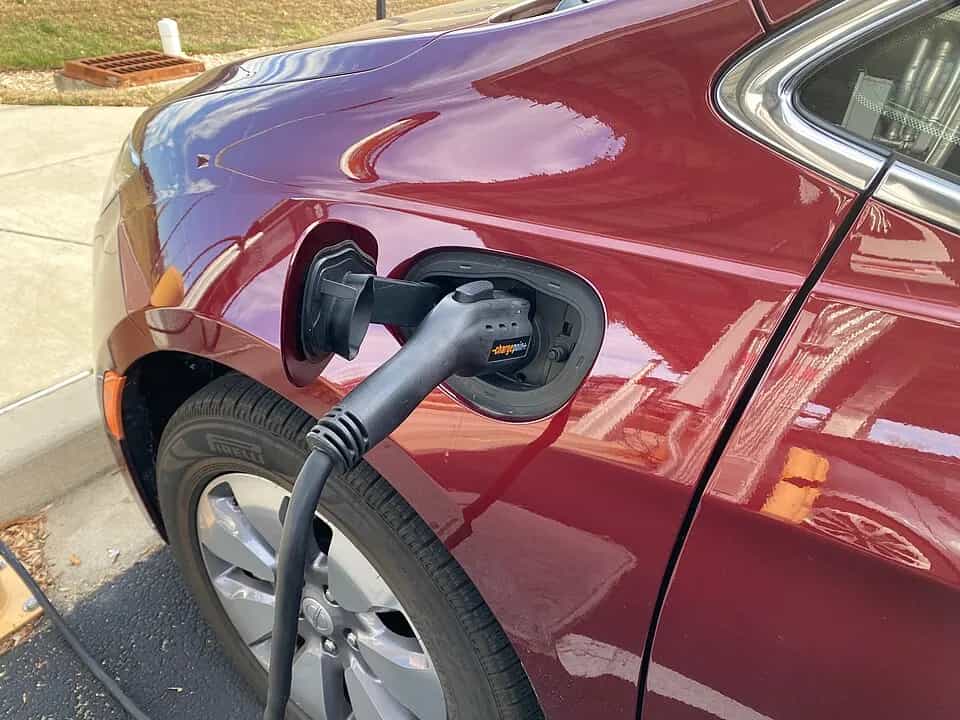
US cars run amber rear turn signals in many cases, lack a rear fog lamp, and use miles-per-hour instrumentation. The charging port is a Type 1 (J1772) connector, so you will use an adapter or a suitable cable for European AC wallboxes. Radio frequency bands and the eCall/telematics setup differ from EU norms. None of this is a barrier, but each item is part of the individual approval work at the TÜV.
Import step by step
The process runs in a clear sequence: model and specific-car selection; VIN and origin verification (crucial for this Canadian-built van); a secured payment via escrow; inland transport to the port and ocean freight to a European hub such as Bremerhaven; customs clearance on arrival; the technical inspection and individual approval (Einzelabnahme) at the TÜV; and finally registration at your local authority. We coordinate the chain and keep you informed at each handover.
Customs and taxes: what applies
In short: the 0% duty rate applies only with documented US origin (VIN/plant) – German import VAT of 19% is always due.
Two charges are separate and must not be confused. First, the EU import duty: under Regulations (EU) 2026/1455 and 2026/1461, a 0% rate can apply to vehicles of proven US origin imported with direct transport (in force since 1 July 2026, running to 31 December 2029). The Pacifica is built in Windsor, Canada, so a Canadian-built example does not automatically qualify — the rate depends on the actual plant shown by the VIN and origin documents, and we never describe any import as "duty-free" or guaranteed. Second, and always applicable regardless of origin, is the 19% German import VAT (Einfuhrumsatzsteuer) levied on the customs value. We charge no margin on either.
Modifications and single-vehicle approval
Typical changes for approval include converting or supplementing the lighting (adding a rear fog lamp, adapting turn-signal colour and headlight beam pattern), confirming the speedometer reads in km/h, and documenting the emissions and hybrid system. The odometer and its history are checked. Once the TÜV issues the individual approval, you register the van and receive German plates.
What to verify before buying
Before committing to any US Pacifica Hybrid, work through these points: confirm the VIN and build origin (the first characters reveal the plant); pull a full Carfax or AutoCheck history for accidents, title brands and odometer consistency; check for salvage, rebuilt or flood titles; inspect the underbody for rust on northern cars; review service records including recall completion and high-voltage system checks; test that the battery charges and holds its rated range; and verify the second-row seats and sliding-door mechanisms function.
Common questions
Is the Chrysler Pacifica Hybrid a plug-in hybrid?
Yes. Despite the plain "Hybrid" badge it is a plug-in hybrid with a 16 kWh battery and roughly 51 km of electric range, chargeable from an external source.
Does importing a Pacifica Hybrid qualify for 0% EU duty?
Only with proven US origin and direct transport under the current regulations. The Pacifica is built in Canada, so eligibility depends on the specific car's documented origin — it is never automatic.
Do I always pay German import VAT?
Yes. The 19% Einfuhrumsatzsteuer applies to every import regardless of origin and is calculated separately from any customs duty.
Can I charge it at a European wallbox?
Yes, using a Type 1 (J1772) cable or adapter for AC charging. The car does not use DC fast charging.
Does the Hybrid have Stow 'n Go seats?
No. The underfloor battery means the Hybrid uses removable captain's chairs instead of the fold-into-floor second row of the gasoline Pacifica.
How reliable is it?
Generally solid, provided early-build recalls and software updates were completed. The Pentastar V6 is well proven.
What mileage should I expect on used examples?
Anything from low-use lease returns under 80,000 km to higher-mileage family cars. History and condition matter more than the number alone.
Is all-wheel drive available on the Hybrid?
No. AWD is offered only on gasoline Pacificas; the Hybrid is front-wheel drive.
Browse more Chrysler in the Carhub, compare the non-hybrid Chrysler Pacifica and rival vans such as the Honda Odyssey and Kia Carnival, or view current Pacifica Hybrid listings.