Chrysler Crossfire

Importing a used Chrysler Crossfire from the USA

The Chrysler Crossfire is one of the more unusual cars you can source from the American used market, precisely because it was never fully American under the skin. Built on Mercedes-Benz mechanicals and assembled in Germany, it wore an American badge and sold most strongly in the United States. That history matters when you import a used Chrysler Crossfire from the USA today, because origin, not badge, decides the customs treatment. As an independent broker, USCar Trader helps you locate a clean example, verify its build plant through the VIN, and manage the journey back across the Atlantic.

Chrysler crossfire – used car imported from the USA
Photo: CZmarlin · CC0 · Wikimedia Commons

Model history: years and generations

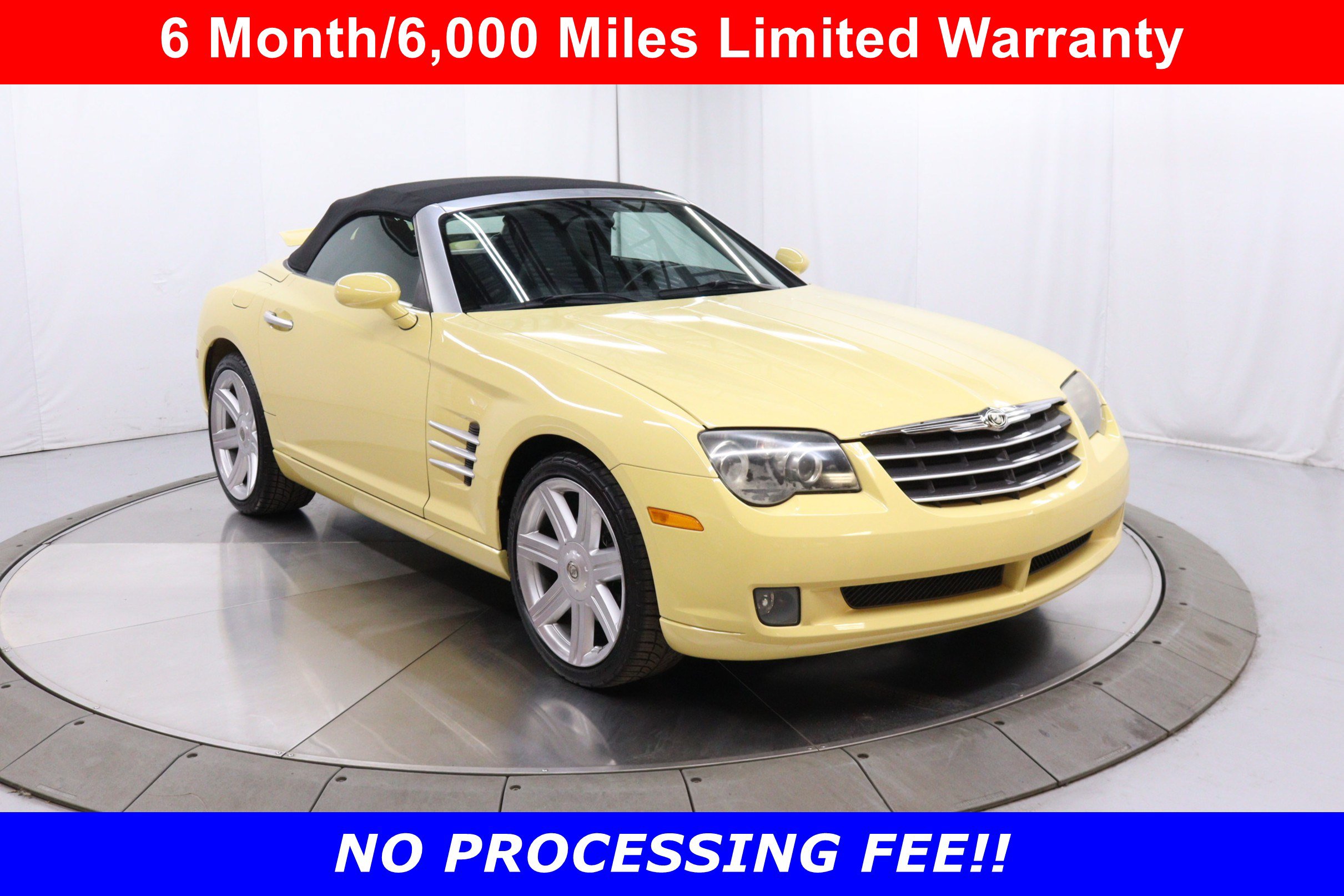
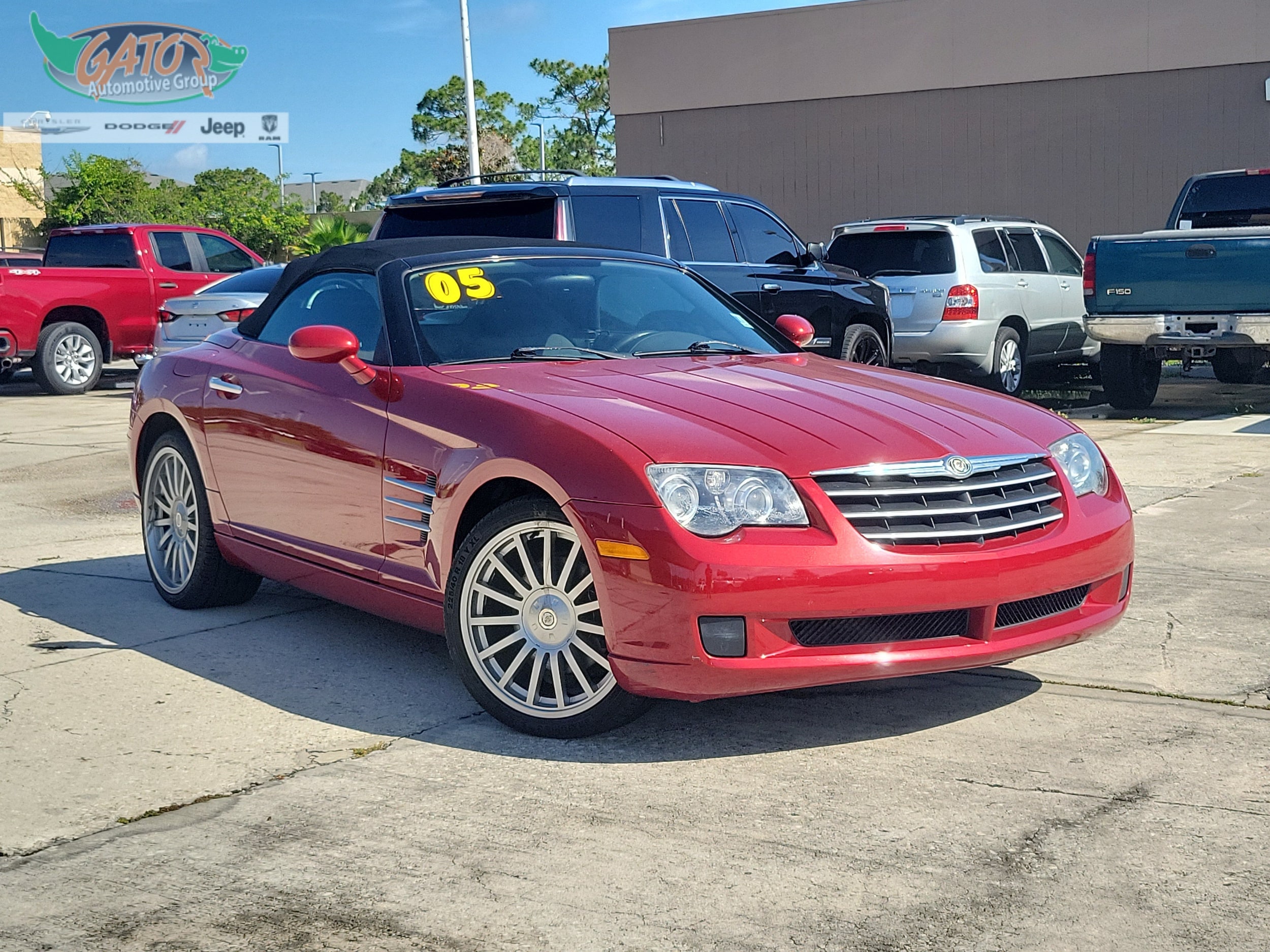
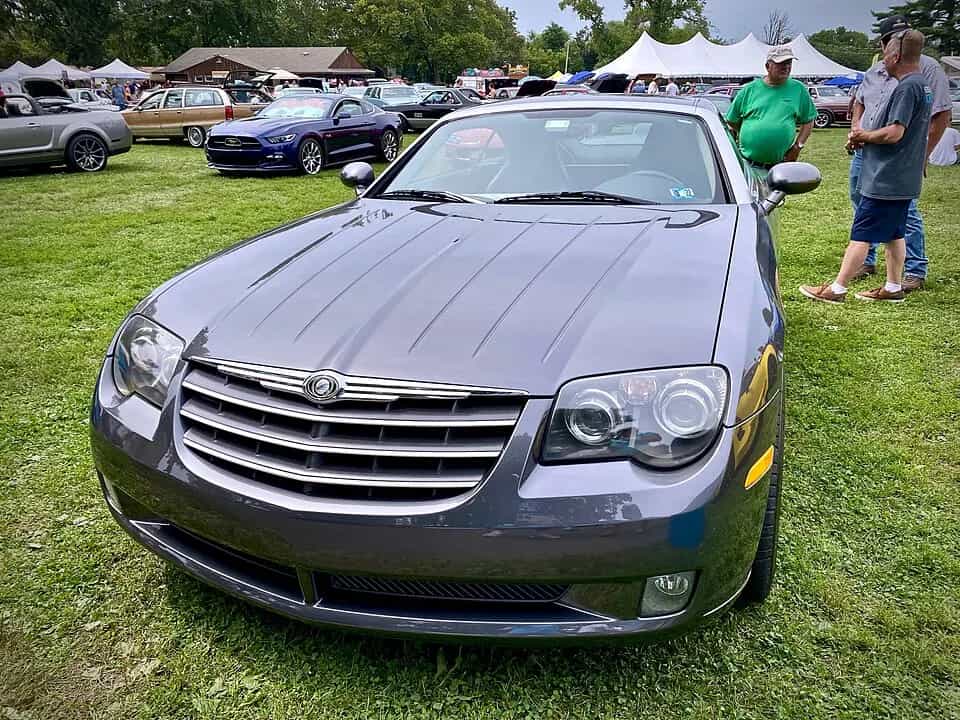
The Crossfire ran for a single generation, model years 2004 to 2008. It arrived first as a two-seat coupe, joined for 2005 by a soft-top roadster. The high-performance SRT-6 followed in 2005 as well, offered in both bodies. The Crossfire shared roughly 80 percent of its components with the first-generation Mercedes SLK (R170), and it was assembled by Karmann in Osnabrück, Germany. Production ended in 2008 after the DaimlerChrysler split, making the Crossfire a short-lived but distinctive footnote — a genuine reason it stayed a collectible niche car rather than a mass-market one.

Engines, transmissions and drive

Every Crossfire uses a Mercedes-derived 3.2-liter V6. The base and Limited trims run the naturally aspirated M112 with roughly 215 hp and 229 lb-ft, driving the rear wheels through either a six-speed manual or a five-speed automatic. The SRT-6 fits a supercharged, intercooled version of the same block making about 330 hp and 310 lb-ft, paired exclusively with the five-speed AMG-sourced automatic. Rear-wheel drive is standard across the range; there was no all-wheel-drive option. On US cars you will overwhelmingly find the automatic, with the six-speed manual noticeably rarer and worth seeking out.

Equipment lines and body styles

The lineup is compact: base, Limited, and SRT-6, each available as coupe or roadster. Limited cars add leather, heated seats, and upgraded audio. The SRT-6 brings the supercharged engine, a fixed rear spoiler, firmer suspension, and unique wheels. All variants keep the strict two-seat cabin and the tapered, boat-tail rear that defines the car's look.

The US used market

The United States absorbed the majority of Crossfire production, so it remains the deepest pool of used examples worldwide. Most cars on offer are automatic coupes; roadsters and manuals command more attention. Mileage varies widely because many were bought as weekend cars, so low-mileage garage-kept examples still surface regularly. Condition is generally good given the Mercedes underpinnings, though interiors and soft-tops show their age. Because this was never a high-volume model, patience and a nationwide search usually beat settling for the first car you see.

Is an import right for you?

A Crossfire suits a buyer who wants Mercedes engineering and rear-drive character in a shape that stands apart from the SLK it shares parts with. It is a compelling choice if you value the coupe's fastback silhouette or want the supercharged SRT-6, which was only ever a small slice of production. Because the car was built in Germany, importing one is effectively bringing a European-built vehicle home — a detail that shapes the customs picture and can make the paperwork more straightforward than a purely US-built model.

Specs at a glance

AttributeDetail (typical US-spec)
Production years2004–2008
Body styles2-seat coupe, 2-seat roadster
Base engine3.2L M112 V6, naturally aspirated
Base outputapprox. 215 hp / 229 lb-ft
SRT-6 engine3.2L supercharged V6
SRT-6 outputapprox. 330 hp / 310 lb-ft
Transmissions6-speed manual, 5-speed automatic
DrivetrainRear-wheel drive
0–60 mph (base)approx. 6.5 s
Lengthapprox. 4,058 mm
Wheelbaseapprox. 2,400 mm
Curb weightapprox. 1,360–1,470 kg
FuelPremium unleaded
Assembly plantKarmann, Osnabrück (Germany)
Seating2

Common issues buyers should know

Crossfire reliability is broadly solid thanks to the proven M112 V6, but there are known weak points. The rear-mounted electronic spoiler motor can fail and is a common complaint. Sealed-for-life differentials and rear suspension bushings wear on higher-mileage cars. Water ingress around the trunk and taillights, sticky interior soft-touch coatings, and window regulator issues appear regularly. On the SRT-6, watch the supercharger and its cooling. The five-speed automatic is durable but benefits from fluid service that many owners skipped. As with any 15-to-20-year-old car, the key is documented maintenance rather than headline mileage.

Differences from the European version

Because the Crossfire was built in Germany and also sold in Europe, the mechanical differences are minor, but US cars carry American lighting, amber side markers, a mph-primary speedometer, and US emissions calibration. Sealed-beam-style headlamp aiming and the absence of a rear fog lamp are the typical items a US car needs corrected for German registration. Tire pressure monitoring, unit labeling, and daytime running light behavior may also need attention.

Import step by step

The process runs in a set order. First, selection: agree the target car and inspect it. Second, VIN and origin check: confirm the German build plant and the vehicle's history. Third, secure payment through escrow so funds release only on agreed terms. Fourth, ocean freight: container or roll-on/roll-off to a North German port such as Bremerhaven. Fifth, customs clearance on arrival. Sixth, TÜV and individual approval (Einzelabnahme) for road-legal compliance. Finally, registration at your local authority.

Customs and taxes: what applies

In short: the 0% duty rate applies only with documented US origin (VIN/plant) – German import VAT of 19% is always due.

Two separate charges apply and must never be blurred together. Import duty depends on provable origin. Because origin here is marked neutral, the exact rate depends on the actual build plant shown by the VIN. The 0% EU rate under Regulations (EU) 2026/1455 and 2026/1461 applies only to vehicles of provable US origin, shipped directly, and only for the window running from 1 July 2026 to 31 December 2029 — a Crossfire built in Germany is assessed on its own documented origin, not assumed. Separately and in every case, the 19% German import VAT (Einfuhrumsatzsteuer) applies on the customs value. As a broker we do not add a vehicle margin; you see the car cost and the official charges distinctly.

Modifications and single-vehicle approval

For the TÜV inspection and Einzelabnahme, expect to address lighting first: headlamp beam pattern, side markers, and fitting a rear fog lamp where required. The odometer must read in kilometers or be verifiably converted, and the speedometer needs a km/h scale. Documentation of the car's specification, brakes, and tires rounds out a typical approval.

What to verify before buying

Before committing, confirm these points: 1) decode the VIN and confirm the German build plant; 2) pull a Carfax or AutoCheck history for accidents and title events; 3) inspect for rust in the trunk floor, sills, and around the taillights; 4) review service records, especially transmission and differential fluid; 5) check the title status is clean, not salvage or rebuilt; 6) test the electric spoiler, soft-top (roadster), and all windows; 7) on the SRT-6, verify supercharger health and service history.

Common questions

Is the Chrysler Crossfire a reliable import?

Yes, broadly. Its Mercedes V6 and drivetrain are durable; most issues are age-related electrical and trim items rather than fundamental faults.

Was the Crossfire really built in Germany?

Yes. It was assembled by Karmann in Osnabrück on Mercedes SLK underpinnings, despite the Chrysler badge.

Does the 0% EU import duty apply to a Crossfire?

Not automatically. Duty depends on provable origin from the VIN and build plant; the 0% US-origin rate applies only to qualifying US-built cars shipped directly within the 2026–2029 window.

Does import VAT still apply?

Yes. The 19% German import VAT (Einfuhrumsatzsteuer) always applies on the customs value, regardless of the duty rate.

Should I look for the manual or the SRT-6?

The six-speed manual is rarer and engaging; the supercharged SRT-6 is the performance flagship. Both are less common than the base automatic.

What are the most common Crossfire problems?

The electric rear spoiler motor, water ingress at the rear, window regulators, and sticky interior coatings are the frequent complaints.

How long does the import take?

Typically several weeks door to door, driven mainly by ocean freight scheduling and customs clearance.

Can I get a manual-transmission SRT-6?

No. The SRT-6 was automatic only; the manual was offered on base and Limited cars.

Ready to start? Browse Chrysler in the Carhub, compare related models such as the Chrysler 300, the Chrysler Sebring and the Chrysler Pacifica, or view current Crossfire listings.